A common starting point looks like this. Someone already owns a capable drone, has seen paid work in real estate, construction, agriculture or inspections, and now hits the same question every serious operator hits in Australia. What counts as a legal UAV pilot certificate, and what does CASA expect before a drone can be flown for work?
The confusion usually comes from mixed advice. Some guidance talks about hobby flying. Some talks about accreditation. Some talks about the Remote Pilot Licence, or RePL. Those aren't the same thing, and the differences matter because the rules are designed to protect other aircraft, people on the ground, and the pilot's own business.
This guide breaks the process down the way an aviation instructor would. It starts with legal obligations, then moves through prerequisites, training, assessment, ongoing compliance, and the practical career pathways that follow.
Table of Contents
- Understanding Your Legal Obligations as a Drone Pilot
- Meeting the Eligibility and Prerequisites for a RePL
- Choosing Your Training and Understanding the Syllabus
- Navigating the Assessment and CASA Application
- Costs, Timelines, and Maintaining Your Certification
- Career Pathways and Ace Aviation's Role in Your Success
- Frequently Asked Questions
- Is a RePL the same as drone accreditation in Australia
- Does every paid drone job require a full UAV pilot certificate
- Why does CASA care so much about weather and pre-flight planning
- Can an experienced manned aircraft pilot skip RePL training
- When is AROC relevant for drone pilots
- What is one simple operational limit every beginner should remember
Understanding Your Legal Obligations as a Drone Pilot
The biggest mistake new operators make is assuming that being able to fly safely means being ready to fly commercially. CASA separates recreational use from commercial operations because the risk profile changes as soon as money, clients, controlled airspace, or more complex job sites enter the picture.
Why CASA separates hobby flying from commercial work
For a person flying purely for fun, the rules are simpler. For a person flying for reward, the law becomes more structured because that flight may take place near a worksite, near infrastructure, or in airspace that demands stronger radio discipline and decision-making.
To legally conduct commercial drone operations (for reward) in Australia, a pilot must hold a Remote Pilot Licence (RePL) issued by the Civil Aviation Safety Authority (CASA); this is mandatory if operating a drone weighing over 2kg, flying outside CASA's standard operating conditions, or operating in controlled airspace, as outlined by commercial drone licence requirements in Australia.
That rule exists for a practical reason. A commercial pilot is expected to understand more than stick control. They need to interpret airspace, assess weather, plan a safe operating area, and document risk.
Practical rule: If the drone flight supports a business outcome, a paid job, or a professional deliverable, the operator should check whether a RePL is required before the first flight, not after.
Some operators also hear the term “excluded category” and assume it covers most business activity. It doesn't automatically replace the need for proper licensing in broader operations. A useful starting point is this guide to excluded category drone operations.
Drone operation categories in Australia
The clearest way to remove confusion is to compare the categories directly.
| Operational Category | Licence/Accreditation Required | Typical Use Case | Key Limitations |
|---|---|---|---|
| Recreational flying | Usually no RePL when flying for fun under standard conditions | Weekend flying, personal practice, hobby photography | Must still follow operating rules and airspace restrictions |
| Limited lower-risk commercial activity | May involve accreditation or specific excluded-category arrangements depending on operation | Small-scale business use in straightforward conditions | Not a blanket approval for all paid work |
| RePL-required operations | Remote Pilot Licence (RePL) | Work with drones over 2kg, flights in controlled airspace, or flights outside standard operating conditions | Higher training, assessment, and compliance expectations |
A second point often missed by beginners is that airspace and location can change the answer. A pilot might own a small drone and still need more than basic knowledge if the mission involves controlled airspace or non-standard conditions.
Another simple rule matters on the ground before take-off. Drones exceeding 250g in weight must maintain a minimum distance of 5.5km from all controlled aerodromes, according to CASA rules remote pilots must know. That restriction reflects the core purpose behind the regulations. Manned aircraft and drones must stay separated by planning, not luck.
Meeting the Eligibility and Prerequisites for a RePL
Many training delays happen before training even begins. The issue usually isn't flying skill. It's paperwork, identity verification, or uncertainty about what CASA wants first.
The first document to organise
Before entering much of the Australian aviation system, a pilot needs an Aviation Reference Number, or ARN. That identifier links the person to CASA records and later licensing activity.
The requirement is straightforward. The RePL is legally required in Australia for anyone operating drones weighing more than 2kg for commercial purposes, with drone registration mandatory for commercial operations and requiring renewal every 12 months through the myCASA portal; an Aviation Reference Number (ARN) must first be obtained by completing identity verification via the myCASA portal or submitting Form 1162 with certified ID documents, as explained in this guide on becoming a drone pilot in Australia.
That “obtain the ARN first” point matters because many students try to enrol, complete training, and only then realise they still need the underlying CASA identity process finalised.
A practical pre-enrolment checklist
A clean pre-enrolment process usually looks like this:
- Create or access a myCASA profile: Many pilots utilize this platform for identity verification and subsequent administrative tasks.
- Prepare certified identification documents: If online verification isn't used, CASA may require documents through Form 1162.
- Think beyond the licence itself: Commercial operators also need to plan for drone registration and its 12-month renewal cycle through myCASA.
- Match the intended work to the correct pathway: A short self-check with a tool such as AAA's licence finder can help narrow down whether the operation points toward accreditation, RePL training, or broader organisational approval.
A beginner who isn't yet ready for full RePL training may also start with ACE READY, an entry level drone training course that covers drone fundamentals, aviation safety, CASA regulations, flight operations, and preparation for advanced RePL training in Australia.
Good preparation removes avoidable stress. The pilot who sorts identity, documents and intended use case early usually studies better because the licensing path is already clear.
There's another reason CASA's administrative steps matter. A commercial drone pilot isn't just learning to fly a machine. They're entering a regulated aviation environment, and regulated aviation always starts with traceable identity, documented competence, and a clear chain of responsibility.
Choosing Your Training and Understanding the Syllabus
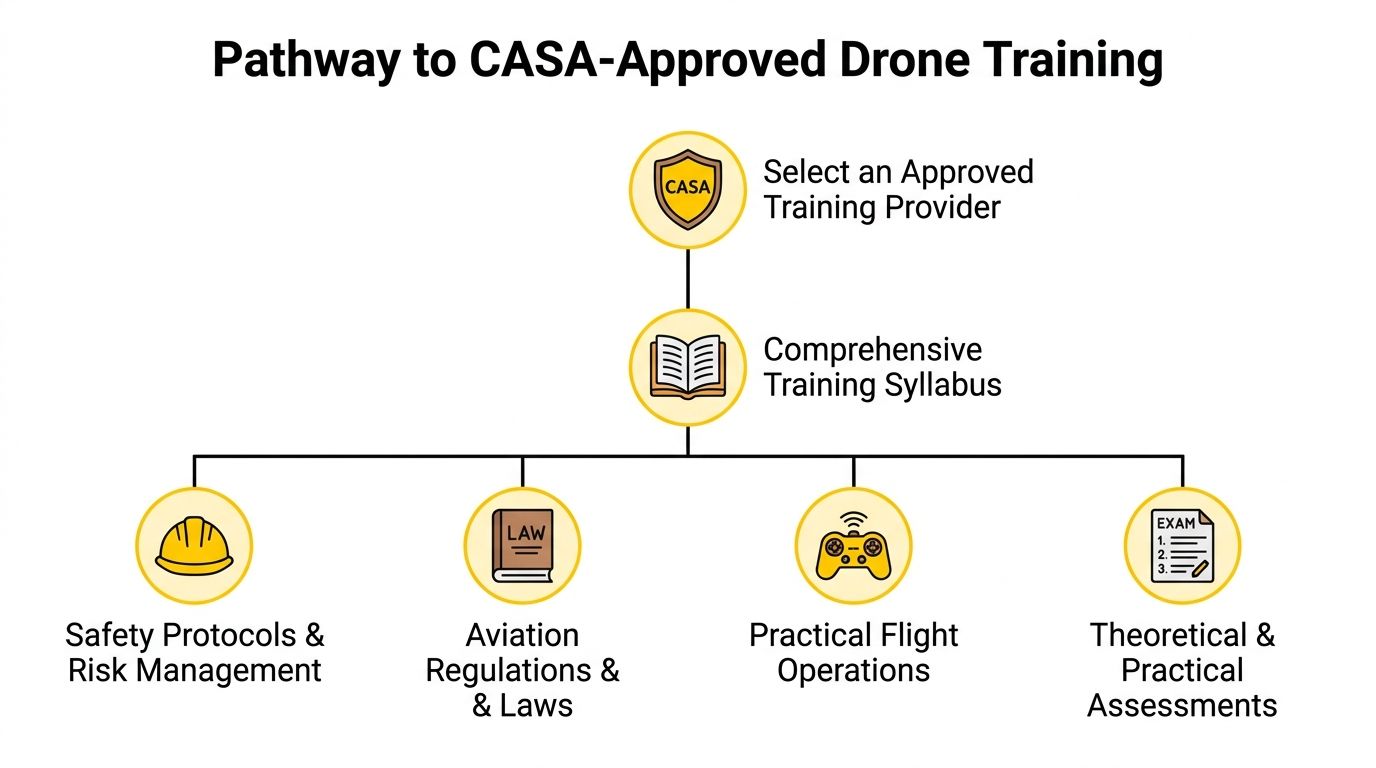
The quality of RePL training shapes far more than exam performance. It shapes judgement. A poor course might help a student memorise facts. A solid course teaches why each rule exists and how those rules affect a real job in changing weather, difficult terrain, and live airspace.
What a serious RePL course includes
For drones up to 25kg, a proper training program has clear regulatory benchmarks. Obtaining a Remote Pilot Licence for drones up to 25kg requires a CASA-approved training course that mandates 100% attendance at all classes and tutorials to meet CASR Part 101 requirements, with students needing to achieve a minimum of 85% on the RePL theory examination and 80% on the Aeronautical Radio Operator Certificate theory exam if applicable, according to Swinburne's RePL unit requirements.
That 100% attendance requirement often surprises students. It tells them something important about aviation training culture. Presence matters because safety knowledge is cumulative. Missing a session on weather, human factors or airspace can create a dangerous gap later.
A strong syllabus usually includes:
- Air law and CASA rules: Students need to know what they may do, what they may not do, and why those boundaries exist.
- Meteorology: Drone pilots don't need airline-level weather theory, but they do need to recognise conditions that can quickly degrade performance or safety.
- Human factors: Fatigue, distraction, overconfidence and rushed decision-making cause errors long before any aircraft issue appears.
- Practical flight operations: The pilot must show controlled take-off, manoeuvring, situational awareness, and disciplined shutdown procedures.
- Radio procedures where relevant: Controlled airspace work demands stronger communication habits, which is why the Aeronautical Radio Operator Certificate (AROC) becomes relevant for some operations.
A student comparing providers can review available options through AAA's course catalogue.
Where students usually struggle
The easiest trap is to focus only on passing the written component. That mindset often produces shallow understanding. The better approach is to study each subject as a flight safety tool.
For example, meteorology isn't there to make the course feel academic. It helps the pilot predict turbulence near structures, battery performance concerns, and whether the planned operating window is safe. Human factors isn't theory for theory's sake either. It explains why otherwise capable pilots make poor calls under client pressure.
A good RePL course doesn't just produce a pass. It produces a pilot who can stop a job, explain the risk, and still protect the client relationship.
Another overlooked question involves recognition of prior learning. Existing aviation professionals often ask whether a PPL, CPL or ATPL background reduces the training load. Some providers mention RPL pathways, and one industry example notes an $890 conversion course versus a $1750 full course, but there's no consolidated national guidance that removes all uncertainty for Australian applicants, as noted in this RPL pathway discussion. For that reason, experienced aviators should ask training providers for a precise breakdown of what prior qualifications may change.
Navigating the Assessment and CASA Application
Assessment day is a structured check of a pilot's competence, knowledge application, and operational discipline.
A common scene plays out the same way. A student can fly well in practice, then lose marks because they rush the pre-flight brief, give a vague weather assessment, or treat the paperwork like a formality. CASA and the assessor are checking something broader than stick skills. They need evidence that the pilot can make safe decisions before, during, and after a flight. That is the reason these rules exist. Commercial drone work puts an aircraft into shared airspace and often near people, property, or time pressure.
What assessment day usually involves
The day usually moves through three parts. First comes the knowledge check. Then the practical flight assessment. After that, the training records and application documents are finalised.
For larger drone RePL pathways, applicants complete a CASA-approved training course through a recognised provider, sit the online knowledge test, and pass a practical flight assessment. CASA's remote pilot licence guidance also explains the test format and pass mark, which helps students prepare with the right level of seriousness instead of guessing what the standard looks like: CASA remote pilot licence information.
The practical assessment works like a flight review with a teaching purpose. The assessor is watching how the pilot plans, explains, checks, and corrects. Calm, methodical performance usually scores better than flashy flying.
Common failure points, and why they matter
Students often assume the flight portion is where they will come unstuck. In practice, three weaker habits show up again and again.
Weak weather interpretation
The pilot needs to do more than describe the sky as "fine" or "windy." An assessor wants to hear what the conditions mean for the operation. If wind direction, gusts, sun angle, or nearby obstacles could affect control or visibility, the pilot should say so clearly.
Poor visual line of sight discipline
Visual line of sight is about maintaining practical awareness of the aircraft, not repeating the rule from memory. Candidates lose confidence here when they position themselves badly, let the aircraft drift into a hard-to-see background, or fail to explain when they would stop and reposition.
Rushed or thin pre-flight documentation
Paperwork is part of the safety system. A risk assessment shows whether the pilot has scanned the job properly before motors start. If the document looks incomplete, the assessor has reason to question the pilot's judgement under commercial pressure.
These are not side topics. They are the habits that separate a person who can operate a drone from a pilot who can run a safe job.
How to prepare for the assessment without overcomplicating it
A simple method helps. Study and practise in the same order you would use on a real site.
Start with the environment. Before touching the controller, explain the airspace, location hazards, weather, people nearby, and emergency options. Next, walk through the aircraft and mission setup in a consistent sequence every time. Then fly the planned task while speaking clearly and making deliberate decisions. This works like a checklist for your thinking. It keeps nerves from pushing you into shortcuts.
A few practical habits reduce avoidable errors:
- Answer aloud during practice. If you cannot explain a decision clearly, your understanding may still be too shallow.
- Use the same pre-flight sequence every session. Repetition builds reliability under pressure.
- Practise line-of-sight positioning on the ground. Choose where you will stand before take-off, not halfway through the flight.
- Treat risk forms as operational tools. Write them as if a client, assessor, and chief pilot will all read them.
- Ask your instructor what usually causes re-assessment. That question often reveals small habits students miss on their own.
Students comparing likely training and application costs can use AAA's drone training quote calculator before booking.
Getting the CASA application right
Once the course and assessment are complete, the last task is administrative accuracy. This stage feels simple, but delays often start here. Missing records, inconsistent personal details, or incomplete submissions can slow the process even when the training result is fine.
Keep your exam outcome, practical assessment result, identification details, and provider-issued training records organised in one place from the start of the course. That approach works like packing your flight bag the night before. It removes last-minute mistakes and makes the CASA application much easier to complete correctly on the first try.
Costs, Timelines, and Maintaining Your Certification
A realistic budget for a UAV pilot certificate includes more than the course itself. Training is the centrepiece, but compliance also includes administration, equipment planning, and in some cases additional qualifications depending on the type of work.
What to budget for
Precise pricing varies by provider, aircraft category, and whether extra endorsements or support services are needed. That means it's safer to think in categories rather than assume one flat national figure.
Typical budget areas include:
- Training course fees: The main cost usually sits here.
- CASA administration: Licence and registration-related steps may carry their own charges depending on the process.
- Equipment readiness: Batteries, maintenance items, and safe transport aren't optional if the pilot plans to work consistently.
- Insurance and business setup: Many commercial operators include these early because clients often expect professional risk management.
- AROC where needed: A pilot intending to work in controlled airspace should factor in radio training and assessment.
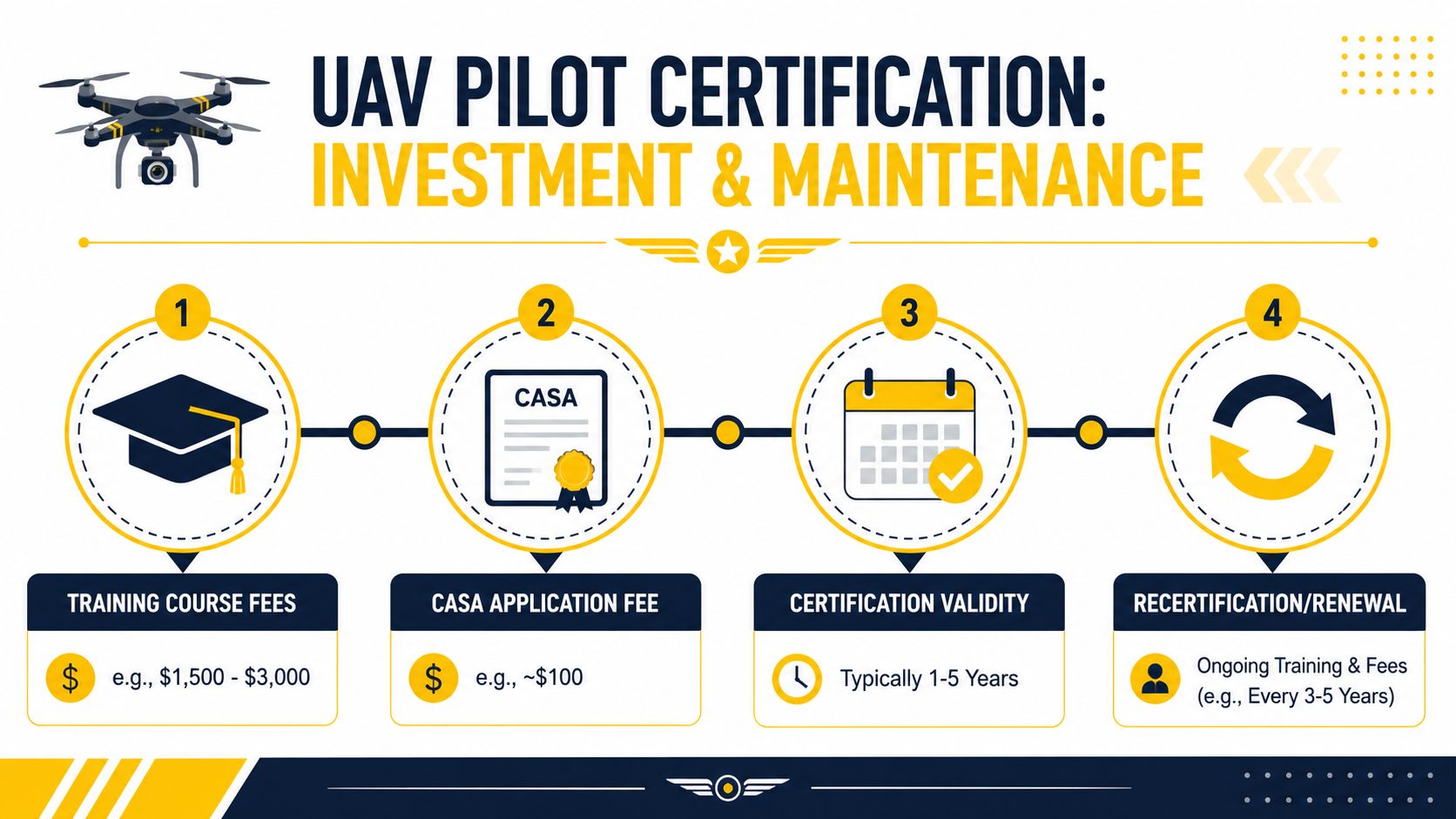
A business comparing likely training and compliance costs can use AAA's quote calculator as one planning reference.
What maintenance really means
Many new operators think “getting certified” is the finish line. In practice, it's the start of professional responsibility. A capable commercial pilot maintains skill, records, aircraft readiness, and regulatory awareness.
The most concrete recurring requirement in the verified material is registration. Commercial drone registration must be renewed every 12 months, as noted earlier in the article. That is a reminder that the administrative side of drone operations continues after the first certificate arrives.
AROC also deserves a practical mention here. It isn't just an extra line on a résumé. For work that touches controlled airspace, radio knowledge supports safer coordination with the broader aviation system. Businesses planning larger or more structured operations may also need to think beyond the pilot and look at organisational approvals such as ReOC Consulting support.
A useful mindset is simple. Currency isn't only about whether a piece of paper remains valid. It's about whether the pilot still performs to a safe standard when the jobsite is busy, the client is waiting, and conditions aren't perfect.
Career Pathways and Ace Aviation's Role in Your Success
A RePL changes what kind of work becomes possible. It gives a pilot a legal and professional base to step into industries that need more than aerial footage. They need structured data collection, safe inspections, documented procedures, and consistent delivery.
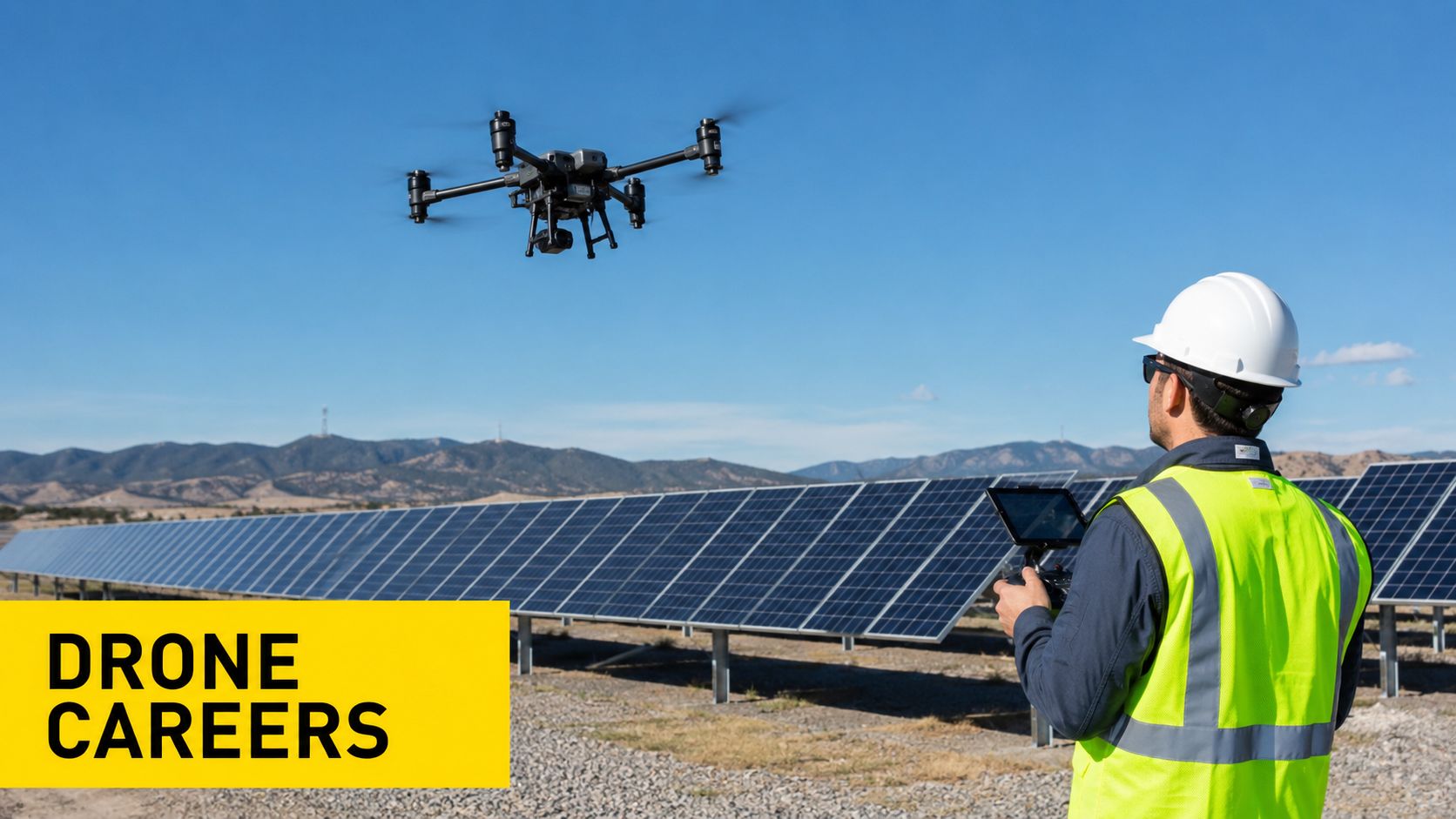
Where a RePL can take a pilot
Common pathways include:
- Agriculture: Crop monitoring, property awareness, and broader aerial observation tasks.
- Construction and surveying support: Site progress capture, visual records, and data collection around changing worksites.
- Infrastructure and utilities: Roof inspections, asset checks, solar and energy site work.
- Public sector and government use: Operational support where compliance and documentation matter.
- Media and communications: Commercial filming where location control and legal operation are essential.
What links these sectors is not the aircraft. It's the operator's judgement. Clients value a pilot who can arrive prepared, assess risk, communicate clearly, and stop a mission when conditions no longer support a safe result.
Training support for different stages of the pathway
One provider in this space is Ace Aviation Aerospace Academy. Its relevant training options for this pathway include Remote Pilot Licence (RePL) training, Aeronautical Radio Operator Certificate (AROC) training, ReOC Consulting, Enterprise Drone Training, Corporate Drone Training, and broader aviation study such as Certificate III in Aviation where that suits the student's goals.
For a student who wants one program that combines commercial drone focus with wider operational readiness, ACE GOLD includes RePL, ReOC support, practical flight training, aviation compliance, and business readiness for commercial drone operations.
A short overview helps visual learners connect the steps to the industry pathway:
The strongest long-term results usually come from treating the licence as one part of a professional system. The pilot learns the rules, builds flight skill, adds radio competence where required, and develops industry-specific capability for the kind of contracts they want to pursue.
Frequently Asked Questions
Is a RePL the same as drone accreditation in Australia
No. They serve different purposes. A Remote Pilot Licence is the formal pilot qualification used for broader commercial operations and more complex flying. Accreditation applies to narrower circumstances and doesn't replace a RePL where CASA requires licensed operation.
Does every paid drone job require a full UAV pilot certificate
Not every situation is identical, but many commercial operations do require a RePL. The key triggers include aircraft weight, operating environment, controlled airspace, and whether the flight sits outside standard operating conditions. If the work is for reward, the pilot should check the legal category before accepting the job.
Why does CASA care so much about weather and pre-flight planning
Because those two areas reveal judgement. A pilot can often recover from a small handling error. It's much harder to recover from poor weather interpretation or an unsafe operating plan that should never have been approved.
Can an experienced manned aircraft pilot skip RePL training
Sometimes prior aviation experience may support a recognition of prior learning discussion, but it shouldn't be assumed. Providers may offer conversion or RPL-style pathways, and the exact treatment of prior qualifications should be confirmed before enrolment.
When is AROC relevant for drone pilots
AROC becomes relevant when the operation involves radio procedures, particularly around controlled airspace activity. It supports safe communication and is often a practical addition for pilots planning more advanced commercial work.
What is one simple operational limit every beginner should remember
A very useful one is the aerodrome separation rule. Drones over 250g must remain at least 5.5km from controlled aerodromes. It's one of the clearest examples of how CASA's rules are built around separation and risk reduction.
Ace Aviation Aerospace Academy provides Australian drone and aviation training for students, businesses and agencies that need a clear path through CASA requirements. Readers comparing training options can review its RePL, AROC, ReOC consulting and related course pathways at Ace Aviation Aerospace Academy.