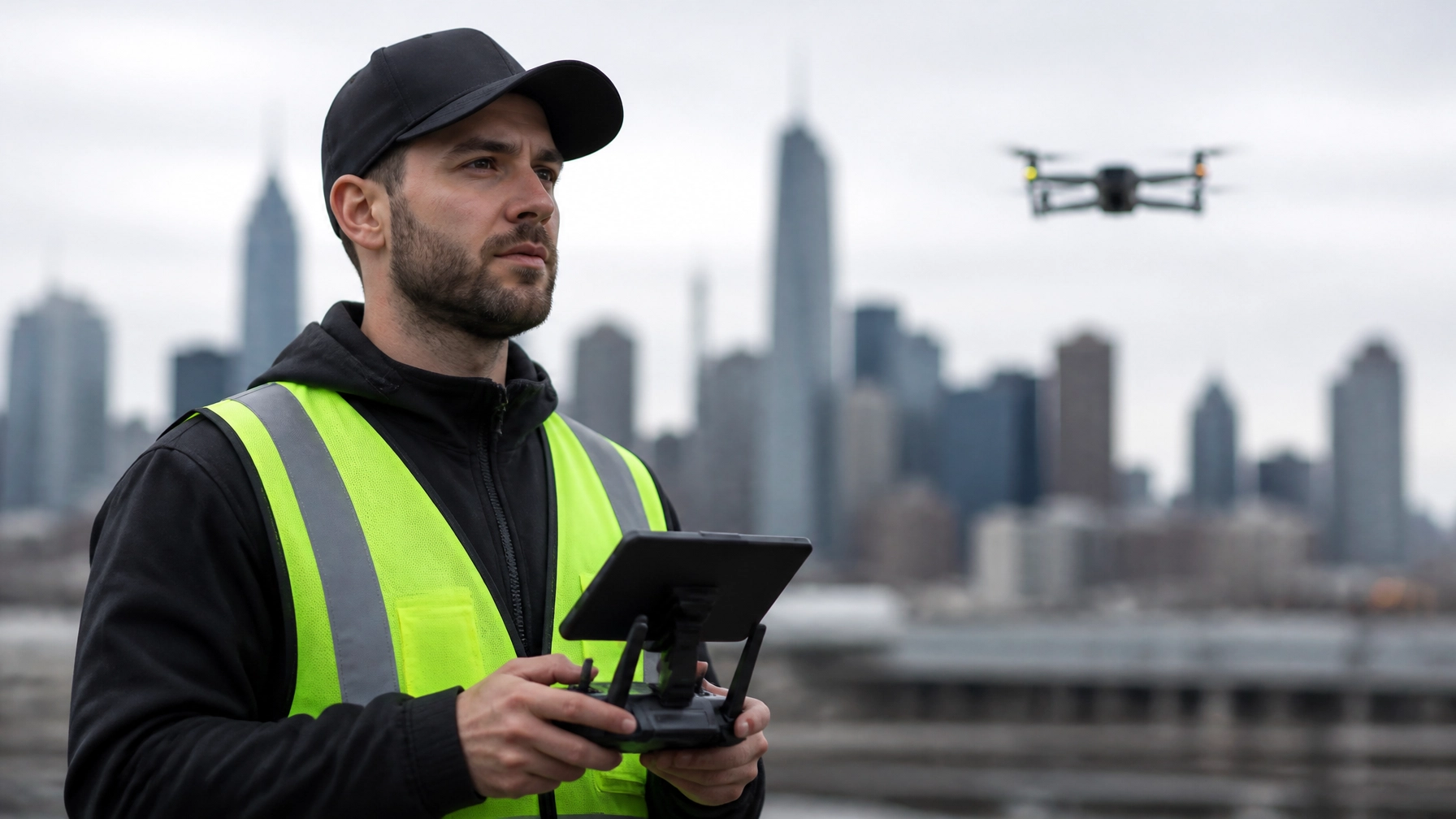
Operating under the CASA Excluded Category restricts your business to sub-2kg drones and "standard operating conditions," preventing night flights, operations in controlled airspace (like Brisbane or Sydney CBD), and the use of heavy professional equipment. To scale and secure high-value contracts, obtaining a Remote Pilot Licence (RePL) is essential.
For many drone operators in Australia, the Excluded Category is often the first step into commercial drone operations. It offers a relatively simple pathway to start earning income with a remotely piloted aircraft (RPA) without the initial complexity of obtaining a Remote Operator Certificate (ReOC). However, while the Excluded Category can be a great starting point, many operators quickly discover that it comes with significant limitations that can restrict growth, reduce earning potential, and prevent access to higher-value contracts.
As the leading authority on drone pilot training in Australia, Ace Aviation Aerospace Academy has seen hundreds of businesses hit the "Excluded Category ceiling." This guide breaks down exactly why staying in this category might be the biggest bottleneck in your aviation career. For operators comparing Drone courses, drone flight training, or a formal drone pilot course, the key issue is simple: excluded category operations can limit the type of work you can legally perform, the airspace you can access, and the contracts you can win across Aviation Training Australia markets.
What Is an Excluded Category Operation?
In Australia, the Civil Aviation Safety Authority (CASA) regulates all drone activities under CASR Part 101. The Excluded Category allows for low-risk commercial work without a full RePL or ReOC, provided you meet very specific criteria.
There are two primary ways to operate in the Excluded Category:
- Sub-2kg Commercial: Operating a drone weighing less than 2kg for "hire or reward."
- Private Landowner: Operating a drone up to 25kg over your own land (or land you occupy) for purposes like crop spraying or fence inspections.
While this sounds convenient, the trade-off is a rigid adherence to Standard Operating Conditions (SOCs). In the aviation world, "standard" often means "limited." If you want to fly where the money is, dense urban environments, night-time events, or near airports, the Excluded Category won't get you there.

Detailed Explanation: Why the Excluded Category Is Limiting Your Growth
The "real-talk" version is simple: the Excluded Category is for hobbyists who want to make a few bucks on the side. If you want to be a professional aviator, you need CASA drone certification. In practical terms, that usually means completing RePL training, enrolling in a recognised drone pilot course, and understanding how a remote pilot licence fits into commercial aviation work. For many students researching Drone Pilot Australia pathways, a CASA RePL is the first serious step beyond basic excluded category work.
1. The Weight Wall (The 2kg Limit)
Most high-end sensors, thermal cameras, and LiDAR systems require heavy-lift platforms. If you are restricted to the sub-2kg category, you are limited to consumer drones like the DJI Air series or basic Mavic models. While these are great for real estate photos, they aren't enough for industrial inspections, heavy-lift delivery, or high-end cinematography. A RePL license allows you to fly drones in much higher weight classes (7kg, 25kg, and even 150kg+). That is why serious commercial drone pilot training matters: the right Drone Certificate is what separates casual operators from businesses capable of tendering for infrastructure, mining, surveying, and public safety work.
2. The Airspace Trap (Controlled Airspace)
If you are in Brisbane, Sydney, Melbourne, or Perth, you are likely surrounded by controlled airspace. Under the Excluded Category, you cannot fly within 3 nautical miles (5.5km) of a controlled aerodrome if your drone is likely to pose a hazard to manned aircraft. This is one of the biggest reasons people search terms like RePL Brisbane, RePL Sydney, and RePL Melbourne when they realise that urban operations are governed by strict drone rules australia requirements rather than app-based guesswork.
Professional commercial drone pilot training teaches you how to navigate these complexities. More importantly, only ReOC holders (with RePL-licensed pilots) can apply for specific approvals to fly in controlled airspace or near major airports where high-value infrastructure projects are often located. If you need local training options, see our Melbourne RePL training, Brisbane RePL training, Sydney RePL training, and Perth RePL training pages.
3. The "Daylight Only" Restriction
Excluded category operators are strictly prohibited from flying at night. In the drone industry, night operations are lucrative. From thermal heat-loss inspections to stunning "golden hour" cinematography that stretches into the night, staying on the ground after sunset means leaving money on the table.
4. No Proximity to People
Under the Excluded Category, you must maintain a 30-meter buffer from people at all times. You cannot apply for a "15-meter" or "0-meter" (tethered) exclusion. This makes event photography, wedding videos, and close-proximity industrial inspections legally impossible.
Key Facts Table: Excluded Category vs. RePL/ReOC
| Feature | Excluded Category (Sub-2kg) | RePL + ReOC Certified |
|---|---|---|
| Max Drone Weight | < 2kg (for commercial) | 7kg, 25kg, 150kg+ (based on licence) |
| Controlled Airspace | Prohibited / High Restrictions | Accessible with CASA approval |
| Night Flying | Strictly Prohibited | Allowed with Approval |
| Distance from People | 30 meters minimum | Can be reduced to 15m or less with approval |
| BVLOS / EVLOS | Not Possible | Possible with specific approvals |
| Insurance | Often difficult to find full professional cover | Standard for professional operators |
| Professional Credibility | Low (Basic Notification) | High (CASA Certified Professional) |
The "Hidden" Risks: Liability and Compliance
Operating commercially in Australia means you are subject to the same drone flying laws Australia applies to major airlines, just on a smaller scale. If you operate in the Excluded Category and accidentally drift into a "populous area" or fly 121 meters high, you are in breach of CASA regulations. For anyone researching Drone flying in Australia, understanding drone rules australia is not optional; it is the baseline for legal commercial work.
Without a RePL, your understanding of VTC (Visual Terminal Charts) and VNC (Visual Navigation Charts) is likely limited. This is where most Excluded Category operators get into trouble, they don't know what they don't know. Good drone flight training and aviation training australia standards close that gap before it becomes a compliance problem.

Step-by-Step Process: Transitioning to Professional Certification
If you're ready to stop playing small, here is how you move from a "notification" to a "licence."
- Enrol in a CASA-Approved RePL Course: Visit our RePL Pilot Training page to find a course near you. We operate in Brisbane, Sydney, Melbourne, Perth, Hobart, and globally. If you want city-based options, review Melbourne RePL training, Brisbane RePL training, Sydney RePL training, Hobart RePL training, or Perth RePL training. This is the most direct pathway into structured RePL training, drone pilot training, and a recognised remote pilot licence outcome.
- Complete Theory Training: You'll learn about aerodynamics, meteorology, flight rules, and radio procedures. A proper drone pilot course should also cover drone flying laws Australia, risk management, and practical CASA compliance.
- Obtain your AROC: The Aeronautical Radio Operator Certificate is essential for talking to air traffic control and other pilots. It's often bundled with our RePL courses, and for students specifically comparing an aroc course with broader flight qualifications, it is a key add-on for operations near controlled or CTAF environments.
- Practical Assessment: Show our instructors you can handle the aircraft under pressure. This is where commercial drone pilot training becomes practical rather than theoretical.
- CASA Application: We handle the paperwork to get your official licence issued by CASA. For students searching CASA RePL or casa drone certification, this is the formal licensing stage.
- Join a ReOC or Start Your Own: To fly outside standard conditions, you must operate under a Remote Operator Certificate. You can either work for a company that has one or get your own ReOC with our help.
Real-World Examples: The Cost of "Staying Excluded"
Example A: The Real Estate Photographer in Sydney
- Excluded Status: Can't fly over 30m from people. The house is on a busy street. He can't get the shot without risking a fine.
- RePL Status: Operates under a ReOC. Has a 15m proximity approval and a radio to monitor nearby helicopter traffic from Sydney Harbour. Gets the job done safely and legally. For operators working around complex metropolitan airspace, our Sydney RePL training is built around the realities of Drone flying in Australia in busy urban environments.
Example B: The Asset Inspector in Perth
- Excluded Status: Uses a small Mavic. The image quality isn't high enough for the engineering firm to spot micro-cracks in a bridge.
- RePL Status: Uses a Matrice 350 RTK with a P1 sensor (weighing ~9kg). The job requires a 7kg+ RePL. He lands a $50k annual contract. This is the kind of outcome that pushes students toward Perth RePL training and higher-level Drone Pilot training Australia options.
Example C: The Agricultural Pilot in Regional QLD
- Excluded Status: Can fly up to 25kg on his own land. But he can't fly for his neighbor or charge a fee because he doesn't have a RePL for that weight class.
- RePL Status: Certified for 25kg+ aircraft. He starts a drone-spraying business serving the entire region.

Common Mistakes Made by Excluded Category Operators
- Assuming "Notification" is a Licence: Many think that notifying CASA on the "Drone Checker" app is a licence. It isn't. It's just a notification of intent to fly.
- Flying in "No Fly Zones": Ignorance isn't a defense. Many Excluded operators fly in Sydney or Brisbane's inner suburbs, not realizing they are in restricted airspace.
- Wrong Weight Class: Using a drone that is 2.1kg (like an older Phantom with accessories) immediately moves you out of the sub-2kg Excluded Category.
- Commercial Insurance Voids: Most business insurance policies require the pilot to be "suitably qualified." If you are flying a complex mission without a RePL, your insurer might deny your claim.
- Underestimating Regional Compliance Needs: Operators in Tasmania and the Northern Territory often assume regional locations are simpler, but Drone training Hobart and Drone training Darwin enquiries usually come from pilots who have discovered that controlled airspace, emergency operations, and local procedures still demand proper training.
CASA Considerations: The Future of Regulation
CASA is increasingly focusing on safety and accountability. With the introduction of digital "Remote ID" and stricter enforcement in metropolitan areas, the "wild west" days of the Excluded Category are coming to an end. By investing in commercial drone pilot training now, you are future-proofing your business. This is especially relevant if you are comparing casa drone certification, CASA RePL, or the broader value of aviation training australia providers.
At Ace Aviation, we don't just teach you how to wiggle the sticks; we teach you the airmanship required to operate in the same skies as Qantas and Rex. As a trusted Drone Academy, our Altitude+ program provides ongoing support to ensure you stay compliant as laws evolve. Students often progress from Drone courses into the Certificate III in Aviation pathway when they want a broader vocational qualification alongside operational licensing.
Extensive FAQ: Everything You Need to Know
1. Can I fly commercially in Brisbane with just a sub-2kg notification?
Yes, but you must stay outside of controlled airspace and follow all SOCs. In much of Brisbane, this is practically impossible without a ReOC and AROC.
2. Is a RePL worth it if I only have a small drone?
Yes. A RePL allows you to fly under a ReOC, which unlocks permissions like flying at night or closer than 30m to people, things a small drone can do, but is legally barred from doing in the Excluded Category.
3. How much does a RePL cost?
Costs vary depending on the weight class and location. Many people search repl license cost before enrolling, and the answer depends on the aircraft category, delivery format, and whether your training includes the radio component. Check our latest course pricing for details.
4. Do I need an AROC for the Excluded Category?
Legally, no. However, you cannot talk on an aviation radio without one. If you are flying near an airport, you are essentially "blind" to other aircraft without it.
5. Can I fly at night if I have a RePL?
A RePL is the first step. To fly at night commercially, you must be operating under a ReOC that has a "Night RPA" approval.
6. What is the sub-2kg excluded category?
It is a category for commercial drone use where the drone weighs under 2kg. You must notify CASA and follow all standard operating conditions.
7. Can I fly over my own farm without a licence?
Yes, up to 25kg, provided it is for your own use and not for "hire or reward" for someone else.
8. What happens if I get caught flying illegally?
Fines from CASA can exceed $15,000 per offence. Serious breaches can lead to criminal charges.
9. Can I fly in Melbourne's CBD?
Melbourne's CBD is highly restricted. Only ReOC holders with specific CASA permits and RePL-licensed pilots should even attempt this.
10. Do I need to register my drone?
Yes. All drones used commercially must be registered with CASA, regardless of whether you are Excluded or RePL-certified.
11. What is the difference between RePL and ReOC?
RePL is your individual "driver's licence." ReOC is the business's "operator's certificate." You need both to fly outside standard conditions.
12. Does Ace Aviation provide training in Sydney?
Yes, we have regular training sessions in Sydney. If you are specifically looking for RePL Sydney options, see our Sydney RePL training page.
13. How long does the RePL course take?
Typically 5 days for a full course, including theory and practical flight training. That timeline is common across structured Drone courses, drone flight training, and drone pilot training Brisbane, Sydney, and Melbourne deliveries.
14. Can I get a job as a drone pilot with just the Excluded Category?
Most serious companies (mining, infrastructure, government) require a RePL as a minimum condition of employment.
15. What are Standard Operating Conditions (SOCs)?
These include: daylight only, visual line of sight, below 120m, not over populous areas, and 30m away from people.
16. Can I fly in rain?
Most drones aren't rated for rain. Legally, you must maintain visual line of sight, which is difficult in heavy rain.
17. What is a "Populous Area"?
Any area where, if the drone failed, it could hurt someone. This includes parks, beaches, and busy streets.
18. Can I film weddings under the Excluded Category?
It is very difficult. Maintaining a 30m distance from all guests (who are often moving) is a legal nightmare.
19. Do I need a RePL to fly a drone for my own hobby?
No, hobbyists follow different rules (though many of the safety conditions are the same).
20. Why choose Ace Aviation?
We are a CASA-approved provider with a global footprint and over 4,000 successful graduates. We offer the most comprehensive training in Australia, from Drone Pilot training Australia and CASA RePL programs to aroc course delivery and the Certificate III in Aviation pathway through our education partners.

Summary: Elevate Your Business Today
The Excluded Category is a valuable entry point, but it is not a destination. If your goal is to build a sustainable, scalable, and professional drone business in Australia, the limitations of the sub-2kg notification will eventually hold you back.
From the restricted airspace of Sydney and Melbourne to the weight requirements of industrial sensors, the path to success is paved with proper CASA drone certification. Whether you are comparing a drone pilot course, Drone Certificate, remote pilot licence, or full Drone Pilot Australia career pathway, proper training creates options that excluded category operations simply do not. Don't let a "low-risk" category result in "low-growth" for your business.
Ready to turn your drone operation into a professional aviation business?
Explore our RePL Courses, local options for RePL Melbourne, RePL Brisbane, RePL Sydney, Hobart RePL training, and Perth RePL training, or Contact us today to speak with an aviation specialist.
{“@type”:”BlogPosting”,”image”:”https://cdn.marblism.com/TiKV9mTrbTL.webp”,”author”:{“name”:”Ace Aviation Aerospace Academy”,”@type”:”Organization”},”faqPage”:{“@type”:”FAQPage”,”@context”:”https://schema.org”,”mainEntity”:[{“name”:”Can I fly commercially in Brisbane with just a sub-2kg notification?”,”@type”:”Question”,”acceptedAnswer”:{“text”:”Yes, but you must stay outside of controlled airspace and follow all SOCs. In much of Brisbane, this is practically impossible without a ReOC and AROC.”,”@type”:”Answer”}},{“name”:”Is a RePL worth it if I only have a small drone?”,”@type”:”Question”,”acceptedAnswer”:{“text”:”Yes. A RePL allows you to fly under a ReOC, which unlocks permissions like flying at night or closer than 30m to people.”,”@type”:”Answer”}}]},”@context”:”https://schema.org”,”headline”:”Why Excluded Category Drone Operations May Be Holding Your Business Back”,”publisher”:{“logo”:{“url”:”https://cdn.marblism.com/4Us45emMyQU.png”,”@type”:”ImageObject”},”name”:”Ace Aviation Aerospace Academy”,”@type”:”Organization”},”articleBody”:”Operating under the CASA Excluded Category restricts your business to sub-2kg drones and standard operating conditions… [Content truncated for brevity]”,”description”:”Discover why the CASA Excluded Category is limiting your drone business. Learn the benefits of RePL license and ReOC certification for commercial drone pilots in Australia.”,”datePublished”:”2026-06-19″,”mainEntityOfPage”:{“@id”:”https://aaa.edu.au/why-excluded-category-drone-operations-may-be-holding-your-business-back”,”@type”:”WebPage”}}