The aviation landscape is currently undergoing a monumental shift, revolutionising the way we perceive domestic and commercial logistics. As unmanned aerial systems become increasingly integrated into our daily lives, we are witnessing a transforming era where the sky is no longer a limit but a multi-dimensional workspace. However, this visionary future depends entirely on a foundation of absolute safety and strict regulatory adherence. At Ace Aviation Aerospace Academy, we believe that unveiling the full potential of drone technology requires more than just high-end hardware; it demands a sophisticated understanding of the complex laws that govern our shared airspace.
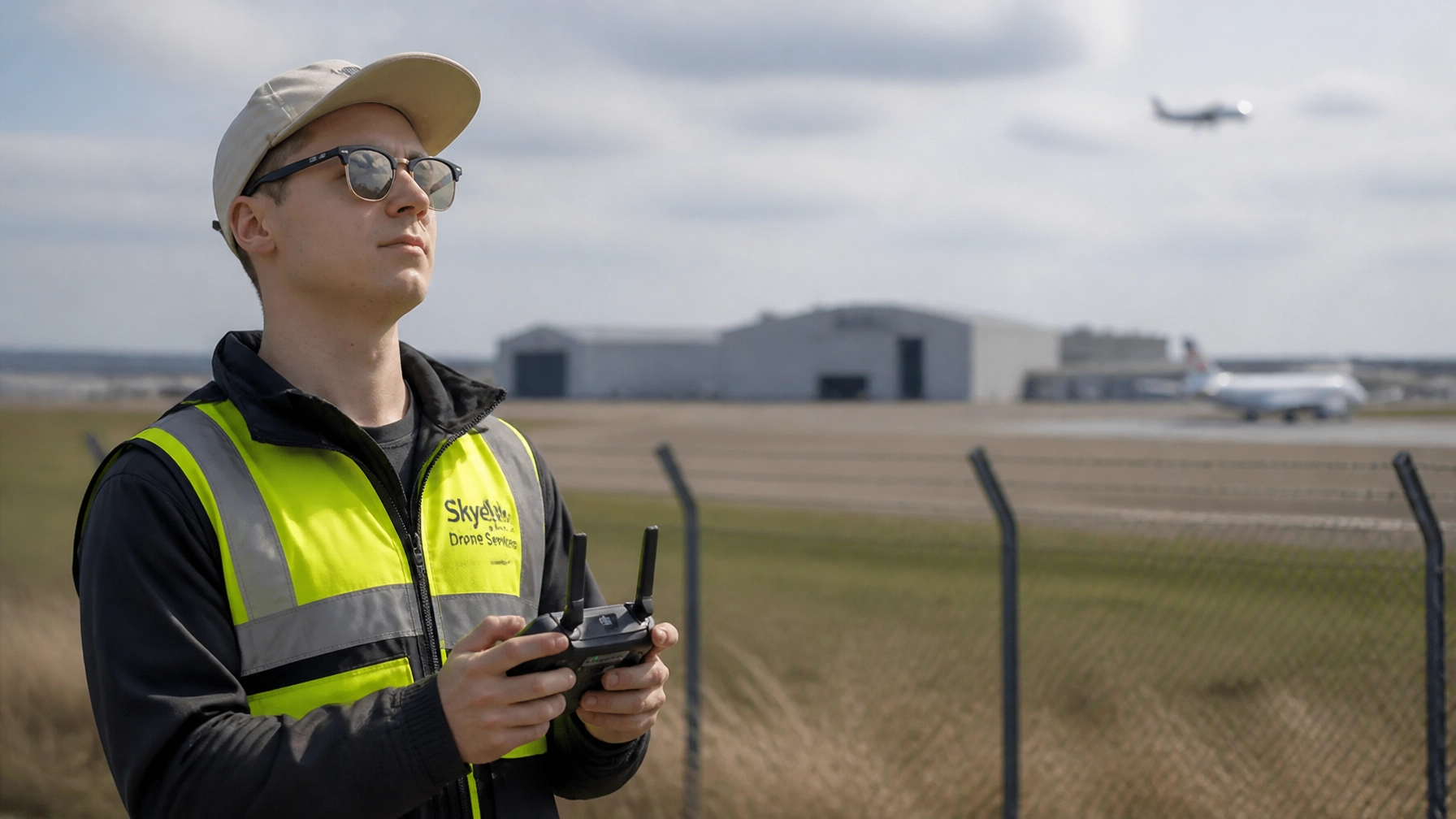
Navigating the skies near airports is perhaps the most critical challenge a remote pilot will face. While the opportunities for aerial cinematography and infrastructure inspection in urban hubs are immense, the risks associated with manned aviation are equally significant. Compliance is not merely a legal requirement; it is a moral imperative to protect the safety of the community and the integrity of the aviation industry.
Below, we break down the seven most common mistakes drone operators make when flying near airports and how you can ensure your operations remain within the rigorous standards set by the Civil Aviation Safety Authority (CASA).
1. Misidentifying Controlled vs. Non-Controlled Aerodromes
One of the most fundamental hurdles for novice pilots is distinguishing between different types of aerodromes. In Australia, the rules vary drastically depending on whether an airport has an active control tower (Controlled) or relies on pilot-to-pilot communication (Non-Controlled).
- Controlled Aerodromes: These include major hubs like Sydney, Melbourne, and Brisbane, as well as significant secondary airports like Jandakot or Gold Coast.
- Non-Controlled Aerodromes: Often regional strips, private paddocks, or hospital helipads where no Air Traffic Control (ATC) is present.
Assuming all “airports” are treated the same is a critical error. While you might have more flexibility near a regional strip, flying within 5.5 km of a controlled airport without the proper authorization is a major breach that can lead to significant fines and the suspension of your credentials.

2. Violating the 5.5 km (3 NM) Radial Rule for Heavy Drones
For any drone weighing more than 250 grams, the 5.5 km rule is a non-negotiable barrier at controlled airports. This distance is approximately 3 nautical miles (NM) from the airport boundary.
Many hobbyists and “excluded category” commercial operators (flying sub-2kg drones without a RePL) mistakenly believe they can fly in a local park or over their own backyard if it falls within this circle. This is incorrect. If your drone is over 250g, you must not fly within 5.5 km of a controlled airport unless you hold a Remote Pilot Licence (RePL) and are operating under a Remotely Piloted Aircraft Operator’s Certificate (ReOC) with specific ATC approval.
3. Neglecting Approach and Departure Paths
Even if you are operating a micro-drone (sub-250g), you are not exempt from common sense and safety protocols. A frequent mistake is flying in the approach or departure paths of a runway. These paths are the corridors where manned aircraft are at their lowest altitude and most vulnerable.
CASA regulations state that you must never fly in a way that creates a hazard to another aircraft. Even if you are outside the strict 5.5 km radius, if you are positioned under a flight path, you are encroaching on a high-risk zone. Always check the orientation of the runways and ensure you are not positioned where a descending Boeing 737 or a climbing Cessna might cross your path.

4. Over-Reliance on Manufacturer Geofencing
While modern drones from manufacturers like DJI often include built-in geofencing (No-Fly Zones), these digital boundaries are not always aligned with Australian law.
Manufacturer software is a secondary safety net, not a legal authority. A drone’s internal map may allow you to take off in a location that CASA has deemed restricted, or it may fail to account for a temporary restricted area (TRA) or a new helipad. As a professional operator, you must rely on CASA-verified drone safety apps rather than the internal software of your aircraft.
5. Failure to Yield at Non-Controlled Sites
Recent regulatory updates in 2025 and 2026 have clarified rules for non-controlled aerodromes. While you may now fly within 5.5 km of a regional strip, you are bound by a strict set of “Yield” requirements:
- Monitor the Airspace: You must ensure no manned aircraft are currently taking off or landing.
- Immediate Evasion: If you see or hear an aircraft, you must immediately manoeuvre away from its path.
- Land Safely: You must land your drone as soon as it is safe to do so.
Mistaking “allowed to fly” for “having right of way” is a dangerous assumption. In the aviation hierarchy, the manned aircraft always takes precedence.

6. Operating Without an Aeronautical Radio Operator Certificate (AROC)
In complex airspace, communication is your most powerful tool for risk mitigation. Many pilots attempt to operate near airfields without the ability to listen to aviation radio frequencies.
If you are flying commercially, particularly under a ReOC near an airport, having an AROC is essential. It allows you to monitor the Common Traffic Advisory Frequency (CTAF) or listen to ATC instructions, providing you with “situational awareness” that no camera or app can replicate. At Ace Aviation, we integrate this specialized training into our aviation career pathways, ensuring our students are not just pilots, but informed participants in the aviation ecosystem.
7. The “RePL is Enough” Misconception
Perhaps the most common mistake among aspiring professionals is the belief that obtaining a Remote Pilot Licence (RePL) automatically grants the right to fly anywhere.
A RePL is a personal qualification: like a driver’s license. However, to fly near a controlled airport, you must also operate under a ReOC (the “business” license) and obtain a specific Airspace Authorization. This process involves:
- Submitting a flight plan to CASA or Airservices Australia.
- Conducting a thorough Job Safety Assessment (JSA).
- Obtaining a NOTAM (Notice to Airmen) if required.
- Maintaining direct radio contact with the control tower.
Without these additional layers of compliance, a RePL holder is subject to the same 5.5 km restrictions as a hobbyist.

The Path to Mastery and Compliance
The complexities of airport operations should not be viewed as barriers, but as professional standards that elevate the industry. By adhering to these rules, you contribute to a culture of safety that allows the drone industry to thrive and expand into new frontiers, such as BVLOS (Beyond Visual Line of Sight) and automated delivery systems.
Proper education is the bridge between a hobbyist and a respected aviation professional. At Ace Aviation Aerospace Academy, we take pride in our track record of training over 4,000 students across the globe, from Australia to Dubai. Our CASA-approved curriculum is designed to transform these regulatory hurdles into clear, manageable steps for your career.
We invite you to join our next intake and secure your place in the future of aviation. Whether you are looking to start with a Certificate III in Aviation or advance your existing skills, our instructors are ready to guide you through every nautical mile of your journey.

As we look toward the horizon, let us remember our responsibility to the skies and the communities below. Safe flying is the only way forward.
Are you ready to take the next step? Explore our courses today and fly the right way.