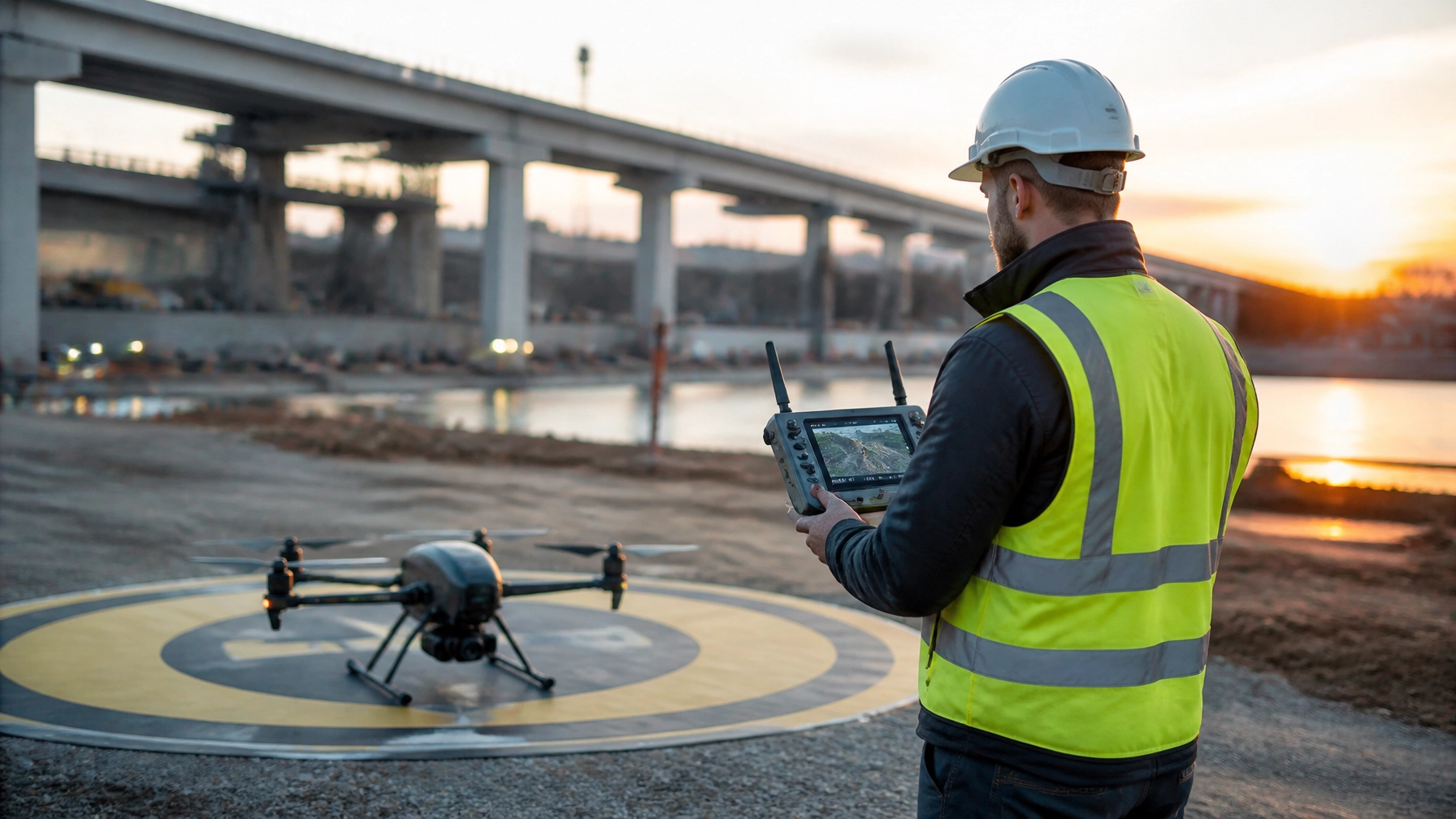
In 2026, a professional commercial drone pilot in Australia typically earns between $65,000 and $110,000 per year for full-time roles. Specialized operators in mining, industrial inspection, and surveying frequently command day rates of $1,500 or higher, with senior specialists earning upwards of $150,000 annually.
The Reality of the "Sky High" Paycheck
The transition from flying a drone on weekends to earning a six-figure salary isn't just about owning a fancy piece of hardware; it’s about operating within the CASA (Civil Aviation Safety Authority) framework as a certified professional. While hobbyists enjoy the view, professionals manage risk, data, and compliance.
In 2026, the Australian drone industry has matured beyond simple photography. We are seeing a massive surge in demand for BVLOS (Beyond Visual Line of Sight) operations and EVLOS (Extended Visual Line of Sight) missions, particularly in regional hubs like Perth, Brisbane, and Adelaide. The "brutally honest truth" is that while the $1,500/day jobs exist, they are reserved for those who hold a Remote Pilot Licence (RePL) and have mastered specific industrial applications.
The Salary Spectrum: From Entry-Level to Enterprise
The earnings gap in the RPAS (Remotely Piloted Aircraft Systems) sector is wide. A pilot doing real estate photography in Sydney might struggle to break $500 a day, whereas a pilot conducting thermal inspections on a solar farm in regional Queensland can easily double that. In practical terms, your income depends on three things: industry, compliance status, and whether you are selling images or operational outcomes.
Salary Breakdown by Industry in Australia
The table below reflects realistic 2026 ranges for Australian operators working in major markets such as Brisbane, Sydney, and Melbourne, plus regional and remote contract work. These figures vary based on aircraft class, sensor payload, whether the pilot is supplying post-processing, and whether they are operating under a ReOC with approvals that expand what jobs they can legally accept.
| Industry | Typical Full-Time Salary | Typical Contract Day Rate | Common Work Type | What Drives Higher Pay |
|---|---|---|---|---|
| Real Estate & Media | $55,000 – $75,000 | $400 – $700 | Listings, promotional video, roof photos | Fast turnaround, editing, premium city clients |
| Agriculture | $70,000 – $95,000 | $600 – $1,000 | Crop health, spraying support, water monitoring | Multispectral mapping, large-acreage reporting |
| Infrastructure | $90,000 – $130,000 | $1,000 – $1,500 | Bridges, roads, rail, solar, utilities | Thermal data, confined-site ops, reporting accuracy |
| Mining & Surveying | $110,000 – $160,000+ | $1,500 – $2,500 | Stockpile surveys, pit mapping, inspections | LiDAR, RTK/PPK, mine-site induction, remote deployment |
| Emergency Services / Government | $85,000 – $115,000 | Usually salaried | Search support, incident mapping, public safety | Night ops, procedural discipline, agency clearances |
Industry-by-Industry Salary Reality
1. Mining
Mining remains one of the highest-paying verticals for commercial drone pilots in Australia. Sites in WA and QLD routinely pay more because the work is operationally critical, remote, and heavily compliance-driven.
- Typical contract rate: $1,500 to $2,500 per day
- Typical salary: $110,000 to $160,000+
- Why it pays more: Remote travel, long swings, site inductions, higher safety expectations, complex deliverables
- Common payloads: LiDAR, RTK photogrammetry, thermal, gas detection in some specialised roles
A pilot flying stockpile volume missions in the Pilbara is not being paid simply to fly. They are being paid to produce defensible data that feeds mine planning, production reporting, and safety workflows. That is a very different commercial proposition from taking promotional footage.
2. Real Estate
Real estate is where many new entrants start, especially in Sydney, Melbourne, and Brisbane. It is accessible, but it is also one of the most price-sensitive markets.
- Typical contract rate: $400 to $700 per day
- Typical salary: $55,000 to $75,000
- Why rates stay lower: Low barrier to entry, frequent package deals, strong competition from small operators
- Upside opportunities: Premium developments, construction marketing, roof inspections, strata and insurance crossover work
The ceiling rises when a pilot combines photography with floorplans, short-form video, progress reporting, or controlled-airspace capability. In inner Sydney or Melbourne, where properties may sit near controlled airspace, a licensed and radio-competent operator can charge more because fewer people can lawfully and confidently do the job.
3. Agriculture
Agriculture sits in the middle of the market but offers strong long-term upside for operators who understand agronomy, mapping, and repeat service models.
- Typical contract rate: $600 to $1,000 per day
- Typical salary: $70,000 to $95,000
- Common jobs: NDVI crop mapping, livestock water inspections, drainage analysis, broadacre surveys
- Why income grows: Recurring seasonal work, larger geographic coverage, specialised analytics
A farmer does not hire a drone pilot for cinematic shots of a paddock. They hire one to identify plant stress, irrigation issues, spray planning gaps, or access problems. If your output improves decisions, you can build recurring accounts rather than one-off shoots.
4. Infrastructure
Infrastructure is one of the most stable and scalable sectors, especially around major urban centres like Brisbane, Sydney, and Melbourne, where transport, energy, and construction projects run year-round.
- Typical contract rate: $1,000 to $1,500 per day
- Typical salary: $90,000 to $130,000
- Common jobs: Bridge inspections, rail corridor mapping, façade inspection, progress captures, solar farm assessments
- Why it pays well: Safety documentation, structured reporting, site access control, asset-critical data
This sector rewards pilots who can operate professionally around stakeholders, produce repeatable reports, and integrate into engineering or contractor workflows. The drone is only one part of the value chain.
The "RePL Factor": How Certification Changes Your Billing Rate
A major reason salary discussions get distorted online is that people compare licensed commercial operators with unlicensed hobby-style freelancers. In the Australian market, a RePL often changes not just legality, but pricing power.
Here is the practical difference:
| Operator Type | Typical Billing Position | Likely Rate Outcome | Why |
|---|---|---|---|
| Hobbyist / low-compliance shooter | Competes mainly on price | $200 – $500 jobs | Limited trust, limited scope, weaker commercial access |
| RePL holder under a ReOC | Can service structured commercial clients | $500 – $1,200 jobs | Meets baseline expectations for many compliant businesses |
| RePL + AROC + sector skills | Can access metro, controlled-airspace, higher-risk work | $1,000 – $1,500+ jobs | Fewer qualified competitors, stronger client confidence |
| RePL + ReOC + specialist data capability | Can scope, run, and deliver enterprise missions | $1,500 – $2,500+ jobs | Operational control, approvals pathway, premium deliverables |
Why RePL Changes What You Can Charge
A Remote Pilot Licence does four important things in the market:
-
Signals legal credibility
Clients in construction, utilities, government, and mining increasingly ask whether the pilot is properly licensed and operating under a compliant framework. -
Unlocks better work
Many contracts are simply not available to an uncredentialed operator. If the client needs a pilot flying under a ReOC, with manuals, risk assessments, and formal procedures, a hobbyist is out. -
Reduces client risk
A builder in Brisbane, an agency in Sydney, or an asset owner in Melbourne is not paying only for footage. They are paying to reduce operational, legal, and insurance exposure. -
Creates room for premium services
Once you are licensed, you can stack additional capability: AROC, night operations training, complex mission planning, mapping software, and industry-specific reporting.
In short: the RePL is not just a compliance document; it is often the line between consumer-level pricing and business-grade billing.
Hidden Costs vs. Real Profit Margins
One of the biggest mistakes new operators make is confusing revenue with profit. Saying "I charge $1,500 a day" sounds impressive, but that is not take-home pay. Commercial drone work has overhead, downtime, and replacement costs that hobbyists rarely budget for properly.
The Hidden Costs Many Pilots Ignore
Below are the common costs that eat into margins:
- Aircraft and payload depreciation
- Batteries, chargers, props, and field consumables
- Public liability and hull insurance
- CASA registration and operator compliance costs
- ReOC overhead, manuals, audits, and admin
- AROC training or radio compliance
- Travel, accommodation, and vehicle costs
- Software subscriptions such as Pix4D, DroneDeploy, DJI Terra, or CAD processing tools
- Data processing time after the flight
- Site inductions and unpaid quoting/admin time
- Laptop, tablets, monitors, and storage hardware
- Marketing and lead generation
- Weather cancellations and non-billable standby days
Example: What a "$1,500 Day" Can Really Look Like
A specialist pilot may invoice $1,500 for a one-day infrastructure inspection. But the actual margin may look more like this:
| Cost Item | Approximate Amount |
|---|---|
| Day rate invoiced | $1,500 |
| Travel and vehicle allocation | -$120 |
| Insurance allocation | -$40 |
| Equipment wear/depreciation | -$150 |
| Software and processing allocation | -$90 |
| Admin / quoting / reporting time | -$200 |
| GST and tax not yet set aside | varies |
| Pre-tax operating margin before owner wage adjustment | materially lower than the headline rate |
For lower-end markets like real estate, margins can get tighter fast. A $450 shoot in suburban Melbourne or Brisbane may involve travel, editing, client revisions, upload time, and weather rescheduling. That "easy job" can end up producing a poor hourly return.
Gross Revenue vs. Sustainable Business
A healthy drone business is not built on random one-off jobs. It is built on:
- repeat clients
- strong scopes of work
- efficient workflows
- compliant operations
- pricing based on outcomes, not flight minutes
That is why many professional operators move away from charging purely for "a drone shoot" and instead quote for:
- inspection packages
- mapping deliverables
- progress reporting
- asset condition reports
- recurring site services
The more your service resembles a business tool rather than a flying camera, the better your margin usually becomes.
The "Secret Sauce": Why Some Pilots Make 3x More
It comes down to Utility vs. Art. If you are selling "pretty pictures," you are competing with every teenager with a DJI Mini. If you are selling survey-grade data that helps a mining company save $2 million in operational costs, you are a high-value asset.
To reach the $1,500/day mark, you generally need:
- CASA RePL (Remote Pilot Licence): The baseline legal requirement for commercial work.
- AROC (Aeronautical Radio Operator Certificate): Essential for flying in controlled airspace (near airports in Melbourne, Sydney, etc.).
- Specialised Certification: Such as a Certificate III in Aviation, which provides the formal educational weight behind your flight hours.

Step-by-Step: Moving from Hobbyist to Professional
The path to becoming a high-earning pilot is structured. You cannot simply "freelance" your way into the big leagues without hitting regulatory milestones.
1. Obtain Your RePL
The Remote Pilot Licence is your "driver's license" for drones. It removes the 2kg weight limit restriction and allows you to fly for a Remote Operator's Certificate (ReOC) holder. At Ace Aviation, we’ve trained over 4,000 pilots to this standard.
2. Get Your AROC
The Aeronautical Radio Operator Certificate is what separates the "park flyers" from the aviators. If you want to work on major construction sites or near city centers, you must be able to communicate with air traffic control and other manned aircraft.
3. Choose a Niche
Don't be a generalist. In 2026, the money is in the data. Whether it's 3D mapping for Brisbane's infrastructure projects or asset inspection in the Pilbara, pick a vertical and master the software (like Pix4D or DroneDeploy) as much as the flight.
4. Join a ReOC or Start Your Own
To fly commercially, you must either work under someone else's Remote Operator’s Certificate (ReOC) or obtain your own. Many high-earning contractors maintain their own ReOC to ensure they have full control over their operations and insurance.
Common Mistakes That Kill Careers (and Bank Accounts)
- Flying Without Insurance: Standard liability insurance won't cover you if you're flying commercially without a RePL. One accident can lead to a lifetime of debt.
- Ignoring Maintenance Logs: In 2026, CASA compliance is stricter than ever. If you aren't logging your battery cycles and motor hours, you're a liability.
- Undercutting the Market: "Mate's rates" destroy the industry. Professional pilots charge for their expertise, risk management, and $20,000+ equipment suites.

CASA Considerations: The Legal Framework
Operating a drone in Australia is governed by CASR Part 101. The rules are designed to keep the skies safe, but they also create a barrier to entry that protects the salaries of qualified pilots.
- Standard Operating Conditions (SOCs): As a RePL holder, you can apply for variations to these conditions (e.g., flying closer than 30m to people or flying at night) through your ReOC's operations manual.
- Flight Restricted Zones: Understanding where you can't fly is just as important as where you can. Professional training teaches you how to read aviation charts, something a YouTube tutorial won't cover.
Extensive FAQ: Everything You Need to Know
Schema-Ready FAQ
1. Can a drone pilot really make $1,500 a day in Australia?
Yes. In 2026, Australian drone pilots can earn $1,500 or more per day in specialised sectors such as mining, infrastructure inspection, LiDAR surveying, and high-risk industrial work. These rates usually apply to licensed operators delivering commercial outcomes, not hobbyist-style photography.
2. What is the average drone pilot salary in Australia in 2026?
A full-time commercial drone pilot in Australia typically earns between $65,000 and $110,000 per year, with specialist operators in mining, surveying, and infrastructure often earning $110,000 to $160,000+. Entry-level media and real estate work usually sits at the lower end.
3. Which drone industry pays the most: mining, real estate, agriculture, or infrastructure?
Mining generally pays the highest rates, followed by infrastructure. Real estate is usually the lowest-paying sector because competition is higher and barriers to entry are lower. Agriculture sits in the middle, with strong potential for repeat work if the operator offers mapping and analysis.
4. How much do drone pilots earn in mining?
Mining drone pilots commonly earn $110,000 to $160,000+ in salaried roles or $1,500 to $2,500 per day as contractors. Rates rise further when the pilot provides LiDAR, RTK mapping, volumetrics, or remote-site availability.
5. How much do drone pilots earn in real estate?
Real estate drone pilots typically earn $55,000 to $75,000 annually or $400 to $700 per day on contract. Premium metro work in Sydney, Melbourne, and Brisbane may pay more when the operator includes editing, floorplans, or controlled-airspace capability.
6. How much do drone pilots earn in agriculture?
Agriculture drone pilots usually earn $70,000 to $95,000 per year or $600 to $1,000 per day. Rates improve when the pilot provides NDVI mapping, multispectral analysis, irrigation assessment, or repeat seasonal reporting.
7. How much do drone pilots earn in infrastructure?
Infrastructure drone pilots commonly earn $90,000 to $130,000 annually or $1,000 to $1,500 per day. This sector often includes bridge inspections, rail corridor mapping, road progress monitoring, utilities inspection, and solar asset work.
8. Does having a RePL increase your drone pilot income?
Yes. A RePL (Remote Pilot Licence) usually increases a pilot’s earning potential because it improves legal employability, client trust, and access to better work. In many cases, the RePL is what moves a pilot from low-cost consumer jobs into compliant commercial engagements.
9. What is the “RePL Factor”?
The “RePL Factor” is the pricing difference created by certification. Licensed operators can generally charge more because they are better positioned to work under a ReOC, complete formal risk assessments, meet procurement standards, and access more complex jobs.
10. Is a RePL legally required for paid drone work in Australia?
The answer depends on the aircraft, operation, and business structure, but in practical commercial terms, serious clients often expect the pilot to be operating within the CASA compliance framework. If the aircraft is over 2 kg, a RePL is generally required for commercial operations under a ReOC. Even where exemptions may exist, certification still improves access to higher-value work.
11. What is a ReOC and why does it matter for salary?
A ReOC (Remote Operator’s Certificate) is the organisational approval that allows commercial drone operations under CASA rules. Working under a ReOC matters because many higher-paying jobs require documented procedures, approved operations, insurance alignment, and formal supervision structures.
12. What is AROC and why does it matter for metro jobs?
An AROC (Aeronautical Radio Operator Certificate) allows a pilot to use aviation radios in relevant airspace environments. It matters because many jobs near airports or controlled airspace in Sydney, Melbourne, and Brisbane require stronger communication capability and aviation awareness.
13. Can I become a professional drone pilot without a university degree?
Yes. A university degree is not required to become a professional drone pilot in Australia. What matters more is holding the correct certifications, understanding CASA requirements, and developing practical capability in sectors such as mapping, inspection, or data capture. A Certificate III in Aviation can still strengthen your employability.
14. What hidden costs reduce a drone pilot’s profit?
The biggest hidden costs include:
- equipment depreciation
- batteries and propellers
- insurance
- software subscriptions
- travel and accommodation
- data processing time
- unpaid quoting and admin
- CASA registration and compliance
- ReOC overhead
- tax and GST obligations
These costs mean a high day rate does not automatically equal high profit.
15. What profit margin is realistic for a freelance drone pilot?
Profit margins vary widely, but many operators discover that after equipment, insurance, software, travel, and admin, their true margin is far lower than expected. Sustainable margins usually come from repeat clients, efficient workflows, and higher-value deliverables rather than one-off low-cost shoots.
16. Is the drone pilot market oversaturated in Australia?
The low-end photography market is crowded, but the compliant commercial market is not. There is still strong demand for operators who hold a RePL, understand CASA rules, and can provide useful outputs such as survey data, inspections, or recurring asset reports.
17. What is the most profitable niche for a new drone pilot?
For a new pilot, the most practical path is often to enter through real estate, construction progress, or basic inspections, then move into higher-value sectors such as infrastructure, agriculture, or surveying. The most profitable long-term niches usually involve data, compliance, and repeat contracts.
18. How long does it take to get a RePL?
A typical RePL course can often be completed in about 5 days, depending on the provider, aircraft category, and practical assessment requirements. Ace Aviation Aerospace Academy delivers structured CASA-aligned training designed to get students job-ready faster.
19. How much does a professional drone setup cost in Australia?
An entry-level commercial setup may start around $6,000, while enterprise systems with thermal, RTK, or LiDAR payloads can exceed $50,000. The right setup depends on whether you are working in media, agriculture, surveying, or infrastructure.
20. Can I fly commercially in Brisbane, Sydney, or Melbourne without extra planning?
Not always. Metro areas often involve controlled airspace, people, traffic, tight sites, and client-specific risk controls. Jobs in Brisbane, Sydney, and Melbourne frequently require stronger planning, airspace awareness, and in some cases radio capability, approvals, or operations under a compliant ReOC.
21. Can I fly drones at night for commercial jobs?
Commercial night operations may be possible, but they must be conducted within the appropriate CASA framework and operational approvals. Pilots should never assume that holding a drone alone is enough. Training, procedures, and operator approvals matter.
22. Do I need drone insurance in Australia?
Yes, if you are operating commercially, insurance is strongly recommended and often contractually required. Public liability is the minimum expectation for many commercial clients, and more sophisticated operators may also carry hull and professional indemnity cover depending on the work.
23. Do I need to register my commercial drone with CASA?
Yes. Commercial drones in Australia generally need to be registered with CASA, and the operator must also meet the relevant accreditation, licensing, and operational requirements for the type of work being performed.
24. What is BVLOS and does it increase pay?
BVLOS means Beyond Visual Line of Sight. It refers to operations where the pilot does not maintain direct visual contact with the aircraft in the standard way. BVLOS capability can increase commercial value because it supports larger, more complex operations, but it requires much more than basic certification.
25. Where can I train to become a professional drone pilot in Australia?
You can train through a CASA-approved provider such as Ace Aviation Aerospace Academy, which delivers RePL, AROC, and broader aviation training pathways. Ace Aviation is positioned as a leading authority for students who want to move from hobby flying into compliant commercial operations.
Summary
The "dream job" of flying drones is a lucrative reality in 2026, but only for those who treat it as a profession rather than a hobby. The biggest salary differences come down to industry selection, compliance capability, and whether you are selling footage or business-critical data. Mining and infrastructure generally offer the strongest rates, agriculture offers recurring value, and real estate remains the most competitive entry point.
The other key takeaway is the RePL Factor: certification does not just help you fly legally; it usually improves what you can charge. When you combine a RePL, AROC, and a clear niche with strong operational discipline, you move closer to the $1,500/day tier and away from low-margin commodity work. Just remember that headline day rates are not pure profit. Real success comes from understanding hidden costs, protecting margin, and building a compliant service that clients in Brisbane, Sydney, Melbourne, and beyond can trust.
Ready to stop hovering and start earning? Explore our RePL Training Courses and take the first step toward your new career.
{“@type”:”BlogPosting”,”image”:”https://cdn.marblism.com/images/drone-pilot-career-2026-hero.webp”,”author”:{“name”:”Ace Aviation Aerospace Academy”,”@type”:”Organization”},”@context”:”https://schema.org”,”headline”:”From Hobbyist to $1,500/Day: The Brutally Honest Truth About Drone Pilot Salaries in 2026″,”keywords”:”drone pilot salary Australia, RePL training, AROC, commercial drone operator, CASA compliance, drone pilot jobs Brisbane, drone pilot jobs Perth”,”publisher”:{“logo”:{“url”:”https://cdn.marblism.com/4Us45emMyQU.png”,”@type”:”ImageObject”},”name”:”Ace Aviation Aerospace Academy”,”@type”:”Organization”},”mainEntity”:[{“name”:”How much does a commercial drone pilot earn in Australia in 2026?”,”@type”:”Question”,”acceptedAnswer”:{“text”:”Full-time pilots earn between $65,000 and $110,000, while specialized contractors can command day rates of $1,500 or more.”,”@type”:”Answer”}},{“name”:”What qualifications do I need to be a professional drone pilot?”,”@type”:”Question”,”acceptedAnswer”:{“text”:”You need a CASA-approved Remote Pilot Licence (RePL). For advanced work, an Aeronautical Radio Operator Certificate (AROC) and a Certificate III in Aviation are highly recommended.”,”@type”:”Answer”}}],”description”:”Discover the real earning potential of commercial drone pilots in Australia for 2026. Learn how to transition from a hobbyist to a professional earning $1,500/day through RePL and AROC certification.”,”datePublished”:”2026-06-07″,”mainEntityOfPage”:{“@id”:”https://aaa.edu.au/blog/drone-pilot-salaries-2026″,”@type”:”WebPage”}}