If a student is preparing to study drone operations or aviation training in Australia, the visa application often feels simple at first, then starts to split into a hundred small decisions. The offer letter needs to match the course plan, the finances need to line up, the Genuine Student narrative has to make sense, and the timing has to work before travel arrangements begin. That's why the Subclass 500 international student visa Australia process deserves careful attention, especially for applicants who want their study pathway to support a credible aviation career plan.
The scale of Australia's student visa system shows why accuracy matters. Australia's international student population reached a record high in 2024, with 608,262 student visa holders on 30 June 2024 and 673,981 resident student visa holders in May 2024 when partners and children were included, according to the published briefing on the record-high figures. That same data also shows how concentrated the market is, with students from India, China, Nepal, the Philippines, and Vietnam making up more than half of the total student population living in Australia. In practical terms, that concentration helps explain why visa scrutiny is tight, why documentation needs to be consistent, and why a study plan for drone or aviation training has to look credible from the start.
For aviation-minded applicants, the visa is more than an entry document. It's the first test of whether the course choice, finances, English evidence, and intended study progression all fit together cleanly. A CoE, OSHC, financial capacity, and the Genuine Student framework all need to align before lodging an application, or the process can stall before it even begins.
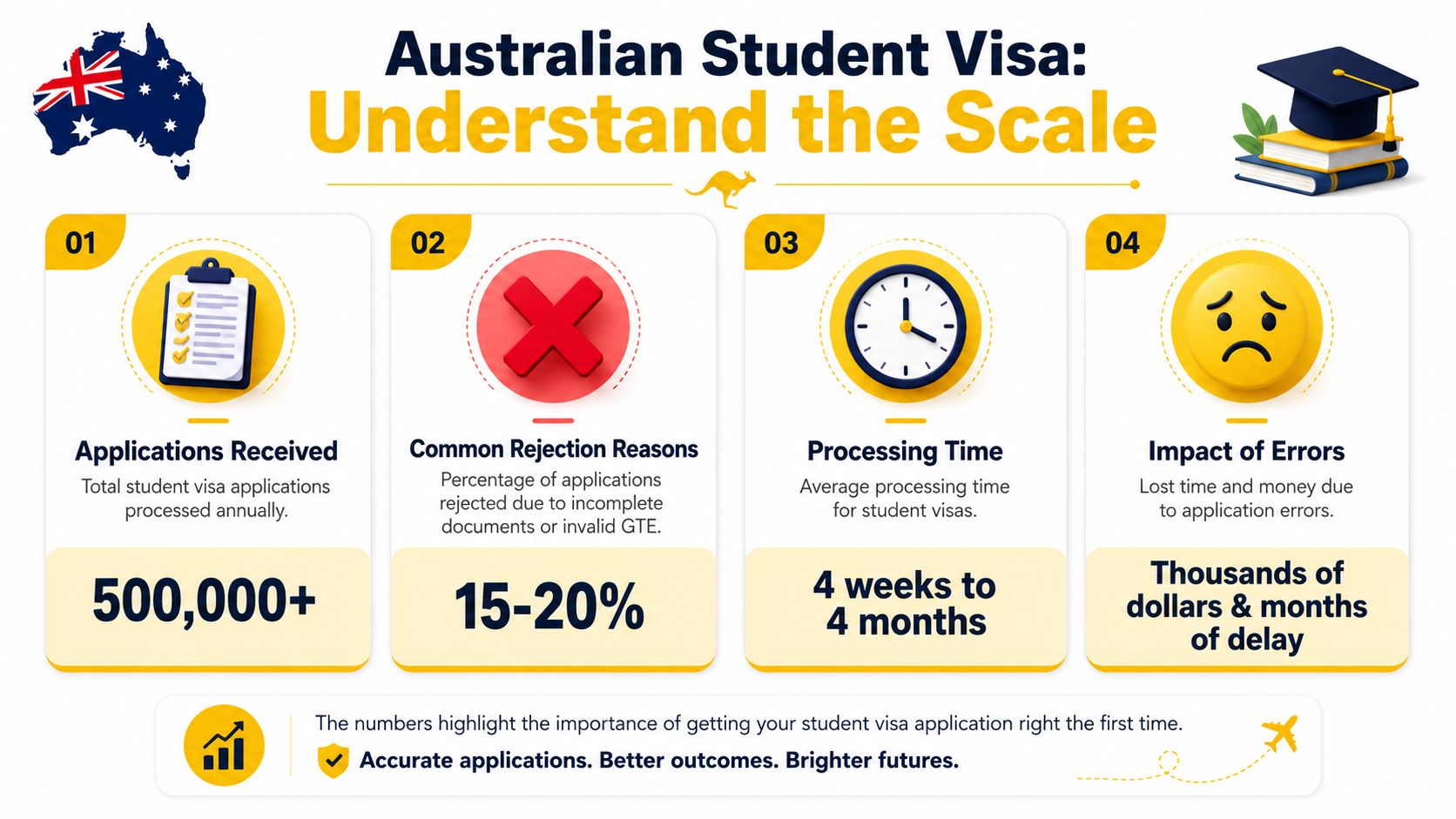
Table of Contents
- Introduction
- Eligibility criteria for Subclass 500
- Required documentation and timelines
- Step-by-step application process
- Visa conditions and post-arrival compliance
- Common pitfalls and processing tips
- Conclusion and Ace Aviation support
- FAQ
Introduction
Australia's student visa system now sits inside a bigger migration and education conversation than ever before. In August 2024, the federal government announced a cap of 270,000 new international students across higher education and vocational training providers from January 1 of the following year, a level officials said was about 7,000 below pre-pandemic levels and roughly 53,000 lower than the previous year. Separately, Department of Home Affairs data reported 151,000 student visas granted to primary offshore students from July through April of the 2025/26 fiscal year, which was 8% below the same period a year earlier, with projections for the full year pointing to about 193,000 offshore student visas. ABC's charted summary of the policy shift shows that Australia has moved from post-pandemic recovery toward tighter, managed growth in student intake.
For a student aiming at drone or aviation training, that policy context matters because the visa decision is no longer treated as a routine formality. The system expects clear study intent, sufficient funds, and evidence that the course choice fits the applicant's background and goals. A weak narrative can slow a file down even when the applicant has already chosen the right course.
Why aviation students need a cleaner narrative
Aviation training often sounds practical and career focused, which helps, but the visa file still has to explain why Australia, why this provider, and why this course now. A student who wants to start with a foundation drone program and later progress into commercial training needs to show a logical pathway, not a vague interest in “working in aviation”.
Practical rule: visa officers look for documentary consistency first, then use interviews only when something in the file needs clarification.
That matters for applicants who are building a study plan around flight training, CASA-aligned learning, or commercial drone work. The more the documents, finances, and course choice point in one direction, the easier it is to read the application as genuine.
What this guide helps readers check
The most common confusion points are usually simple. Does the applicant already have the CoE? Is the bank evidence strong enough? Does the English result match the course level? Does the GS narrative sound like a real study plan rather than a migration script?
For students comparing pathway options, the ACE READY course is a factual example of an entry-level drone training option covering drone fundamentals, aviation safety, CASA regulations, and preparation for advanced Remote Pilot Licence training. It's the kind of course that can fit into a study story when the applicant can explain prior learning, current goals, and how the course supports a structured aviation pathway. The broader course list is available at Ace Aviation's course page.
Eligibility criteria for Subclass 500
The Subclass 500 visa is built around a simple idea. The applicant has to show that the main purpose of coming to Australia is study, that the course is real, that the student can pay for living costs, and that the paperwork supports the story. The Genuine Student framework now replaces the older GTE test, so the file is judged more on credibility, evidence, and course logic than on rehearsed answers.
What the Genuine Student test means
The Genuine Student framework asks the applicant to explain current circumstances, including ties to family, community, employment, and economic circumstances, and to explain why they want to study in Australia with a particular provider, including their understanding of the course and of living in Australia. Home Affairs' Genuine Student requirement makes clear that this is not just a form field. It is a credibility test.
For drone and aviation applicants, that usually means the story should answer three questions cleanly:
- Why this course? The answer should connect to the applicant's current study level or work experience.
- Why this provider? The choice should fit the course content and training pathway.
- Why Australia? The answer should make sense in the context of the student's long-term plans, not just a short-term desire to work.
A student who wants to complete commercial drone training, for example, should not describe the course as a shortcut to migration. A better approach is to show how the course fits prior learning, industry exposure, and a realistic career step.
Course, English, and funding checks
For many courses, applicants must show an overall IELTS score of 6.0 under the Genuine Student framework guidance used in sector material. IDP's summary of the current visa rules also notes that the English benchmark has tightened in practice, which matters for courses with technical content and safety-critical communication.
Funding is equally important. For Subclass 500 visas, applicants must show at least AUD 29,710 in annual living costs, plus extra funds for dependants. Study Australia's visa application guidance also points out that dependants increase the funding requirement, with extra amounts needed for a partner and each child. That makes financial preparation a genuine gate, not a loose guideline.
For a student considering ACE SILVER, the factual course snapshot describes commercial Remote Pilot Licence training with classroom instruction, practical flight training, CASA compliant certification, Aeronautical Radio Operator Certificate, and aviation English proficiency for professional drone pilots. That kind of course profile can support a credible study narrative when the applicant can show a sensible progression from foundation learning to licensed commercial capability.
The strongest applications don't try to sound impressive. They sound consistent, specific, and believable.
Required documentation and timelines
The application becomes much easier when the documents are gathered in the right order. Some items can be prepared only after the offer is issued, while others, like financial records and English results, should already be under control before the CoE lands in the inbox.
Start with the course offer and CoE
The first practical step is securing the offer and then the Confirmation of Enrolment (CoE). For a student planning around drone or aviation training, the CoE is the document that turns a course interest into a visa-ready study plan. Without it, the visa file cannot move in a clean way.
That is why the timing of the CoE matters. If the applicant is still collecting bank statements, still deciding on OSHC, or still waiting for an English result, it's usually smarter to finish those pieces first. A rushed CoE can create pressure later if the visa submission date arrives before the supporting evidence is ready.
Build the evidence pack before lodging
The most useful documents are usually the most ordinary ones, but they need to be current and easy to read.
- Proof of enrolment or CoE: Confirms the course and provider.
- Valid passport: The identity document must be current and readable.
- English evidence: Test results should match the course expectations.
- Financial evidence: Bank records, loan letters, or scholarship documents should support the required living-cost amount.
- OSHC details: Overseas Student Health Cover needs to be in place before the visa is lodged.
- GS statement draft: The narrative should align with the applicant's circumstances and course plan.
Why timing affects the result
For Subclass 500 visas, the financial threshold of AUD 29,710 for living costs, plus dependants where relevant, should be treated as a real preparation milestone rather than a last-minute upload. Study Australia's guidance makes the requirement explicit, so the evidence has to be credible, traceable, and available when asked for.
A student starting with a foundation course such as ACE BRONZE, described in the catalogue snapshot as a foundation commercial drone course covering drone operations, flight safety, aviation theory, and practical skills, may need a slightly different documentary story from an applicant entering a higher commercial course. The documents still need the same standard of clarity, but the study pathway should match the student's level of preparation.
Step-by-step application process
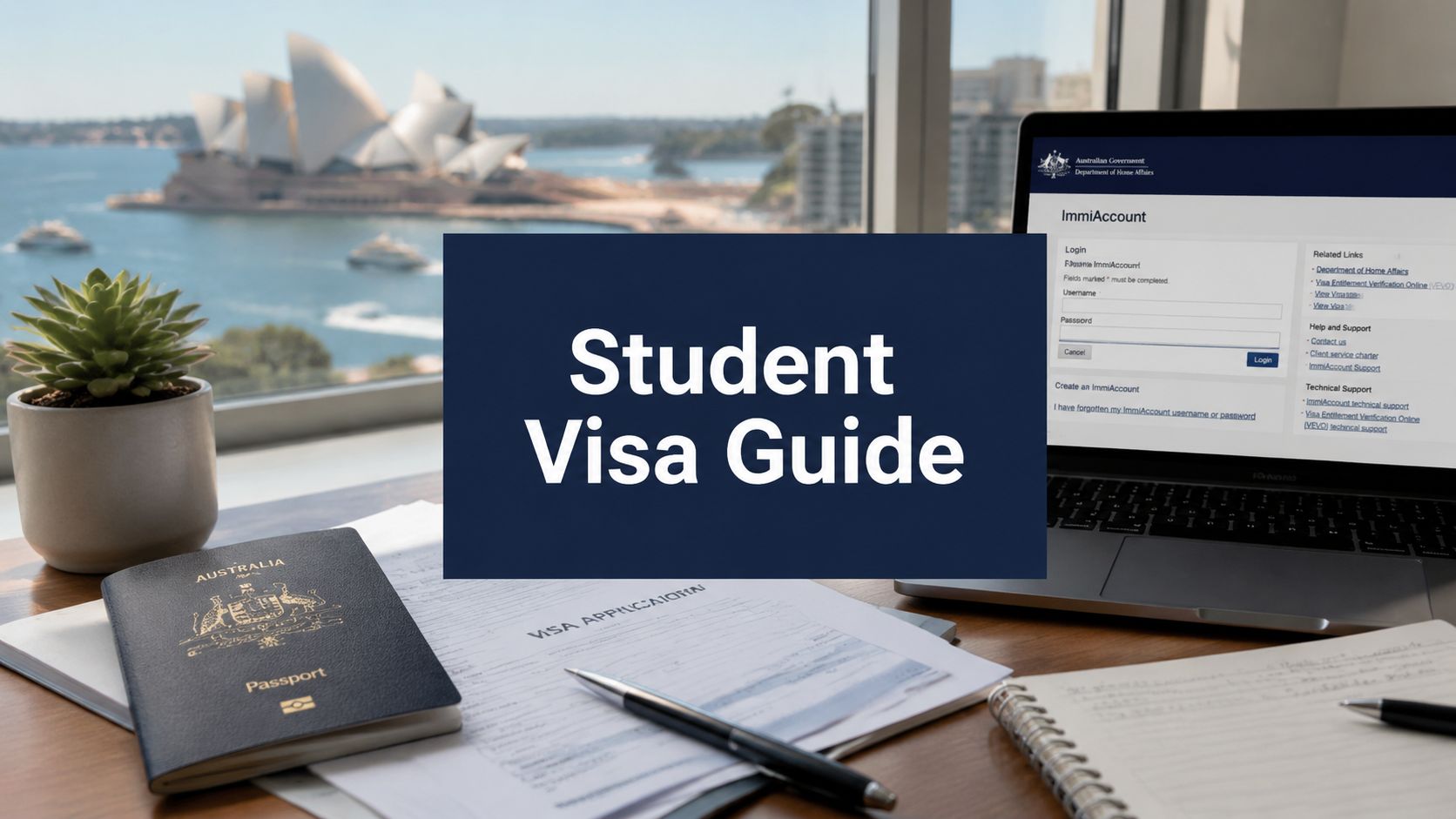
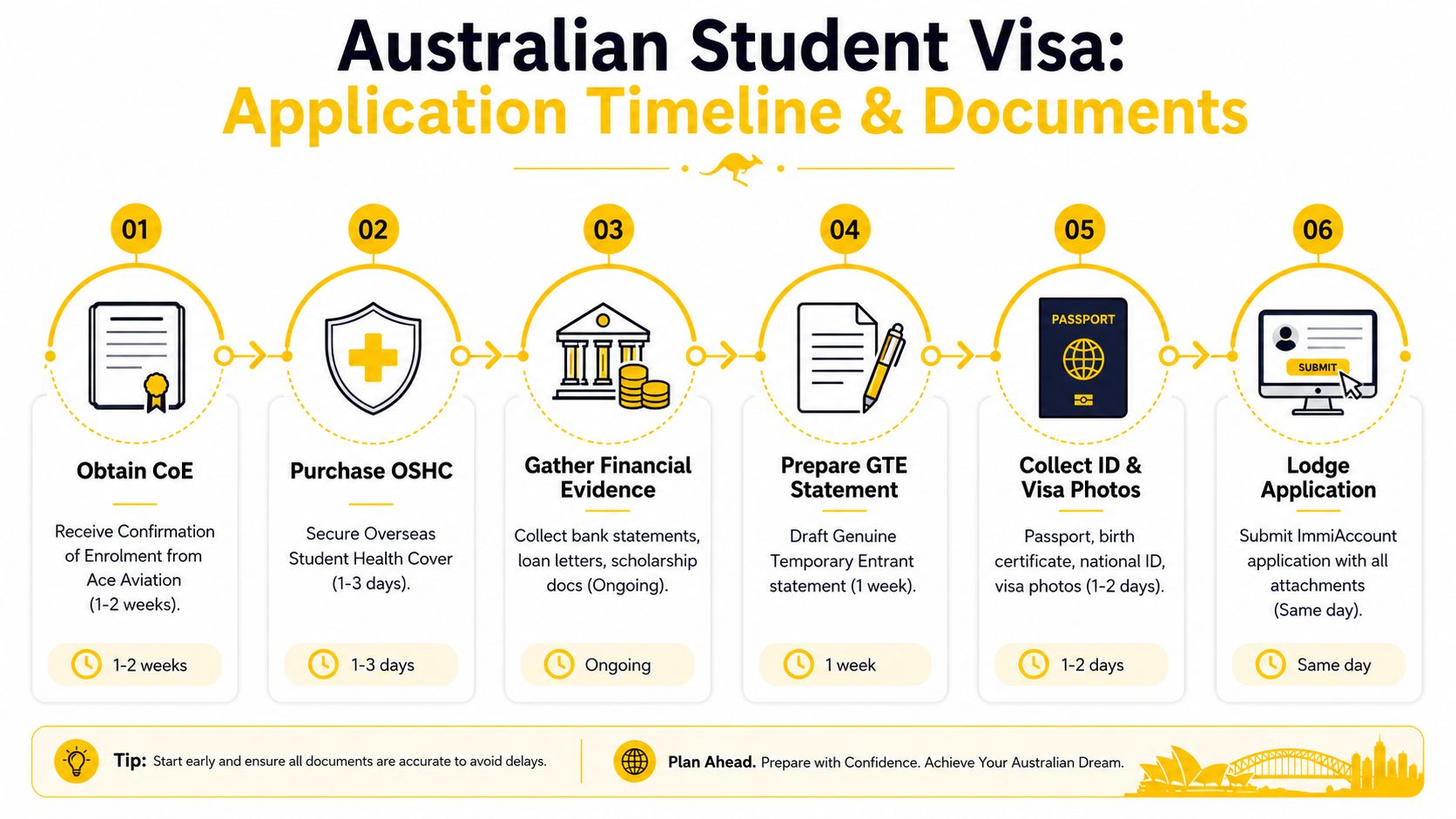
The Subclass 500 process is lodged through the Department of Home Affairs ImmiAccount system, where applicants select the visa subclass, upload documents, pay the fee, and submit the application. Study Melbourne's application guide sets out the same core sequence, which makes the online pathway the practical default for most applicants.
Create the file with the right structure
The first task is to open ImmiAccount and create the application under the student visa subclass 500. The file should be organised before anything is uploaded, because messy document naming creates avoidable confusion later. A clear naming pattern, such as passport, CoE, financial evidence, or OSHC, keeps the submission readable.
The best approach is to upload documents in the same order the case officer is likely to think through them. Identity first, then enrolment, then finances, then English, then health cover, then the GS statement.
Upload clean, readable evidence
File quality matters more than many applicants expect. Blurry scans, cropped pages, and mismatched filenames make the file harder to assess. If a document has multiple pages, it should be merged logically so the reviewer can move through it without guessing.
A student preparing for aviation training should also make sure the course documents line up with the intended study dates. If the CoE says one intake and the personal statement describes another, that mismatch can raise questions.
Pay, submit, and watch for messages
Once the uploads are complete, the fee is paid inside ImmiAccount and the file is submitted. After submission, the applicant should check the account regularly for any request for further information or status update. Missing a message is a common reason a file slows down.
For applicants who need direct clarification on course timing, documents, or intake sequencing, the contact page at Ace Aviation Aerospace Academy can help align the study paperwork before lodging.
Visa conditions and post-arrival compliance
A student who gets the visa still has to live by the conditions attached to it. That part is easy to overlook, especially when the focus has been on getting the grant decision, but post-arrival compliance is what protects the study pathway once the student is in Australia.
The rules that usually matter most
The Subclass 500 visa commonly carries expectations around study load, attendance, course progress, and maintaining health cover. If the student stops meeting those conditions, the visa can become a problem even after arrival.
A practical compliance routine usually looks like this:
- Keep enrolment active: Don't let the course lapse without checking the consequences.
- Maintain OSHC: Health cover should stay current for the full stay.
- Update address details: Any change of address should be recorded promptly.
- Stay engaged with study: Attendance and course progress are essential requirements.
- Check employment limits: Part-time work must stay within the conditions attached to the visa.
Balancing work and study without drifting off course
Students often try to support themselves with casual work while studying. That can be sensible, but the job can't take over the timetable or weaken course performance. For aviation and drone students, practical training blocks, assessments, and theory sessions need enough space to stay on track.
If the student is also planning a move from another city, a resource such as planning international relocation with AUSFF can help with the logistics side of the move, while the visa side still needs to be handled separately and carefully.
Local compliance habits that reduce stress
The easiest students to keep compliant are usually the ones who build a simple weekly habit. They save key documents, check cover dates, and keep their course calendar visible. Students training near Melbourne can also keep local logistics organised by checking the academy's Melbourne location and planning travel around classes rather than after them.
Compliance is easier when it's routine, not reactive.
Common pitfalls and processing tips
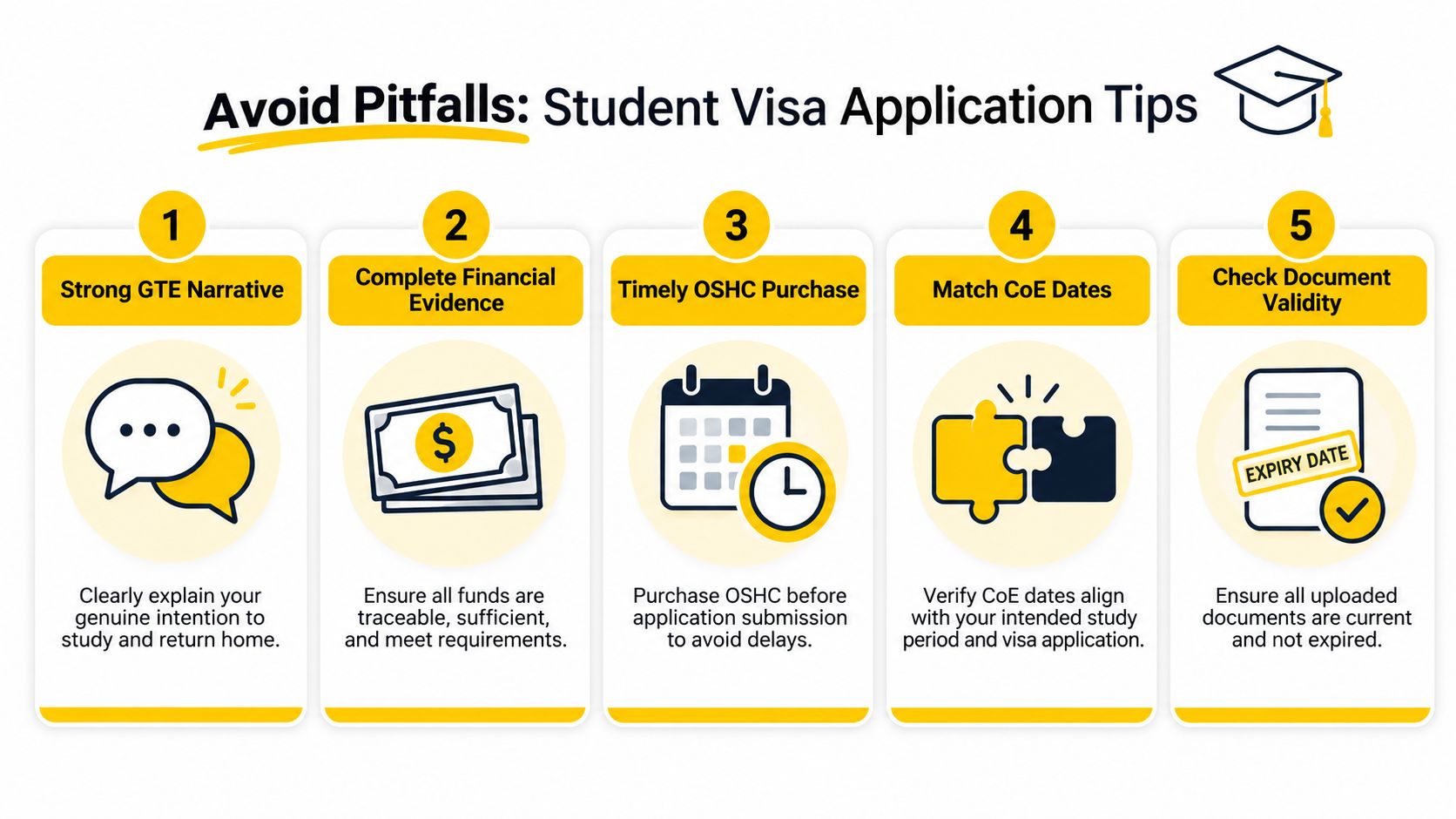
Most visa problems don't come from one dramatic mistake. They come from small mismatches that add up, such as a weak GS statement, a missing bank record, or a CoE that doesn't quite match the intended study period.
The most common errors
- Weak GS narrative: The story sounds generic, or it doesn't explain why the course fits the applicant's background.
- Incomplete financial evidence: Funds exist, but the documents don't show them clearly enough.
- Late OSHC purchase: Health cover is left until the last minute, then the file stalls.
- CoE date mismatch: The study dates in the letter and the application don't line up.
- Expired or unclear documents: Old scans, invalid passports, or unreadable attachments create avoidable doubt.
What to do instead
A good fix starts with documentary consistency. Visa officers prioritise whether the evidence fits together, and current guidance notes that interviews are used only to clarify inconsistencies, not as the main GS test. That point is reflected in independent Australian guidance, which is why the file itself has to carry the argument.
The safest processing habit is to lodge when the evidence is already complete, not when the applicant hopes to “fill gaps later”. That means the financial evidence should be traceable, the CoE should match the intended study plan, and the English result should already be in hand.
For applicants mapping out a practical drone pathway, the difference between a clean file and a messy one can be the difference between a straightforward review and a request for more information. That's especially true when the course plan moves from foundation study into commercial aviation training.
Conclusion and Ace Aviation support
The Subclass 500 visa works best when the study story is already coherent before the application is lodged. A credible course choice, a matching CoE, clear English evidence, realistic finances, and a Genuine Student statement that reflects the applicant's circumstances all point in the same direction. That is what gives an aviation or drone applicant the strongest chance of presenting as a genuine student rather than just a hopeful traveller.
For students building a pathway into Australia's drone and aviation sector, the next step is usually not “find a trick”. It is “make the evidence fit the plan”. That means choosing a course sequence that makes sense, timing the CoE only when the documents are ready, and keeping the narrative aligned from the first upload to the final submission.
Ace Aviation Aerospace Academy's support can sit inside that process in a practical way. Its course pathway includes RePL, AROC, and Certificate III in Aviation options, and its support functions can help with the study-side preparation that often sits behind a solid visa file. Readers comparing relocation details may also find useful context in tips for moving to Melbourne, especially when housing, arrival timing, and study start dates all need to line up.
Students who want a more structured course conversation can review why Ace Aviation and then map the course choice against the visa evidence before lodging. That preparation usually saves time later, and it helps the whole application read as one consistent plan.
FAQ
How long does a Subclass 500 decision usually take?
Processing varies, so no single timeframe should be treated as fixed. A complete, consistent application usually moves more smoothly than one with missing or conflicting documents.
Can a student change courses after lodging?
A change can affect the visa story if it alters the study plan that was used in the application. Any course change should be checked against the original Genuine Student narrative before it is made.
Do dependants make the financial requirement higher?
Yes, dependants increase the funding requirement. The visa guidance also adds extra amounts for a partner and each child, so the financial evidence needs to match the full family situation.
Is an interview always required?
No, interviews are not used for every applicant. Current guidance says they are mainly used to clarify inconsistencies in the documentary record.
Where can applicants find common application questions?
A useful starting point is the academy's FAQ page, especially for questions about study pathways and course support. The visa application itself should still be checked against Home Affairs guidance before submission.
A CTA for Ace Aviation Aerospace Academy.