Australia's drone workforce has already crossed the line most applicants still think they're chasing. CASA reported 33,388 Remote Pilot Licences in Australia as of 20 February 2024, compared with 30,843 conventional aircraft pilots, a lead of 2,545 or about 8.3% (CASA milestone report). That does not mean drone work is saturated, it means the licence alone is no longer a differentiator. The hiring question in drone pilot jobs Australia is simple, does the pilot understand regulated operations, data delivery, and sector workflow, or just how to pass a course.
Employers in mining, surveying, rail, utilities, and emergency services hire for outcomes, not paperwork. They want pilots who can fly legally, communicate over radio, process usable data, and operate inside enterprise compliance systems. A RePL opens the door, but it rarely gets the job on its own.
Table of Contents
- Why Most Drone Pilot Job Seekers Get Stuck Early
- The CASA Credential Stack You Need
- Sectors Hiring Drone Pilots and What They Pay
- Building a Portfolio and CV That Gets Shortlisted
- Where to Actually Find Drone Pilot Vacancies
- Insurance, Registration, and Compliance Realities
- Next Steps and Frequently Asked Questions
Why Most Drone Pilot Job Seekers Get Stuck Early
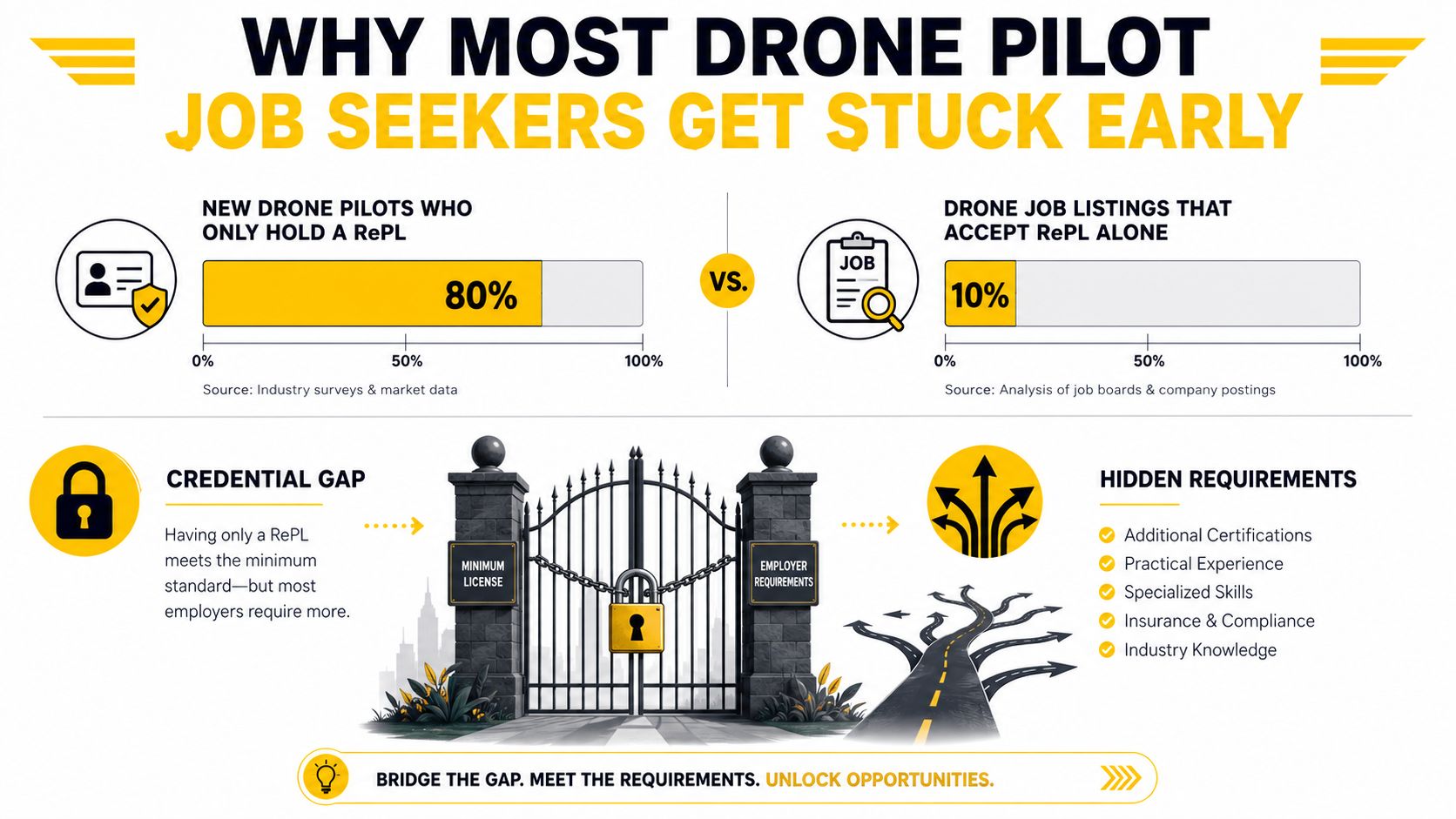
The pattern shows up fast. A new pilot gets the RePL, finishes the paperwork, uploads a certificate to a job board, and expects interviews to follow. That approach fails because the market treats the RePL as the entry point, while employers are screening for proof that you can work on site, follow a process, and hand over usable results.
Why the licence is only the starting point
The gap sits between holding a licence and being ready for commercial work. CASA's licensing growth shows the market has matured, which means employers can be selective about who they shortlist, and they do not need to settle for a pilot who only meets the minimum paperwork requirement (CASA milestone report). They want judgement, discipline, and the ability to produce output that fits a project brief.
That is why many applicants stall. They present themselves as “a drone pilot” when the job ad is looking for a field operator who can slot into a bigger system. Mining teams want site awareness and radio discipline. Surveying firms want clean data handling. Emergency-services crews want calm decision-making, clear communication, and the ability to work under pressure.
A licence alone does not show that.
What makes an employable pilot
Employers look for operators who can work a task from start to finish. That means flight planning, hazard checks, crew coordination, data capture, and basic post-flight handover. It also means knowing how to log the job properly. A practical example is a flight log that records the site name, aircraft used, weather, battery cycles, location notes, mission purpose, and any incident or deviation. In survey and inspection roles, they may also want output in a clean folder structure with labelled photos, stitched imagery, or CSV files that another team can open without chasing you for clarification.
That is the standard people miss. A CV that only proves licencing reads like a certificate. A CV that shows field readiness proves you can arrive on site, complete the work, and deliver data in a format the employer can use.
The strongest candidates stop talking like hobbyists and start writing like operators. They can explain how they planned the flight, what came back from the mission, what went wrong, and how they corrected it. That language fits aviation, infrastructure, surveying, and emergency-response teams far better than generic enthusiasm.
For beginners, a structured entry course such as ACE READY fits here because it covers drone fundamentals, aviation safety, CASA regulations, flight operations, and preparation for advanced RePL training. For readers who want to understand how operator authorisation fits into the broader pathway, see this guide to ReOC training and requirements.
The CASA Credential Stack You Need
Australia's drone jobs are built around a stack of credentials, not a single ticket. The order matters because each layer opens a different kind of work, and job ads often assume the candidate already understands that structure. The quickest way to stall your job search is to treat every qualification as interchangeable.
What ARN, RePL, AROC, and ReOC do
An Aviation Reference Number sits at the centre of the regulatory relationship with CASA, and the official ABLIS listing for remotely piloted aircraft operator accreditation directs applicants to CASA's Permissions Issue Team, including 13 67 73 and regservices@casa.gov.au (ABLIS listing). The RePL is the commercial flying licence needed in certain cases, especially for aircraft over 2 kg used for business operations. The AROC matters when the job requires radio work, and the ReOC becomes relevant when the operator is running a drone business rather than just flying under someone else's system.
CASA's student guide says RePL training generally takes about 5 days, usually split into 3 days of theory and 2 days of practical training, through a CASA-certified provider (CASA student drone guide). The same guide says the operator accreditation safety quiz needs 85% to pass, the certificate lasts 3 years, and there are more than 50 approved training providers across Australia (CASA student drone guide).
A serious candidate treats the credentials like a ladder. ARN first, licence second, radio capability third, then operational permissions and business structure where needed.
How to choose the right training path
The common mistake is buying the wrong qualification first. If the goal is to work for a company under its existing structure, the immediate focus should be licence, radio capability, and practical operating confidence. If the goal is to run a drone service, ReOC knowledge becomes part of the conversation fast, and you should read a proper ReOC guide at Ace Aviation before you spend money on the wrong course.
The training path should match the target role. An entry course such as ACE BRONZE makes sense for candidates who want a foundation in commercial drone operations, flight safety, aviation theory, and practical skills before moving into the licence stream. It gives you structure before you start stacking the higher-level paperwork and operating requirements that employers expect.
Sectors Hiring Drone Pilots and What They Pay
The strongest hiring demand sits in industries that already pay for better data, better safety, and fewer site visits. Mining, construction, surveying, utilities, rail, agriculture, emergency services, and media all use drones, but they don't buy the same skill set. A pilot who wants the wrong sector wastes months.
Which sector suits which pilot
Mining and resources want pilots who can work around site controls, track assets, and support inspection and mapping. Construction and infrastructure roles usually lean on progress capture, defect checks, and coordination with engineers. Agriculture tends to reward pilots who understand crop monitoring and spraying workflows, while utilities and rail value inspection, telemetry, and repeatable data capture.
Surveying and mapping is where technical depth pays off. The rail industry role description says operators need a RePL and may also need a Certificate IV, Diploma or Advanced Diploma in Surveying plus mapping and photogrammetry knowledge (Work in Rail). That is the clearest signal that some drone work sits inside a survey discipline, not a pure flying role.
Emergency services and media are different again. Emergency work values reliability, scene awareness, and radio discipline. Media production rewards visual judgement and flight control, but the work is generally less tied to regulated enterprise data workflows than mining or surveying.
Drone Pilot Roles by Sector in Australia
| Sector | Typical Work | Key Extra Skills |
|---|---|---|
| Mining and resources | Site inspection, mapping, asset checks | Operational discipline, data handling, site coordination |
| Construction and infrastructure | Progress capture, inspection, reporting | Photogrammetry, thermal imaging, client reporting |
| Agriculture | Crop monitoring, spraying support, land assessment | Precision application knowledge, field planning |
| Surveying and mapping | Measurement, terrain capture, model generation | Photogrammetry, mapping, survey qualifications |
| Utilities and rail | Line inspection, corridor monitoring, defect capture | Radio communication, telemetry, compliance awareness |
| Emergency services | Search support, hazard checks, scene overview | Calm judgement, radio discipline, night or incident operations where permitted |
| Media production | Aerial filming, property work, promotional footage | Camera control, visual composition, client communication |
The candidate who wants a serious long-term path should be chasing sector-specific skill, not generic flying practice. That includes LiDAR, photogrammetry, thermal work, and familiarity with EVLOS or BVLOS when job ads ask for it. A better drone job usually comes from better output, not just better stick time.
For a wider view of the Australian drone ecosystem, the internal overview at DroneWork Australia fits alongside this section.
Building a Portfolio and CV That Gets Shortlisted
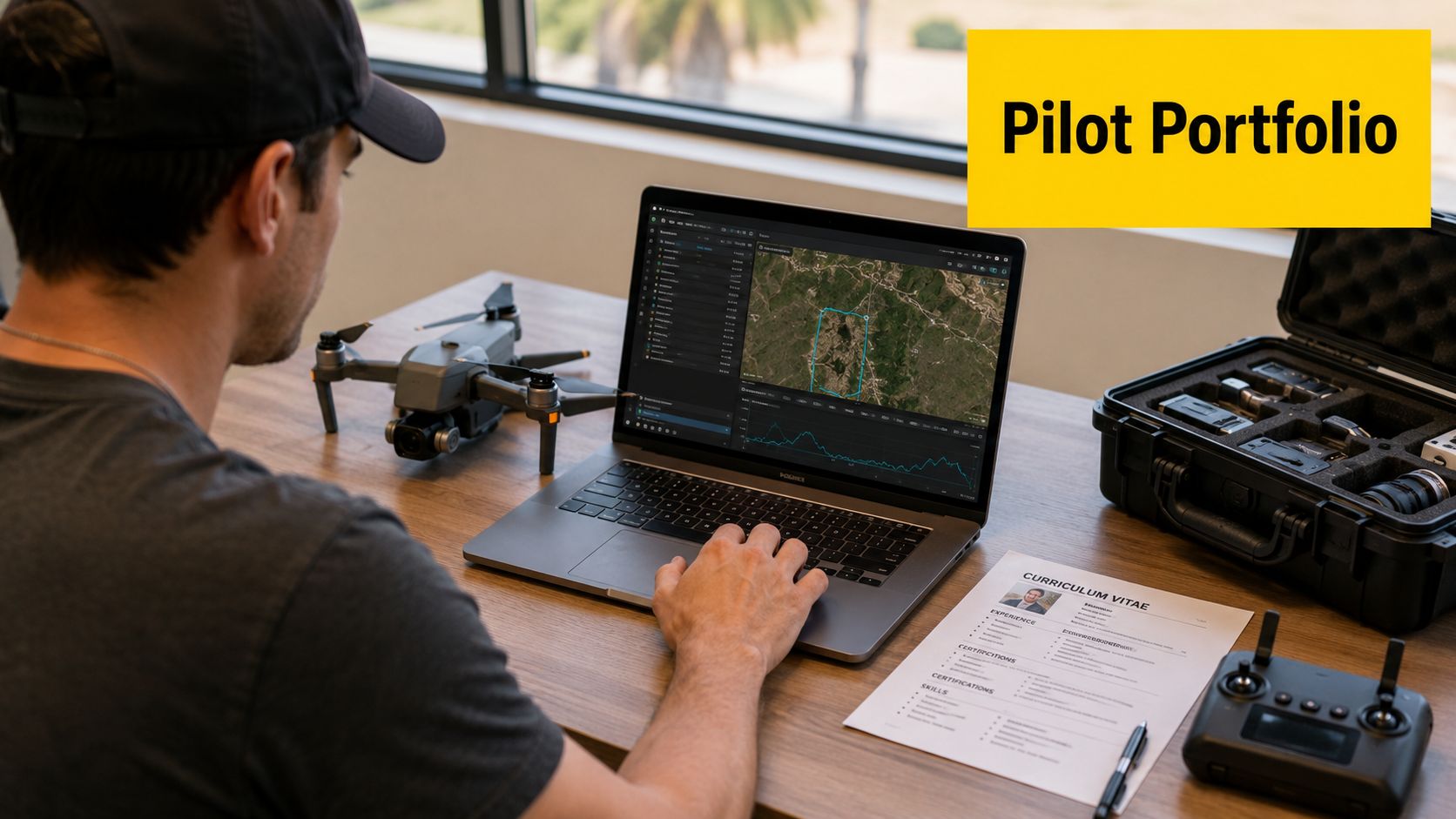
Include three project files: one flight log, one annotated image set, and one incident-response summary. That gives hiring managers a fast read on how you fly, how you record work, and how you handle problems when a site changes or a mission goes sideways.
What belongs in the portfolio
A strong portfolio should be practical, not decorative. It needs annotated flight logs, before-and-after imagery, sample inspection outputs, and one or two concise project summaries that show the problem, the operating environment, and the result. If the work involved AROC use, complex site access, or a specific category of operation, say so plainly.
Keep the evidence varied. One school project, one paddock inspection, and one structured site assessment tell a better story than thirty generic selfies with a drone. Employers want proof of judgement, not enthusiasm.
Interview test: when asked about a flight that went wrong, the answer should describe the risk, the decision made, the correction, and what changed afterwards. That is what professionals do.
Use supporting material to show range, not clutter. A short incident note, a sample deliverable, or a cleanly labelled data export tells the reviewer more than a pile of screenshots. If you also create content for other platforms, revid.ai's guide to AI YouTube content shows how structured examples can support a wider portfolio without pretending every outcome came from flight work.
How to write the CV so it reads like an operator
The CV must be concrete. It should list logged flight time if it's relevant to the role, the environments operated in, the software used for processing, and any sector-specific deliverables. A generic summary like “passionate drone pilot seeking opportunities” gets ignored.
Put the operational facts where they can be scanned quickly. A skills section should name real tools, real operating conditions, and real outputs, not padded claims. The skills section examples for job seekers guide from StoryCV is useful here because it shows the kind of structure recruiters can read fast.
For candidates reviewing their own presentation, the Ace Aviation reviews page is a sensible place to check how others have described training outcomes and support in plain language.
Where to Actually Find Drone Pilot Vacancies
The best vacancies don't all appear in one place. General job boards catch the obvious openings, but a lot of drone work is posted discreetly through company sites, recruiter searches, or industry networks. The candidate who waits for a single portal usually sees the market too late.
The channels that actually produce leads
Start with Indeed and Seek, because they surface broad commercial listings and make alerting easy. Search terms should be specific, not just “drone pilot”. Use combinations like UAV operator, remote pilot, survey drone, inspection drone, and RePL.
Specialist platforms and LinkedIn bring in more targeted roles. On LinkedIn, recruiter searches often reveal company hiring before the public ad appears. Company career pages matter too, especially in mining, utilities, surveying, and rail, where teams often hire operational staff before they advertise widely.
Government tender portals and industry noticeboards are worth checking for contract work, but they need tighter reading. The candidate should ask whether the role is in-house under a ReOC or being outsourced. That difference changes the level of autonomy, compliance responsibility, and expected experience.
Search habits that save time
Set alerts, then refine them. A vague alert for “drone” creates noise. A sharper alert for “survey drone operator” or “RePL inspection” surfaces better listings and reduces time wasted scrolling.
Networking still matters. Some companies use drones every week but never post a visible drone role. The pilot who speaks to site supervisors, survey teams, or operations managers often gets referred before the vacancy hits a public board.
If social profiles are messy, that can hurt. A quick clean-up using the Digital Footprint Check online presence tool helps candidates make sure their public presence doesn't undermine a serious application.
For live openings and internal pathways, the Ace Aviation jobs page is the obvious place to monitor alongside external listings.
Insurance, Registration, and Compliance Realities
Professional drone work is a compliance business before it is a flying business. The pilot who ignores registration thresholds, insurance, or the right contact routes to CASA is not job-ready, even if the flying looks tidy. Employers spot that straight away.
The basics employers expect
Commercial drones over 500 g need registration under current CASA rules, and that weight threshold matters because compliance starts with the aircraft, not just the pilot. For the current rule details, use the CASA guidance on remotely piloted aircraft registration and keep the Drone careers guide in context rather than as the final word. The practical message is simple. Weight, registration, and operating category all shape what kind of work you can legally take on.
Insurance is another divider between hobby flying and paid work. Many employers expect public liability and professional indemnity cover to already be understood, even when they arrange broader business insurance themselves. A candidate who can explain insurance and operating limits clearly sounds prepared fast.
Professionalism shows up in the small stuff. Registration, documentation, and the ability to explain compliance without sounding confused.
Excluded-category jobs need the same discipline. If a role sits outside the standard commercial pathway, read the rules carefully and check the excluded category drone operations guide before you accept the work. That is the point where a sloppy assumption turns into a compliance problem.
Why compliance literacy belongs in the interview
When an employer asks about risk, list the job controls, not buzzwords. Explain how you assessed the site, what could affect safety, and what changed in the plan when conditions shifted. That answer matters in aviation, utilities, and emergency work.
Candidates also need to know where to go when a regulatory question comes up. CASA contact pathways are part of the job, not an afterthought. Pilots who understand that before they arrive on site make the business look safer to clients and managers.
The broader message is straightforward. A professional drone operator keeps current on renewals, training, insurance, and software because the job does not stop at take-off. That discipline is what separates a casual flyer from someone an employer can trust. For a practical guide to presenting that level of skill on paper, use these skills section examples for job seekers.
Next Steps and Frequently Asked Questions
The quickest way in is simple. Pick a CASA-aligned training pathway, then build the rest of your profile around the job you want. Licence preparation comes first, radio capability comes next where the role needs it, and your portfolio has to show real operating judgement. A basic CV will not carry you.
The smart next move is to match your skills to the sector you are targeting, then close the gaps that employers care about. If you want surveying work, you need mapping and photogrammetry capability. If you want mining or utilities, you need clean compliance habits, clear reporting, and the ability to work to a site plan without improvising. Your skills section should reflect that level of discipline, and the skills section examples for job seekers resource is a useful benchmark for writing that sounds capable, specific, and grounded.
The training mix changes with the role, but the sequence does not. Get the licence, add the communication and compliance layer, then prove you can produce useful field output.
FAQ
Can an overseas drone pilot work in Australia?
Yes, but only if the pilot meets CASA requirements for the specific work being done. Overseas experience helps, yet it does not automatically transfer into Australian authorisation. CASA may recognise overseas aviation experience in some cases, but the employer still needs proof that you can operate to local rules, use the right procedures, and complete the job to Australian standards.
Is part-time drone work realistic while studying?
Yes, but only for students who keep building evidence, not just stick to flying for fun. Part-time roles usually start in media, assistant work, inspections, or labouring jobs where the drone task is one part of a broader site role. Expect employers to ask for reliability, travel flexibility, and enough logged practice to show that you can fly safely without supervision. If you are only available in short blocks, say so clearly and show where your hours were accumulated.
Do employers hire pilots who only have a RePL?
Some do, but many do not stop there. AROC, logged hours, survey basics, ReOC familiarity, and sector-specific data skills often separate the people who get interviewed from the people who get ignored. If the ad mentions mapping, inspection reporting, or site compliance, a lone RePL is usually not enough.
How should a beginner start?
Start with structured foundation training, then move into RePL preparation and practical portfolio building. A beginner course such as ACE READY fits that route well. Use it to build the habits employers notice, aircraft handling, radio discipline, and an understanding of what safe, repeatable work looks like on site.
What gets a new candidate noticed fastest?
Clear proof of safe operations, usable data output, and straightforward communication. Hiring managers notice candidates who can describe what they flew, what they delivered, and how they handled changing conditions. The best applications make it easy for an employer to see that the pilot can turn up, comply, and produce work without hand-holding.