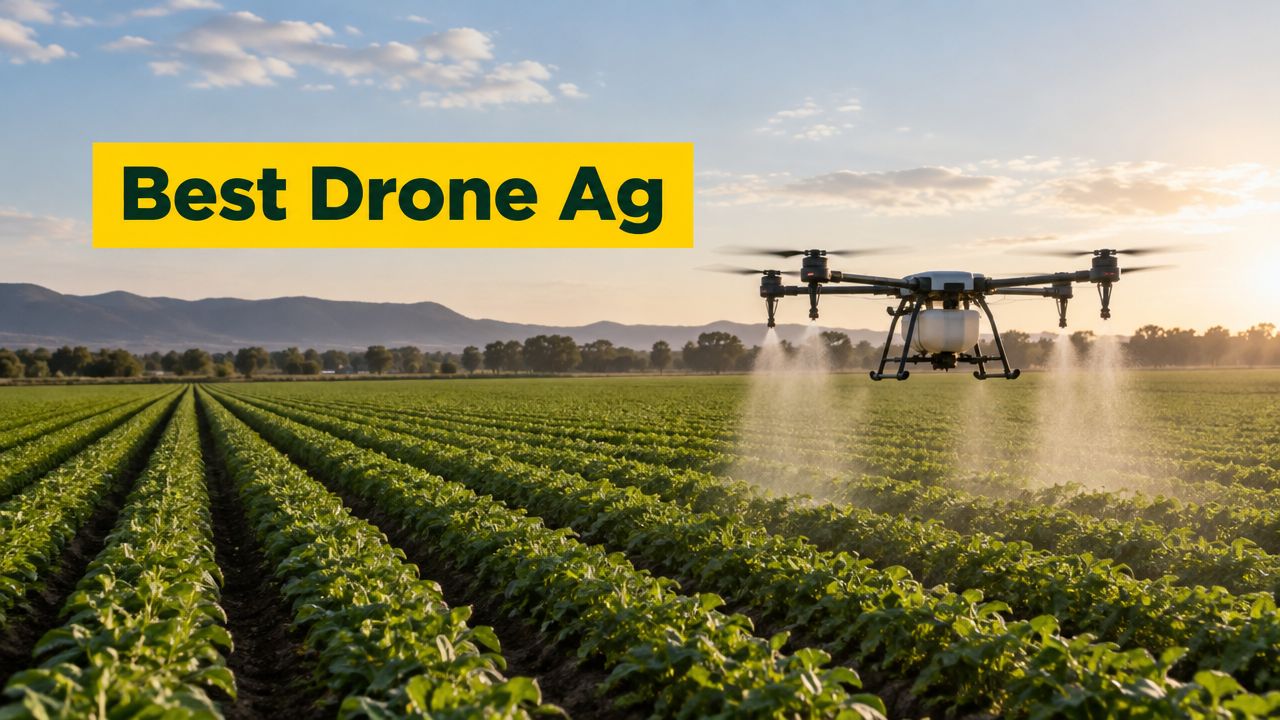
An Australian farm is weighing drone spraying, crop mapping or livestock monitoring. The aircraft brochure looks straightforward, but the decision sits elsewhere. The operator needs the right flight skills, a workable aircraft workflow, accurate records and a clear understanding of CASA and state or territory responsibilities. A spraying drone, mapping platform and enterprise inspection aircraft can all demand different levels of preparation.
This comparison evaluates five training pathways for agricultural drone work, rather than ranking aircraft. It separates entry-level preparation, commercial licensing, aeronautical radio communications, advanced operations and enterprise management. Each pathway is considered against the agricultural role it supports, practical flight readiness, CASA-related considerations, operational documentation, likely price-band position without unsupported figures, strengths, limitations and best-fit users. Before flying or applying agricultural products, operators must confirm current CASA requirements and relevant state or territory chemical-use obligations.
Table of Contents
- 1. ACE READY
- 2. ACE BRONZE
- 3. ACE SILVER
- 4. ACE GOLD
- 5. ACE PLATINUM
- ACE Agricultural Drone Tier Comparison
- Final Thoughts
- Frequently Asked Questions
- What training is needed for agricultural drone work in Australia?
- Does spraying one drone on a farm require CASA authorisation?
- Is AROC useful for agricultural drone pilots?
- Is ReOC needed for every agricultural drone operation?
- Does BVLOS reform make rural drone work automatically easier?
- Which training path suits an agricultural business?
1. ACE READY
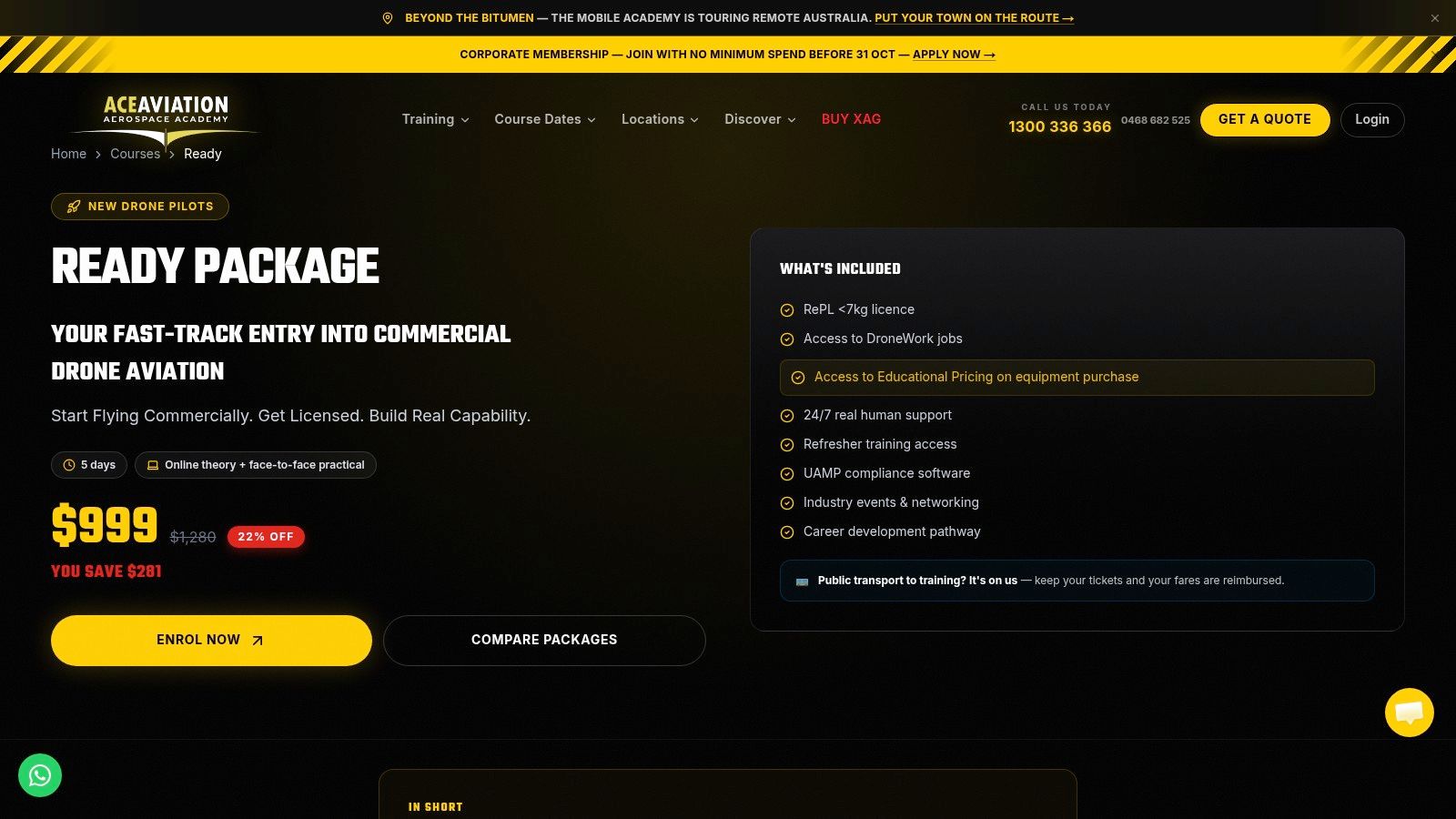
A new farm operator often starts with a narrow task, such as checking a dam, inspecting a crop edge or learning whether drone mapping can support an agronomy workflow. That operator may not yet need commercial licensing, but still needs aviation fundamentals. ACE READY is suited to that entry point, with beginner preparation covering drone fundamentals, aviation safety, CASA regulations and flight operations, while preparing students for more advanced Remote Pilot Licence training in Australia.
The value of this pathway lies in preventing equipment-first decisions. Before a business compares spray systems, cameras or automated flight functions, a beginner needs to understand airspace awareness, pre-flight checks, weather considerations, battery management, emergency responses and safe separation from people, stock, buildings and obstacles. Those foundations apply whether the aircraft is used for a visual crop check or a more demanding agricultural mission.
What this pathway develops
ACE READY is best understood as a capability-building first step, not a substitute for every qualification needed for paid agricultural services. A student can use it to build confidence with core flight operations and to identify the gap between recreational familiarity and professional aviation practice.
That distinction matters on farms. A pilot who can control a small aircraft in open space still needs additional preparation before managing a spraying job, operating near obstacles, collecting consistent mapping data or working under an enterprise safety system. CASA's remote pilot guidance says pilots should obtain the licence for the type and model of drone they intend to fly, operate within standard operating conditions and not accept payment for services without the appropriate pathway. The drone licence guidance helps frame the next step for students moving towards professional work.
Best fit and limitations
This pathway fits:
- New farm operators: People testing whether drone work belongs in an existing farming role.
- Future commercial pilots: Students who need aviation vocabulary and basic operational discipline before RePL training.
- Agribusiness staff: Employees beginning to assess mapping, monitoring or inspection workflows.
- Small internal programs: Teams starting with low-complexity, visual tasks on their own property.
It isn't the strongest standalone choice for a professional spraying contractor or a business that needs a documented commercial operating system. Those users need a deeper licensing and compliance pathway, especially where the work involves payment, specialised aircraft, chemical application or more complex operating conditions.
Practical rule: The first training decision should match the intended job, not the aircraft already sitting in a supplier catalogue.
For agricultural businesses, ACE READY offers a sensible foundation when the immediate need is understanding safe drone operations and deciding whether further training is justified. It supports informed progression, but advanced agricultural work still depends on the operator's aircraft, role, licence requirements and operating environment.
2. ACE BRONZE
A farm employee may already understand basic drone controls but lack the aviation theory and practical structure needed for commercial work. ACE BRONZE addresses that transition with foundation commercial drone education covering operations, flight safety, aviation theory and practical skills. It suits students beginning the journey towards becoming licensed drone pilots in Australia.
The distinction from an entry-level course is operational intent. A commercial foundation pathway asks the student to think beyond “can the aircraft fly?” and towards “can the mission be planned, conducted and recorded safely?” That shift is important for agriculture, where a mapping flight may need repeatable capture standards, while a livestock inspection may require careful planning around terrain, animals, vehicles, structures and changing weather.
Turning flying into a repeatable operation
A useful agricultural workflow begins before the aircraft leaves the ground. The operator identifies the job, checks the operating area, reviews airspace and weather, confirms equipment readiness, briefs anyone nearby and records the outcome. Training at this stage should help students connect theory with those practical decisions.
The course is also relevant to businesses that are not yet ready to commit to a full internal drone department. A farm manager can use the foundation to assess whether an employee is suited to further licensing, while a government or corporate team can identify the difference between casual equipment use and an aviation-managed activity. Current regulatory information should be checked carefully, including the Australian drone laws update, because rules and guidance can change.
A capable agricultural pilot doesn't just produce an image or complete a flight. The pilot can explain why the operation was safe, what limitations applied and what should change next time.
Best fit and limitations
ACE BRONZE is particularly suitable for:
- Aspiring commercial pilots: Students preparing for a formal licensed pathway.
- Farm staff with basic experience: Operators who need stronger aviation theory and structured practical skills.
- Agricultural businesses assessing capability: Employers deciding whether in-house drone work can be managed responsibly.
- Mapping and monitoring starters: Teams building consistent habits before investing in advanced systems.
Its limitation is scope. A foundation commercial course isn't automatically a complete answer for specialised spraying, aeronautical radio operations, BVLOS activity or enterprise governance. Chemical application also brings state and territory obligations. In Victoria, for example, remotely piloted aircraft spraying must occur within specific daylight, product-label and wind conditions, and the relevant aircraft setup must meet state requirements described by Victoria's agricultural chemical spraying rules.
That makes ACE BRONZE a strong middle ground for students who need more than beginner awareness but aren't yet selecting an advanced commercial or enterprise pathway. It develops the judgement needed to decide whether the next investment should be RePL training, radio certification or operational consulting.
3. ACE SILVER
Agricultural drone work becomes materially different once a pilot is responsible for professional services. A mapping client expects dependable data, a spraying operation requires disciplined application control and an employer needs evidence that the pilot can operate within the applicable rules. ACE SILVER provides a commercial Remote Pilot Licence pathway with classroom instruction, practical flight training, CASA-compliant certification, AROC and aviation English proficiency for professional drone pilots.
Why RePL capability matters
CASA's guidance says pilots should get the licence for the type and model of drone they intend to fly and remain within standard operating conditions. That makes aircraft selection and training inseparable. A pilot trained on one type of operation shouldn't assume the same competence automatically transfers to a different aircraft, payload, control system or mission profile.
For agricultural businesses, RePL training supports more than basic control. It develops structured decision-making, flight planning, operational awareness and practical responses to abnormal situations. Those skills become especially important around low-altitude obstacles, changing wind, uneven terrain, livestock, power infrastructure and chemical-handling areas.
The AROC component adds another layer. A pilot working in an aviation environment may need to communicate clearly and understand radio procedures, particularly where the operation interacts with controlled or designated airspace requirements. Aviation English supports that communication by focusing on clear, standardised expression rather than casual conversation.
Mapping, spraying and professional records
A RePL pathway is relevant to a farm that wants to bring drone work in-house, a contractor offering agricultural services or a consultancy collecting geospatial information. It doesn't remove the need for a job-specific risk assessment. A pilot still needs to consider the aircraft's capabilities, payload, operating area, weather, people and property, product instructions and relevant state controls.
The BVLOS training pathway is also relevant when a business is considering operations beyond visual line of sight, although BVLOS work cannot be treated as an automatic extension of ordinary flight privileges. It involves its own approval, risk and operational considerations.
This pathway best suits:
- Professional agricultural pilots: Operators seeking RePL capability for paid work.
- Farm businesses with recurring drone missions: Teams that need a consistent licensed operator.
- Mapping providers: Businesses where data quality depends on disciplined capture and repeatability.
- Operators working near aviation environments: Pilots who may benefit from AROC and aviation communication skills.
ACE SILVER doesn't replace ReOC support, chemical-use compliance or advanced operational approvals where those are required. It is the most direct choice when the central need is a professional pilot who can fly safely, communicate appropriately and operate within the licensed framework.
4. ACE GOLD
A commercial drone business needs more than a pilot certificate. It needs an operating model that connects aircraft, personnel, procedures, records, safety responsibilities and customer commitments. ACE GOLD is aimed at that advanced commercial level, combining RePL, ReOC support, practical flight training, aviation compliance and business readiness for commercial drone operations.
From pilot to operator
The difference between a licensed pilot and a commercial operator becomes clear when several people, aircraft or job types are involved. A business may need standard operating procedures for mapping, spraying, inspections, battery handling, maintenance, incident reporting and data management. It may also need to explain who can approve a mission, who supervises the pilot and what happens when conditions change.
ReOC consulting is relevant to organisations that need help developing the systems behind commercial operations. The certificate itself isn't a shortcut around sound practice. A business still needs procedures that reflect the aircraft, worksite, crew capability and risk profile.
Agriculture makes that systems approach particularly important. CASA's agricultural flying safety profile recorded 445 occurrences between 2014 and 2023, including 71 accidents and 7 fatal accidents, while spreading and spraying accounted for 92 accidents and a serious-incident rate of 201.4 per million hours in the profile's reporting. These figures concern agricultural flying broadly, not a claim that drones produce the same risk profile. They do, however, reinforce the need to examine how risk changes when a task moves from legacy aerial operations to low-altitude remotely piloted work. The relevant CASA agricultural flying safety performance data supports a cautious, evidence-based approach.
Best fit
ACE GOLD fits:
- Commercial drone operators: Businesses developing formal aviation systems.
- Agricultural contractors: Providers managing recurring spraying, spreading, mapping or monitoring jobs.
- Companies adding multiple pilots: Employers that need consistent procedures and supervision.
- Organisations seeking ReOC support: Teams moving from individual capability to business-level compliance.
The pathway may be more than a single farm needs for occasional internal mapping. It becomes more appropriate when the operation accepts customer work, employs pilots, deploys specialised aircraft or needs a defensible compliance structure. Agricultural drone guidance was formally elevated nationally in 2022, and CASA clarified in 2024 that spraying with one drone on the operator's own land doesn't require CASA authorisations. The CASA agriculture guidance explains why the operating context matters.
The right question isn't whether an enterprise can buy a capable drone. It's whether the enterprise can manage the complete aviation activity around it.
5. ACE PLATINUM
An enterprise agricultural drone programme may involve pilots, supervisors, safety managers, procurement staff, data specialists and senior decision-makers. That structure demands a broader capability than individual flight training. ACE PLATINUM brings together RePL, AROC, Aviation English, Express ReOC, Certificate III in Aviation, advanced operations training and preparation to operate and manage a commercial drone business.
Capability for complex deployment
This pathway suits organisations that want to build internal aviation capability rather than outsource every mission. A large agribusiness may need staff who can coordinate pilots, maintain operating documents, evaluate new aircraft, manage contractors and make defensible decisions about risk. Government and corporate teams can face similar requirements when drone work spans multiple sites, departments or operational objectives.
The Certificate III in Aviation component gives the pathway a broader vocational context. It can help connect practical drone work with aviation management, workplace systems and professional development. The relevance depends on the student's role and the organisation's intended use, so the training outcome should be matched to actual responsibilities rather than selected solely because it is the most all-encompassing option.
The economic case for this level also needs discipline. A Meat & Livestock Australia project identified 63 on-farm drone adoptions nationwide and reported producer feedback about time savings, reduced labour reliance, improved safety and animal welfare, with many enterprises achieving return on investment within the first year. The MLA drone adoption project shows why capability should be assessed through workflow and operating model, not aircraft specifications alone.
Advanced operations and enterprise planning
CASA introduced a 12-month BVLOS trial on 19 September 2025 for eligible ReOC holders operating drones up to 25 kg, using broader area authorisations instead of small site-by-site applications. That creates potential for new workflows, but it doesn't make BVLOS automatically suitable or profitable for every agricultural business. Eligibility, approval conditions, risk controls, aircraft suitability and staffing still matter.
ACE PLATINUM is best suited to:
- Enterprise agriculture: Organisations managing repeatable drone programmes across sites.
- Government and corporate teams: Groups needing radio, aviation English and structured operational capability.
- Commercial operators pursuing advanced work: Businesses considering BVLOS or broader ReOC-supported services.
- Future aviation managers: Professionals expected to oversee pilots, systems and compliance.
It may be excessive for a beginner who only wants to learn basic flight. For an organisation planning spraying, mapping, livestock monitoring and enterprise deployment, however, its strength is integration. It treats the drone programme as an aviation operation, not an isolated technology purchase.
ACE Agricultural Drone Tier Comparison
| Program | 🔄 Implementation complexity | ⚡ Resource requirements & duration | ⭐ Expected outcomes / quality | 📊 Results / impact | 💡 Ideal use cases / tips |
|---|---|---|---|---|---|
| ACE READY | Low, basic theory and supervised practice | Low, minimal equipment, short course | ⭐ Basic foundation in drone fundamentals and CASA rules | 📊 Intro-level awareness; not a commercial licence | 💡 Beginners/hobbyists preparing for RePL |
| ACE BRONZE | Low–Medium, foundational commercial skills | Medium, practical drills, classroom theory, moderate time | ⭐ Solid practical & theoretical grounding for commercial pathway | 📊 Competence for entry-level commercial roles and further training | 💡 Early-career pilots starting licensing journey |
| ACE SILVER | Medium, structured RePL training with assessments | Medium–High, flight hours, instructor-led classroom, exam prep | ⭐ RePL & AROC-aligned certification; aviation English proficiency | 📊 Eligible for commercial operations under RePL; improved employability | 💡 Candidates seeking RePL and professional pilot work |
| ACE GOLD | High, advanced operations plus ReOC support | High, extended practical training, compliance & business modules | ⭐ Advanced commercial capability; RePL with ReOC preparation | 📊 Business-ready pilots able to manage commercial operations | 💡 Ideal for pilots moving into operator/manager roles |
| ACE PLATINUM | Very High, comprehensive enterprise-level program | Very High, full certification stack, assessments, longer duration | ⭐ Enterprise-grade readiness: RePL, AROC, Cert III, Express ReOC | 📊 Qualified to operate and manage commercial drone businesses | 💡 Suited for companies, enterprise operators, and leaders |
Final Thoughts
The best drone agriculture pathway in Australia depends on the work being performed and the responsibility held by the operator. A farm employee checking stock or learning basic mapping may need entry-level preparation. A student moving towards paid work needs a commercial foundation and, where applicable, RePL. A professional pilot working around aviation environments may also need AROC and aviation English.
Spraying creates a separate decision layer. In Victoria, the product label or permit must allow aerial or spot spraying, application must occur within the required daylight and wind conditions, and the remotely piloted aircraft must meet aircraft-specific mechanics. Those rules include a gross weight below 150 kg, a prohibition on autonomous operation, correctly positioned and equally spaced nozzles, and active pump and nozzle shut-off systems, as set out in Victoria's aerial spraying requirements. CASA also states that one drone spraying on the operator's own land requires no CASA authorisation, but that does not remove state chemical rules or the need for safe operation.
The scale of agricultural drone use is no longer purely experimental. A major Australian economic assessment estimated about 89,400 agricultural businesses in 2018 to 2019, and modelled agricultural drone uptake at roughly 8,300 units under a low-adoption scenario and 23,900 units under a high-adoption scenario. Under its medium scenario, agriculture, forestry and fishing could capture about $3,488 million in drone-related benefits between 2020 and 2040. The Australian economic assessment supports the view that training decisions have industry-scale relevance.
Market growth also makes rushed procurement risky. One independent report estimated Australia's agricultural-drone market at USD 69.3 million in 2025, with a projection of USD 578.4 million by 2034 at a 25.79% CAGR. The Australian agriculture drone market projection indicates expanding demand, but growth doesn't determine the right aircraft or training pathway for an individual operation.
The strongest choice is the pathway that matches the job, aircraft, pilot capability, approval route and documentation burden. Equipment matters, but safe and profitable deployment begins with people who understand the operation around the aircraft.
Frequently Asked Questions
What training is needed for agricultural drone work in Australia?
The answer depends on the operation. Entry-level training may suit basic internal preparation, while paid commercial work generally requires a suitable RePL pathway and operation within applicable CASA conditions. Spraying and advanced operations can add state chemical rules, ReOC requirements or specific approvals.
Does spraying one drone on a farm require CASA authorisation?
CASA states that spraying with one drone on the operator's own land doesn't require CASA authorisations. State or territory chemical-use rules still apply, and operators must confirm current requirements before applying products.
Is AROC useful for agricultural drone pilots?
AROC can be relevant when a pilot operates in an aviation environment requiring aeronautical radio communication. It is especially useful for professional, enterprise and government teams whose work may interact with aviation procedures.
Is ReOC needed for every agricultural drone operation?
Not every operation follows the same approval pathway. The requirement depends on the nature of the work, the operator, the aircraft and the conditions of operation. Businesses should obtain current CASA advice or qualified compliance support before commercial deployment.
Does BVLOS reform make rural drone work automatically easier?
No. CASA's BVLOS trial applies to eligible ReOC holders and drones up to 25 kg, with conditions and approval requirements still applying. Each business must assess whether the workflow is safe, compliant and economically viable.
Which training path suits an agricultural business?
A small internal programme may start with entry-level or foundation training. A commercial contractor is more likely to need RePL and operational compliance support, while a multi-site enterprise may benefit from advanced training, ReOC capability and aviation qualifications.
Ace Aviation Aerospace Academy offers Australian training for RePL, AROC, aviation qualifications, advanced operations and ReOC support relevant to agricultural drone programmes. Businesses and aspiring pilots can visit Ace Aviation Aerospace Academy to match training with spraying, mapping, monitoring or enterprise deployment goals.