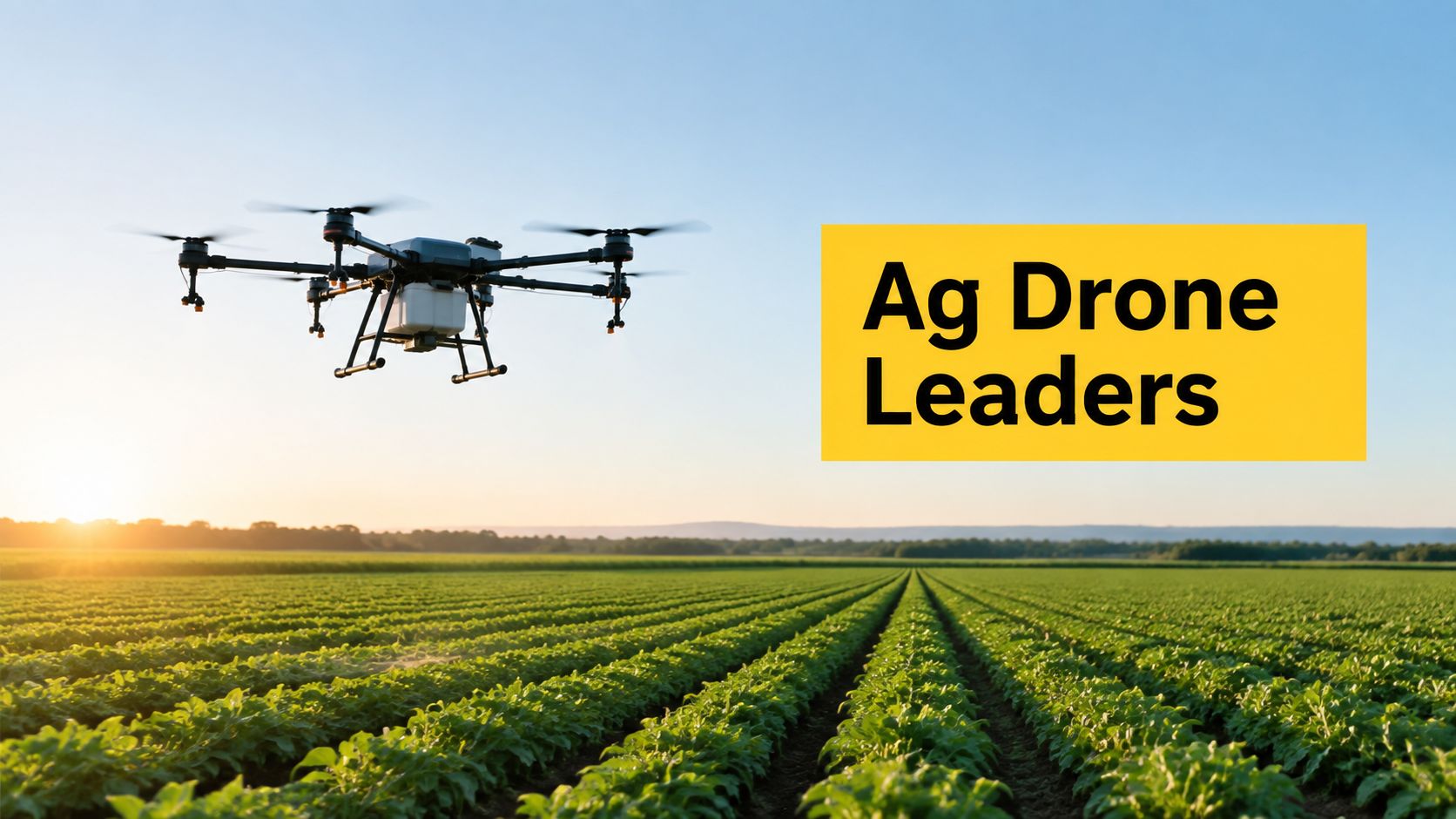
A farm operator deciding whether to outsource aerial spraying, purchase an agricultural drone, or develop an internal team faces more than an equipment choice. The decision also covers the agricultural task, operating region, service model, pilot qualifications, CASA responsibilities, implementation effort, and the evidence a prospective provider can produce before engagement. Those factors matter as Australian agriculture moves from early drone adoption towards scale. The national agriculture-drones market was estimated at USD 69.3 million in 2025 and is forecast to reach USD 578.4 million by 2034, with a projected compound annual growth rate of 25.79% over 2026 to 2034, according to IMARC's Australian agriculture drones market analysis.
The options below need careful classification. Ace Aviation Aerospace Academy's supplied resources are aviation training and capability-building pathways, not agricultural drone service companies. External agricultural equipment suppliers and service providers still require independent verification. A farm business assessing agricultural technology can also review adjacent operational support, such as a 24/7 lawn care receptionist, where customer enquiries and field-service scheduling form part of the wider delivery model.
Table of Contents
- 1. ACE READY
- 2. ACE BRONZE
- 3. ACE SILVER
- 4. ACE GOLD
- 5. ACE PLATINUM
- Drone Agriculture ACE Tier Comparison
- Turn the Shortlist Into a Safe Partnership
1. ACE READY
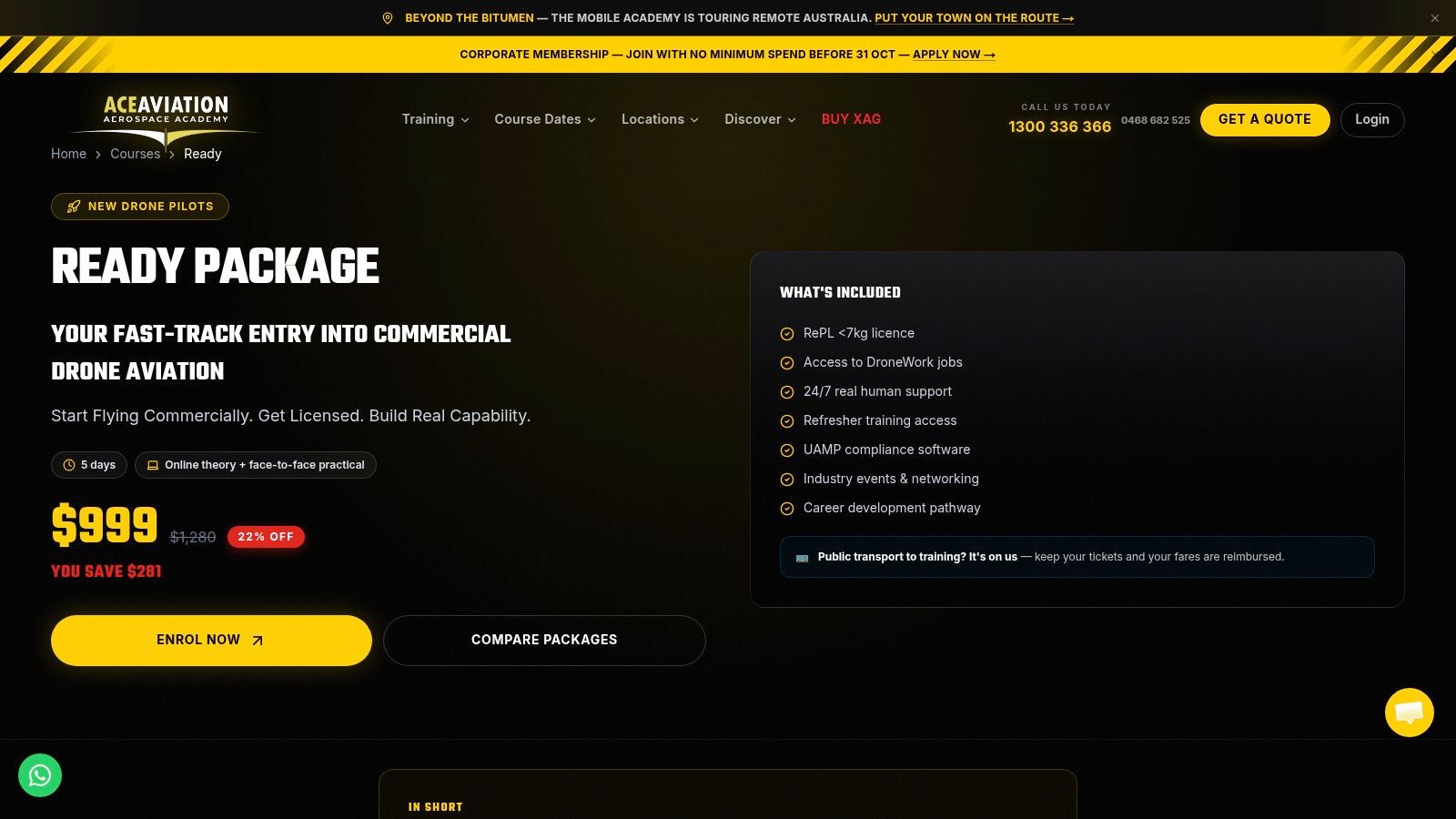
ACE READY is the most appropriate starting point for a person who has not yet built a working understanding of drone operations. Its catalogue description identifies an entry-level course for beginners covering drone fundamentals, aviation safety, CASA regulations and flight operations, with preparation for advanced Remote Pilot Licence training in Australia.
That positioning matters in agriculture because a spraying, spreading or mapping service begins with safe aircraft handling and regulatory awareness. A prospective agricultural operator still needs to separate introductory knowledge from the authorisations and operating systems required for paid commercial work. CASA states that anyone can apply for a Remote Pilot Licence, but a RePL is required when flying for an individual or business that holds a Remotely Piloted Aircraft Operator's Certificate, or when operating an RPA weighing more than 25 kg but less than 150 kg over the operator's own land. The relevant CASA RePL requirements should be checked against the proposed aircraft and business structure.
Where the pathway fits
ACE READY suits several early decisions:
- Capability discovery: A farm owner can establish whether internal piloting is realistic before committing to an agricultural aircraft or a more advanced qualification.
- Safety foundations: Beginners can address flight operations and aviation safety before learning the additional demands of field logistics.
- Progression planning: The course is described as preparation for advanced RePL training, so it can form part of a staged capability plan rather than being treated as a complete commercial authorisation.
It isn't a substitute for agricultural application competence. Spraying and spreading also involve aircraft selection, battery and payload management, site assessment, chemical handling responsibilities, weather decisions, records and repeat-mission control. Those matters require confirmation from the relevant training provider, aircraft manufacturer, chemical authority and operational adviser.
Practical rule: Treat an entry-level course as a screening and foundation step. Confirm the exact qualification, practical component and next-stage pathway before presenting it to clients as commercial readiness.
Evidence to request
A farm business should ask how the learning outcomes map to the intended operation. The useful questions concern the drone category, the type of flying covered, the transition into RePL training, and which compliance responsibilities remain with the operator. The answers should be documented rather than inferred from the course name.
This option is strongest when a business is building its first internal operator or assessing whether an employee can progress. It's less suitable as a standalone answer for an established service company that already needs commercial pilots, operating documentation or ReOC-related support. For the publisher's broader training rationale, the provider's aviation training approach can be reviewed separately, while agriculture-specific equipment and service claims should still be verified with each external supplier.
2. ACE BRONZE
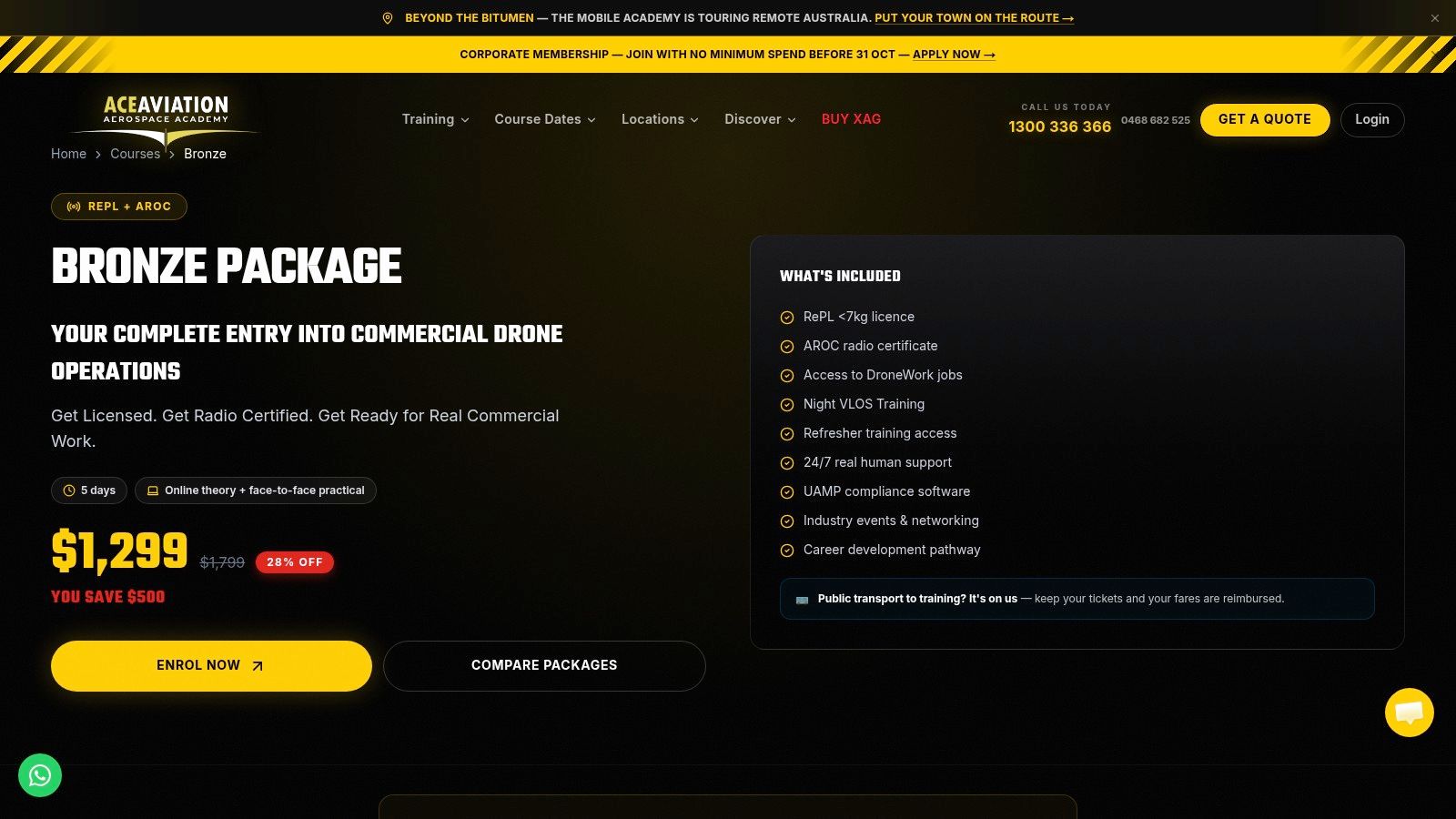
ACE BRONZE occupies a foundation position between introductory familiarisation and advanced professional preparation. Its catalogue describes a commercial drone course covering drone operations, flight safety, aviation theory and practical skills for students beginning the path towards becoming licensed drone pilots in Australia.
For an agricultural business, that scope may help an employee understand the difference between recreational flying and structured work for a farm or service provider. Private property does not remove every operating obligation. CASA states that agricultural spraying on an operator's own land does not require authorisation for the spraying operation itself, while the operator must still hold the correct RePL for the drone type, register the drone before its first flight, follow standard operating conditions, keep required records and avoid accepting payment for the service. The CASA guidance on agricultural drone spraying should be checked before work is planned.
What the course can and cannot establish
The catalogue supports a cautious assessment of three possible uses. A farm may use the course to develop an internal operator, a small agricultural business may use it to assess whether internal capability is practical, and a future service pilot may use it as an initial foundation before pursuing RePL and any required operating approvals.
Those applications depend on confirmation from the provider. The course description does not establish that a graduate can conduct spraying, spreading, mapping or livestock operations without further training and compliance work. It also does not establish aircraft-specific competence. Agricultural aircraft can differ in flight behaviour, payload systems, control software and maintenance requirements, so a buyer should ask which equipment is used in practical training and how assessment scope is defined.
The operational question should come before procurement. Identify the task first, such as crop mapping or application work, then match the aircraft category, pilot qualification and operating conditions. This sequence shows whether ACE BRONZE is an appropriate foundation or whether the operation needs a more advanced pathway.
The XAG P150 Max agriculture discussion illustrates why equipment-specific analysis matters. It does not prove that a particular aircraft suits every Australian property. Terrain, access, weather, payload, maintenance support and regional logistics require confirmation from the relevant provider or operator.
ACE BRONZE is best classified as an operator capability option, not a turnkey agricultural drone company. It may support internal capability building, while a buyer seeking outsourced work must separately verify the contractor's licences, aircraft registration, operating documentation, insurance and ability to deliver repeat missions in the relevant region.
3. ACE SILVER
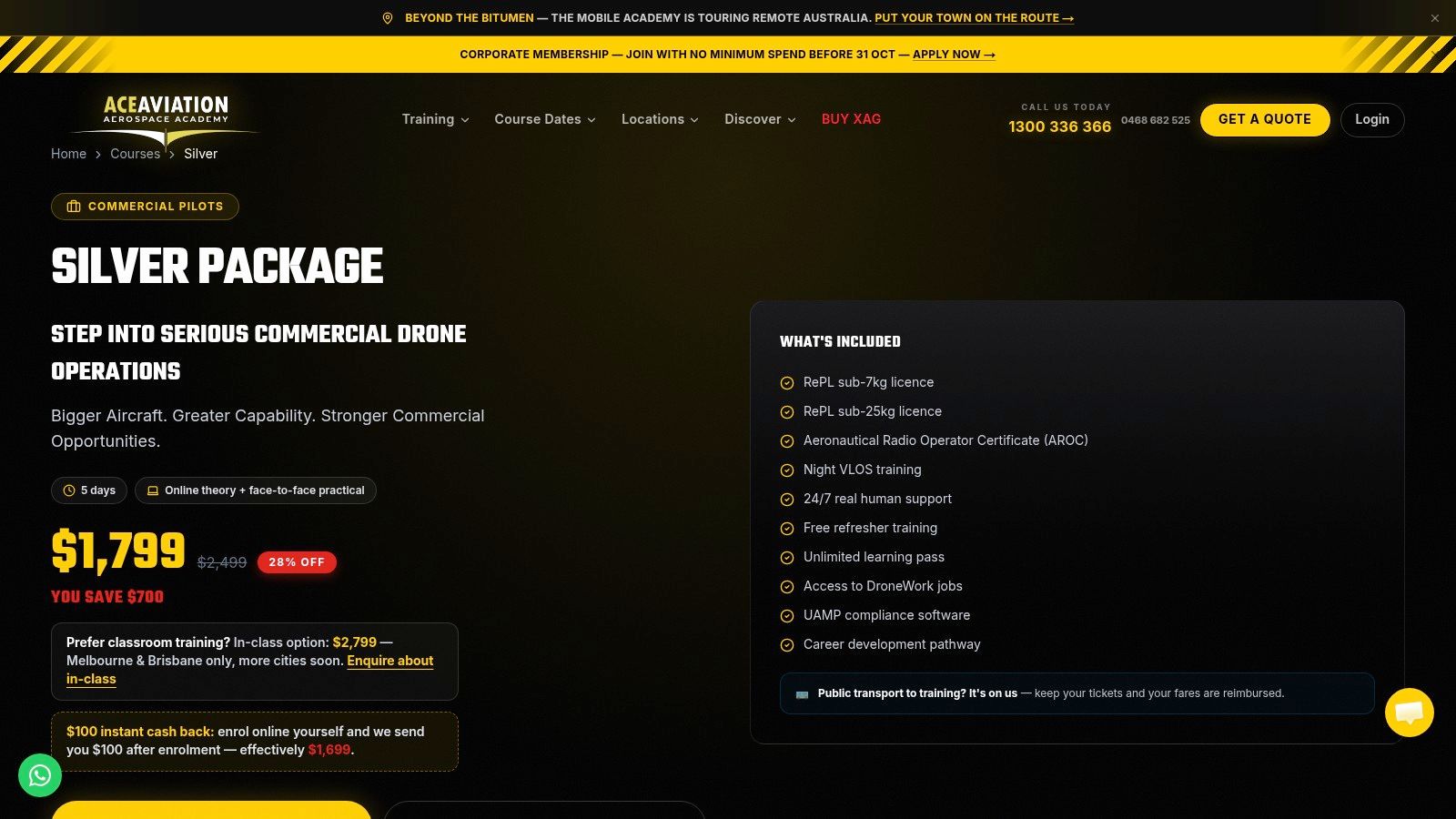
ACE SILVER is the clearest fit among the listed pathways for an individual seeking professional drone pilot preparation. Its catalogue snapshot identifies commercial RePL training with classroom instruction, practical flight training, CASA-compliant certification, an Aeronautical Radio Operator Certificate, and aviation English proficiency for professional drone pilots.
That combination addresses several parts of an agricultural operation, but it doesn't remove the need for an operating plan. RePL relevance depends on the aircraft and the work being performed. CASA's licensing guidance makes the responsibility specific to the operating context, including flights for a ReOC holder and certain heavier RPAs over the operator's own land. A farm business should therefore match the proposed aircraft type and mission profile to the training outcome rather than selecting a course solely because it contains the term “commercial”.
Why radio capability can matter
Agricultural work often occurs in regional environments where pilots still need disciplined aviation communication and situational awareness. The inclusion of AROC in the catalogue description is relevant for teams that may need aeronautical radio capability, although the exact training scope, assessment and operational applicability should be confirmed with the provider.
Aviation English is also presented as part of the professional preparation. That can be relevant to teams that need consistent communication across pilots, supervisors and other aviation participants. It doesn't, by itself, demonstrate competence in spraying, spreading, mapping or farm-data interpretation.
Operational distinction: A pilot qualification establishes an important part of operator capability. It doesn't automatically prove that a proposed contractor can manage an agricultural mission from site assessment through records and repeat delivery.
Assessing the commercial fit
ACE SILVER is most relevant where a business has already decided that an internal pilot or employee needs a RePL-oriented pathway. It may also suit an aspiring pilot who wants a more complete aviation foundation before approaching agricultural employers or service operators.
The business should request clear information about:
- Aircraft scope: Which aircraft types and practical operations form part of the training.
- Qualification outcome: What certification is issued and what remains to be completed.
- Agricultural transferability: Whether separate application, mapping or payload training is needed.
- Operational responsibility: Which compliance tasks remain with the employer or operator.
The XAG Australia resource can be considered alongside the training pathway when evaluating equipment ecosystems, but it doesn't replace independent checks of aircraft suitability, regional support or legal operating conditions. ACE SILVER is a capability-building option for professional pilots, not evidence that an external agricultural service provider has the people, aircraft and systems to deliver a complete farm programme.
4. ACE GOLD
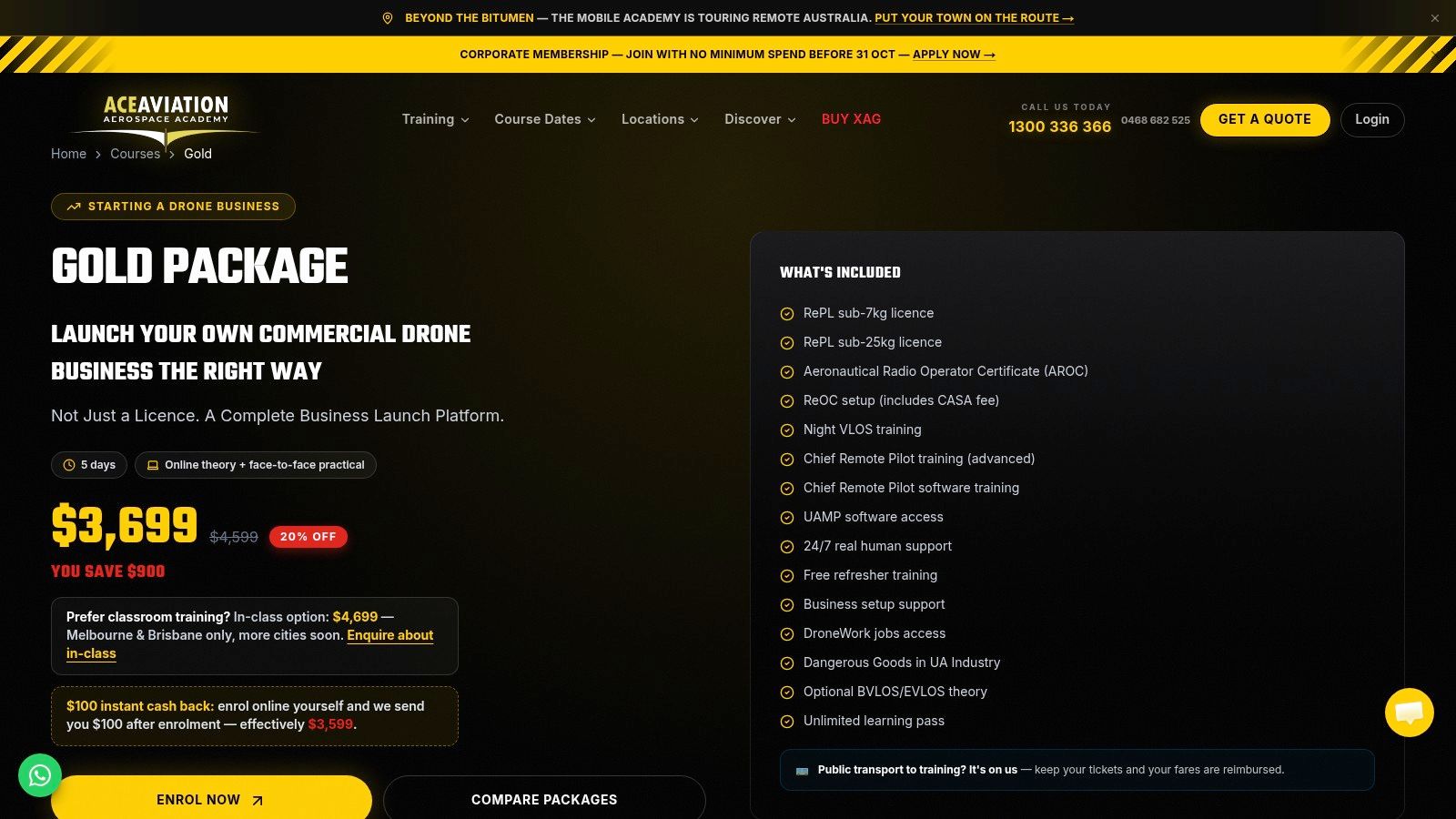
ACE GOLD is presented as an advanced commercial drone pilot programme. The supplied catalogue description lists RePL, ReOC support, practical flight training, aviation compliance and business readiness for commercial drone operations. That combination is relevant to an agricultural business considering an external service model rather than assigning one employee to fly an aircraft.
The operating distinction matters. CASA requires a RePL in specified operating circumstances, while the ReOC is held by the operator or business responsible for commercial operations under that certificate. A course or consulting pathway may assist with the process, but the buyer must establish which documentation, assessment, application work and continuing obligations are included.
Fit for a commercial agricultural operation
ACE GOLD may suit a business planning to provide paid agricultural services to multiple farms. That model requires a defined operating structure covering more than pilot competence:
- Commercial responsibility: The business needs to establish who holds the ReOC, controls the operation and accepts responsibility for each mission.
- Operational ownership: Scheduling, safety systems, aircraft maintenance, records, client communication and repeat delivery need named owners.
- Business preparation: The catalogue's business-readiness component is more relevant to a service provider than to an employee operating only within an internal farm programme.
“ReOC support” needs a written scope before enrolment. Ask whether it includes preparation, documentation, application coordination, operations manuals or assistance after approval. The course label alone does not demonstrate that CASA has granted an approval.
Test the service model before committing
Use a representative farm scenario to assess operational fit. Ask the provider or proposed operator to explain how a mapping mission followed by an application task would be planned and delivered, including site access, aircraft choice, weather checks, records, data handover, maintenance and a repeat visit. This test exposes whether the proposed partnership covers the complete agricultural operation or only the training component.
The publisher's Australia drone laws discussion provides background, while current CASA requirements remain the controlling reference. Product use, land access, environmental controls and workplace safety may create obligations outside the aviation framework.
For GOLD specifically, ask the academy to document which ReOC application tasks are included and which remain the applicant's responsibility before enrolment. The same scope should identify regional delivery arrangements and any handover required between the academy, the operator and the farm business.
5. ACE PLATINUM
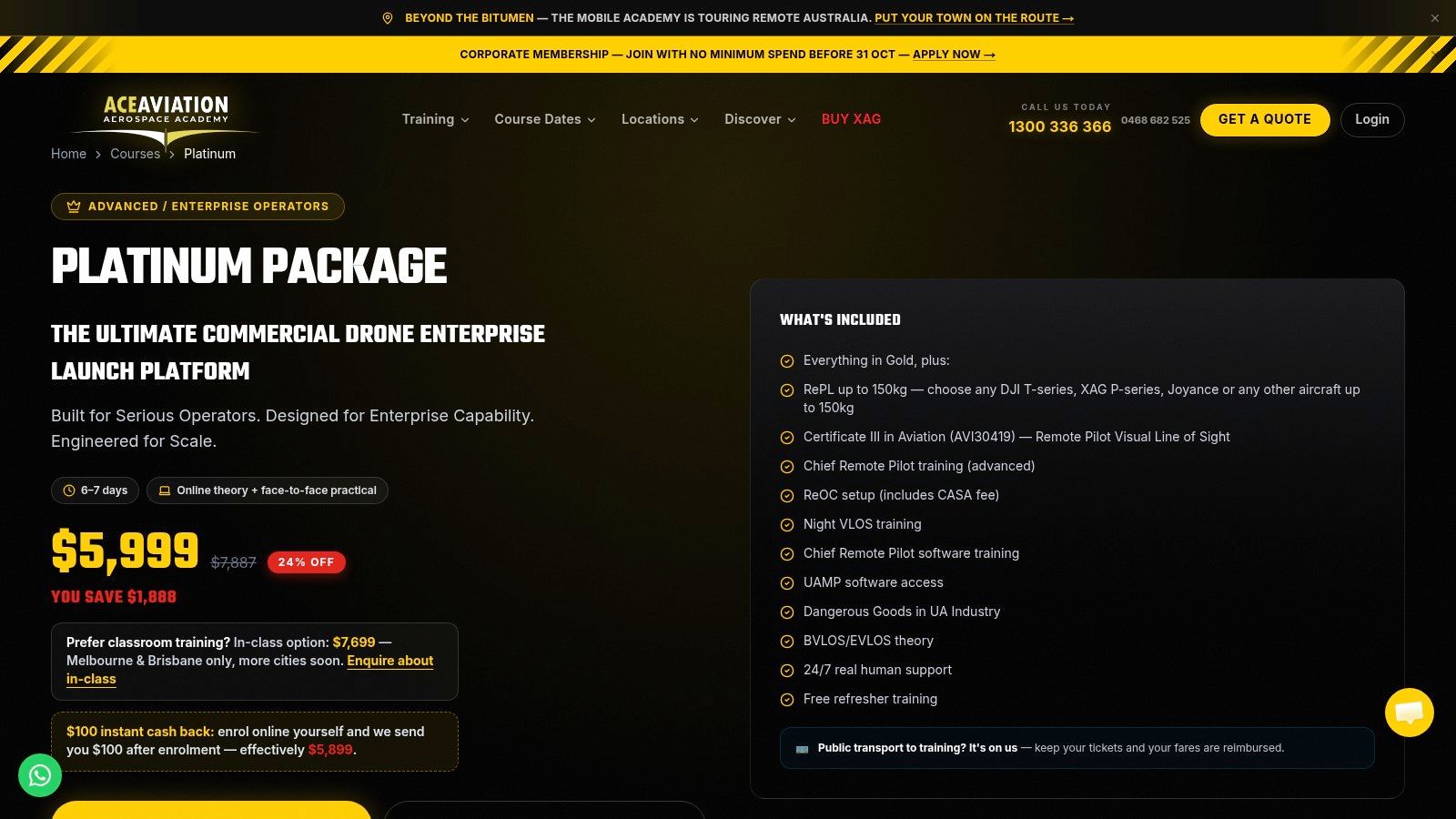
ACE PLATINUM is the broadest listed capability package in the supplied Australian training options. Its catalogue description includes RePL, AROC, Aviation English, Express ReOC, Certificate III in Aviation, advanced operations training, and preparation to operate and manage a commercial drone business.
For an agricultural enterprise, the relevant question is whether those components form a workable operating model. A farm group, contractor, government team, or agricultural technology business may need several pilots, aviation communication skills, management procedures, and documented systems. The catalogue does not by itself confirm coverage for every agricultural task, aircraft type, region, or service arrangement, so each item requires confirmation with the academy.
Assess the package as an operating system
Platinum has its clearest potential fit where an organisation is building repeatable internal capability. Before purchase, map the package against four operational owners:
- People: Who flies, supervises, reviews records, and can stop a mission?
- Approval: Which entity holds the relevant operating approval, and who maintains its documents?
- Aircraft: Who registers, maintains, inspects, and records each aircraft?
- Information: Who controls imagery, maps, client records, and retention?
Regional delivery also needs a practical plan covering travel, equipment transport, weather delays, technical support, and handover between the training provider and the operating team. These conditions determine whether the package supports field work or remains primarily a classroom and qualification pathway.
Certificate III in Aviation may suit a formal aviation career or enterprise capability plan. Confirm the exact qualification structure and units before treating it as an agricultural operations credential.
Clarify Express ReOC before signing
“Express ReOC” requires a written scope. Ask what prerequisites apply, which documents the provider prepares, whether application coordination is included, and where provider assistance ends and CASA approval begins. The guide to ReOC in Australia supports initial research, but current CASA requirements and the engagement terms control the decision.
Governance test: A mature agricultural drone operation can identify the person responsible for each flight, aircraft record, safety decision, and client deliverable.
ACE PLATINUM suits enterprise planning more closely than a beginner's introduction to drones. It may also exceed the needs of a farm that only commissions occasional mapping. Buyers should compare the package with their staff, aircraft, regions, delivery model, and timeframe, then verify every qualification and service directly with the academy.
Drone Agriculture ACE Tier Comparison
| Course | Core features | Quality ★ | Value 💰 | Audience & USP 👥 ✨ |
|---|---|---|---|---|
| ACE READY | Drone fundamentals, CASA basics, flight ops, RePL prep | ★★☆☆☆ | 💰💰 Low-cost intro | 👥 Beginners / hobbyists • ✨ CASA safety foundation |
| ACE BRONZE | Foundation commercial ops, theory + practical skills | ★★★☆☆ | 💰💰💰 Good starter value | 👥 Aspiring commercial pilots • ✨ Practical pathway to RePL |
| ACE SILVER | RePL training, AROC, practical flights, aviation English | ★★★★☆ | 💰💰💰💰 Strong ROI for pilots | 👥 Prospective licensed pilots • ✨ CASA-compliant RePL + AROC |
| ACE GOLD | Advanced RePL, ReOC support, compliance & business readiness | ★★★★★ 🏆 | 💰💰💰💰 Premium (ReOC support) | 👥 Commercial operators / SMEs • ✨ ReOC guidance + business prep |
| ACE PLATINUM | Complete enterprise package: RePL, AROC, Aviation English, Express ReOC, Cert III | ★★★★★ 🏆 | 💰💰💰💰💰 Enterprise-level value | 👥 Corporates & enterprises • ✨ Full-suite + Express ReOC & Cert III |
Turn the Shortlist Into a Safe Partnership
A shortlist of drone agriculture companies or training pathways becomes useful only after the farm business defines the work. Spraying, spreading, mapping, livestock monitoring and fence inspection can require different aircraft, payloads, software, pilot skills and records. The first decision should identify the task, the land involved, the required frequency and whether the work is for the farm itself or for paying clients.
The next decision is structural. An outsourced service may reduce the effort of building an internal team, while in-house capability can give a business more control over scheduling, data and repeat missions. Neither model is automatically safer or more suitable. The buyer should test the provider's ability to operate in the relevant region, transport and maintain equipment, respond to weather interruptions and deliver consistent outputs.
A practical selection sequence
- Define the agricultural task: Specify the intended application, mapping or monitoring outcome before discussing equipment.
- Choose the operating model: Decide whether the farm needs a contractor, an employee pilot, or a broader commercial operator.
- Request current evidence: Check qualifications, aircraft registration, operating documentation, insurance and relevant practical competence.
- Confirm lawful delivery: Match the aircraft, pilot, business structure and mission to current CASA requirements. CASA's own guidance should control the final decision.
- Test a representative scenario: Ask the provider to explain site assessment, flight planning, safety controls, records, data handling and repeat visits.
- Document responsibilities: Record who manages safety, maintenance, chemicals, data, client communication, delays and incident reporting.
The supplied AAA pathways belong after this assessment. ACE READY or ACE BRONZE may suit foundational learning. ACE SILVER is more relevant to RePL-oriented professional preparation, while ACE GOLD or ACE PLATINUM may be considered where commercial operations, ReOC support or enterprise capability are central. The course descriptions alone don't establish aircraft-specific agricultural competence or a CASA approval, so each outcome needs confirmation.
Frequently asked questions
Does a farm operator always need a RePL for agricultural drone work?
CASA's requirements depend on the operating circumstances, including the aircraft and whether the flight is conducted for a business holding a ReOC. For spraying on the operator's own land, CASA still requires the correct RePL for the drone type in the circumstances described in its guidance. The operator should check the current CASA requirements before flying.
Is an ReOC required when a farm hires an external drone company?
The answer depends on the arrangement and the entity conducting the operation. A farm should ask which business is responsible for the flight, which certificate applies, and which pilot and aircraft records support the work. The provider should supply current documentation rather than relying on a verbal assurance.
Can training replace an outsourced agricultural service?
Training can build internal capability, but it doesn't automatically provide agricultural application experience, aircraft access, maintenance systems or regional delivery capacity. A farm should compare the effort of building those capabilities with the scope and evidence offered by an external contractor.
What should an agricultural business verify before hiring a provider?
The buyer should verify current pilot qualifications, aircraft registration, operating documentation, insurance, relevant practical experience, regional availability, data handling and the proposed safety process. The provider should also explain which responsibilities remain with the farm.
Which AAA pathway is relevant to a new agricultural drone pilot?
ACE READY and ACE BRONZE are described as foundation options. ACE SILVER is described as commercial RePL-oriented preparation, while ACE GOLD and ACE PLATINUM address broader commercial and enterprise capability. The academy should confirm the current scope, prerequisites and outcomes for the particular operator and aircraft.
Ace Aviation Aerospace Academy offers Australian drone and aviation training pathways including RePL, AROC, aviation qualifications and ReOC consulting relevant to agricultural operators building safe internal capability. Businesses can compare the appropriate pathway with their spraying, spreading, mapping or enterprise needs by visiting Ace Aviation Aerospace Academy.