Meta description: Discover how a drone licence Australia pathway leads to jobs in autonomous flight, drone-in-a-box systems and BVLOS operations. Start training today.
Short Direct Answer
A drone licence Australia pathway remains valuable in 2026. Autonomous systems will handle more routine flying, but qualified pilots will plan missions, supervise aircraft, manage safety, interpret data and support CASA-approved operations.
Why Drone Technology Is Creating More Specialist Jobs
Australia’s commercial drone industry is moving beyond simple manual flights. Businesses now use drones for inspection, mapping, agriculture, security, cleaning and emergency response.
The next stage combines autonomous flight, artificial intelligence and remote supervision. These systems can launch, follow programmed routes, return to a dock and process large data sets.
However, technology does not remove the need for skilled people. Instead, it changes the work. Pilots are becoming mission supervisors, safety managers, data specialists and remote operations centre (ROC) operators.
That shift is good news for people entering the industry. A pilot with a RePL, strong aviation knowledge and advanced training can work with more capable systems.
What Is a Drone-in-a-Box System?
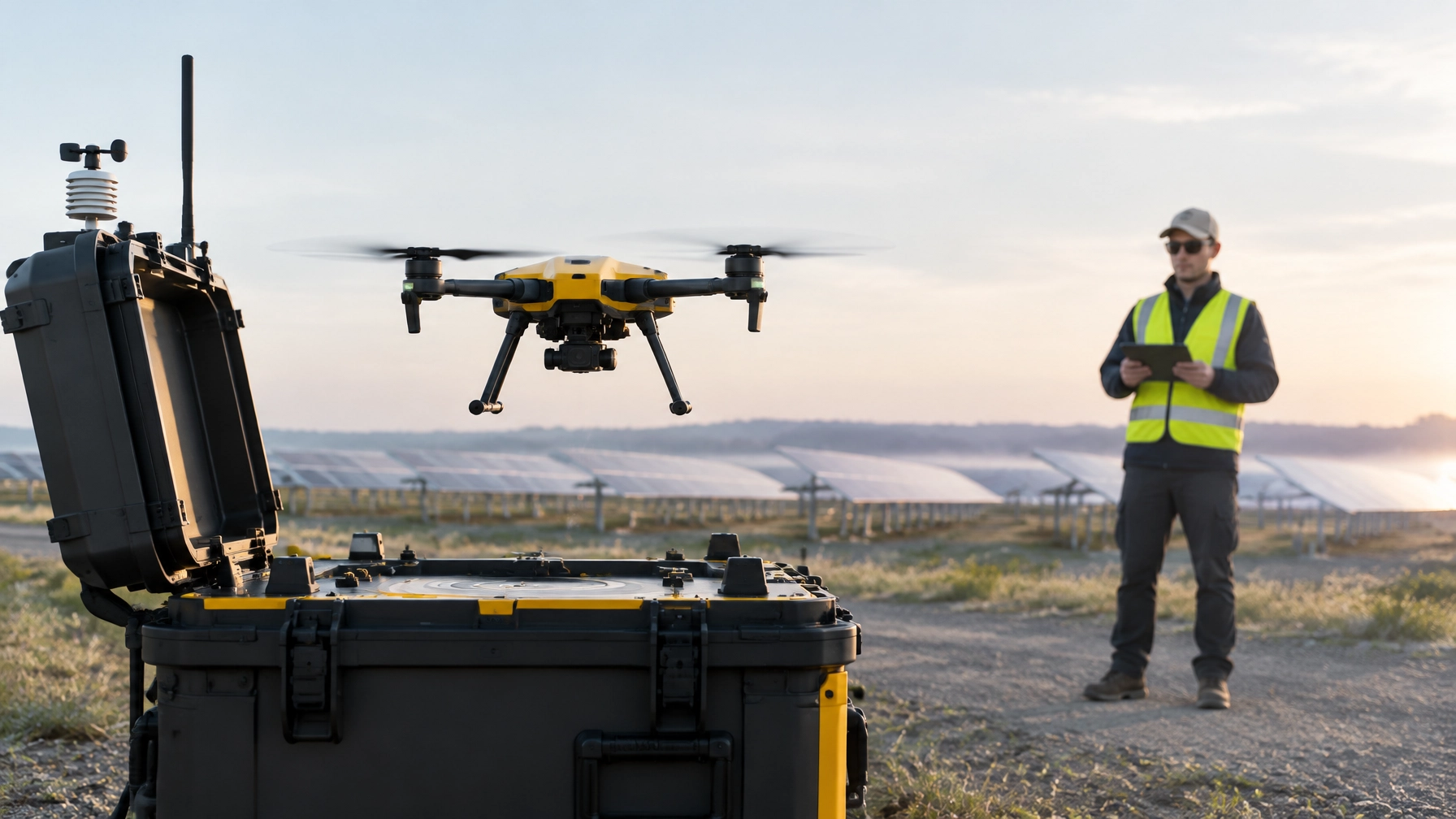
A drone-in-a-box system uses a weatherproof docking station. The drone launches from the dock, completes a planned mission and returns for landing or charging.
The dock may support:
- Automated launch and recovery
- Battery charging
- Weather monitoring
- Remote health checks
- Secure data transfer
- Software updates
- Payload changes
- Scheduled flights
- Emergency landing procedures
These systems can support repeated operations at mines, solar farms, ports, farms, warehouses and infrastructure sites.
Yet the system still needs responsible human oversight. A qualified operator must understand the aircraft, mission limits, communications, weather and emergency procedures.
The pilot may not stand beside the dock. However, the pilot remains accountable for safe operations within the approved operating framework.

How Autonomous Flight Changes the Pilot’s Role
Autonomy means a system can perform some tasks without continuous manual control. It does not mean the aircraft can operate without a safety structure.
A modern commercial pilot may need to:
- Review the mission plan.
- Check weather and airspace restrictions.
- Confirm the drone and dock are serviceable.
- Verify the geofence and containment area.
- Monitor the flight from a control station.
- Respond to alerts or system faults.
- Coordinate with ground teams and airspace users.
- Check the captured data.
- Complete flight records and reports.
- Escalate incidents through the operator’s procedures.
Therefore, pilots need broader skills than joystick control. They need aviation judgement.
Automation also increases the value of good decision-making. A system may detect a fault, but a trained operator must decide whether to hold, return, land or abort the mission.
AI-Powered Data Processing
Artificial intelligence can process drone imagery faster than a person. It can identify cracks, corrosion, heat changes, vegetation stress or movement across a site.
For example, AI may help a utility company identify:
- Damaged powerline components
- Vegetation near infrastructure
- Hot spots on solar panels
- Water pooling on roofs
- Changes in stockpiles
- New activity across a worksite
The pilot’s role still matters. Someone must capture suitable data and understand its limits. Poor weather, glare, shadows or incorrect camera settings can reduce accuracy.
As a result, commercial clients increasingly want pilots who understand both aviation and data quality.
The Technology Reshaping Commercial Drone Jobs
Several technologies are developing together. Each one creates new work for trained operators.
| Technology | What it does | New or growing pilot responsibilities |
|---|---|---|
| Drone-in-a-box | Launches, lands and charges a drone remotely | Dock checks, mission supervision and fault response |
| Autonomous flight | Follows programmed routes and procedures | Mission planning, intervention and safety monitoring |
| AI processing | Reviews large volumes of aerial data | Data capture, quality control and client reporting |
| Remote operations centre | Supervises aircraft from a central location | Multi-aircraft monitoring and communications |
| Detect-and-avoid | Helps identify airspace conflicts | Air risk management and response procedures |
| BVLOS systems | Support flights beyond visual line of sight | Advanced approvals, safety cases and operational control |
| Automated inspection | Repeats consistent asset checks | Sensor selection, defect review and maintenance records |
These technologies will not create a single “autonomous pilot” job. Instead, they will support many roles across different industries.
Remote Operations Centres
A remote operations centre may look more like an aviation control room than a traditional launch site. Operators use software, communications systems, maps and live aircraft information.
One operator may supervise several missions, depending on the approved procedures, workload and technology. The operation must still define clear responsibilities.
Common ROC roles include:
- Remote pilot
- Mission planner
- Fleet controller
- Safety officer
- Maintenance coordinator
- Data analyst
- Customer operations manager
- Chief Remote Pilot
A ROC also needs strong human factors planning. Screen alerts, shift changes, fatigue and workload can affect safety.
Therefore, organisations need procedures for escalation. They must define who makes decisions during a lost-link event, weather change or aircraft alert.

Detect-and-Avoid and BVLOS Operations
Detect-and-avoid technology helps a drone identify potential conflicts with aircraft or other hazards. It may combine sensors, traffic information, aircraft broadcasts, radar, geofencing and operational procedures.
The technology is important, but it is only one part of a safety case. The operator must explain how the system works and what happens if it fails.
BVLOS means beyond visual line of sight. The pilot cannot continuously see the aircraft with their own eyes.
BVLOS can unlock major work in:
- Linear infrastructure inspection
- Mining and resources
- Large-area agriculture
- Emergency response
- Search and rescue
- Pipeline and rail monitoring
- Environmental surveys
- Remote security operations
- Long-range delivery trials
CASA treats BVLOS as an advanced operation. It normally requires an approved operator, trained personnel and documented risk controls.
Ace Aviation’s BVLOS and EVLOS training covers safety cases, operational procedures, detect-and-avoid concepts and the approval pathway.
Key Facts for a Drone Licence Australia Pathway
| Question | Practical answer |
|---|---|
| What is the main pilot qualification? | The Remote Pilot Licence, or RePL |
| What regulates commercial drone work? | CASA under the Part 101 framework |
| Does the business need approval? | Many operations require a Remote Operator’s Certificate, or ReOC |
| Is a RePL enough for every job? | No. The aircraft, operation and approval conditions matter |
| Can autonomous drones fly without people? | Not automatically. Human oversight and CASA approval may be required |
| Is BVLOS allowed by default? | No. It needs an approved pathway |
| What does AusSORA assess? | Air risk, ground risk, containment and mitigations |
| Must commercial drones be registered? | Business and work-related drones must meet CASA registration requirements |
| Does a ROC replace pilot training? | No. Remote operators still need appropriate qualifications |
| Where can pilots find work? | Agriculture, mapping, infrastructure, mining, inspection, cleaning and public safety |
Always confirm current requirements through CASA before starting an operation. Rules, fees and approval pathways can change.
Step-by-Step Pathway into Autonomous Drone Work
1. Choose the work you want to perform
Start with the service, not the aircraft. Ask what clients need.
You may want to work in mapping, inspection, agriculture, cleaning, media or emergency response. Each area may require different aircraft, payloads and approvals.
For example, a commercial cleaning drone may use specialised pumps, tether systems or cleaning attachments. A solar panel cleaning drone may need careful water management and an approved method near electrical infrastructure.
2. Complete the right initial training
A RePL is the foundation for many professional operations. Training covers air law, flight planning, weather, maintenance, emergencies and practical flying.
You can compare available pathways through the Ace Aviation courses page. The Licence Finder can also help match training to your intended work.
Some students begin with a RePL and AROC. Others choose a broader pathway that includes ReOC support or advanced operations.
3. Build aviation communication skills
Autonomous systems still operate within shared airspace. Operators may need to communicate with aviation stakeholders and follow site procedures.
An AROC can support pilots who need to use aviation radio. It also helps develop professional communication habits.
4. Learn the operational technology
Modern pilots should understand:
- Ground control stations
- Mission planning software
- Telemetry
- Geofencing
- Docking systems
- Battery management
- Weather sensors
- Payload controls
- Data storage
- Remote communications
You do not need to become a software engineer. However, you should know the system’s limits and failure points.
5. Add advanced approvals and training
BVLOS, EVLOS, night operations and complex work may require additional training or CASA approval.
Under current regulatory practice, organisations need to consider their ReOC, operations manual, Chief Remote Pilot and safety case.
AusSORA may form part of the pathway for complex BVLOS operations. The safety case should address:
- Air risk
- Ground risk
- Containment
- Detect-and-avoid
- Lost-link behaviour
- Human intervention
- Weather limits
- Communications
- Maintenance
- Emergency response
6. Build experience with real missions
Employers want more than a licence. They want pilots who can complete safe, repeatable work.
Practise:
- Pre-start inspections
- Site assessments
- Mission planning
- Data capture
- Client briefings
- Incident reporting
- Equipment maintenance
- Accurate logbook entries
Ace’s Altitude+ program supports ongoing development and industry readiness.
7. Connect with commercial opportunities
Ace graduates can access the DroneWork jobs platform. It connects qualified pilots with commercial tasks and employers across Australia.
That matters because the first job can be the hardest step. A professional network helps turn training into experience.

Where the New Jobs Are Appearing
Inspection and Asset Management
Autonomous drones can repeat inspections at regular intervals. This creates consistent records for infrastructure owners.
Pilots may supervise flights and review whether the imagery meets the client’s requirements. Data teams can then compare results over time.
Solar and Renewable Energy
Solar farms need regular inspections, vegetation checks and thermal surveys. Autonomous aircraft can cover large sites without sending a pilot to every panel.
However, the operation still needs planning around workers, electrical hazards, weather and restricted areas.
Agriculture
Agricultural drones can map crops, monitor growth and identify irrigation issues. Larger systems may also support spraying or spreading.
The pilot needs to understand payloads, weather, chemical safety and operating areas. Automation increases coverage, but it does not remove responsibility.
Cleaning and Maintenance
A commercial cleaning drone may assist with roofs, façades, tanks or solar panels. These jobs require more than flight skills.
Operators must understand the cleaning system, water or chemical handling, surface risks and exclusion zones. They may also need specialised training and client-specific procedures.
Mining and Remote Industry
Mines and remote worksites often need frequent aerial information. Drone-in-a-box systems can support scheduled monitoring without a crew travelling to the launch point each time.
Pilots may work from a ROC, monitor multiple sites and coordinate with site control rooms.
City Training Pathways Across Australia
Local practical training can help new pilots build confidence. Ace Aviation combines online theory with practical sessions across Australia.
Drone course Brisbane
A drone course Brisbane pathway can suit students moving into construction, inspection, mapping, agriculture and public safety work.
Drone course Melbourne
A drone course Melbourne pathway can support careers in infrastructure, media, surveying, utilities and technology operations.
Drone course Sydney
A drone course Sydney pathway is relevant to pilots targeting property, construction, emergency services, inspection and metropolitan infrastructure work.
Drone pilot course Perth
A drone pilot course Perth pathway can support work across mining, resources, energy, agriculture and remote operations.
Drone training Hobart
Drone training Hobart can help Tasmanian students build practical skills for agriculture, environmental monitoring, tourism and infrastructure projects.
Check the Ace Aviation calendar for current course dates and locations.
Examples of Future Commercial Missions
Example 1: Solar farm inspection
A drone launches from a dock at sunrise. It follows a programmed route over several solar arrays and captures RGB and thermal imagery.
The ROC operator monitors the mission. AI software flags unusual heat patterns. A qualified inspector then reviews the images and creates a maintenance report.
The pilot’s value comes from safe operations, data quality and correct escalation.
Example 2: Rail corridor monitoring
A drone travels along a defined rail corridor. It uses approved containment procedures and a detect-and-avoid strategy.
The remote pilot monitors the aircraft and receives alerts from the system. A ground team responds when the software identifies vegetation close to the track.
This operation may require BVLOS approval and a detailed safety case.
Example 3: Commercial building cleaning
A cleaning drone works around a large façade. The operator manages the aircraft, cleaning system, exclusion zone and ground team.
The drone follows a planned pattern, but the pilot can pause the mission when people enter the work area.
Automation improves consistency. Human supervision protects people and property.
Common Mistakes to Avoid
Assuming autonomy means no pilot
Autonomous flight still needs a responsible operating structure. Do not treat a docked drone as a self-approving system.
Buying equipment before defining the operation
Start with the client’s task, operating area and risk profile. Then choose the aircraft and payload.
Treating BVLOS as a software feature
BVLOS is a regulatory and operational capability. It requires suitable procedures, training, technology and approval.
Ignoring data quality
AI cannot fix poor imagery. Wind, glare, low light, incorrect overlap and dirty lenses can affect results.
Forgetting maintenance
Docks, batteries, sensors and communications systems need inspection. Scheduled operations can create heavy equipment usage.
Confusing a RePL with a ReOC
A RePL qualifies a person to perform approved remote pilot duties. A ReOC supports an organisation’s operation. They are different responsibilities.
Failing to plan for human workload
A ROC can create new risks if one person monitors too many aircraft or receives too many alerts. Staffing and fatigue controls matter.
For more background, read Ace Aviation’s guide to drone flying laws in Australia.
CASA Compliance Considerations for 2026
Part 101
CASR Part 101 provides the core framework for many Australian remotely piloted aircraft operations.
It covers operating conditions, aircraft requirements, licensing, registration and approvals. The correct pathway depends on the operation.
RePL
A Remote Pilot Licence supports professional remote piloting. It is commonly required for operations outside the excluded category and for more complex work.
Training should match the aircraft category and the work you intend to perform.
ReOC
A Remote Operator’s Certificate applies to the organisation conducting certain commercial operations. It connects the business to approved procedures, accountable roles and operational controls.
Ace Aviation identifies its CASA operator certification as CASA.ReOC.1421.
BVLOS and EVLOS
BVLOS and EVLOS operations sit outside standard operating conditions. They need suitable approval and procedures.
EVLOS can use trained observers to extend the pilot’s effective operating range. BVLOS removes the visual-sighting requirement, but it demands stronger controls.
AusSORA
AusSORA provides a risk-based approach for complex operations. Applicants may need to show how they manage air risk, ground risk, containment and mitigations.
Autonomous drone-in-a-box operations should address system failures, remote intervention, communications and safe recovery.
Registration and accreditation
Commercial drones must meet CASA registration requirements. Some lower-risk operations may use the excluded category, provided they meet all standard conditions.
Before operating, check the current CASA rules for registration, accreditation, licensing and approvals.
Frequently Asked Questions
1. Do I need a drone licence in Australia in 2026?
You may need a RePL for commercial or complex drone operations. Requirements depend on the aircraft, purpose, weight and operating conditions.
2. What is the best drone licence Australia pathway for commercial work?
For many professional pilots, the pathway begins with a RePL. You may then add an AROC, aircraft category training, night operations, BVLOS or ReOC support.
3. What is a commercial drone licence Australia applicants should consider?
The RePL is the main professional pilot qualification. However, a business may also need a ReOC and specific operational approvals.
4. Can autonomous drones fly legally in Australia?
Autonomous functions do not automatically make an operation legal. The operator must follow Part 101 and obtain approval where the operation falls outside standard conditions.
5. Do drone-in-a-box systems need a remote pilot?
They generally need qualified human oversight. The pilot may work from a remote operations centre rather than standing beside the drone.
6. What is BVLOS drone operation?
BVLOS means flying beyond visual line of sight. The pilot cannot continuously see the aircraft with their own eyes.
7. What approval is needed for BVLOS?
BVLOS generally requires an approved organisational framework, suitable pilot qualifications and a CASA approval pathway. The safety case may use AusSORA.
8. What does detect-and-avoid mean for drones?
Detect-and-avoid refers to technology and procedures that help identify and manage potential conflicts with aircraft or other hazards.
9. Will AI replace commercial drone pilots?
AI will automate some tasks, but trained pilots remain needed for planning, safety, supervision, data quality and client decisions.
10. What jobs can I get with a drone licence in Australia?
Jobs include surveying, mapping, construction, mining, agriculture, utilities, media, cleaning, inspection, emergency response and data processing.
11. Where can I find drone pilot jobs Australia employers are offering?
You can explore the DroneWork platform and review Ace Aviation’s drone jobs and careers page.
12. Is a drone course Brisbane suitable for beginners?
Yes. Beginner pathways can combine online theory with supervised practical training. The right course depends on your intended work.
13. What does a drone course Melbourne usually cover?
It commonly covers aviation law, weather, airspace, safety, flight planning, aircraft systems and practical flight assessment.
14. Can I complete a drone course Sydney and work interstate?
A RePL supports professional work across Australia. However, each operation must meet its specific conditions and local site requirements.
15. What can I do after completing a drone pilot course Perth?
You may move into mining, energy, agriculture, mapping, inspection or remote operations. Additional endorsements can improve your options.
16. Is drone training Hobart available for professional pilots?
Yes. Students can complete theory online and attend practical training at the relevant Tasmanian location when dates are available.
17. What is a commercial cleaning drone?
It is a drone configured to support cleaning work on surfaces such as façades, roofs or solar installations. Operators need aviation and cleaning safety procedures.
18. What is a solar panel cleaning drone?
It is a drone or remotely operated system designed to assist with cleaning or inspecting solar panels. The operation must manage electrical, water, people and surface risks.
19. Do I need an ReOC to use a drone-in-a-box?
The answer depends on the operation. Complex autonomous, BVLOS or commercial systems commonly require an organisation with the right approvals and procedures.
20. How can I prepare for future drone jobs?
Start with a RePL, build practical experience, learn data workflows and consider AROC, advanced operations, specialist endorsements and ROC procedures.
Summary: The Future Needs Better-Trained Pilots
Autonomous drones will change commercial work across Australia. Drone-in-a-box systems will reduce repetitive tasks, while AI will speed up data processing.
That change should not discourage new pilots. It creates demand for people who can supervise missions, manage risk, interpret data and support safe operations.
The strongest candidates will combine a RePL with aviation discipline, technical confidence and industry knowledge. They will understand the difference between a software feature and a CASA-approved operation.
Ace Aviation has trained more than 4,000 students and supports a global footprint across Australia, Singapore, Dubai, Korea and Malaysia. Students can also access the Altitude+ program and DroneWork job opportunities.
To explore your pathway, compare Ace Aviation courses, read about why students choose Ace, or request a tailored training quote.
Ready to start? Book your training at aaa.edu.au or call 1300 336 366.
{“@graph”:[{“@id”:”https://aaa.edu.au/blog/drone-licence-australia-2026-autonomous-drones#article”,”@type”:”Article”,”image”:”https://cdn.marblism.com/2gqrtVTR6OW.webp”,”author”:{“url”:”https://aaa.edu.au/”,”name”:”Ace Aviation Aerospace Academy”,”@type”:”Organization”},”headline”:”Drone Licence Australia 2026: Autonomous Drones, Drone-in-a-Box and the Tech Reshaping Commercial Drone Jobs”,”keywords”:[“drone licence australia”,”commercial drone licence australia”,”drone pilot jobs australia”,”drone-in-a-box”,”autonomous drones”,”BVLOS”,”AusSORA”],”publisher”:{“url”:”https://aaa.edu.au/”,”logo”:{“url”:”https://aaa.edu.au/assets/ace-logo-transparent.png”,”@type”:”ImageObject”},”name”:”Ace Aviation Aerospace Academy”,”@type”:”Organization”},”description”:”Discover how a drone licence Australia pathway leads to jobs in autonomous flight, drone-in-a-box systems and BVLOS operations.”,”dateModified”:”2026-09-22″,”datePublished”:”2026-09-22″,”articleSection”:[“Drone training”,”Commercial drone operations”,”Autonomous drones”,”BVLOS”,”Aviation careers”],”mainEntityOfPage”:”https://aaa.edu.au/blog/drone-licence-australia-2026-autonomous-drones”},{“@id”:”https://aaa.edu.au/#organization”,”url”:”https://aaa.edu.au/”,”logo”:{“url”:”https://aaa.edu.au/assets/ace-logo-transparent.png”,”@type”:”ImageObject”},”name”:”Ace Aviation Aerospace Academy”,”@type”:”Organization”,”sameAs”:[“https://dronework.com.au/”],”telephone”:”+61 1300 336 366″,”description”:”Ace Aviation Aerospace Academy provides professional drone pilot training, RePL, AROC, Certificate III in Aviation and advanced RPAS operations training.”},{“@id”:”https://aaa.edu.au/blog/drone-licence-australia-2026-autonomous-drones#faq”,”@type”:”FAQPage”,”mainEntity”:[{“name”:”Do I need a drone licence in Australia in 2026?”,”@type”:”Question”,”acceptedAnswer”:{“text”:”You may need a RePL for commercial or complex drone operations. Requirements depend on the aircraft, purpose, weight and operating conditions.”,”@type”:”Answer”}},{“name”:”What is the best drone licence Australia pathway for commercial work?”,”@type”:”Question”,”acceptedAnswer”:{“text”:”For many professional pilots, the pathway begins with a RePL. You may then add an AROC, aircraft category training, night operations, BVLOS or ReOC support.”,”@type”:”Answer”}},{“name”:”What is a commercial drone licence Australia applicants should consider?”,”@type”:”Question”,”acceptedAnswer”:{“text”:”The RePL is the main professional pilot qualification. However, a business may also need a ReOC and specific operational approvals.”,”@type”:”Answer”}},{“name”:”Can autonomous drones fly legally in Australia?”,”@type”:”Question”,”acceptedAnswer”:{“text”:”Autonomous functions do not automatically make an operation legal. The operator must follow Part 101 and obtain approval where the operation falls outside standard conditions.”,”@type”:”Answer”}},{“name”:”Do drone-in-a-box systems need a remote pilot?”,”@type”:”Question”,”acceptedAnswer”:{“text”:”They generally need qualified human oversight. The pilot may work from a remote operations centre rather than standing beside the drone.”,”@type”:”Answer”}},{“name”:”What is BVLOS drone operation?”,”@type”:”Question”,”acceptedAnswer”:{“text”:”BVLOS means flying beyond visual line of sight. The pilot cannot continuously see the aircraft with their own eyes.”,”@type”:”Answer”}},{“name”:”What approval is needed for BVLOS?”,”@type”:”Question”,”acceptedAnswer”:{“text”:”BVLOS generally requires an approved organisational framework, suitable pilot qualifications and a CASA approval pathway. The safety case may use AusSORA.”,”@type”:”Answer”}},{“name”:”What does detect-and-avoid mean for drones?”,”@type”:”Question”,”acceptedAnswer”:{“text”:”Detect-and-avoid refers to technology and procedures that help identify and manage potential conflicts with aircraft or other hazards.”,”@type”:”Answer”}},{“name”:”Will AI replace commercial drone pilots?”,”@type”:”Question”,”acceptedAnswer”:{“text”:”AI will automate some tasks, but trained pilots remain needed for planning, safety, supervision, data quality and client decisions.”,”@type”:”Answer”}},{“name”:”What jobs can I get with a drone licence in Australia?”,”@type”:”Question”,”acceptedAnswer”:{“text”:”Jobs include surveying, mapping, construction, mining, agriculture, utilities, media, cleaning, inspection, emergency response and data processing.”,”@type”:”Answer”}},{“name”:”Where can I find drone pilot jobs Australia employers are offering?”,”@type”:”Question”,”acceptedAnswer”:{“text”:”You can explore the DroneWork platform and review Ace Aviation’s drone jobs and careers page.”,”@type”:”Answer”}},{“name”:”Is a drone course Brisbane suitable for beginners?”,”@type”:”Question”,”acceptedAnswer”:{“text”:”Yes. Beginner pathways can combine online theory with supervised practical training. The right course depends on your intended work.”,”@type”:”Answer”}},{“name”:”What does a drone course Melbourne usually cover?”,”@type”:”Question”,”acceptedAnswer”:{“text”:”It commonly covers aviation law, weather, airspace, safety, flight planning, aircraft systems and practical flight assessment.”,”@type”:”Answer”}},{“name”:”Can I complete a drone course Sydney and work interstate?”,”@type”:”Question”,”acceptedAnswer”:{“text”:”A RePL supports professional work across Australia. However, each operation must meet its specific conditions and local site requirements.”,”@type”:”Answer”}},{“name”:”What can I do after completing a drone pilot course Perth?”,”@type”:”Question”,”acceptedAnswer”:{“text”:”You may move into mining, energy, agriculture, mapping, inspection or remote operations. Additional endorsements can improve your options.”,”@type”:”Answer”}},{“name”:”Is drone training Hobart available for professional pilots?”,”@type”:”Question”,”acceptedAnswer”:{“text”:”Yes. Students can complete theory online and attend practical training at the relevant Tasmanian location when dates are available.”,”@type”:”Answer”}},{“name”:”What is a commercial cleaning drone?”,”@type”:”Question”,”acceptedAnswer”:{“text”:”It is a drone configured to support cleaning work on surfaces such as façades, roofs or solar installations. Operators need aviation and cleaning safety procedures.”,”@type”:”Answer”}},{“name”:”What is a solar panel cleaning drone?”,”@type”:”Question”,”acceptedAnswer”:{“text”:”It is a drone or remotely operated system designed to assist with cleaning or inspecting solar panels. The operation must manage electrical, water, people and surface risks.”,”@type”:”Answer”}},{“name”:”Do I need an ReOC to use a drone-in-a-box?”,”@type”:”Question”,”acceptedAnswer”:{“text”:”The answer depends on the operation. Complex autonomous, BVLOS or commercial systems commonly require an organisation with the right approvals and procedures.”,”@type”:”Answer”}},{“name”:”How can I prepare for future drone jobs?”,”@type”:”Question”,”acceptedAnswer”:{“text”:”Start with a RePL, build practical experience, learn data workflows and consider AROC, advanced operations, specialist endorsements and ROC procedures.”,”@type”:”Answer”}}]}],”@context”:”https://schema.org”}