
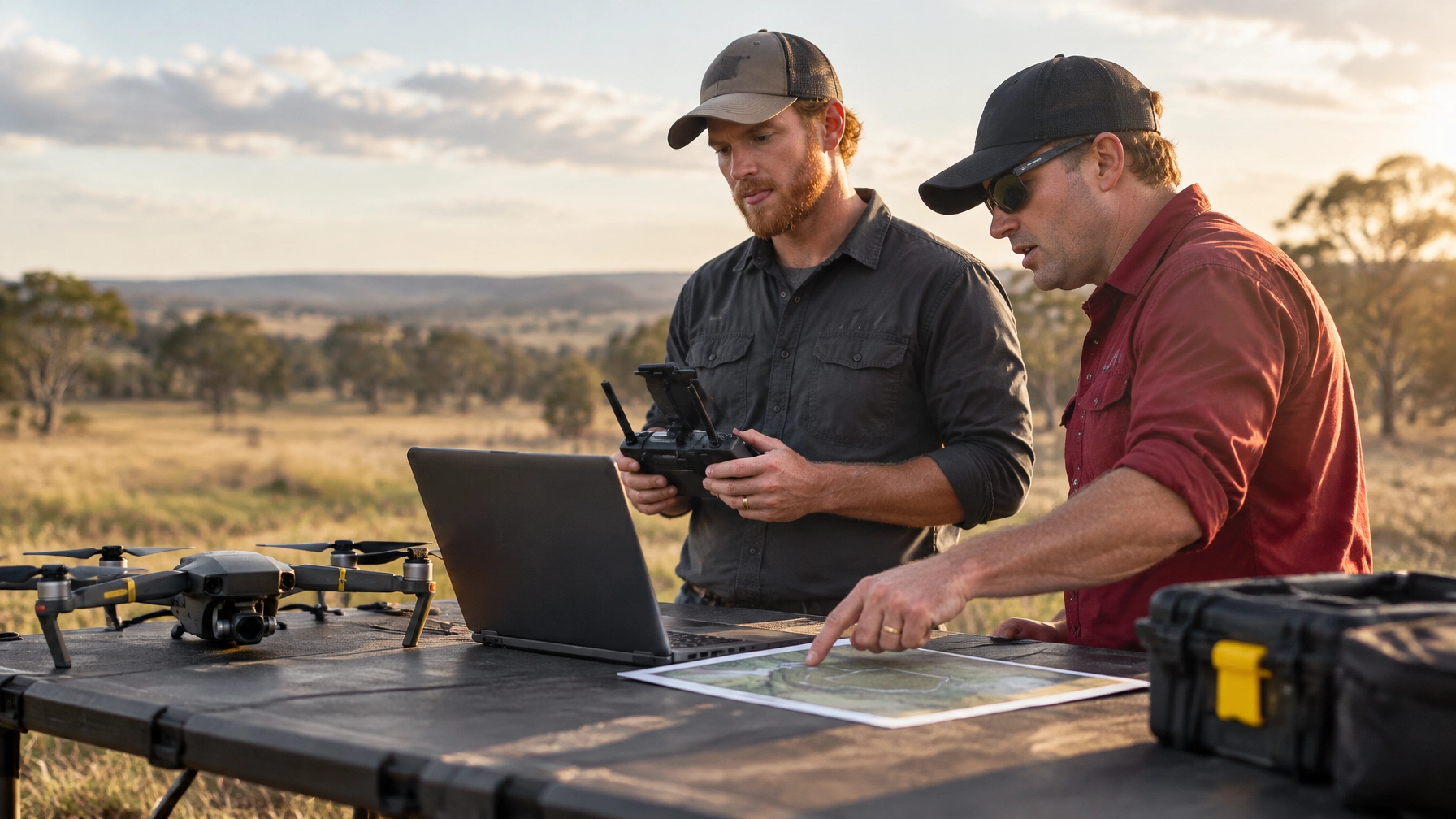
Meta description: Drone licence Australia guide to pricing quotes, day rates and service fees. Build a confident rate card and start quoting smarter today.
If you hold a drone licence in Australia and plan to quote for work, price the whole service, not just the flight. Include preparation, travel, risk, equipment and the final deliverables. Set a clear minimum, define what the client receives, and check local rates before sending your quote.
Drone licence Australia: short direct answer
There is no single standard rate for drone services in Australia. New operators should build a rate card around the job’s scope, time, risk, travel and deliverables. Then compare local market rates and state clearly what is included, what costs extra, and whether GST applies.
Key facts about pricing drone services
| Pricing question | Practical answer |
|---|---|
| Is there a standard Australian drone rate? | No. Rates vary by market, operation, skill and deliverables. |
| What can I charge for? | A defined service, such as aerial media, inspection capture or processed mapping outputs. |
| Should I quote by the hour? | It can suit short, simple work. Project pricing often works better when preparation and delivery matter. |
| What belongs in a quote? | Scope, deliverables, travel, processing, approvals if needed, timing and payment terms. |
| Can I charge for every flight with a RePL? | Not automatically. A RePL is a pilot licence, not by itself an operator approval. Check the rules for your operation. |
| Are example prices fixed? | No. Check local rates and confirm the requirements for each job. |
A good quote helps both sides understand the work before it starts. It also helps prevent unpaid editing, travel or repeat visits from eating into your margin.

What drives your quote?
Start with the client’s goal. A short set of real-estate photos differs from a mapped construction site or a detailed inspection. Each job needs a different level of planning, equipment and post-processing.
Consider these cost drivers:
- Deliverable: Basic images take a different workflow from a stitched map, inspection report or edited video.
- Time: Count briefing, travel, site setup, flying, file checks and delivery.
- Risk and access: Busy sites, airspace limits and complex locations may need more planning.
- Equipment and skills: Specialist sensors, software or trained support can add cost.
- Travel: Include distance, parking, accommodation or other agreed expenses.
- Insurance and client rules: Site owners may require proof of cover or specific terms.
- Turnaround: Expedited editing or reporting can require extra work.
These are not regulated tariffs. Rates and requirements vary by market and operation, so check local rates and confirm the scope before committing.
Sample pricing structure
| Service type | Typical pricing model | Notes |
|---|---|---|
| Real-estate aerial media | Per property or defined media package | State image count, editing, delivery format and usage terms. |
| Construction progress capture | Per visit, site or project | Clarify repeat visits, capture points and reporting needs. |
| Mapping and orthomosaic | Per project or site, with processing separated | Define area, accuracy expectations, processing and file format. |
| Solar or asset inspection | Per site, asset group or inspection scope | Agree access, image coverage and whether a report is included. |
| Tourism or promotional video | Per production or shoot package | Set the filming window, edits, revisions and usage rights. |
| Short, simple capture | Hourly rate with a minimum booking | Specify the minimum and what counts as working time. |
An orthomosaic is a corrected aerial image assembled from many photos. It can require more processing than a set of individual images. Always define the output rather than using a vague label like “mapping included.”
Step-by-step: build a rate card and quote
- Define the service. Write down the client’s goal and the exact result they need.
- List the work stages. Include briefing, flight planning, travel, setup, capture, file checks and editing.
- Set a minimum. A minimum call-out or half-day booking can protect you from very short jobs that still require preparation.
- Choose the pricing model. Use hourly pricing for simple, bounded tasks. Use a project price when the client wants a defined result.
- Add expenses and extra work. State how you handle travel, accommodation, processing, waiting time, approvals and re-flights.
- Check your local market. Compare similar services and scope, not just headline prices. Rates vary by market and operation.
- Write clear terms. Specify deliverables, timing, revisions, weather plans, payment terms and whether prices include GST.

Quote your first job without underpricing
Before quoting, estimate the full time the job will take. Include the hours that happen away from the flight site. Then check whether your proposed fee covers operating costs, insurance, software, equipment upkeep and administration.
Avoid discounting just because you are new. Instead, keep the scope focused and offer a clear service you can deliver well. If a client asks for more, explain the extra work and update the quote before proceeding.
As your skills grow, move from selling flight time towards pricing the value and reliability of the result. For example, a client may value repeatable progress records or a useful inspection summary more than the minutes spent in the air.
Worked examples: quoting across Australian cities
These examples show how to structure a quote, not what to charge. Check local rates, client requirements and operating conditions before pricing the work.
- Brisbane, real-estate media: Quote a defined property package. List the number and type of images, editing, delivery format and travel area. Offer video as a separate option rather than including open-ended revisions.
- Sydney, construction progress mapping: Price the visit and processing as clear components. Confirm site access, repeat capture dates, required outputs and any coordination needed before promising a delivery date.
- Melbourne, solar panel inspection: Define which panels or areas the client wants covered. Separate image capture from sorting, analysis or a written report, if requested.
- Perth, façade or cleaning survey: Quote a survey of the agreed building areas, not an undefined “inspection.” Confirm safe access, airspace, site controls and whether the client expects findings or just images.
- Hobart, tourism aerial media: Set a filming window and list the edited clips or stills the client will receive. Include travel and clarify how weather or location restrictions affect the shoot.
Comparing service pricing models
| Model | Works well when | Watch for |
|---|---|---|
| Hourly | The task is simple and the client can define a short scope | Set a minimum and explain how waiting or extra time is billed. |
| Half-day or day rate | The job needs a crew or a longer site presence | Define the time window and whether processing is extra. |
| Per deliverable | The client wants a known output | Define quality, format, quantity and revision limits. |
| Project price | The work has several stages and a clear outcome | List assumptions and price changes for added scope. |
| Value-based fee | Your experience supports a valuable business outcome | Explain the result and avoid promising outcomes outside your control. |
Common pricing mistakes
- Quoting only for flight time. Preparation, travel and processing still take time.
- Leaving deliverables vague. “All photos” can mean different things to different clients.
- Forgetting a minimum booking. Short jobs can still carry substantial setup costs.
- Underestimating extra requests. Agree how you will price added locations, edits or return visits.
- Comparing unlike services. An unedited image set is not the same as a processed map or inspection report.
- Ignoring the rules. A client deadline does not remove airspace or safety requirements.
CASA considerations for commercial work
A RePL is the pilot’s licence. It does not, on its own, authorise every paid operation. Many commercial operations require the operator to hold a ReOC and the pilot to hold the appropriate RePL. Some operations may qualify under an excluded category, subject to its limits and conditions.
So, do not assume an unlicensed flight can be charged for. Check the rules that apply to the aircraft, operator and proposed work before accepting payment. CASA requirements can include registration or accreditation, depending on the category and operation.
Standard operating conditions include visual line of sight, a maximum height of 120 metres above ground level, and limits around people and airspace. Daylight rules also apply to standard operations. Check current CASA drone rules and RePL information before quoting a job that may need special permissions.
Ace Aviation is a CASA-approved training provider, approval CASA.ReOC.1421. More than 4,000 students have trained with Ace across Australia, Singapore, Dubai, Korea and Malaysia. Students can also access the Altitude+ benefits program through the Ace Aviation website. Explore RePL and other aviation courses or learn why students choose Ace.
RePL training in major cities
If you are exploring how to become a drone pilot in Australia, compare training options and confirm which course fits your goals:
- Drone course Brisbane
- Drone course Melbourne
- Drone course Sydney
- Drone pilot course Perth
- Drone training Hobart
For questions about training or course suitability, contact Ace Aviation. When you are ready to explore opportunities, the DroneWork jobs platform can help you find drone pilot jobs in Australia.
Frequently asked questions
1. What should a new drone pilot charge in Australia?
There is no universal starting rate. First, define the service and estimate all time, including preparation, travel and delivery. Then check local rates for comparable work. Keep the scope modest and clear, and avoid quoting a complex project as though it were only a short flight.
2. Should I price by the hour or by the project?
Hourly pricing can suit a short, straightforward task with a clear time limit. Project pricing is often better when preparation, processing or a defined deliverable matters. In either case, state what is included and how you will handle extra time or added scope.
3. How do I set a day rate?
Work out the total time and costs involved in a typical booked day, not just flight time. Include planning, travel, setup, equipment and administration. Define the day’s time window and list any separate charges for processing, accommodation, approvals or work outside the agreed scope.
4. What should I include in a drone service quote?
Name the service, location, deliverables, timing and price basis. Also explain travel, processing, revisions, payment terms and any assumptions about access or weather. If relevant, state whether the quote includes GST. Clear terms help both you and the client spot scope changes early.
5. How should I charge for travel?
Set a clear travel area or explain how you calculate travel beyond it. Depending on the job, you might list travel as a separate line or include it in the project fee. Confirm parking, accommodation and other expenses before booking, especially for remote work.
6. Should I set a half-day minimum?
A minimum can make sense when even a brief flight requires planning, equipment checks, travel and site setup. Explain what the minimum covers and define its time window. If the client needs extra time or requests more work, show how you will price that separately.
7. How should I price orthomosaics compared with simple photos?
A set of simple photos may need limited editing, while an orthomosaic requires capture planning, processing and quality checks. Price the actual deliverable, not just the flight. Confirm the area, expected format and any accuracy requirements before promising an output.
8. Do insurance costs affect my rates?
Insurance is one of the operating costs to consider when setting a rate. In addition, clients may require proof of cover or particular policy terms. Check what your policy covers for the planned operation, and do not treat insurance as a substitute for CASA approvals.
9. How do I raise my prices as I gain experience?
Review your costs, workload and local market regularly. As your skills and workflow improve, explain the added value through reliability, specialist capability or clearer deliverables. Give existing clients notice where practical, and update your rate card so new quotes stay consistent.
10. What do clients in Brisbane, Sydney, Melbourne, Perth and Hobart expect?
Expectations depend more on the project and client than the city. A real-estate brief in Brisbane may need a different scope from construction mapping in Sydney or tourism media in Hobart. Ask what the client needs, then check comparable local services before pricing.
11. What are the risks of underpricing?
A low quote can leave out travel, processing, insurance and time spent managing the job. It can also create confusion if the client expects extra edits or repeat visits. Price a defined scope instead, and explain any additional work before you undertake it.
12. Should I do a first job for free?
Free work is not required to prove your value. If you choose to offer a sample, keep it limited and agree in writing on what you will provide and how the client may use it. A small, paid trial with a clear scope can also build trust.
13. How should I handle GST in a quote?
State clearly whether your quoted amount includes GST or excludes it. Your registration and invoicing obligations depend on your circumstances. Check with your accountant about GST treatment, registration and tax invoices rather than relying on a general pricing guide.
14. How does a RePL affect what I can legally charge for?
A RePL is a pilot qualification, but it does not by itself authorise every commercial operation. Many paid jobs require the operator to hold a ReOC and the pilot to hold the right RePL. Some limited excluded categories may apply, so check current CASA guidance for your operation.
15. How can I price against more experienced competitors?
Do not compete on price alone. Offer a clear scope, reliable communication and deliverables suited to the client’s need. Compare similar services in your area, then price within the market you can serve. Avoid claiming experience or outcomes you cannot support.
16. How can DroneWork help me find priced work, and does demand change by season?
The DroneWork jobs platform can help you look for opportunities and understand the kinds of work clients advertise. Demand may change with weather, daylight, project schedules and seasonal activity. Keep your availability and skills current, and quote each job on its own requirements.
17. How should I price drone cleaning or solar inspection work?
Define the assets and areas to be covered, the capture method and the client’s expected output. Treat cleaning, inspection capture and analysis as distinct scopes where relevant. Confirm site access, operating limits, insurance and any specialist requirements before quoting; rates vary by market and operation.
Summary
A strong quote accounts for the full job: planning, travel, flight, processing and delivery. Set a minimum, describe the deliverables, and compare like-for-like local rates. Most importantly, check that your qualifications and operating approvals match the work before accepting a paid job.
Ace Aviation has trained over 4,000 students and supports learners through its Altitude+ program and international training footprint. Use the city course links above to explore your options.
Ready to start? Book your training at aaa.edu.au or call 1300 336 366.
{“@graph”:[{“@type”:”Article”,”author”:{“name”:”Ace Aviation Aerospace Academy”,”@type”:”Organization”},”headline”:”Drone Licence Australia 2026: How to Price Your Drone Services — A New Pilot’s Guide to Quoting and Day Rates”,”publisher”:{“url”:”https://aaa.edu.au”,”name”:”Ace Aviation Aerospace Academy”,”@type”:”Organization”},”description”:”A guide for new Australian drone operators on pricing services, building a rate card and quoting work with a clear scope.”,”datePublished”:”2026-11-13″},{“url”:”https://aaa.edu.au”,”name”:”Ace Aviation Aerospace Academy”,”@type”:”Organization”,”telephone”:”1300 336 366″,”identifier”:”CASA.ReOC.1421″},{“@type”:”FAQPage”,”mainEntity”:[{“name”:”What should a new drone pilot charge in Australia?”,”@type”:”Question”,”acceptedAnswer”:{“text”:”There is no universal starting rate. First, define the service and estimate all time, including preparation, travel and delivery. Then check local rates for comparable work. Keep the scope modest and clear, and avoid quoting a complex project as though it were only a short flight.”,”@type”:”Answer”}},{“name”:”Should I price by the hour or by the project?”,”@type”:”Question”,”acceptedAnswer”:{“text”:”Hourly pricing can suit a short, straightforward task with a clear time limit. Project pricing is often better when preparation, processing or a defined deliverable matters. In either case, state what is included and how you will handle extra time or added scope.”,”@type”:”Answer”}},{“name”:”How do I set a day rate?”,”@type”:”Question”,”acceptedAnswer”:{“text”:”Work out the total time and costs involved in a typical booked day, not just flight time. Include planning, travel, setup, equipment and administration. Define the day’s time window and list any separate charges for processing, accommodation, approvals or work outside the agreed scope.”,”@type”:”Answer”}},{“name”:”What should I include in a drone service quote?”,”@type”:”Question”,”acceptedAnswer”:{“text”:”Name the service, location, deliverables, timing and price basis. Also explain travel, processing, revisions, payment terms and any assumptions about access or weather. If relevant, state whether the quote includes GST. Clear terms help both you and the client spot scope changes early.”,”@type”:”Answer”}},{“name”:”How should I charge for travel?”,”@type”:”Question”,”acceptedAnswer”:{“text”:”Set a clear travel area or explain how you calculate travel beyond it. Depending on the job, you might list travel as a separate line or include it in the project fee. Confirm parking, accommodation and other expenses before booking, especially for remote work.”,”@type”:”Answer”}},{“name”:”Should I set a half-day minimum?”,”@type”:”Question”,”acceptedAnswer”:{“text”:”A minimum can make sense when even a brief flight requires planning, equipment checks, travel and site setup. Explain what the minimum covers and define its time window. If the client needs extra time or requests more work, show how you will price that separately.”,”@type”:”Answer”}},{“name”:”How should I price orthomosaics compared with simple photos?”,”@type”:”Question”,”acceptedAnswer”:{“text”:”A set of simple photos may need limited editing, while an orthomosaic requires capture planning, processing and quality checks. Price the actual deliverable, not just the flight. Confirm the area, expected format and any accuracy requirements before promising an output.”,”@type”:”Answer”}},{“name”:”Do insurance costs affect my rates?”,”@type”:”Question”,”acceptedAnswer”:{“text”:”Insurance is one of the operating costs to consider when setting a rate. In addition, clients may require proof of cover or particular policy terms. Check what your policy covers for the planned operation, and do not treat insurance as a substitute for CASA approvals.”,”@type”:”Answer”}},{“name”:”How do I raise my prices as I gain experience?”,”@type”:”Question”,”acceptedAnswer”:{“text”:”Review your costs, workload and local market regularly. As your skills and workflow improve, explain the added value through reliability, specialist capability or clearer deliverables. Give existing clients notice where practical, and update your rate card so new quotes stay consistent.”,”@type”:”Answer”}},{“name”:”What do clients in Brisbane, Sydney, Melbourne, Perth and Hobart expect?”,”@type”:”Question”,”acceptedAnswer”:{“text”:”Expectations depend more on the project and client than the city. A real-estate brief in Brisbane may need a different scope from construction mapping in Sydney or tourism media in Hobart. Ask what the client needs, then check comparable local services before pricing.”,”@type”:”Answer”}},{“name”:”What are the risks of underpricing?”,”@type”:”Question”,”acceptedAnswer”:{“text”:”A low quote can leave out travel, processing, insurance and time spent managing the job. It can also create confusion if the client expects extra edits or repeat visits. Price a defined scope instead, and explain any additional work before you undertake it.”,”@type”:”Answer”}},{“name”:”Should I do a first job for free?”,”@type”:”Question”,”acceptedAnswer”:{“text”:”Free work is not required to prove your value. If you choose to offer a sample, keep it limited and agree in writing on what you will provide and how the client may use it. A small, paid trial with a clear scope can also build trust.”,”@type”:”Answer”}},{“name”:”How should I handle GST in a quote?”,”@type”:”Question”,”acceptedAnswer”:{“text”:”State clearly whether your quoted amount includes GST or excludes it. Your registration and invoicing obligations depend on your circumstances. Check with your accountant about GST treatment, registration and tax invoices rather than relying on a general pricing guide.”,”@type”:”Answer”}},{“name”:”How does a RePL affect what I can legally charge for?”,”@type”:”Question”,”acceptedAnswer”:{“text”:”A RePL is a pilot qualification, but it does not by itself authorise every commercial operation. Many paid jobs require the operator to hold a ReOC and the pilot to hold the right RePL. Some limited excluded categories may apply, so check current CASA guidance for your operation.”,”@type”:”Answer”}},{“name”:”How can I price against more experienced competitors?”,”@type”:”Question”,”acceptedAnswer”:{“text”:”Do not compete on price alone. Offer a clear scope, reliable communication and deliverables suited to the client’s need. Compare similar services in your area, then price within the market you can serve. Avoid claiming experience or outcomes you cannot support.”,”@type”:”Answer”}},{“name”:”How can DroneWork help me find priced work, and does demand change by season?”,”@type”:”Question”,”acceptedAnswer”:{“text”:”The DroneWork jobs platform can help you look for opportunities and understand the kinds of work clients advertise. Demand may change with weather, daylight, project schedules and seasonal activity. Keep your availability and skills current, and quote each job on its own requirements.”,”@type”:”Answer”}},{“name”:”How should I price drone cleaning or solar inspection work?”,”@type”:”Question”,”acceptedAnswer”:{“text”:”Define the assets and areas to be covered, the capture method and the client’s expected output. Treat cleaning, inspection capture and analysis as distinct scopes where relevant. Confirm site access, operating limits, insurance and any specialist requirements before quoting; rates vary by market and operation.”,”@type”:”Answer”}}]}],”@context”:”https://schema.org”}