Short Direct Answer
Yes. A drone licence australia strategy can help mining, utilities, construction, agriculture and council teams build safe in-house capability. Usually, this means RePL-qualified pilots, a suitable ReOC structure, a Chief Remote Pilot, documented procedures and role-specific training.
Drone Licence Australia: Building an In-House Corporate Drone Team
Organisations are using drones for more than aerial photography. They now support asset inspections, surveying, environmental monitoring, stockpile measurement, emergency response and agricultural operations.
However, buying aircraft is only one part of the business case. A capable drone program also needs trained people, clear procedures and strong safety governance.
For many organisations, the question is not whether drones have value. The real question is whether to outsource every flight or build an internal team.
A well-designed corporate drone training program can give an organisation:
- Faster access to inspection and mapping data
- Better control over sensitive information
- More consistent operating procedures
- Lower dependence on external contractors
- Stronger internal knowledge of site conditions
- Greater flexibility during urgent events
- A clearer pathway to advanced operations
The right solution depends on the organisation’s work. A council flying near residents faces different risks from a mine operating in the Pilbara. A utility inspecting power assets may need stronger airspace planning. An agriculture group may require aircraft-specific training and chemical application controls.
That is why corporate RePL training should begin with a capability audit. The goal is not to put every employee through the same course. Instead, the goal is to train the right people for the right operational roles.

Why Corporate Drone Training Can Make Business Sense
Outsourcing remains a sensible option for occasional work or highly specialised missions. Yet, an in-house team may create better value when drone tasks are frequent, time-sensitive or spread across multiple sites.
For example, a utility may need repeated inspections after storms. A mining company may need regular stockpile surveys. A council may require rapid imagery after flooding or damage to public infrastructure.
An internal team can respond without waiting for contractor availability. It can also understand the organisation’s assets, safety systems and reporting requirements.
The business case should include more than training fees. Decision-makers should assess:
- Contractor call-out costs
- Travel and mobilisation expenses
- Data processing and delivery times
- Internal staff availability
- Insurance and risk requirements
- Fleet maintenance
- Software and data storage
- ReOC and compliance costs
- Training refreshers and currency
- Potential revenue from external work
The most effective programs often use a hub-and-spoke model. A small group of core pilots completes advanced training. Other employees learn how to request missions, support fieldwork and interpret results.
This approach avoids training every worker as a remote pilot. It also creates a stronger internal control structure.
A practical ROI calculation
A simple planning formula is:
Annual external drone spend avoided + productivity gains − annual in-house program cost = estimated program value
The calculation should use real internal data. Avoid assuming that every contractor invoice will disappear. Some work will still need external specialists, additional permissions or advanced sensors.
The strongest business case usually comes from repeated work. It may also come from reduced downtime, faster decision-making or improved safety intelligence.
Key Facts Table: Corporate Drone Capability
| Business requirement | Typical training or governance response | Why it matters |
|---|---|---|
| Employees fly drones for company work | RePL training for nominated remote pilots | Builds individual pilot competence |
| The organisation conducts commercial operations | ReOC pathway or another lawful operating structure | Establishes organisational accountability |
| Multiple pilots operate under one system | Chief Remote Pilot and training matrix | Creates consistent oversight |
| Flights use aviation radio procedures | AROC training where required | Supports communication in relevant airspace |
| Inspections occur near people or infrastructure | Mission-specific risk assessments and procedures | Controls operational hazards |
| The team uses thermal, multispectral or LiDAR payloads | Specialist equipment and mission training | Improves data quality and safe use |
| The organisation operates in several regions | Central governance with local site procedures | Supports consistent standards across sites |
| The team wants advanced missions | BVLOS, night, EVLOS or other specialist pathways | Helps prepare for operations beyond basic conditions |
CASA rules and permissions can change. Organisations should confirm current requirements through CASA’s official drone guidance before launching or changing operations.
Corporate Training ROI and Program Comparison
The figures below use published course starting points as planning examples. They are not a corporate quote. Group size, aircraft type, travel, site delivery, accommodation and specialist requirements can change the final price.
| Program model | Example structure | Indicative published training basis | Best suited to | ROI signal |
|---|---|---|---|---|
| Foundation pilot team | Three RePL 25kg pilots | 3 × $1,799 = $5,397 | Occasional inspections and mapping | Reduces simple contractor call-outs |
| Pilot and operator pathway | Three Gold Operator participants | 3 × $3,799 = $11,397 | Organisations preparing to operate internally | Builds pilot and operator capability together |
| Specialist team | RePL plus AROC, thermal, night, BVLOS or aircraft-specific training | Quoted according to scope | Utilities, mining and complex environments | Supports higher-value or time-critical work |
| ReOC preparation | ReOC setup and operational documentation support | ReOC setup published from $2,499 | Organisations formalising operations | Creates an internal operating framework |
| Enterprise rollout | Multi-site training, governance, CRP development and refresher plan | Custom corporate quote | National or international organisations | Creates a scalable capability across business units |
Ace Aviation’s course catalogue includes RePL, AROC, operator, advanced and specialist pathways. Corporate clients should request a tailored scope rather than rely on a public retail price.
In-house team versus outsourced contractor
| Consideration | In-house drone team | Outsourced contractor |
|---|---|---|
| Response time | Often faster for planned and urgent tasks | Depends on contractor availability |
| Fixed cost | Training, equipment, software and governance | Lower internal setup cost |
| Variable cost | Lower marginal cost after capability is established | Recurring fees per mission |
| Site knowledge | Strong internal understanding | Contractor must learn the site |
| Data control | Easier to keep data within company systems | Depends on contract and provider |
| Specialist work | May still require external support | Contractor may bring specialist payloads |
| Safety accountability | Managed within internal systems | Shared through procurement and contractor controls |
| Scalability | Requires recruitment and refresher planning | Can scale through supplier networks |
| ReOC responsibility | Organisation may need its own ReOC | Contractor may operate under its own ReOC |
| Best use case | Frequent, repeatable or sensitive work | Occasional or highly specialised work |
The decision does not need to be all or nothing. Many organisations build an internal core team and retain approved contractors for overflow, advanced missions or regional coverage.
Step-by-Step Process: From Capability Audit to ReOC-Ready Crew
1. Complete a capability audit
Start by listing every current and planned drone use case.
Ask:
- What assets will the team inspect?
- How often will flights occur?
- Where will flights take place?
- Will operations occur near people, roads or critical infrastructure?
- Is visual line of sight practical?
- Will flights occur at night?
- What data must the team capture?
- Who will approve each mission?
- Which sites have local hazards?
This audit identifies the number and type of pilots required. It also shows whether the organisation needs basic RePL training or a broader operational pathway.
2. Select the internal roles
A mature program normally includes several roles:
- Executive sponsor
- Chief Remote Pilot
- Remote pilots
- Visual observers, where appropriate
- Safety or risk manager
- Asset or project owner
- Data and information manager
- Procurement and insurance contact
One person may hold several roles in a small organisation. However, responsibilities should remain clear.
The Chief Remote Pilot is not simply the most experienced pilot. The role includes operational oversight, procedure management, training records and compliance supervision.
3. Choose the right aircraft and payloads
Training should match the aircraft the team will use.
A small multirotor may suit roof inspections. A larger aircraft may support mapping, agricultural work or heavier payloads. Thermal, multispectral and LiDAR sensors also require different planning and data skills.
Do not choose a course only because it has the lowest price. Match the training to the intended aircraft category, payload and operating environment.
4. Build the training matrix
A training matrix should show who needs what qualification.
For example:
| Role | Minimum pathway to assess | Possible additional training |
|---|---|---|
| Occasional pilot | RePL for the relevant aircraft category | Site induction and payload training |
| Senior pilot | RePL and operational procedures | Night, BVLOS, thermal or mapping |
| Chief Remote Pilot | RePL plus CRP and compliance development | ReOC management and audit preparation |
| Field observer | Site and aviation safety briefing | Airspace and communications awareness |
| Data analyst | Mission and data workflow briefing | Photogrammetry, thermal or LiDAR interpretation |
| Operations manager | Program governance briefing | ReOC, risk and incident management |
5. Deliver group RePL training
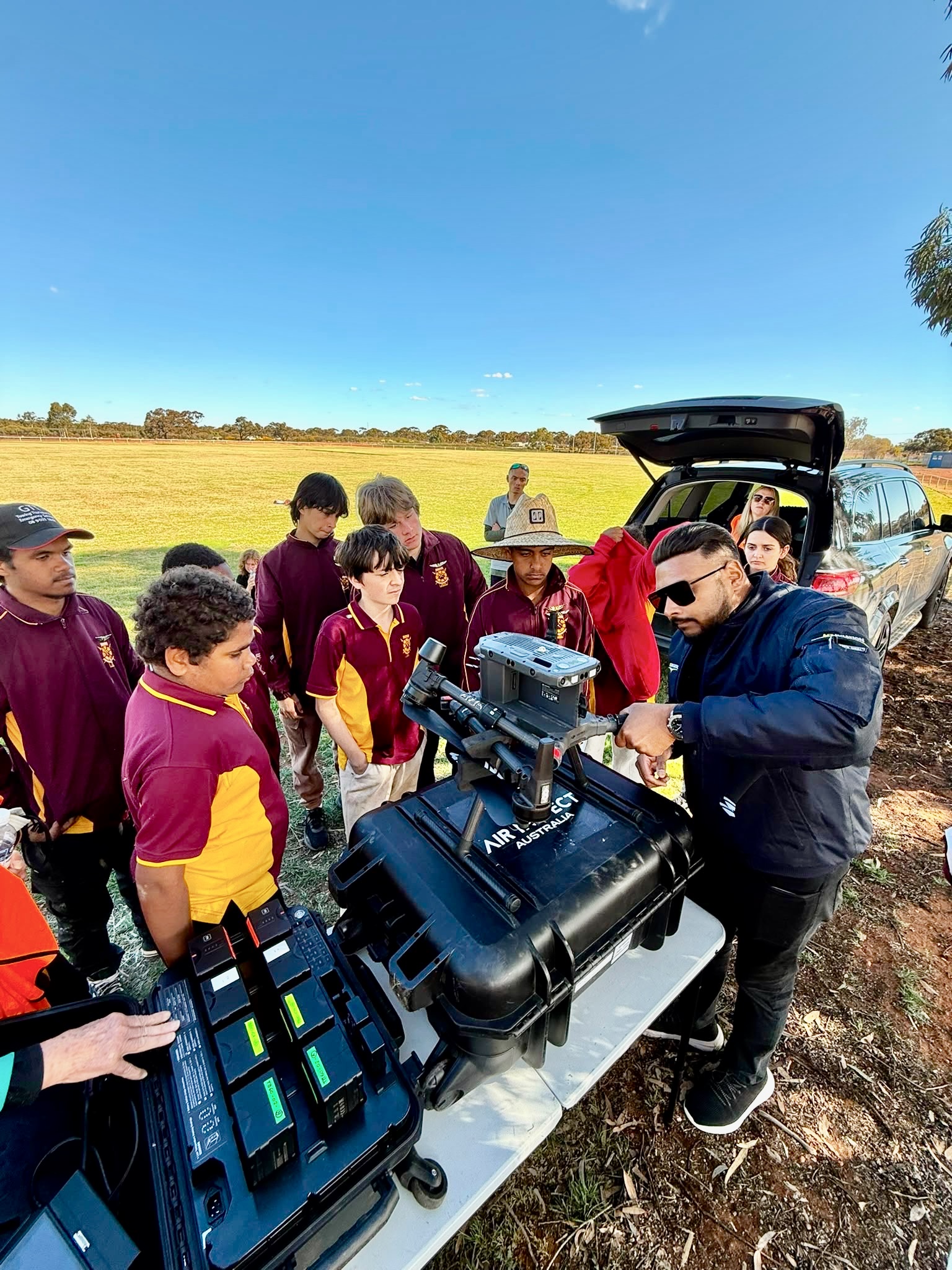
Corporate training can be delivered at an Ace location or, where suitable, through a group or on-site arrangement.
Available training locations include Brisbane, Sydney, Melbourne, Perth and Hobart.
Training may combine self-paced study, instructor-led theory and practical assessment. A group format helps teams develop shared language around airspace, weather, checklists and risk.
6. Align the program with WHS and site systems
The drone program should connect with existing work health and safety systems.
For a mine, this may include permit-to-work processes, exclusion zones and vehicle movements. For a utility, it may include electrical hazards, access controls and critical infrastructure procedures.
For a council, the system may need public communication, privacy controls, road closures and event coordination.
7. Prepare procedures and records
The organisation should document:
- Mission approval steps
- Pilot authorisation
- Pre-flight and post-flight checks
- Weather limits
- Airspace checks
- Battery controls
- Maintenance requirements
- Data handling
- Incident and near-miss reporting
- Emergency response
- Refresher training
- Currency and competency checks
A ReOC application or operating model should reflect how the organisation actually works. Generic procedures are less useful than practical procedures that match real sites.
8. Establish the ReOC pathway where required
A ReOC belongs to the organisation. It is separate from an individual RePL.
Organisations should determine whether their planned operations require a ReOC, whether an existing ReOC needs variation, and what approvals are required for operations outside standard conditions.
Ace provides a ReOC setup pathway and specialist support options. The final structure should be confirmed against current CASA requirements.
9. Run a supervised pilot project
Before a full rollout, choose one controlled project.
Good pilot projects have:
- A clear business owner
- A manageable operating area
- A defined data output
- Limited public exposure
- Measurable time or cost benefits
- A post-flight review
Use the results to improve procedures before expanding to other sites.
10. Move to a ReOC-ready crew
A ReOC-ready crew has more than licensed pilots. It has documented responsibilities, trained staff, suitable aircraft, maintenance records and a repeatable approval process.
The team should also know when to stop. A professional operator recognises when a mission exceeds its approvals, competence or equipment.

Illustrative Corporate Case Studies
The following examples are illustrative case studies. They show how different organisations could structure a program. They are not claims about named clients or completed projects.
Case study 1: Mining operator in the Pilbara
A mining operator wants to reduce delays in stockpile surveys, haul-road inspections and rehabilitation monitoring.
The company begins with six employees across two sites. Three complete a commercial RePL pathway. One senior employee also develops Chief Remote Pilot capability. The remaining staff support field safety, mission planning and data review.
The team creates separate procedures for:
- Stockpile mapping
- Active haul-road inspections
- Survey control points
- Work near heavy vehicles
- Restricted areas
- Battery transport and storage
The company still uses external surveyors for complex geospatial work. However, the internal drone team handles repeatable visual inspections and early-stage mapping.
The main benefit is not simply lower cost. The mine gains faster access to information between scheduled contractor visits.
Case study 2: Utility asset-inspection team
A utility wants to inspect poles, substations and corridors after storms.
Its main risk is not pilot skill alone. The team must manage electrical hazards, public areas, roads, communications and sensitive infrastructure.
The utility trains a central group of pilots. It then creates local mission coordinators in each region. The Chief Remote Pilot controls pilot authorisations and reviews higher-risk missions.
The training plan includes:
- RePL
- AROC where operationally required
- Thermal payload familiarisation
- Night operations planning
- Incident reporting
- Data security
- Emergency response
The utility keeps a contractor panel for complex corridor work. Its internal team focuses on rapid damage assessment and routine inspection support.
Case study 3: Metropolitan council in Brisbane
A metropolitan council wants an internal team for parks, drainage assets, flood response and construction monitoring.
Because council operations occur around residents, roads and public spaces, its program places strong emphasis on planning and communication.
The council trains a small core team and creates a request form for other departments. Every request must explain:
- The purpose of the mission
- The proposed location
- The expected public exposure
- The required data
- The time frame
- Any privacy concerns
The drone team works with emergency management, parks and infrastructure departments. It also maintains a list of approved contractors for major events or specialist sensors.
For council teams, the goal is not to fly more often. The goal is to fly with clear authority, appropriate notice and a documented public-interest purpose.
Case study 4: Agriculture group
An agriculture group operates across several properties and wants more consistent crop monitoring.
The group creates a seasonal training plan. General pilots complete RePL training. Selected operators continue into aircraft-specific agricultural training for spraying and application systems.
The program also covers:
- Chemical handling
- Weather and wind limits
- Buffer zones
- Property boundaries
- Battery management
- Maintenance
- Data interpretation
- Seasonal competency checks
For specialist agricultural aircraft, the group uses the appropriate type and operational training. It does not assume that a basic RePL alone prepares a pilot for every agricultural task.
Ace offers agricultural pathways, including XAG pilot and operator training.
Case study 5: International cohort across Singapore, Dubai, Korea and Malaysia
An international engineering organisation wants a common drone competency framework for staff in several countries.
The organisation uses a central training standard. Local teams then adapt the operational procedures to local aviation rules, airspace and site risks.
Ace’s global footprint includes Australia, Singapore, Dubai, Korea and Malaysia. This can help international employers coordinate training delivery across regions.
However, an Australian RePL does not automatically replace local aviation approvals in another country. The employer must confirm the rules that apply in each jurisdiction.
The value of a shared program is consistency. Staff can use common terms, checklists and reporting standards while still following local law.
Common Mistakes Organisations Make
Training too many people without a clear role
More certificates do not automatically create a better program. Train people who have a defined operational purpose.
Buying aircraft before defining the mission
An aircraft should support the business requirement. It should not determine the requirement.
Treating a RePL as organisational approval
A RePL belongs to an individual. A ReOC relates to the organisation. These are different parts of the compliance structure.
Ignoring data governance
Drone imagery can contain personal, commercial or security-sensitive information. Define storage, access, retention and sharing rules before the first mission.
Using one procedure for every site
A mine, council park and electricity substation do not have the same hazards. Procedures should reflect the operating environment.
Forgetting non-pilot staff
Project managers and asset owners should understand how to request a mission. They should also know what drones can and cannot safely do.
Assuming advanced operations are included automatically
BVLOS, night, EVLOS, heavier aircraft and complex environments may need additional training, approvals or procedures.
Failing to budget for ongoing competency
A one-time course is only the beginning. Plan for currency checks, equipment changes, refresher training and procedure reviews.
Measuring only the number of flights
A useful program measures outcomes. These may include inspection turnaround, avoided travel, incident rates, data quality and asset decisions supported.
CASA Considerations for Corporate Drone Programs
CASA requirements depend on the aircraft, location, operation and organisation. Corporate programs should therefore use current regulatory advice rather than rely on a generic checklist.
Key considerations include:
- RePL: The individual qualification for eligible remote pilots.
- ReOC: The organisational certificate used for commercial operations where required.
- Chief Remote Pilot: The person responsible for operational oversight within the organisation’s approved structure.
- Standard operating conditions: The baseline conditions that may apply to eligible operations.
- Operations outside standard conditions: These may require additional approvals, procedures, training or risk controls.
- Airspace: Operators must check controlled airspace, aerodromes, restrictions and local requirements.
- People and property: Separation and overflight rules must be considered for every mission.
- Night operations: These require suitable procedures, training and compliance controls.
- BVLOS and EVLOS: These are advanced operational concepts. They should not be treated as a routine extension of basic RePL training.
- Incident reporting: The organisation needs a clear internal and regulatory reporting pathway.
- Records: Training, maintenance, flight and risk records should be accurate and retrievable.
Ace Aviation operates under CASA.ReOC.1421 and has trained more than 4,000 students. Its approach combines CASA-certified training with operational pathways, industry relationships and post-training support.
Organisations may also compare providers such as National Drones, iDrone Train, Aviassist and Global Drone Solutions. Each provider has its own delivery model, locations and specialist strengths. For an enterprise buyer, the important comparison points are broader than price:
- Can the provider train groups across multiple locations?
- Can it support RePL, AROC and advanced pathways?
- Does it understand enterprise governance?
- Can it support site-specific delivery?
- Are records and assessments managed clearly?
- Does the provider offer useful post-training pathways?
Ace’s differentiators include its Australia-wide and international footprint, the Altitude+ program, the DroneWork job board and connections to operational compliance tools. Learn more about why organisations choose Ace Aviation.
Training Locations and Delivery Options
Corporate teams can plan training around operational requirements.
A team may attend a scheduled course in Sydney, Melbourne, Brisbane, Perth or Hobart. Ace can also discuss group arrangements, regional delivery and blended theory options.
The best location is not always the closest one. Consider:
- Where most employees are based
- Where practical assessment can occur safely
- Whether the site reflects normal operations
- Travel and accommodation costs
- Seasonal weather
- Aircraft and payload availability
- Future refresher requirements
For a tailored scope, organisations can request a corporate training quote or contact the Ace Aviation team.
Frequently Asked Questions
1. Can a company fly drones without a ReOC?
A company conducting commercial drone operations may need a ReOC or another lawful operating arrangement. The answer depends on the operation and current CASA rules. An individual RePL does not automatically authorise a company to operate commercially.
2. Does our whole team need a RePL?
No. Usually, only employees who control the aircraft need the relevant pilot qualification. However, observers, managers, data staff and site supervisors still need suitable briefings for their roles.
3. What is a Chief Remote Pilot?
A Chief Remote Pilot manages day-to-day remote pilot operations within the organisation’s approved structure. The role commonly includes pilot authorisation, procedures, training oversight, records and operational safety.
4. How do you get a ReOC?
An organisation normally prepares an application, nominates responsible personnel and documents its operating procedures. The process depends on the proposed operation. Specialist support can help an organisation prepare its manual, governance model and supporting records.
5. Does training count under our WHS obligations?
Training can support an organisation’s competency and risk controls. However, a RePL does not replace the organisation’s WHS duties. The company must still manage site hazards, supervision, equipment, emergency response and worker competency.
6. Can we run group training at our own site?
Potentially, yes. Site delivery depends on the location, facilities, airspace, weather, safety controls and assessment requirements. A corporate provider should inspect the proposed site and confirm whether it is suitable.
7. Do overseas staff need Australian certification?
Staff flying in Australia must follow Australian aviation requirements. An overseas licence may not transfer automatically. Staff flying in another country must also meet that country’s rules. International programs should use a local compliance review.
8. How long does corporate training take?
The duration depends on the course, aircraft category, theory format, practical assessment and group size. A basic RePL pathway may use pre-course study, live theory and practical assessment. Advanced or specialist programs add further time.
9. How much does corporate drone training cost?
Published starting points include RePL and operator packages, while group and enterprise programs are quoted according to scope. Travel, accommodation, aircraft type, AROC, ReOC support and specialist training can affect the total. Use the Ace quote page for a current estimate.
10. What records must a company keep?
Records commonly include pilot qualifications, training, competency checks, aircraft maintenance, batteries, flight logs, risk assessments, mission approvals and incident reports. The exact record set should match the organisation’s operating model and current requirements.
11. How does AROC fit into corporate drone operations?
An AROC relates to aeronautical radio operations. It may be relevant where pilots need to use aviation radio procedures. It does not replace a RePL or ReOC. The organisation should confirm when AROC is required for its missions.
12. Can we train for BVLOS, EVLOS or thermal operations?
Yes, specialist pathways may be available. However, training alone does not authorise the operation. The organisation must also hold the correct approvals, procedures, risk controls and equipment for the intended mission.
Ace lists advanced options such as BVLOS and advanced operations, night operations and aircraft-specific training.
13. What is Altitude+ for corporate students?
Altitude+ is an Ace Aviation support and benefits program designed to extend value beyond the classroom for eligible students. Corporate buyers should confirm current inclusions, eligibility and whether team memberships are available.
14. How does DroneWork help with surge crews?
DroneWork connects qualified pilots with commercial opportunities and can help organisations identify additional pilot capacity. It may support surge planning when an internal team needs extra qualified personnel. Availability and role requirements vary.
15. Can we use contractors and an in-house team together?
Yes. A blended model is common. The internal team can handle routine work, while approved contractors support complex missions, specialist payloads, overflow or remote locations. Responsibilities and approvals should be clear.
16. Can council employees fly over public areas?
Public-area operations require careful planning. The team must consider people, roads, property, privacy, events, local permissions and CASA requirements. A council should use documented approvals rather than relying on informal pilot judgement.
17. Do mining pilots need different training from office-based pilots?
The core RePL requirements may be similar, but mining pilots need site-specific competency. This can include heavy vehicle interaction, exclusion zones, remote communications, emergency response and work near active operations.
18. What is the difference between RePL training and corporate drone training?
RePL training focuses on individual pilot competence. Corporate drone training adds organisational design, procedures, governance, records, site hazards, role allocation and implementation support.
19. Should we buy drones before training our team?
Usually, start with the use case and training plan. Then select aircraft that match the mission. Buying equipment first can create avoidable costs if the platform does not suit the operation or the team’s approvals.
20. How can we compare Ace with other training providers?
Compare accreditation, course scope, practical delivery, locations, corporate experience, support, specialist options and post-training services. Ace has trained more than 4,000 students, operates under CASA.ReOC.1421 and delivers training across Australia, Singapore, Dubai, Korea and Malaysia. You can also review student feedback and reviews.
Summary
A corporate drone program works best when it is treated as an operational capability, not a one-day equipment purchase.
The right pathway may include RePL training, AROC, a Chief Remote Pilot, ReOC preparation, specialist aircraft training and site-specific procedures. Mining, utilities, construction, agriculture and councils can all benefit from an internal team when drone work is frequent, sensitive or time-critical.
Ace Aviation helps organisations plan practical training pathways across Australia and internationally. Its CASA.ReOC.1421 credentials, 4,000+ students, Altitude+ program and DroneWork network support a broader journey from training to operational capability.
Start with a capability audit. Define the mission. Train the right people. Then build the governance needed to operate safely and lawfully.
Ready to start? Book your training at aaa.edu.au or call 1300 336 366.
{“@graph”:[{“@id”:”https://aaa.edu.au/blog#drone-licence-australia-corporate-training-2026″,”@type”:”Article”,”image”:”https://aaa.edu.au/assets/courses-group-training-hero.jpeg”,”author”:{“url”:”https://aaa.edu.au/”,”name”:”Ace Aviation Aerospace Academy”,”@type”:”Organization”},”headline”:”Drone Licence Australia 2026: Corporate Training Case Studies — How Ace Aviation Builds In-House Drone Teams for Mining, Utilities and Councils”,”publisher”:{“url”:”https://aaa.edu.au/”,”logo”:{“url”:”https://aaa.edu.au/assets/ace-logo-transparent.png”,”@type”:”ImageObject”},”name”:”Ace Aviation Aerospace Academy”,”@type”:”Organization”},”inLanguage”:”en-AU”,”description”:”Drone licence australia guide for corporate RePL training, ReOC planning and in-house drone teams. Compare options and request a quote today.”,”dateModified”:”2026-10-07″,”datePublished”:”2026-10-07″,”mainEntityOfPage”:”https://aaa.edu.au/blog”},{“@id”:”https://aaa.edu.au/blog#drone-licence-australia-corporate-faq”,”@type”:”FAQPage”,”mainEntity”:[{“name”:”Can a company fly drones without a ReOC?”,”@type”:”Question”,”acceptedAnswer”:{“text”:”A company conducting commercial drone operations may need a ReOC or another lawful operating arrangement. The answer depends on the operation and current CASA rules. An individual RePL does not automatically authorise a company to operate commercially.”,”@type”:”Answer”}},{“name”:”Does our whole team need a RePL?”,”@type”:”Question”,”acceptedAnswer”:{“text”:”No. Usually, only employees who control the aircraft need the relevant pilot qualification. Observers, managers, data staff and site supervisors still need suitable briefings for their roles.”,”@type”:”Answer”}},{“name”:”What is a Chief Remote Pilot?”,”@type”:”Question”,”acceptedAnswer”:{“text”:”A Chief Remote Pilot manages day-to-day remote pilot operations within the organisation’s approved structure. The role commonly includes pilot authorisation, procedures, training oversight, records and operational safety.”,”@type”:”Answer”}},{“name”:”How do you get a ReOC?”,”@type”:”Question”,”acceptedAnswer”:{“text”:”An organisation normally prepares an application, nominates responsible personnel and documents its operating procedures. The process depends on the proposed operation.”,”@type”:”Answer”}},{“name”:”Does training count under our WHS obligations?”,”@type”:”Question”,”acceptedAnswer”:{“text”:”Training can support an organisation’s competency and risk controls. However, a RePL does not replace the organisation’s WHS duties.”,”@type”:”Answer”}},{“name”:”Can we run group training at our own site?”,”@type”:”Question”,”acceptedAnswer”:{“text”:”Potentially, yes. Site delivery depends on the location, facilities, airspace, weather, safety controls and assessment requirements.”,”@type”:”Answer”}},{“name”:”Do overseas staff need Australian certification?”,”@type”:”Question”,”acceptedAnswer”:{“text”:”Staff flying in Australia must follow Australian aviation requirements. An overseas licence may not transfer automatically. Staff flying in another country must also meet that country’s rules.”,”@type”:”Answer”}},{“name”:”How long does corporate training take?”,”@type”:”Question”,”acceptedAnswer”:{“text”:”The duration depends on the course, aircraft category, theory format, practical assessment and group size. Advanced or specialist programs add further time.”,”@type”:”Answer”}},{“name”:”How much does corporate drone training cost?”,”@type”:”Question”,”acceptedAnswer”:{“text”:”Published starting points include RePL and operator packages, while group and enterprise programs are quoted according to scope. Travel, accommodation, aircraft type, AROC, ReOC support and specialist training can affect the total.”,”@type”:”Answer”}},{“name”:”What records must a company keep?”,”@type”:”Question”,”acceptedAnswer”:{“text”:”Records commonly include pilot qualifications, training, competency checks, aircraft maintenance, batteries, flight logs, risk assessments, mission approvals and incident reports.”,”@type”:”Answer”}},{“name”:”How does AROC fit into corporate drone operations?”,”@type”:”Question”,”acceptedAnswer”:{“text”:”An AROC relates to aeronautical radio operations. It may be relevant where pilots need to use aviation radio procedures. It does not replace a RePL or ReOC.”,”@type”:”Answer”}},{“name”:”Can we train for BVLOS, EVLOS or thermal operations?”,”@type”:”Question”,”acceptedAnswer”:{“text”:”Yes, specialist pathways may be available. Training alone does not authorise the operation. The organisation must also hold the correct approvals, procedures, risk controls and equipment.”,”@type”:”Answer”}},{“name”:”What is Altitude+ for corporate students?”,”@type”:”Question”,”acceptedAnswer”:{“text”:”Altitude+ is an Ace Aviation support and benefits program designed to extend value beyond the classroom for eligible students. Corporate buyers should confirm current inclusions and eligibility.”,”@type”:”Answer”}},{“name”:”How does DroneWork help with surge crews?”,”@type”:”Question”,”acceptedAnswer”:{“text”:”DroneWork connects qualified pilots with commercial opportunities and can help organisations identify additional pilot capacity. Availability and role requirements vary.”,”@type”:”Answer”}},{“name”:”Can we use contractors and an in-house team together?”,”@type”:”Question”,”acceptedAnswer”:{“text”:”Yes. A blended model is common. The internal team can handle routine work, while approved contractors support complex missions, specialist payloads, overflow or remote locations.”,”@type”:”Answer”}},{“name”:”Can council employees fly over public areas?”,”@type”:”Question”,”acceptedAnswer”:{“text”:”Public-area operations require careful planning. The team must consider people, roads, property, privacy, events, local permissions and CASA requirements.”,”@type”:”Answer”}},{“name”:”Do mining pilots need different training from office-based pilots?”,”@type”:”Question”,”acceptedAnswer”:{“text”:”The core RePL requirements may be similar, but mining pilots need site-specific competency. This can include heavy vehicle interaction, exclusion zones, remote communications and emergency response.”,”@type”:”Answer”}},{“name”:”What is the difference between RePL training and corporate drone training?”,”@type”:”Question”,”acceptedAnswer”:{“text”:”RePL training focuses on individual pilot competence. Corporate drone training adds organisational design, procedures, governance, records, site hazards, role allocation and implementation support.”,”@type”:”Answer”}},{“name”:”Should we buy drones before training our team?”,”@type”:”Question”,”acceptedAnswer”:{“text”:”Usually, start with the use case and training plan. Then select aircraft that match the mission. Buying equipment first can create avoidable costs.”,”@type”:”Answer”}},{“name”:”How can we compare Ace with other training providers?”,”@type”:”Question”,”acceptedAnswer”:{“text”:”Compare accreditation, course scope, practical delivery, locations, corporate experience, support, specialist options and post-training services. Ace has trained more than 4,000 students and operates under CASA.ReOC.1421.”,”@type”:”Answer”}}]},{“@id”:”https://aaa.edu.au/#organization”,”url”:”https://aaa.edu.au/”,”logo”:”https://aaa.edu.au/assets/ace-logo-transparent.png”,”name”:”Ace Aviation Aerospace Academy”,”@type”:”Organization”,”sameAs”:[“https://dronework.com.au/”],”telephone”:”+61 1300 336 366″,”areaServed”:[“Australia”,”Singapore”,”Dubai”,”Korea”,”Malaysia”],”description”:”Ace Aviation Aerospace Academy provides CASA-approved drone pilot training, RePL, AROC, aviation qualifications and corporate drone training across Australia and internationally.”}],”@context”:”https://schema.org”}