Short answer
ACE Aviation’s annual Remote Operations Tour takes practical, CASA-approved drone training to regional communities. Its 2026 route plan covered more than 8,800 km across WA, NT, SA and VIC. By bringing instructors and aircraft to regional towns, the tour helps people train closer to the work they plan to do.
Drone licence Australia: why the classroom moves to the paddock
For many regional workers, getting a drone licence means more than finding a course. It can mean flights, accommodation and a week away from the operation. The people who need commercial drone capability (such as station managers, mine supervisors, surveyors, shire crews and agricultural contractors) may also live furthest from a training centre.
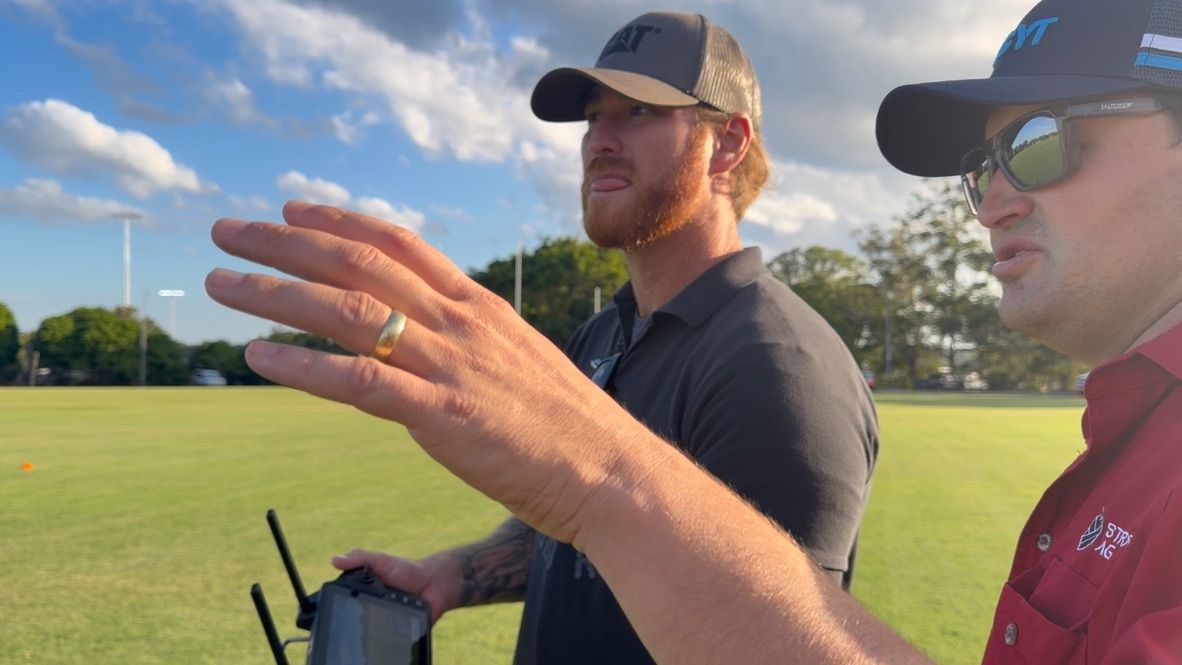
ACE Aviation’s annual Remote Operations Tour, “Our Great Australian Trip”, is designed to address that distance. The academy packs training equipment into a vehicle and takes the operation on the road. Students can learn in or near the regions where they work, rather than assuming that professional training must happen in a capital city.
That setting can make the link between training and day-to-day operations easier to see. A student preparing for agricultural work can learn around agricultural platforms. A council or mine team can discuss the kinds of inspections and site tasks relevant to its operation. However, the training still follows CASA requirements. A regional location does not create a different licence or a shortcut through compliance.
The 2026 route plan covered 8,800+ km and 15+ regional locations across WA, NT, SA and VIC. It opened in Perth, then headed north along the WA coast and into the Pilbara and Kimberley. The return leg was planned as an express drive through the Kimberley, NT and SA, without training stops.
ACE is a CASA-approved training provider, CASA.ReOC.1421. Over 10+ years, it has trained more than 4,000 students. Its head office is in Melbourne, with training delivery across Australia and internationally in Singapore, Dubai, Korea and Malaysia. Read more about ACE’s regional Remote Operations Tour, or explore its training pathways.

What comes off the truck?
The tour brings more than a classroom presentation to a town. Its mobile academy carries training equipment and learning resources that support practical delivery, including:
- CASA-approved training delivery, with real instructors rather than video modules
- Enterprise-grade multirotor aircraft
- Agricultural spray and spreading platforms
- Heavy-lift and medium-category aircraft
- Night-operations equipment
- Mapping and inspection payloads
- Simulation and theory stations
- Assessment and compliance workflows
- Regional airspace planning tools
The pathways available on tour can include RePL (Remote Pilot Licence) training, AROC (Aeronautical Radio Operator Certificate), ReOC and Chief Remote Pilot pathways, agricultural drone operations, specialist ratings, night operations, and enterprise or whole-crew training. RePL training covers multirotor theory and practical flight in the field. AROC builds radio competency for operations near controlled airspace and crewed aviation.
Not every program runs at every stop. Availability depends on demand, instructor availability, aircraft logistics, venue suitability, and airspace or operational requirements. ACE also offers corporate and on-site training across Australia as a separate pathway, where instructors, training drones and ground control equipment come to a client’s site.
Key facts: the 2026 regional tour
| Tour detail | 2026 route plan |
|---|---|
| Route length | 8,800+ km |
| Locations | 15+ regional locations |
| States and territories | WA, NT, SA and VIC |
| Tour start | Perth, 23–25 August; three days of CASA-approved training |
| Listed stops and dates | Geraldton 27 August; Carnarvon 29 August; Karratha 31 August; Port Hedland 2 September; Broome 4 September; Derby 7–11 September; Adelaide 16 September |
| Other route details | Melbourne was proposed on the run home; the express return via the Kimberley, NT and SA had no training stops |
| Training delivered on the road | RePL, AROC, agricultural operations, night operations, specialist pathways and enterprise teams, subject to availability |
| Who it is for | Regional workers, local operators, founders, schools, councils, and corporate or whole-crew teams |
| Cost to register interest | Free, with no commitment to enrol |
The route ran in three legs. Leg 1 went north from Perth along the WA coast to the Pilbara. Leg 2 travelled from Karratha through Port Hedland and Broome to Derby in the Kimberley. Leg 3 was an express return home through the Kimberley, NT and SA, with no training stops.
The route details describe a plan, not a promise that every listed location hosted every course. To shape a future trip, people can register interest in the next tour at no cost and without committing to enrol.
City training and regional tour training: what changes?
A licence pathway must meet the relevant requirements wherever training takes place. What changes is the setting, the logistics and how closely the training can connect with local work.
| Consideration | City training | Regional tour training |
|---|---|---|
| Access to instructors | Students attend a scheduled training base or course location. | The mobile academy brings instructors to selected regional communities. |
| Aircraft available | Equipment depends on the selected course and site. | The tour carries multirotor, agricultural, heavy-lift and medium-category equipment; availability varies by program. |
| Airspace complexity | Depends on the training site and planned operation. | Also depends on the site and operation; regional airspace planning tools travel with the academy. |
| AROC relevance | Based on the operation and its radio needs. | The same principle applies; AROC training may be available where scheduled. |
| Travel and work downtime | Regional students may face flights, accommodation and time away from work. | Training in town may reduce that travel burden, depending on the stop and student’s circumstances. |
| Work types nearby | Depends on the local area and the student’s work. | Can connect with regional sectors such as agriculture, mining, surveying, councils, emergency services and infrastructure. |
Step-by-step: how a regional student goes from enquiry to licence
The tour creates a local training opportunity, but students still need to choose the right pathway and complete its requirements. A typical sequence looks like this:
- Register interest. Share your town, training needs and whether you are applying as an individual, organisation or potential host. Registration is free and does not commit you to enrol.
- Confirm the stop and program. ACE assesses demand and practical requirements. Ask which course or pathway is likely to run, because not every program is available at every location.
- Prepare before arrival. Once the program is confirmed, complete any assigned pre-course study online and check the course information. This helps you arrive ready to take part in the instructor-led learning.
- Attend instructor-led theory. Work through the relevant theory with an instructor. The tour also carries theory and simulation stations for learning and practice.
- Complete practical flight and assessment in town. RePL students complete practical flight training and assessment in the field using the equipment arranged for their program.
- Add AROC if the operation needs radio competency. Discuss your intended work and operating environment. AROC training may be included where scheduled or arranged as a relevant pathway.
- Plan your next step. Qualified pilots can explore work opportunities through DroneWork, a network connecting qualified pilots with commercial work. Work is not guaranteed by training or by joining a jobs network.
For a broader view of ACE’s approach and student experience, see why students choose ACE. Regional workers can also ask how the tour pathway fits with their organisation’s operations and compliance needs.
A week on tour: what a regional student actually does
The walkthrough below follows the tour’s published schedule. It describes a typical pattern rather than one person’s diary.
Before the truck arrives. Pre-course study happens online. That matters in the bush, because a student can work through the theory on wet days or after knock-off instead of losing a week of work up front.
The opening block. The 2026 plan began with three days of CASA-approved training in Perth from 23 to 25 August. Instructor-led theory sits alongside simulation stations and practical flights, so the theory and the stick time stay connected.
The drive north. Geraldton on 27 August, Carnarvon on 29 August, Karratha on 31 August, then Port Hedland on 2 September and Broome on 4 September. A station hand, a mine supervisor and a shire crew in three different towns each get a scheduled window instead of a plane ticket.
The school program. Derby ran a five-day school program from 7 to 11 September. That is the clearest sign regional delivery is not only for commercial operators; it also builds a first pathway for local students.
Afterwards. Records, registration where required, and the operation itself take over. The licence opens the door, but the work and the compliance habits are what keep it open.
Regional examples: training near the work
These examples show how the tour’s listed industries connect with training pathways. They describe possible work contexts, not promised jobs or specific student outcomes.
Pilbara, mining and ports: Mining and resource operations can involve stockpile volumetrics, pit inspections, exploration support and site compliance capture. Port and infrastructure settings also need inspection and mapping capability. A regional RePL pathway can help a worker build practical skills near the industry context, while the intended task and site still guide planning and compliance.
Kimberley, pastoral work and wet-season access: Pastoral operations can use drones for mustering support, water-point checks, spraying, spreading and crop monitoring. The region’s long road distances and wet-season access limits make local capability relevant to day-to-day planning. ACE’s 2026 plan included Broome and a five-day school program in Derby from 7–11 September.
Regional WA and SA, broadacre agriculture and renewables: Agricultural operators may need skills for crop monitoring, spraying and spreading. Renewables and energy infrastructure can call for inspection and mapping work. The tour’s equipment list includes agricultural platforms and mapping or inspection payloads, although availability depends on the program at each stop.
NT, cattle, remote communities and infrastructure corridors: Cattle operations, councils, regional services and infrastructure operators are among the sectors named for the tour. Their potential tasks include asset inspection, mapping and operational support. Training near the work can reduce the need to leave an operation for a week, but the next route and program must still be confirmed.
Derby, community and school pathway: The 2026 plan set aside five days in Derby for a school program. This shows that regional delivery can include learning pathways beyond individual commercial operators. Any future school or community program will depend on demand, instructors, equipment, venue suitability and operational requirements.
How regional graduates may use their skills
A RePL can support commercial drone work, but it is not a job offer. Regional industries named for the tour include agriculture and pastoral operations, mining and resources, surveying and mapping, councils and emergency services, infrastructure and energy, and local operators or founders. Depending on their training and operation, pilots may work on tasks such as crop monitoring, volumetrics, site mapping, asset inspection or fire mapping.
ACE’s published graduate testimonials provide examples of outcomes for ACE graduates generally. They are not presented as results from the Remote Operations Tour. Sarah Mitchell said she “landed my first agricultural contract within three weeks of graduating. The XAG training was invaluable”. James Thornton said he was “now doing survey work for a major construction firm in Queensland”. Luke Patterson said, “Had three job offers within a month of completing my Gold package.” These are individual experiences, not typical or guaranteed results. You can read more ACE graduate testimonials or browse the drone career and pay pathways for a sector-by-sector view.
For ongoing operations, ACE’s UAMP compliance and operations platform supports compliance and operational processes. ACE also offers Altitude+, its student support and benefits program; learn more through the ACE website. For eligible students, the Certificate III in Aviation AVI30419 is delivered on behalf of Reach Community College (RTO 40747).
Why regional demand for licensed pilots is rising
Regional organisations face the same wider shift towards uncrewed aviation as organisations elsewhere in Australia, while often facing longer distances to training. The report Sizing the Future Drone and Advanced Air Mobility Market in Australia projects that Australian uncrewed traffic will grow from 1.5 million to more than 60 million drone flights annually by 2043. That is a national forecast, not a regional job count, but it signals the scale of expected activity.
The workforce need also extends beyond remote pilots. Aviation Australia CEO Glenn Ryan has said traditional aviation training models must scale aggressively to prevent a severe skills bottleneck in Australia’s next commercial transport era. He pointed to growing demand for advanced software engineers, complex systems operators and specialised maintenance technicians, not just remote pilots. Industry demand also includes chief remote pilots, instructors, engineers, maintenance specialists, systems operators, researchers, software and autonomy specialists, and safety professionals.
Training policy is changing too. On 12 October 2026, Skills Ministers endorsed the revised Aviation Training Package, Release 12.0. It updates the Certificate III in Aviation Remote Piloting to align more closely with CASA licensing requirements, streamlining six existing units and replacing them with four new units. In addition, AAUS and Industry Skills Australia are developing a tiered RPAS competency framework, due for completion in December 2026, to inform CASA’s future licensing reforms.
These developments do not guarantee work in any town. They do show why accessible training and clear competency pathways matter. If you are working out how to become a drone pilot in Australia, start by matching a suitable training pathway to the operation you want to perform. Then keep building safe, compliant skills. A commercial drone licence in Australia is a first step, not a promise of a contract.

What the tour proves about regional training
Three things stand out from the 2026 route plan.
First, the barrier for regional students is logistics, not ability. Station managers, mine supervisors, surveyors, shire crews and agricultural contractors were already the people most likely to need commercial drone capability. They were also the furthest from a training base, and the standard answer was flights, accommodation and a week off the operation.
Second, the equipment has to match the work. A tour that carries agricultural spray and spreading platforms, heavy-lift and medium-category aircraft, night-operations equipment and mapping payloads can train for the tasks the region actually performs. A general multirotor course would not cover a spray contractor's needs.
Third, demand sets the route. Every registration is a data point, and a town that wants training has to say so. That is an unusual model for a training provider, and it is a fair one: the academy goes where the need can be shown.
Common mistakes regional students should avoid
- Assuming there is no controlled airspace nearby, so AROC is never relevant. Check the operation and location rather than making a blanket assumption. AROC develops radio competency for operations near controlled airspace and crewed aviation.
- Buying an aircraft before checking registration and category requirements. First confirm the type of work, aircraft category and applicable CASA requirements. The aircraft you already own may not match the training or operation you need.
- Ignoring wet-season or harvest timing when registering. Tell ACE about the periods when you cannot leave your operation. This can help inform demand and planning, though it cannot guarantee a particular stop or date.
- Treating the licence as the finish line. Commercial work also depends on the operation, ongoing compliance and the skills a client needs. Consider whether further training or organisational support fits your work.
- Failing to ask about aircraft logistics. The tour carries a range of aircraft and equipment, but the arrangements for each program depend on demand and logistics. Confirm what equipment will be available before the course.
- Underestimating record keeping. Keep the records and operational documentation relevant to your work. Good records help you manage a professional operation and show how you are meeting its procedures.
- Assuming every program runs at every stop. RePL, AROC, agricultural operations, specialist ratings, night operations and team training depend on demand, instructors, aircraft, venue suitability and airspace or operational requirements.
CASA considerations
A regional tour changes where training happens, not the rules that apply. The tour does not change any regulatory requirement. Before flying, check the current rules and guidance from CASA’s drone information pages.
For commercial drone work, a RePL is required for the relevant remote pilot. You must also check whether your aircraft needs registration and whether the operation requires accreditation. Registration and accreditation are separate from completing training, so confirm which applies to you and your operation.
Standard operating conditions include keeping the drone within visual line of sight (VLOS), staying at or below 120 metres, flying in daylight, and maintaining required separation. These are core conditions to understand, not a complete guide to every rule or approval. A different operation may have additional requirements.
AROC provides radio competency for operations near controlled airspace and crewed aviation. Discuss your intended work and airspace needs with a training adviser, and confirm the applicable requirements before operating. Keep records that support your operations and follow the procedures that apply to your work.
Frequently asked questions
-
Do I need to travel to a city to get my drone licence?
Not always. ACE’s Remote Operations Tour brings practical training to selected regional communities. If the tour does not stop near you, ACE also delivers training across Australia and has a separate corporate and on-site pathway. Confirm the location, course and schedule before making travel plans. -
What if the tour is not coming to my town?
Register your interest and include your town, training needs and whether you can help host a stop. The next route is set by registered demand. You can also ask about ACE’s separate Australia-wide on-site delivery option. A request helps inform planning, but it does not guarantee a stop. -
Can my whole crew train together?
Yes. Enterprise and whole-crew training is one of the pathways that can be delivered on the tour. It can be relevant to mines, councils, utilities and emergency services. The team will need to confirm program scope, participant demand, instructor availability, aircraft logistics, venue suitability and operational requirements. -
Do I need to bring my own drone?
No. The mobile academy carries training aircraft and equipment, though arrangements depend on the program and stop. Ask ACE what will be provided for your specific course before you travel or buy anything. -
Does a drone licence from regional training work anywhere in Australia?
The training location does not create a separate regional licence. You must still follow the conditions and requirements that apply to your aircraft and operation wherever you fly. Check the current CASA rules and the limits of your own training before taking on work in a new location. -
Is the qualification nationally recognised?
The Certificate III in Aviation (AVI30419) is a formal qualification delivered by ACE on behalf of Reach Community College (RTO 40747). A RePL is a separate CASA licence pathway, not the same credential. Check the selected course description to confirm exactly what it awards. -
Can I do the theory online before the tour arrives?
Course preparation can include online pre-course study. Once your program is confirmed, follow the instructions ACE provides about study, theory sessions and assessment. The tour also carries theory and simulation stations, with real instructors supporting the training on location. -
How long does regional drone training take?
The length depends on the course and delivery plan. The 2026 tour included three days of CASA-approved training at its Perth start and a five-day school program in Derby. Those dates describe particular tour activities; they do not set the duration of every course or stop. -
What does it cost to register interest, and what does training cost?
Registering interest in the next tour is free and does not commit you to enrol. Training fees depend on the course or package you choose. Check ACE’s current course information and confirm what is included before you enrol; the tour page does not make every program available at every stop. -
Do I need AROC as well as a RePL?
AROC develops radio competency for operations near controlled airspace and crewed aviation. Whether it fits your pathway depends on the operation and its needs. Ask about your intended work and confirm the applicable requirements. AROC may be available on tour where it is scheduled. -
Is there commercial drone work in regional areas?
Regional industries listed for the tour include agriculture, mining, surveying, councils, emergency services, infrastructure and energy. These sectors use drones for tasks such as monitoring, inspection and mapping. Work availability varies, and completing a course does not guarantee employment or a contract. -
Can I train for night operations on the tour?
Night-operations equipment and specialist training pathways are part of the tour’s capability. However, night operations are not available at every stop. Availability depends on local demand, instructors, aircraft logistics, the venue and operational requirements. Confirm the specific program before registering for a course. -
Can a council train its team together?
Yes. Enterprise and whole-crew training can be relevant to councils and emergency services, including teams preparing for asset inspection, search support, fire mapping or disaster assessment. ACE can discuss an on-site or tour-based option. Delivery depends on the team’s needs and practical requirements. -
What happens after I register interest?
ACE uses registrations to understand demand and shape the next route. The team can then discuss likely timing, participant numbers and suitable training pathways. Registration is free and not a commitment to enrol. It also does not confirm that your town or a particular course will be selected. -
Is the next tour route confirmed?
The 2026 route plan covered locations in WA, NT, SA and VIC. The next annual route is set by registered demand and practical requirements. A registered town may be considered, but stops depend on demand, instructor availability, aircraft logistics, venue suitability and airspace or operational needs. -
Does getting a licence guarantee a job?
No. Training builds skills and supports a licensing pathway, but it does not guarantee employment, clients or income. ACE graduate testimonials describe individual experiences, not guaranteed results. Qualified pilots can explore commercial opportunities through DroneWork, while continuing to meet the rules for their operations. -
How do I get started?
Register interest in the regional tour or contact ACE to discuss your town, work and training goals. Ask which course is suitable, what will be available at the stop and what preparation is needed. Then confirm the schedule and enrolment details before making travel or work arrangements.
Training locations
The regional tour is one way to train. ACE also lists training information for Brisbane, Sydney, Melbourne, Perth and Hobart.
Summary
ACE Aviation’s Remote Operations Tour takes instructors, training aircraft and practical learning to regional communities. The 2026 plan covered 8,800+ km and 15+ locations across WA, NT, SA and VIC, with delivery shaped by local demand and operational logistics. It offers a way to learn closer to regional work, while keeping the same need to meet CASA requirements.
ACE has trained 4,000+ students over 10+ years and delivers training in Australia and internationally. Its wider support includes DroneWork, UAMP and Altitude+, ACE’s student support and benefits program. Training does not guarantee employment, and program availability at each stop depends on demand and logistics. Explore the regional tour or book training to discuss your next step.
Ready to start? Book your training at aaa.edu.au or call 1300 336 366.
{“@graph”:[{“@type”:”Article”,”author”:{“name”:”Ace Aviation Aerospace Academy”,”@type”:”Organization”},”headline”:”Drone Licence Australia 2026: The Outback Tour Case Study — What Happens When Students Get Their Drone Licence Where They Actually Work”,”publisher”:{“@id”:”https://aaa.edu.au/#organization”},”description”:”Drone licence Australia 2026: explore ACE’s regional training tour, field delivery and pathways. Register interest free and plan your next step.”,”datePublished”:”2026-11-15″,”mainEntityOfPage”:”https://aaa.edu.au/beyond-the-bitumen”},{“@id”:”https://aaa.edu.au/#organization”,”url”:”https://aaa.edu.au/”,”name”:”Ace Aviation Aerospace Academy”,”@type”:”Organization”,”telephone”:”1300 336 366″,”identifier”:”CASA.ReOC.1421″},{“@type”:”FAQPage”,”mainEntity”:[{“name”:”Do I need to travel to a city to get my drone licence?”,”@type”:”Question”,”acceptedAnswer”:{“text”:”Not always. ACE’s Remote Operations Tour brings practical training to selected regional communities. If the tour does not stop near you, ACE also delivers training across Australia and has a separate corporate and on-site pathway. Confirm the location, course and schedule before making travel plans.”,”@type”:”Answer”}},{“name”:”What if the tour is not coming to my town?”,”@type”:”Question”,”acceptedAnswer”:{“text”:”Register your interest and include your town, training needs and whether you can help host a stop. The next route is set by registered demand. You can also ask about ACE’s separate Australia-wide on-site delivery option. A request helps inform planning, but it does not guarantee a stop.”,”@type”:”Answer”}},{“name”:”Can my whole crew train together?”,”@type”:”Question”,”acceptedAnswer”:{“text”:”Yes. Enterprise and whole-crew training is one of the pathways that can be delivered on the tour. It can be relevant to mines, councils, utilities and emergency services. The team will need to confirm program scope, participant demand, instructor availability, aircraft logistics, venue suitability and operational requirements.”,”@type”:”Answer”}},{“name”:”Do I need to bring my own drone?”,”@type”:”Question”,”acceptedAnswer”:{“text”:”Do not assume you need to supply an aircraft. The mobile academy carries training aircraft and equipment, but arrangements depend on the program and stop. Ask ACE what equipment will be provided for your specific course before you travel or make a purchase.”,”@type”:”Answer”}},{“name”:”Does a drone licence from regional training work anywhere in Australia?”,”@type”:”Question”,”acceptedAnswer”:{“text”:”The training location does not create a separate regional licence. You must still follow the conditions and requirements that apply to your aircraft and operation wherever you fly. Check the current CASA rules and the limits of your own training before taking on work in a new location.”,”@type”:”Answer”}},{“name”:”Is the qualification nationally recognised?”,”@type”:”Question”,”acceptedAnswer”:{“text”:”The Certificate III in Aviation (AVI30419) is a formal qualification delivered by ACE on behalf of Reach Community College (RTO 40747). A RePL is a separate CASA licence pathway, not the same credential. Check the selected course description to confirm exactly what it awards.”,”@type”:”Answer”}},{“name”:”Can I do the theory online before the tour arrives?”,”@type”:”Question”,”acceptedAnswer”:{“text”:”Course preparation can include online pre-course study. Once your program is confirmed, follow the instructions ACE provides about study, theory sessions and assessment. The tour also carries theory and simulation stations, with real instructors supporting the training on location.”,”@type”:”Answer”}},{“name”:”How long does regional drone training take?”,”@type”:”Question”,”acceptedAnswer”:{“text”:”The length depends on the course and delivery plan. The 2026 tour included three days of CASA-approved training at its Perth start and a five-day school program in Derby. Those dates describe particular tour activities; they do not set the duration of every course or stop.”,”@type”:”Answer”}},{“name”:”What does it cost to register interest, and what does training cost?”,”@type”:”Question”,”acceptedAnswer”:{“text”:”Registering interest in the next tour is free and does not commit you to enrol. Training fees depend on the course or package you choose. Check ACE’s current course information and confirm what is included before you enrol; the tour page does not make every program available at every stop.”,”@type”:”Answer”}},{“name”:”Do I need AROC as well as a RePL?”,”@type”:”Question”,”acceptedAnswer”:{“text”:”AROC develops radio competency for operations near controlled airspace and crewed aviation. Whether it fits your pathway depends on the operation and its needs. Ask about your intended work and confirm the applicable requirements. AROC may be available on tour where it is scheduled.”,”@type”:”Answer”}},{“name”:”Is there commercial drone work in regional areas?”,”@type”:”Question”,”acceptedAnswer”:{“text”:”Regional industries listed for the tour include agriculture, mining, surveying, councils, emergency services, infrastructure and energy. These sectors use drones for tasks such as monitoring, inspection and mapping. Work availability varies, and completing a course does not guarantee employment or a contract.”,”@type”:”Answer”}},{“name”:”Can I train for night operations on the tour?”,”@type”:”Question”,”acceptedAnswer”:{“text”:”Night-operations equipment and specialist training pathways are part of the tour’s capability. However, night operations are not available at every stop. Availability depends on local demand, instructors, aircraft logistics, the venue and operational requirements. Confirm the specific program before registering for a course.”,”@type”:”Answer”}},{“name”:”Can a council train its team together?”,”@type”:”Question”,”acceptedAnswer”:{“text”:”Yes. Enterprise and whole-crew training can be relevant to councils and emergency services, including teams preparing for asset inspection, search support, fire mapping or disaster assessment. ACE can discuss an on-site or tour-based option. Delivery depends on the team’s needs and practical requirements.”,”@type”:”Answer”}},{“name”:”What happens after I register interest?”,”@type”:”Question”,”acceptedAnswer”:{“text”:”ACE uses registrations to understand demand and shape the next route. The team can then discuss likely timing, participant numbers and suitable training pathways. Registration is free and not a commitment to enrol. It also does not confirm that your town or a particular course will be selected.”,”@type”:”Answer”}},{“name”:”Is the next tour route confirmed?”,”@type”:”Question”,”acceptedAnswer”:{“text”:”The 2026 route plan covered locations in WA, NT, SA and VIC. The next annual route is set by registered demand and practical requirements. A registered town may be considered, but stops depend on demand, instructor availability, aircraft logistics, venue suitability and airspace or operational needs.”,”@type”:”Answer”}},{“name”:”Does getting a licence guarantee a job?”,”@type”:”Question”,”acceptedAnswer”:{“text”:”No. Training builds skills and supports a licensing pathway, but it does not guarantee employment, clients or income. ACE graduate testimonials describe individual experiences, not guaranteed results. Qualified pilots can explore commercial opportunities through DroneWork, while continuing to meet the rules for their operations.”,”@type”:”Answer”}},{“name”:”How do I get started?”,”@type”:”Question”,”acceptedAnswer”:{“text”:”Register interest in the regional tour or contact ACE to discuss your town, work and training goals. Ask which course is suitable, what will be available at the stop and what preparation is needed. Then confirm the schedule and enrolment details before making travel or work arrangements.”,”@type”:”Answer”}}]}],”@context”:”https://schema.org”}