

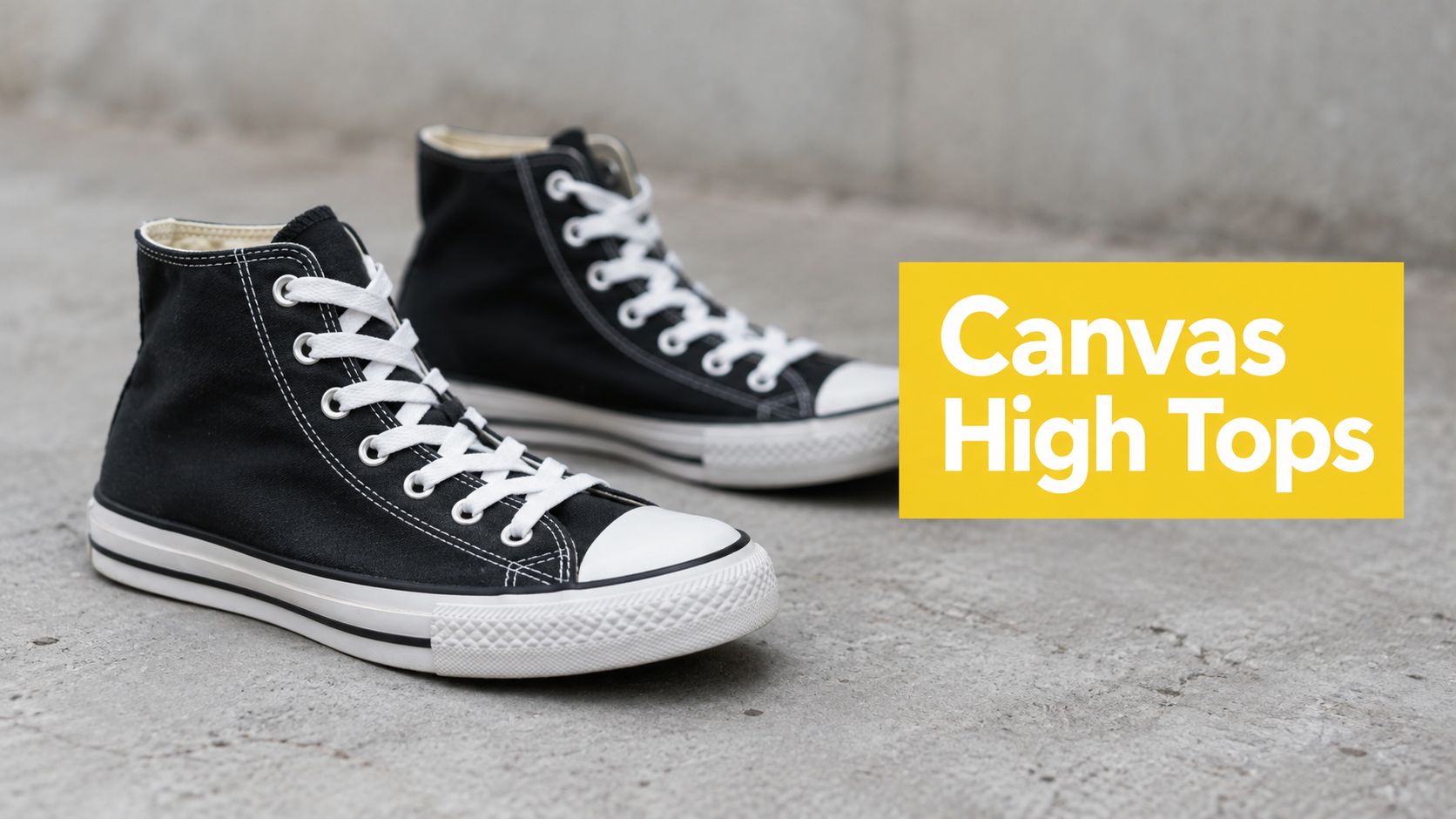
A shopper standing in front of a shoe wall can easily feel stuck. The black canvas high-top looks simple, versatile and familiar, but the same shape may be intended for a school uniform, streetwear, skateboarding or everyday walking. Online listings rarely explain why one pair feels comfortable while another pinches the toes, loses its shape or slides on a wet floor.
This guide treats black canvas shoes high top as a practical footwear choice rather than a single product type. It covers construction, breathability, grip, fit, styling, Australian price tiers and care, then explains where the shoe fits into everyday life in Australia. It also separates fashion footwear from occupational footwear, because a canvas upper alone doesn't make a shoe suitable for industrial work.
Table of Contents
- Introduction to Black Canvas High Top Shoes
- What Makes a Black High Top Canvas Shoe
- Materials Construction and Comfort Trade Offs
- Finding the Right Fit and Sizing for Everyday Wear
- How to Style Black Canvas High Tops for Any Occasion
- What to Look for When Buying in Australia
- Care and Maintenance to Keep Them Looking New
- Frequently Asked Questions
Introduction to Black Canvas High Top Shoes
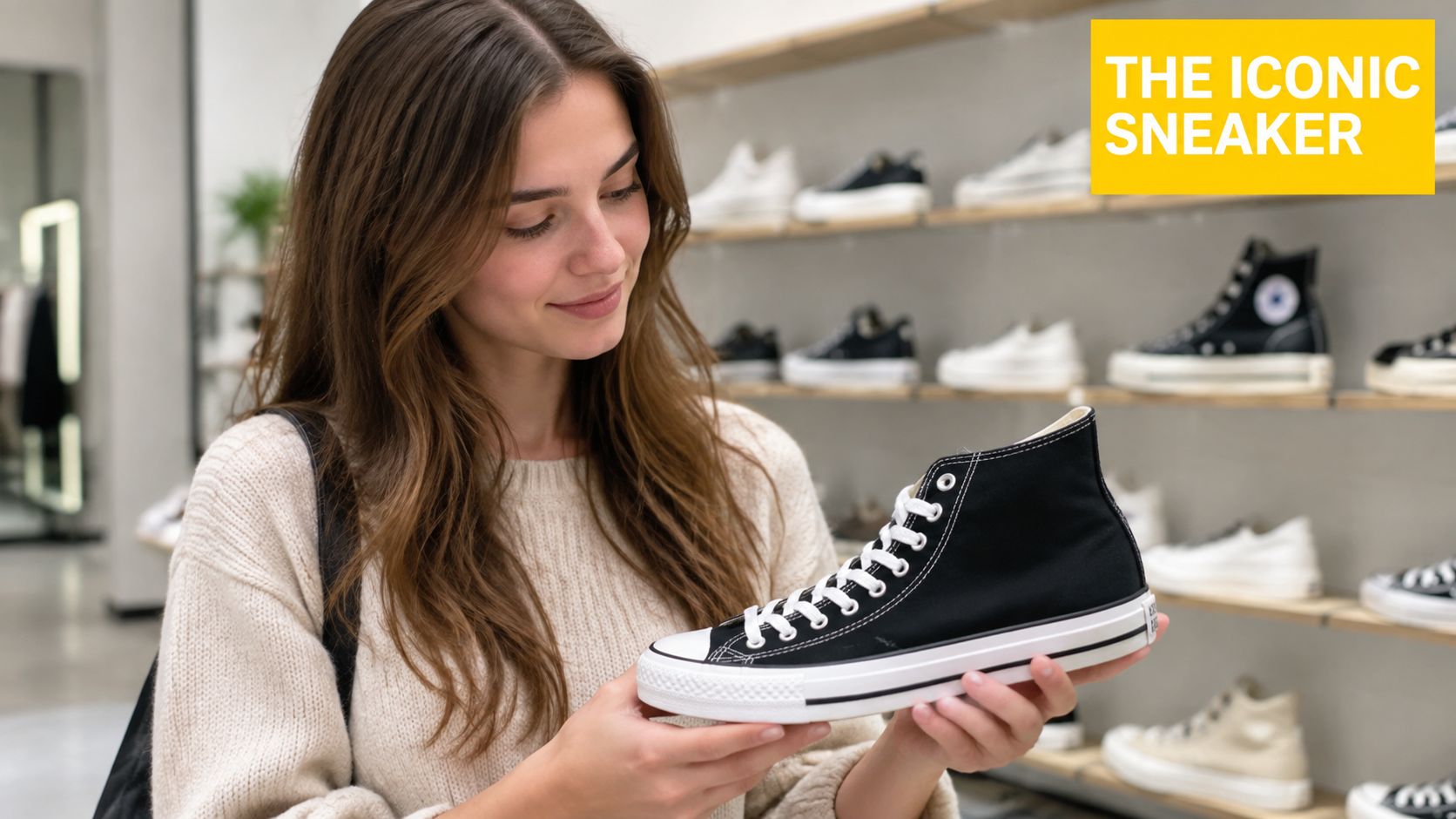
A black high-top canvas shoe usually appears when a buyer wants one pair to do several jobs. It may need to work with a school uniform in the morning, casual clothes after class and a weekend outfit without looking too delicate. The dark colour helps it coordinate with denim, workwear and neutral clothing, while the high cut gives the foot and ankle more visual structure than a low-top.
The appeal also comes from contrast. Canvas is lighter and more flexible than many leather sneaker constructions, while the rubber sole gives the shoe its familiar grounded feel. The upper can soften with wear, but it won't behave exactly like leather, and the shoe's comfort depends heavily on its shape, lining, insole and outsole.
Australian conditions make the choice more specific. A breathable upper can feel pleasant in warm weather, yet a shallow, smooth sole may perform poorly on a polished floor with moisture or debris. For workplace use, the relevant question isn't whether the shoe looks sturdy. It's whether the footwear matches the environment and any applicable occupational requirements.
Three common reasons buyers choose them
The same silhouette serves three distinct purposes:
- Uniform and budget wear: The buyer wants an affordable black shoe that meets a dress expectation and can handle ordinary daily use.
- Fashion streetwear: The buyer values the recognisable high-top shape, easy colour matching and casual visual weight.
- Skate-oriented use: The buyer needs a secure upper, dependable board feel and an outsole suited to repeated movement.
Those categories overlap, but they shouldn't be treated as interchangeable. A fashion pair may look right but lack cushioning, while a skate-inspired pair may feel more stable yet weigh more. The rest of the guide helps a first-time buyer identify which version fits the actual routine.
What Makes a Black High Top Canvas Shoe
The simplest way to understand a high-top is to think of the shoe as clothing in layers. The canvas upper is the outer shirt, the ankle collar is the padded cuff, the midsole acts like a small layer of shock management, and the rubber outsole is the protective sole that meets the ground.
The upper creates the shoe's character
Canvas is a woven textile. Its weight, weave and stitching influence how the shoe bends, holds its shape and responds to scuffing. A tightly woven upper with reinforced seams generally feels more substantial than a thin fashion canvas, although stitching quality and panel design matter just as much as fabric thickness.
Black canvas also shows construction details clearly. Look for even stitching around the toe, clean joins at the eyestay and a firmly attached sole edge. Loose threads don't automatically mean the shoe will fail, but they signal that the buyer should inspect the rest of the build carefully.
The high cut changes the fit
The ankle collar rises higher than a low-top and may include padding. It can make the shoe feel more secure around the heel and ankle, but it also adds material, warmth and visual bulk. The collar shouldn't press painfully against the ankle bone, and it shouldn't remain loose after the laces have been tightened.
Eyelets and laces control much of the fit. The lower laces set pressure across the forefoot, while the upper laces help prevent the heel from lifting. Flat laces distribute pressure more evenly than very narrow laces, but the eyelet spacing and tongue shape still determine how the shoe feels.
The outsole determines ground contact
The rubber outsole is the part that interacts with the floor, pavement or board. Its compound affects flexibility and grip, while tread geometry determines how edges contact the surface and how contaminants move away from the contact area. A high-top with a comfortable upper can still be unsuitable if the outsole doesn't match the environment.
A black canvas high-top is therefore a system, not merely a fabric shoe. Buyers should assess the upper, collar, lacing, cushioning and sole together rather than assuming the most visible material tells the whole story.
Materials Construction and Comfort Trade Offs
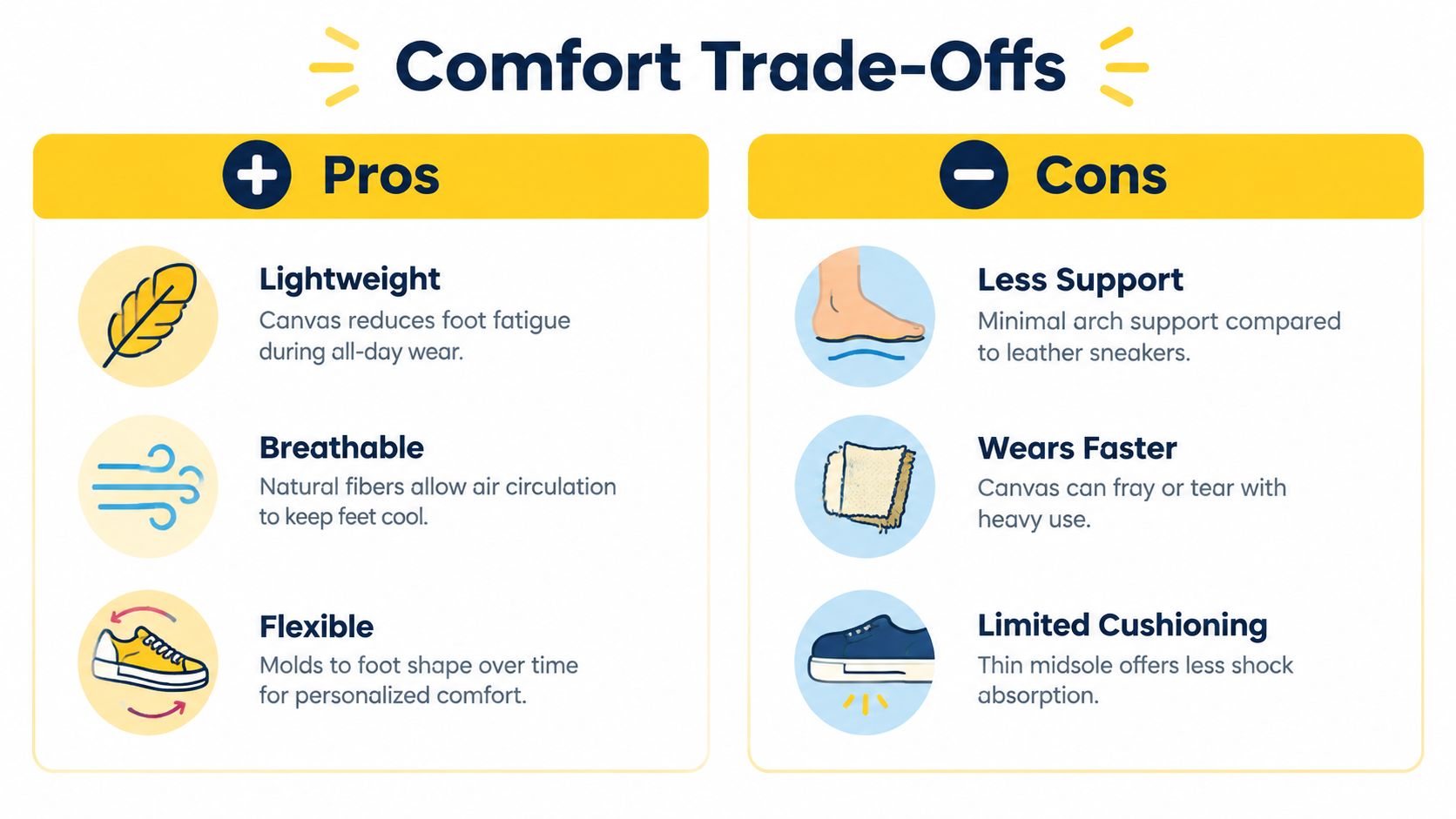
Canvas offers a straightforward comfort advantage: it tends to feel lightweight and flexible, particularly when compared with stiffer casual footwear. Australian retailer guidance also describes mesh and canvas constructions as allowing airflow through the upper, which can create a cooler, more sock-like sensation in warm conditions (JD Sports' black Converse high-top listing).
That flexibility has limits. A simple canvas high-top may provide less structural support, less arch shaping and less shock absorption than a sneaker built around a thicker midsole or a moulded footbed. The upper may soften after repeated wear, but softening doesn't add arch support or transform a flat sole into a cushioned walking shoe.
Breathability versus support
Mesh panels, perforations and lighter canvas can improve airflow. That can suit hot Australian days, especially when the wearer spends time walking outdoors or moving between warm spaces. The trade-off is that a more open upper may feel less protective and may offer less resistance to abrasion or light weather.
A denser canvas, padded collar and reinforced panels create a more structured feel. They can suit cooler southern climates, workwear-inspired outfits and skate use, but the extra material may feel warmer during summer walking. The right choice depends on whether the buyer values airflow, stability or resistance to rough treatment most.
A useful resource on how designers balance appearance and practical use is this overview of AI product design for home goods, which places footwear decisions alongside broader product design considerations.
Grip comes from the sole, not the canvas
Canvas footwear can be slippery on wet floors or roads unless the outsole has been engineered for slip resistance. The technical focus should be the rubber compound and tread pattern, not only the presence of a textured-looking sole.
Black canvas high-tops built to AS 2210.3:2019 / AS 2210.5:2019 requirements can achieve the highest recognised slip-resistance classification, SRC. The rating means the outsole has passed both ceramic-tile-with-detergent testing, known as SRA, and steel-with-glycerol testing, known as SRB (KingGee's slip-resistant canvas safety shoe information).
WorkSafe Queensland guidance cited by that product information favours tread patterns with more edges, bevelled or rounded heel edges and rubber soles. Tread depth should match the contaminant and surface, while shallow, smooth soles are a poor choice for polished floors with moisture or debris. Buyers should test footwear in the intended conditions, especially before using it for workplace tasks.
Finding the Right Fit and Sizing for Everyday Wear
A black high-top can look relaxed while fitting quite precisely. The ankle collar may hide heel movement, and the canvas may feel forgiving across the top of the foot, so shoppers sometimes miss pressure at the toes or width at the forefoot.
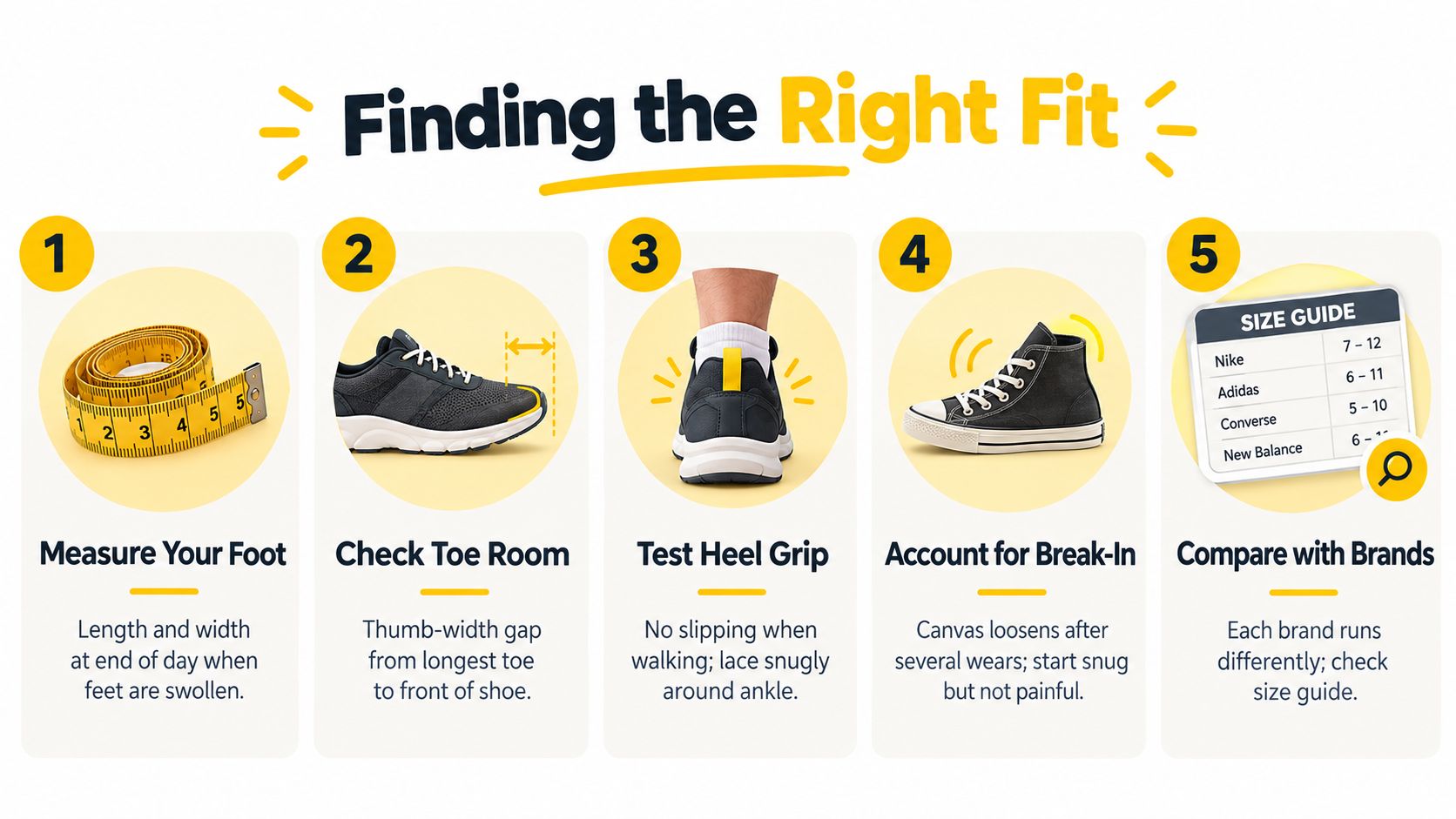
Fit should be checked while wearing the socks normally used with the shoes. Feet can feel larger later in the day, so an afternoon fitting gives a more realistic result than trying footwear only when the feet are rested.
A practical try-on checklist
- Check length first. The longest toe should have comfortable space in front of it. Toes shouldn't touch the end when the wearer walks downhill or bends the foot.
- Assess the ball of the foot. The widest part of the foot should sit at the shoe's widest point. If the canvas bulges sharply or the little toe feels compressed, a longer size may not solve the problem. A wider fit may be more appropriate.
- Walk for heel movement. A small amount of movement can occur in new footwear, but the heel shouldn't lift repeatedly with every step. Lacing the upper eyelets more securely can improve hold, but it can't fix a poor shape.
- Check the collar. The padded edge should sit comfortably around the ankle. Pressure on the ankle bone, rubbing or numbness indicates a problem that break-in time won't necessarily correct.
- Evaluate the footbed. A flat insole may feel acceptable for short outings but become tiring during long standing or walking. Buyers needing specific support should look for a suitable insole or another shoe design.
Canvas often loosens slightly with wear, but it doesn't stretch like leather. A shoe that feels tight across the toes at purchase may remain uncomfortable, while a snug but non-painful upper can settle with use. Guidance on assessing width and pressure points can also be found in this practical discussion of women's safety boots for wide feet.
Choosing between sizes
Brand sizing isn't perfectly consistent. The safest approach is to compare the internal measurements or brand size guide, then use the return policy as a safeguard where available. Sizing up may create excessive heel slip, so width should be assessed separately from length.
How to Style Black Canvas High Tops for Any Occasion
Black high-tops work because they create a clear vertical line from the foot towards the ankle. That line can make relaxed trousers look more deliberate, balance an oversized jacket and bring visual weight to outfits that might otherwise look top-heavy.
The choice between a high-top and a low-top should start with use, not trend. A low-top usually feels lighter and more open around the ankle, which can suit hot summer walking. A high-top offers more ankle coverage and can feel visually warmer in cooler southern climates, although it may add heat and weight.
Three outfit formulas that work
For casual streetwear, black high-tops pair naturally with straight-leg denim, cargo trousers or relaxed shorts. Trouser hems can sit just above the collar, rest lightly on it or stack slightly over the shoe. Black socks create a continuous line, while white or contrast socks make the ankle area a deliberate feature.
For smart-casual layering, the shoe looks cleaner with dark chinos, a plain shirt and an overshirt or lightweight jacket. The high-top keeps the outfit from looking too formal, but the rest of the clothing should be neat. Scuffed rubber and heavily creased canvas can undermine the effect, so this combination suits a well-maintained pair.
For skate-inspired outfits, the buyer can combine a sturdier high-top with relaxed trousers, a graphic tee and an overshirt. The shoe should allow enough ankle movement and shouldn't be selected for appearance alone if it will be used on a board. A secure lace pattern and suitable tread matter more than the logo.
Matching the silhouette to Australian conditions
Black hides some urban dust and small marks better than pale canvas, but it still shows salt, chalky residue and faded areas. In hot weather, shorts and low socks can reduce the visual and physical weight of the high-top, though the collar remains warmer than a low-top.
For school or conservative casual workwear, the dark colour and covered shape are easy to coordinate. For outdoor or industrial work, styling considerations come second. The shoe must match the workplace surface, required protective features and the relevant safety expectations.
What to Look for When Buying in Australia
Australian shoppers encounter a wide range of imported footwear. In 2024, Australia imported about 122 million pairs of footwear worth about US$1.5 billion, with China supplying 88 million pairs, or 72% of total import volume. Vietnam supplied 18 million pairs and Indonesia 6.5 million pairs in the same year (Australian footwear importing guidance from Epic Sourcing). Imports reached 131 million pairs in 2013, showing that imported categories have remained structurally important over a long period.
That context explains why availability can vary and why a familiar brand name doesn't automatically prove better construction. Buyers should inspect the upper, stitching, insole and outsole directly.
Three buying tiers
| Tier | Typical Price AUD | Key Features | Best For |
|---|---|---|---|
| Budget uniform shoes | A$9 to A$18 | Basic canvas or synthetic upper, simple cushioning and standard rubber sole | School uniforms, occasional wear and buyers prioritising low upfront cost |
| Fashion streetwear | Around A$129.99 to A$150 | Recognisable styling, more established construction and broader outfit versatility | Regular casual wear and buyers who value silhouette and brand design |
| Skate-oriented hi-tops | Often around the premium retail range | More structured upper, board-focused fit, secure lacing and attention to outsole feel | Skate use, active casual wear and buyers seeking additional stability |
The budget range is represented by Kmart's black high-top canvas shoes, listed at A$9, previously A$18 (Kmart product listing). Premium examples include Converse Chuck Taylor All Star high-tops at around A$140 to A$150, while JD Sports and Rebel list black hi-top canvas options around A$129.99 to A$150, according to the verified Australian assortment information.
What extra money should achieve
A higher price should buy something tangible, such as a better-shaped footbed, stronger stitching, more consistent sizing, improved cushioning or a more suitable outsole. It shouldn't be paid merely for a black upper and a high collar.
For online shoppers, product images need careful reading. A clear MerchLoom shoe photography guide can help explain why sole edges, stitching, toe shape and material texture matter when comparing listings. Buyers should seek multiple angles, close views of the tread and clear information about materials.
The most useful question is: Which job must the shoe perform? A budget pair may be sensible for a uniform used occasionally, while a daily walker may value cushioning and fit more than the lowest price. A skate user should prioritise secure construction and outsole behaviour.
Care and Maintenance to Keep Them Looking New
Black canvas stays presentable when dirt is removed before it becomes embedded. A soft brush can lift dry dust, while a damp cloth and mild soap are suitable for small marks. Full soaking should be avoided unless the maker specifically permits it, because excess water can affect adhesives, shape and colour.
For routine care:
- Brush first: Remove loose dust before adding moisture.
- Spot-clean gently: Work from the outside of a mark towards the centre without scrubbing aggressively.
- Clean the rubber separately: A soft brush or cloth can lift grime from the midsole and outsole edges.
- Wash laces apart: Removing the laces prevents dirt from collecting beneath them and makes them easier to refresh.
- Dry naturally: Keep the shoes away from direct heat, which can warp materials or accelerate fading.
- Store with shape: Loosely fill the toe area with plain paper and keep the laces relaxed.
Australian dust, heat and occasional rain can make a daily urban pair need more frequent attention than footwear used only on weekends. Waterproofing products should be tested on a discreet area first, because some treatments can darken or alter black canvas.
For readers moving from everyday footwear into aviation training, ACE READY is an entry-level drone training course covering drone fundamentals, aviation safety, CASA regulations, flight operations and preparation for advanced Remote Pilot Licence training in Australia.
Ace Aviation Aerospace Academy provides Australian training in the Remote Pilot Licence and Aeronautical Radio Operator Certificate, along with relevant aviation education for people progressing from beginner drone knowledge to professional operations. Visit Ace Aviation Aerospace Academy to review the training pathways and choose the course that matches the intended aviation role.
Frequently Asked Questions
Are black canvas high-tops suitable for daily walking in hot Australian summers?
They can be comfortable if the upper allows airflow and the fit doesn't create pressure, but the high collar may feel warmer than a low-top. A mesh or lighter canvas construction can improve ventilation, while cushioning and footbed design determine whether the shoe remains comfortable over longer walks.
Do black high-tops hide dirt?
Black can conceal some ordinary urban dust and small marks, but it may show salt, pale residue and fading. Regular brushing and gentle spot cleaning help preserve the colour and surface.
Are canvas high-tops suitable for workplace safety?
Only when the complete shoe matches the workplace requirements. Canvas alone isn't a safety feature. Buyers should check the outsole, relevant certification and the conditions where the shoe will be worn, particularly on wet, polished or contaminated surfaces.
Should buyers size up in black canvas high-tops?
Not automatically. Length and width should be assessed separately. Sizing up may create heel movement, while a wider design may solve forefoot pressure more effectively than adding length.
Which type lasts longest?
Durability depends on construction and use. A budget uniform pair may suit occasional wear, while a sturdier fashion or skate-oriented pair may offer better support and resistance for regular use. The best choice is the tier whose construction matches the daily activity.
Are high-tops better than low-tops?
Neither is universally better. High-tops offer more ankle coverage and a stronger silhouette, while low-tops generally feel lighter and cooler around the ankle. Climate, clothing, walking routine and intended activity should determine the choice.