A drone licence Australia pathway can lead to paid work, but certification is only the beginning. Ace Aviation combines CASA-aligned training with Altitude+ support and DroneWork job access, helping graduates build skills, confidence, compliance systems and commercial opportunities.
Meta description: Drone licence Australia guide for 2026: see how Altitude+ and DroneWork help Ace graduates move from training into paid work. Start today.
Important note: The graduate profiles below are representative composite personas. They show realistic pathways and outcomes, not guaranteed earnings, job offers or employment results.
From a drone licence to a commercial drone career
Many students begin with one question: “How do I become a drone pilot in Australia?”
The answer involves more than passing a theory exam. You need the right licence, practical skills, legal operating structure, insurance, records and a clear plan for finding work.
That is where Ace Aviation’s approach is different. The academy supports the complete journey:
- Choose the right training pathway.
- Complete theory and practical assessment.
- Build operational confidence.
- Maintain currency and compliance.
- Create a portfolio.
- Find suitable work through DroneWork.
- Send your first compliant invoice.
Ace Aviation has trained more than 4,000 students and supports training across Australia and overseas. Its global footprint includes Singapore, Dubai, Korea and Malaysia.
The academy also operates within a broader commercial ecosystem. Ace supports training, UAMP supports operational compliance, and DroneWork connects qualified pilots with commercial opportunities.
This does not mean every graduate receives work automatically. Instead, students receive a stronger platform for turning a qualification into a real business or employment pathway.

What Altitude+ adds to your drone licence Australia pathway
A standard course can help you qualify. However, new pilots often need support after the assessment.
Altitude+ is Ace Aviation’s student benefits and ongoing support program. It is designed to help graduates keep learning, stay current and prepare for commercial work.
Depending on the selected course pathway, student benefits may include:
- Access to DroneWork job and opportunity listings.
- Refresher training support.
- Continued access to learning materials.
- 24/7 human support.
- Educational pricing on selected equipment.
- Industry events and networking.
- Career development guidance.
- Access to UAMP compliance tools on eligible pathways.
- Support with operational planning.
- Additional training options, such as night operations or specialist drone work.
This support matters because aviation skills can fade when they are not practised. Regulations and client expectations can also change.
Altitude+ helps graduates treat certification as the start of professional development. It does not replace a pilot’s responsibility to comply with current CASA requirements. Instead, it gives students a structured environment for continuing that work.
The benefits also help address a common gap in drone education. Many courses finish when the student passes the assessment. A commercial pilot still needs to learn how to quote, plan, document, communicate with clients and deliver consistent results.
What DroneWork does
DroneWork is Ace’s job and opportunities network. It connects qualified pilots with commercial tasks, employers and potential clients across Australia.
Listings and opportunities may relate to:
- Construction progress photography.
- Surveying and mapping.
- Agriculture.
- Property media.
- Infrastructure inspection.
- Utilities.
- Mining and resources.
- Emergency services.
- Environmental monitoring.
- Film and commercial production.
Pilots must still check whether they hold the right licence, aircraft category, insurance and operational approvals for each job.
DroneWork is a pathway to opportunities, not a promise of employment. A graduate’s results depend on location, experience, equipment, portfolio quality, communication and market demand.
Four representative graduate pathways
The following examples show how different students may use Ace training, Altitude+ and DroneWork. Each profile includes a location, course pathway, timeframe and representative commercial outcome.
1. The Brisbane tradie who added drone services
Persona: Daniel, a 38-year-old electrical contractor
Location: Brisbane, Queensland
Course: Silver pathway with sub-7 kg and sub-25 kg RePL training, plus AROC
Timeframe: Around 10 weeks from enquiry to first paid inspection
Representative outcome: Added roof, solar and construction progress imagery to his existing business
Daniel already worked around construction sites. He understood site access, safety briefings and client expectations. However, he had no aviation background and initially viewed drones as a simple camera tool.
During the drone course in Brisbane, Daniel learned that commercial work requires more than flying smoothly. He needed to understand airspace, risk controls, pre-flight planning, emergency procedures and evidence-based record keeping.
After certification, he used Altitude+ support to refine his service offer. He created three sample packages:
- Roof and solar inspection imagery.
- Monthly construction progress reports.
- Basic marketing aerial photography.
He then used DroneWork to review suitable opportunities. His first invoice was for a small construction progress package. It covered travel, flight planning, image capture and edited deliverables.
Daniel did not leave his trade immediately. Instead, he used drone services as an additional revenue stream. This is a practical option for many career starters. Existing industry knowledge can be as valuable as flying ability.
2. The Melbourne career changer who moved into surveying support
Persona: Priya, a 31-year-old former administration manager
Location: Melbourne, Victoria
Course: Gold pathway with RePL, AROC, ReOC setup support and business guidance
Timeframe: Approximately four months from enrolment to regular subcontracting work
Representative outcome: Began supporting a civil contractor with site imagery and mapping data
Priya wanted a career with more outdoor work and technical responsibility. She chose a drone course in Melbourne after comparing short introductory courses with broader commercial pathways.
Her first challenge was confidence. She had never used a professional controller. She also needed to learn aviation language, mapping workflows and the difference between capturing images and producing usable data.
The course gave her a foundation in:
- Flight planning.
- Multi-rotor operations.
- Airspace awareness.
- Risk management.
- Client documentation.
- Professional communication.
Through Altitude+, Priya continued practising flight planning and built a small portfolio. She captured sample construction imagery and created a simple report showing image naming, location and date.
DroneWork helped her understand what clients actually request. She learned that a client may not want “drone footage”. They may want progress evidence, measurements, a site overview or a repeatable monthly report.
Within several months, Priya began taking subcontracting assignments under an existing operator structure. Her representative income reached approximately $450 to $800 for smaller assignments, depending on travel, equipment, editing and scope.
These figures are examples only. A pilot should never price work without considering insurance, time, travel, data processing and compliance requirements.

3. The regional farmer who trained for agricultural drone work
Persona: Marcus, a 46-year-old broadacre farmer
Location: Regional Victoria
Course: Platinum pathway with advanced category training and agricultural specialisation
Timeframe: Around six months from initial enquiry to seasonal commercial work
Representative outcome: Used drone capability for crop monitoring and supported nearby farms
Marcus did not want to become a traditional drone videographer. His focus was agriculture.
He needed training that covered larger aircraft, field logistics, mapping, batteries, ground operations and safe work practices. He also needed to understand that agricultural spraying may involve additional chemical and workplace requirements.
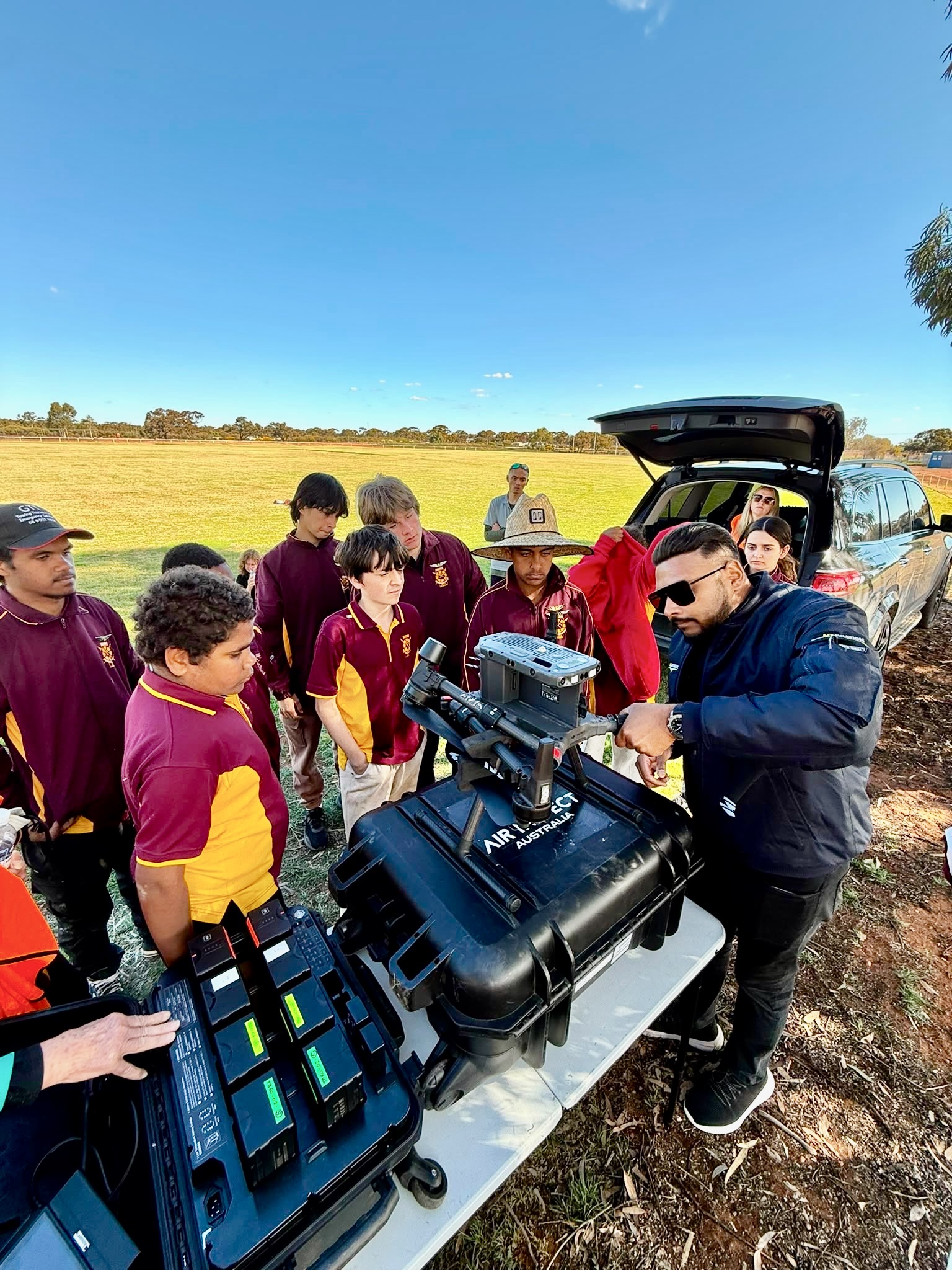
His pathway combined formal aviation training with specialist agricultural drone instruction. Practical sessions helped him understand equipment setup, flight boundaries, mission planning and the difference between a demonstration flight and a repeatable operation.
The training also introduced him to enterprise requirements, including:
- Pre-operational briefings.
- Site risk assessments.
- Battery and equipment checks.
- Weather monitoring.
- Chemical handling considerations.
- Mission records.
- Maintenance records.
- Client reporting.
After completing training, Marcus used his existing agricultural network to find work. DroneWork gave him another channel for reviewing opportunities and building connections.
His first commercial assignments focused on crop health imagery and field mapping. Later, he explored spraying and spreading work after confirming the required qualifications, equipment and approvals.

4. The corporate team operating across Australia and overseas
Persona: A four-person infrastructure inspection team
Locations: Sydney, Perth and Singapore
Course: Corporate RePL and AROC training, followed by advanced compliance support
Timeframe: Approximately three months to train the initial team
Representative outcome: Built an internal drone capability for inspections and asset documentation
A corporate team has different needs from an individual student. The organisation must consider staff roles, equipment, operating procedures, records, client contracts and risk ownership.
The team began with a needs assessment. Their work involved infrastructure inspections, so the training focused on practical operations rather than recreational flying.
Ace delivered training for multiple team members. The group worked through:
- RePL theory.
- Practical flight skills.
- Radio procedures.
- Operational risk controls.
- Equipment checks.
- Data management.
- Internal role allocation.
- Escalation procedures.
The team used Altitude+ benefits to support refresher learning and maintain a common operating standard. It also used compliance tools to improve consistency across locations.
After training in Australia, the team used the same professional mindset when planning work overseas. However, Australian certification does not automatically authorise operations in another country. Each overseas location has its own aviation rules, approvals and operating conditions.
This is why Ace’s international footprint can be useful. Students may access broader industry perspectives in Singapore, Dubai, Korea and Malaysia, while still checking the local law that applies to each operation.
Key facts: pathway, timing and support
The table below provides an indicative guide. Actual timing depends on availability, course selection, assessment performance, business readiness and local job demand.
| Course pathway | Suitable for | Typical time to first paid job* | Support included |
|---|---|---|---|
| Starter | Small commercial work and entry-level pilots | 1–3 months | RePL pathway, AROC, DroneWork access and student support |
| Silver | Pilots seeking broader commercial work | 1–4 months | RePL categories, AROC, flexible study, refreshers and DroneWork |
| Gold | Students starting a drone business | 2–6 months | RePL, AROC, ReOC setup support, First Mission Assist, Altitude+ and DroneWork |
| Platinum | Enterprise, advanced or medium-category operations | 3–9 months | Advanced RePL pathway, Certificate III option, ReOC support, specialist training and career development |
| Corporate | Organisations training multiple staff | Project-based | Group delivery, operational planning, compliance guidance and ongoing support |
*These timeframes are illustrative. Training does not guarantee employment or income.
For current packages, inclusions and pricing, review the Ace Aviation courses page before enrolling. The cost of a CASA RePL pathway varies with aircraft category, AROC, ReOC support, specialist endorsements and delivery format.
Step by step: from enquiry to first invoice
1. Start with the Licence Finder
Begin with the Licence Finder. It helps match your goal to a possible training pathway.
Consider:
- The drone weight and type you plan to operate.
- Whether you want employment or self-employment.
- Your target industry.
- Whether you need radio training.
- Whether you will work under another operator’s ReOC.
- Whether you plan to run your own business.
- Whether you need advanced or specialist operations.
The correct answer is not always the most expensive course. It is the pathway that fits your planned work.
2. Book a consultation or training date
Next, speak with the team and confirm the course structure. You can book your training or discuss your needs before enrolling.
At this stage, confirm:
- Training location.
- Theory delivery.
- Practical assessment dates.
- Aircraft category.
- Required documents.
- Payment options.
- Additional endorsements.
- Business or corporate requirements.
Ace supports locations including Sydney, Melbourne, Brisbane, Perth and Hobart. It also provides online theory options.
3. Complete pre-course theory
Most students begin with self-paced learning. This gives you time to review aviation concepts before live classes.
Important topics may include:
- Aviation legislation.
- Airspace.
- Meteorology.
- Navigation.
- Human factors.
- Risk management.
- Aircraft systems.
- Emergency procedures.
- Operating limitations.
Do not treat theory as a formality. A professional pilot must make safe decisions before the aircraft leaves the ground.
4. Attend instructor-led theory
Live instruction gives students the opportunity to ask questions and work through scenarios.
For example, a trainer may ask what you would do if:
- A person enters the operating area.
- The aircraft loses navigation information.
- Wind conditions change.
- A battery warning appears.
- You approach controlled airspace.
- The client asks you to fly beyond the approved plan.
These discussions build judgement, not just memory.
5. Complete practical flight training
Practical training develops aircraft control and operational discipline.
Students practise:
- Pre-flight inspections.
- Controller setup.
- Take-off and landing.
- Manoeuvres.
- Hover control.
- Emergency responses.
- Visual scanning.
- Site awareness.
- Mission planning.
- Post-flight procedures.
The objective is not to perform impressive tricks. It is to operate safely, consistently and professionally.

6. Complete assessment and certification
After passing the required theory and practical components, the training provider completes the relevant licensing process.
Your RePL is an individual qualification. It does not by itself authorise every type of commercial operation.
The work may also require:
- A ReOC.
- Aircraft registration.
- Operator accreditation.
- AROC.
- Insurance.
- CASA approval.
- Client-specific safety requirements.
- Additional industry licences.
7. Activate Altitude+ benefits
Once certified, use Altitude+ to keep developing.
A new pilot should build a practical plan for the first 90 days. That plan may include:
- Completing refresher flights.
- Creating a service list.
- Building a portfolio.
- Reviewing insurance.
- Preparing quote templates.
- Learning data delivery workflows.
- Updating a professional profile.
- Attending industry events.
- Reviewing DroneWork listings.
8. Join DroneWork and prepare for opportunities
Set up your profile with accurate information. Include:
- Licences and ratings.
- Aircraft categories.
- Location.
- Availability.
- Relevant industry experience.
- Insurance status.
- Portfolio examples.
- Services offered.
- Travel range.
Only accept work that matches your capability and legal authority.
9. Complete the first job and send the first invoice
Before the job, confirm the scope in writing. Include:
- Site address.
- Flight area.
- Deliverables.
- Timing.
- Weather limitations.
- Client responsibilities.
- Price.
- Payment terms.
- Data handling.
After the job, retain the required records. Then send an invoice that clearly describes the service.
Common mistakes new drone pilots make
Choosing a course with no job support
A licence is valuable, but new pilots also need help applying it. Ask whether the provider offers career guidance, portfolio support, refresher access or job-network access.
Letting currency lapse
Skills decline when you stop flying. Schedule regular practice and record your flights. Use refresher options where available.
Starting work without insurance or compliance systems
Do not assume a RePL solves every business requirement. Review public liability, professional indemnity, aircraft cover, contracts and operational documentation.
Having no portfolio
Clients need evidence that you can deliver useful results. Build a small portfolio with permission and protect confidential information.
Accepting work outside your capability
Do not accept a mapping, inspection, agriculture or night operation job simply because it pays well. Confirm the aircraft, approvals, skills and documentation first.
Confusing a RePL with a ReOC
A RePL relates to the individual pilot. A ReOC relates to the organisation operating commercially. Many pilots work under an employer’s ReOC. Business owners may need their own operating certificate.
Treating DroneWork as guaranteed employment
DroneWork can create access to opportunities. It cannot guarantee a job, contract or income. Your profile, response time, professionalism and qualifications still matter.
CASA considerations for commercial drone pilots
Rules can change, so always check the latest information on the CASA drones page before operating.
RePL
A Remote Pilot Licence is an individual qualification for operating certain remotely piloted aircraft. The rating and aircraft category matter.
A pilot must operate within the privileges and limitations of the licence. A RePL is not a universal authorisation for every aircraft or mission.
AROC
An Aeronautical Radio Operator Certificate supports legal use of aviation radio where required. It can be important for operations involving relevant airspace and aviation communication procedures.
However, holding an AROC does not automatically provide permission to enter controlled airspace. The operation must still meet all applicable requirements.
ReOC
A Remote Operator’s Certificate relates to the organisation conducting commercial drone operations. The organisation may need appropriate manuals, systems, nominated personnel and operational controls.
Ace Aviation highlights CASA.ReOC.1421 as part of its operational authority and compliance credentials. Students should still confirm which organisation holds the ReOC and how that authority applies to their intended work.
Registration and accreditation
Commercial drone operators may need to register aircraft and obtain operator accreditation. Requirements can depend on aircraft weight, operation type and the applicable category.
Do not rely on an old social media post or an informal client request. Check current CASA requirements before each new type of work.
Record keeping
Professional operators should maintain accurate records. These may include:
- Pilot qualifications.
- Aircraft details.
- Maintenance.
- Battery checks.
- Pre-flight checks.
- Risk assessments.
- Weather.
- Flight logs.
- Incidents.
- Client approvals.
- Training and currency.
Good records help demonstrate control of the operation. They also make it easier to review what happened after a job.
Frequently asked questions
1. What is a drone licence in Australia?
For many professional operations, a drone licence means a CASA Remote Pilot Licence, or RePL. The required category depends on the aircraft and intended operation.
2. Is a RePL required for every paid drone job?
No. Some sub-2 kg operations may fit within an excluded category with different requirements. However, more complex or heavier commercial work generally requires a RePL and operation under an appropriate ReOC.
3. How do I become a drone pilot in Australia?
Choose a suitable CASA-aligned course, complete theory and practical training, pass the assessment, obtain the required credentials and then build experience through compliant work.
4. What is the commercial drone licence Australia employers usually ask for?
Many employers look for a RePL that matches the aircraft category. They may also require AROC, site inductions, insurance, specialist endorsements or experience in their industry.
5. How much does a CASA RePL cost?
The CASA RePL cost varies by provider, aircraft category and course inclusions. AROC, ReOC support, advanced ratings and specialist training can change the total price. Check current course pricing before enrolling.
6. How long does it take to get a RePL?
Many students complete blended theory and practical training over several weeks. The full journey may take longer if you need additional categories, business setup or advanced endorsements.
7. Can I take a drone course in Brisbane?
Yes. Ace provides training in Brisbane. Visit the Brisbane training location for local delivery information.
8. Does Ace offer a drone course in Melbourne?
Yes. Ace offers practical training in Melbourne alongside online theory options. See the Melbourne drone training page.
9. Where can I take a drone course in Sydney?
Ace provides Sydney training for students seeking commercial drone qualifications. Visit the Sydney location page for current details.
10. Is there a drone pilot course in Perth?
Yes. Students can access Perth-based practical training. Review the Perth drone pilot course information.
11. Does Ace provide drone training in Hobart?
Yes. Ace supports practical training in Hobart. See the Hobart drone training page.
12. What is Altitude+?
Altitude+ is Ace Aviation’s student benefits and ongoing support program. It may include refreshers, learning access, support, equipment benefits, networking and career development resources.
13. What is DroneWork?
DroneWork is a jobs and opportunities network that connects qualified drone pilots with commercial tasks, clients and employers.
14. Does DroneWork guarantee a job?
No. DroneWork provides access to opportunities, but it does not guarantee employment, contracts or income.
15. Can I start a drone business after completing a RePL?
You can begin planning a business, but you may need a ReOC, insurance, operating manuals, risk systems and other approvals before accepting certain commercial work.
16. Do I need an AROC?
You may need an AROC when the operation requires aviation radio use. Your training adviser can help identify whether it fits your intended work.
17. Can I work overseas with an Australian RePL?
Not automatically. Each country has its own aviation rules. Contact the local aviation authority before operating outside Australia.
18. What industries employ drone pilots?
Common industries include agriculture, construction, surveying, mapping, infrastructure, utilities, mining, media, property, emergency services and environmental monitoring.
19. Should I buy a drone before training?
Not always. Start by confirming the aircraft category and type of work you want to pursue. Training first can prevent an expensive purchase that does not suit your legal or commercial pathway.
20. Can Ace help corporate teams?
Yes. Ace provides corporate and on-site training options for organisations building internal drone capability. The program can be tailored to staff numbers, aircraft, sites and operational goals.
Summary: train, stay current and build your pathway
A drone licence Australia qualification can open the door to paid work. However, the qualification alone does not create a career.
Successful pilots continue learning. They maintain currency, understand compliance, build a useful portfolio and communicate clearly with clients.
Ace Aviation’s Altitude+ program supports that ongoing development. DroneWork adds a practical connection to commercial opportunities. Together, they help graduates move from certification towards real operational experience.
Ace’s CASA.ReOC.1421 credentials, 4,000+ students, international footprint and industry relationships provide a strong foundation. Still, each pilot remains responsible for operating within the law and accepting work that matches their capability.
Explore the Ace Aviation training pathways, compare student experiences through the graduate reviews, or learn more about the academy through Why Ace.
Ready to start? Book your training at aaa.edu.au or call 1300 336 366.
{“@graph”:[{“@id”:”https://aaa.edu.au/#drone-licence-australia-2026-altitude-dronework”,”@type”:”Article”,”image”:[“https://aaa.edu.au/assets/courses-group-training-hero.jpeg”,”https://cdn.marblism.com/UjAn-Mkw4uU.jpeg”,”https://cdn.marblism.com/I-nXKhkBgS3.jpeg”,”https://cdn.marblism.com/KE2zNk2WijM.jpeg”,”https://cdn.marblism.com/M5DWP1PxXiT.jpeg”],”author”:{“url”:”https://aaa.edu.au/”,”name”:”Ace Aviation Aerospace Academy”,”@type”:”Organization”},”headline”:”Drone Licence Australia 2026: Altitude+ and DroneWork — How Ace Aviation Students Go From Training to Paid Work”,”keywords”:[“drone licence australia”,”commercial drone licence australia”,”drone pilot jobs australia”,”how to become a drone pilot australia”,”drone course brisbane”,”drone course melbourne”,”drone course sydney”,”drone pilot course perth”,”drone training hobart”,”Ace Aviation”],”publisher”:{“url”:”https://aaa.edu.au/”,”logo”:{“url”:”https://aaa.edu.au/assets/ace-logo-transparent.png”,”@type”:”ImageObject”},”name”:”Ace Aviation Aerospace Academy”,”@type”:”Organization”},”description”:”Drone licence Australia guide for 2026 explaining how Ace Aviation’s Altitude+ support and DroneWork help graduates move from training into paid commercial work.”,”dateModified”:”2026-09-23″,”datePublished”:”2026-09-23″,”mainEntityOfPage”:{“@id”:”https://aaa.edu.au/”,”@type”:”WebPage”}},{“@id”:”https://aaa.edu.au/#organization”,”url”:”https://aaa.edu.au/”,”logo”:{“url”:”https://aaa.edu.au/assets/ace-logo-transparent.png”,”@type”:”ImageObject”},”name”:”Ace Aviation Aerospace Academy”,”@type”:”Organization”,”sameAs”:[“https://aaa.edu.au/”,”https://dronework.com.au/”],”telephone”:”+61-1300-336-366″,”description”:”Ace Aviation Aerospace Academy provides CASA-aligned drone pilot training, RePL, AROC, Certificate III in Aviation and commercial drone operations support.”},{“@id”:”https://aaa.edu.au/#drone-licence-australia-faq”,”@type”:”FAQPage”,”mainEntity”:[{“name”:”What is a drone licence in Australia?”,”@type”:”Question”,”acceptedAnswer”:{“text”:”For many professional operations, a drone licence means a CASA Remote Pilot Licence, or RePL. The required category depends on the aircraft and intended operation.”,”@type”:”Answer”}},{“name”:”Is a RePL required for every paid drone job?”,”@type”:”Question”,”acceptedAnswer”:{“text”:”No. Some sub-2 kg operations may fit within an excluded category with different requirements. More complex or heavier commercial work generally requires a RePL and operation under an appropriate ReOC.”,”@type”:”Answer”}},{“name”:”How do I become a drone pilot in Australia?”,”@type”:”Question”,”acceptedAnswer”:{“text”:”Choose a suitable CASA-aligned course, complete theory and practical training, pass the assessment, obtain the required credentials and build experience through compliant work.”,”@type”:”Answer”}},{“name”:”What is the commercial drone licence Australia employers usually ask for?”,”@type”:”Question”,”acceptedAnswer”:{“text”:”Many employers look for a RePL that matches the aircraft category. They may also require AROC, site inductions, insurance, specialist endorsements or experience.”,”@type”:”Answer”}},{“name”:”How much does a CASA RePL cost?”,”@type”:”Question”,”acceptedAnswer”:{“text”:”The CASA RePL cost varies by provider, aircraft category and course inclusions. AROC, ReOC support, advanced ratings and specialist training can change the total price.”,”@type”:”Answer”}},{“name”:”How long does it take to get a RePL?”,”@type”:”Question”,”acceptedAnswer”:{“text”:”Many students complete blended theory and practical training over several weeks. The full journey may take longer if additional categories, business setup or advanced endorsements are needed.”,”@type”:”Answer”}},{“name”:”Can I take a drone course in Brisbane?”,”@type”:”Question”,”acceptedAnswer”:{“text”:”Yes. Ace Aviation provides drone training in Brisbane with practical delivery and online theory options.”,”@type”:”Answer”}},{“name”:”Does Ace offer a drone course in Melbourne?”,”@type”:”Question”,”acceptedAnswer”:{“text”:”Yes. Ace Aviation offers practical training in Melbourne alongside online theory options.”,”@type”:”Answer”}},{“name”:”Where can I take a drone course in Sydney?”,”@type”:”Question”,”acceptedAnswer”:{“text”:”Ace Aviation provides Sydney training for students seeking commercial drone qualifications.”,”@type”:”Answer”}},{“name”:”Is there a drone pilot course in Perth?”,”@type”:”Question”,”acceptedAnswer”:{“text”:”Yes. Students can access Perth-based practical drone pilot training through Ace Aviation.”,”@type”:”Answer”}},{“name”:”Does Ace provide drone training in Hobart?”,”@type”:”Question”,”acceptedAnswer”:{“text”:”Yes. Ace Aviation supports practical drone training in Hobart.”,”@type”:”Answer”}},{“name”:”What is Altitude+?”,”@type”:”Question”,”acceptedAnswer”:{“text”:”Altitude+ is Ace Aviation’s student benefits and ongoing support program. It may include refreshers, learning access, support, equipment benefits, networking and career development resources.”,”@type”:”Answer”}},{“name”:”What is DroneWork?”,”@type”:”Question”,”acceptedAnswer”:{“text”:”DroneWork is a jobs and opportunities network that connects qualified drone pilots with commercial tasks, clients and employers.”,”@type”:”Answer”}},{“name”:”Does DroneWork guarantee a job?”,”@type”:”Question”,”acceptedAnswer”:{“text”:”No. DroneWork provides access to opportunities, but it does not guarantee employment, contracts or income.”,”@type”:”Answer”}},{“name”:”Can I start a drone business after completing a RePL?”,”@type”:”Question”,”acceptedAnswer”:{“text”:”You can begin planning a business, but you may need a ReOC, insurance, operating manuals, risk systems and other approvals before accepting certain commercial work.”,”@type”:”Answer”}},{“name”:”Do I need an AROC?”,”@type”:”Question”,”acceptedAnswer”:{“text”:”You may need an AROC when the operation requires aviation radio use. Training advisers can help identify whether it fits your intended work.”,”@type”:”Answer”}},{“name”:”Can I work overseas with an Australian RePL?”,”@type”:”Question”,”acceptedAnswer”:{“text”:”Not automatically. Each country has its own aviation rules. Pilots must contact the local aviation authority before operating outside Australia.”,”@type”:”Answer”}},{“name”:”What industries employ drone pilots?”,”@type”:”Question”,”acceptedAnswer”:{“text”:”Common industries include agriculture, construction, surveying, mapping, infrastructure, utilities, mining, media, property, emergency services and environmental monitoring.”,”@type”:”Answer”}},{“name”:”Should I buy a drone before training?”,”@type”:”Question”,”acceptedAnswer”:{“text”:”Not always. Start by confirming the aircraft category and type of work you want to pursue. Training first can prevent an unsuitable equipment purchase.”,”@type”:”Answer”}},{“name”:”Can Ace help corporate teams?”,”@type”:”Question”,”acceptedAnswer”:{“text”:”Yes. Ace Aviation provides corporate and on-site training options for organisations building internal drone capability.”,”@type”:”Answer”}}]}],”@context”:”https://schema.org”}