Meta description: Discover how a drone licence Australia pathway supports commercial cleaning drones. Learn CASA rules and book your training today.
Short Direct Answer: Do You Need a Drone Licence Australia Pathway for Commercial Cleaning?
Yes. A commercial cleaning drone operation usually needs a trained and licensed remote pilot, plus a compliant operating structure under CASA Part 101.
In most cases, that means a Remote Pilot Licence (RePL) for the pilot and a Remote Operator’s Certificate (ReOC) for the business. The operation may also need extra CASA approvals, airspace checks, and risk assessments.
A tethered façade cleaning drone can reduce work at height. However, it does not remove aviation, workplace safety, environmental or privacy duties.
For complex operations, AusSORA now matters. From 11 May 2026, CASA requires AusSORA for new applications involving BVLOS and other complex drone operations. Read the latest guidance on the CASA website before launching a service.
Why Commercial Cleaning Drones Are Growing in Australia
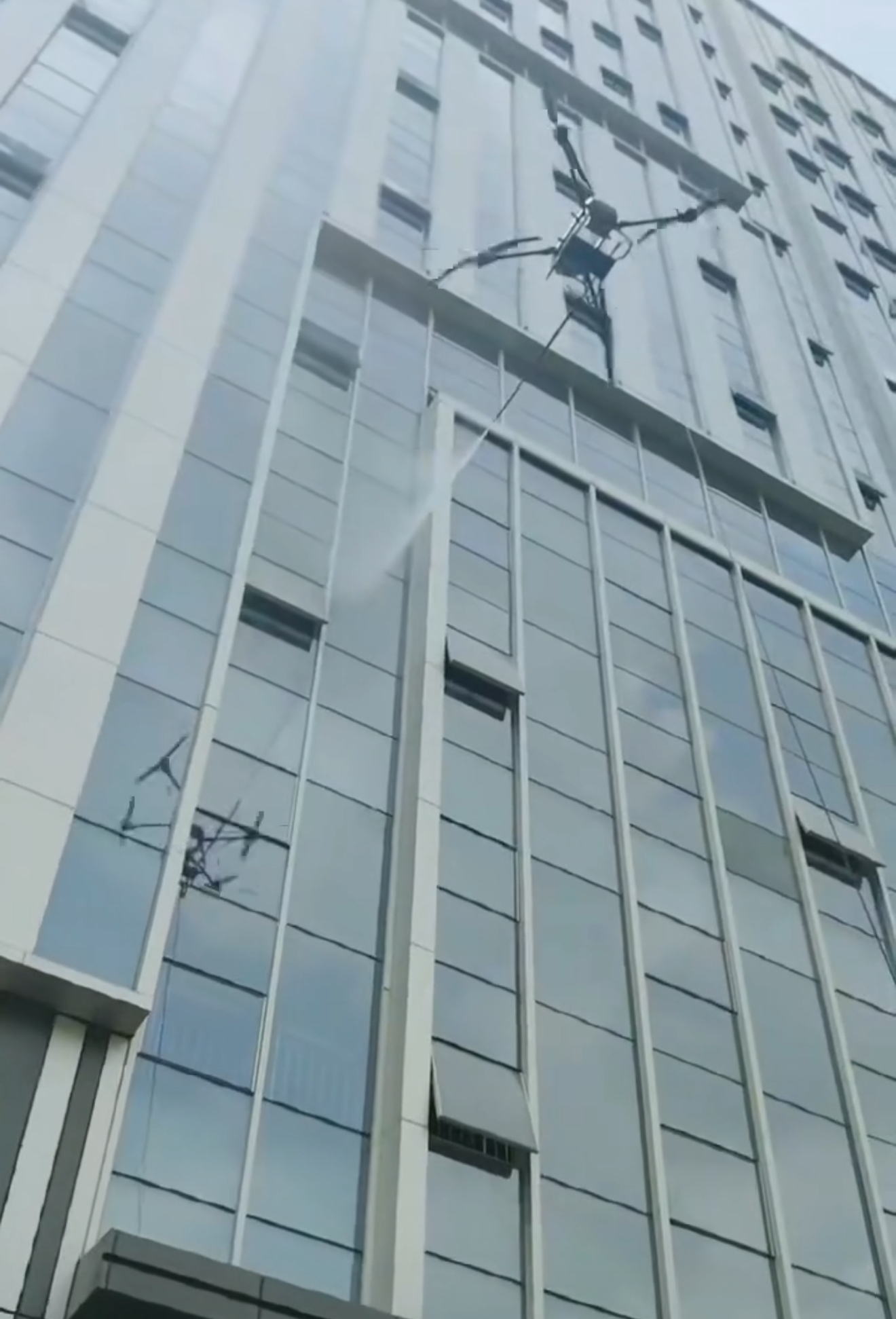
A commercial cleaning drone combines a heavy-lift aircraft with a ground-based water and pumping system. The drone carries a spray head, nozzle or brush. A tethered hose supplies water or cleaning solution from the ground.
This design offers one major advantage. The aircraft does not need to carry a large water tank.
Instead, the ground unit can include:
- Purified or deionised water filtration
- Reverse-osmosis equipment
- Chemical dosing systems
- Pressure controls
- Pumps and water tanks
- Hose management equipment
- Emergency shut-off controls
The pilot then flies a controlled pattern near the surface. A second worker can manage the hose, exclusion zone and ground equipment.
Consequently, one team can clean sections of a building without installing extensive scaffolding. The same method can support façade washing, solar panel maintenance, roof cleaning and selected high-rise window work.
The Australian commercial drone market is often estimated at $612.4 million in 2026, with a projected 16.8% compound annual growth rate through 2035. These figures should be treated as market estimates rather than official CASA statistics.
The façade cleaning segment is also reported to grow at around 6.54% annually between 2026 and 2034. However, operators should validate market reports before using them in a business plan.
A proposed or modelled Sydney program involving 150 buildings has also attracted attention. At present, public sources do not confirm a single council-led program of that size. Therefore, treat the figure as a potential market scenario rather than a confirmed government pilot.
How a Tethered Façade Cleaning Drone Works
A façade cleaning drone uses controlled flight and continuous fluid delivery. It does not work like a normal camera drone with a small spray bottle.
The main parts include:
-
Heavy-lift airframe
The aircraft must handle the drag and weight of the hose, nozzle and any cleaning head. -
Tethered fluid line
A high-strength hose connects the drone to the ground pump. The tether also limits the aircraft’s movement if a control problem occurs. -
Stabilised gimbal or spray mount
A stabilised mount helps keep the nozzle pointed at the wall. It can improve coverage and reduce uneven cleaning. -
Ground-based purification system
Reverse osmosis and deionisation can remove minerals from water. This helps create a spot-free finish on glass. -
Controlled spray equipment
The operator selects flow rate, pressure and cleaning solution for the surface. -
Flight control and safety systems
These can include obstacle awareness, return-to-home functions, geofencing, tether monitoring and emergency stop controls.

Soft Wash Versus Pressure Washing
Soft washing uses lower pressure and cleaning chemistry. It relies on dwell time to loosen mould, algae, grime and other organic contamination.
It suits many surfaces, including:
- Painted façades
- Render
- Roof materials
- Cladding
- Glass
- Solar panels
- Signage
Pressure washing uses much higher water pressure. It can suit hard, durable surfaces such as concrete or some masonry.
However, excessive pressure can damage seals, coatings, paint, render and solar panel surfaces. Therefore, a professional operator should never assume that maximum pressure produces the best result.
A façade cleaning drone should match the cleaning method to the material. It should also follow the building owner’s maintenance instructions and product warranties.
Why Deionised Water Matters
Ordinary tap water contains minerals. When it dries on glass, those minerals can leave marks.
Purified or deionised water contains far fewer dissolved solids. As a result, it can dry with fewer spots and streaks.
A solar panel cleaning drone should use a careful process. Operators need to avoid abrasive brushes, harsh chemicals and uncontrolled pressure. They should also follow the panel manufacturer’s cleaning guidance.
Cleaning may improve output when dust, salt, pollen or bird residue blocks sunlight. However, no responsible operator should promise a fixed energy increase. The result depends on soiling, panel design, weather and system condition.
Key Facts at a Glance
| Topic | Practical answer |
|---|---|
| Main licence | RePL for the remote pilot |
| Business approval | ReOC for many commercial operating models |
| Main regulation | CASA Part 101 |
| Complex operations | AusSORA may apply |
| Common aircraft type | Heavy-lift multirotor with tethered hose |
| Water delivery | Ground pump and purified or deionised water |
| Common cleaning method | Soft wash or controlled low-pressure rinse |
| Main customer groups | Commercial buildings, strata, solar owners and facilities teams |
| Main safety benefit | Less reliance on scaffolding or rope access |
| Main operational risk | Aircraft, hose, water, people, property and airspace |
| Pilot team | Remote pilot plus ground support |
| Business planning | Include training, approvals, insurance and equipment |
| Employment pathway | DroneWork job opportunities |
| Training pathway | Ace Aviation courses |
Why Drone Cleaning Can Beat Scaffolding and Rope Access
Traditional access methods still have an important role. Some façades require hands-on inspection, repairs or detailed manual work.
Yet, drones can offer strong advantages for suitable cleaning tasks.
Improved Safety
Workers may not need to climb onto a suspended platform or use rope access for every clean. That can reduce exposure to falls and dropped-object hazards.
The risk does not disappear. The team still manages an aircraft, hose, water, chemicals, electricity, traffic and members of the public.
Lower Access Costs
Scaffolding requires delivery, installation, inspection, rental and removal. Rope access requires qualified technicians and detailed site controls.
A drone team may set up faster for selected buildings. The final price still depends on height, surface type, water access, traffic controls and approvals.
Less Building Downtime
A building may continue normal operations while a trained team works outside. Operators can also schedule some work before opening hours or during quieter periods.
That matters for retail centres, hospitals, hotels, office towers and strata properties.
Reduced Visual Disruption
Scaffolding can cover windows and affect access to entrances. A drone system usually occupies a smaller ground footprint.
Still, the operator must establish a safe exclusion zone. The aircraft and hose must not create an unacceptable risk to people or property.
Step-by-Step: How to Launch a Compliant Drone Cleaning Business
1. Choose Your Cleaning Niche
Start with one clear service. For example:
- Commercial façade cleaning
- Solar panel cleaning
- Roof and gutter washing
- High-rise glass cleaning
- Industrial structure cleaning
- Warehouse and logistics facility cleaning
A narrow starting niche helps you select suitable equipment and procedures.
2. Complete the Right Training
The first step is a relevant commercial drone training pathway. A standard RePL may not cover every heavy-lift or specialised cleaning task.
Your pathway may include:
- RePL for the aircraft category
- AROC for aviation radio operations
- Heavy-lift or medium-category training
- Night operations training
- Site risk management
- Chief Remote Pilot training
- Specialist cleaning instruction
- BVLOS or advanced operational theory
The aircraft’s maximum take-off weight matters. So does the proposed operating area and the distance from people, roads and buildings.
Use the Licence Finder if you are unsure which pathway fits your proposed aircraft.
3. Set Up the Business Approval Structure
A pilot’s RePL does not automatically authorise a company to run any commercial operation.
The business may need a ReOC and an approved operations manual. That manual should cover the specific aircraft, cleaning method, crew roles, maintenance and emergency procedures.
Ace Aviation operates under CASA.ReOC.1421 and supports students who want to move from licensing into commercial operations.
4. Select and Test the Aircraft
Do not buy a platform based only on advertised lifting capacity.
Test the system with:
- The full hose length
- Normal water flow
- Cleaning attachments
- Wind exposure
- Emergency shut-off procedures
- Battery changes
- Surface proximity
- Hose snag and entanglement risks
A tethered system can still become unstable. The hose creates drag, weight and movement during flight.
5. Build Site-Specific Risk Assessments
Every building creates a different operating problem. Assess:
- Façade materials
- Windows and balconies
- Pedestrian movement
- Roads and nearby traffic
- Power lines
- Rooftop equipment
- Air-conditioning units
- Water runoff
- Chemical exposure
- Wind and weather
- Nearby airports or helicopter landing sites
Do not copy one risk assessment across every site. Use a repeatable template, then adapt it to each location.
6. Check Airspace and Local Restrictions
Check the airspace before quoting the job. Airports, hospital landing sites and controlled areas can create extra requirements.
You may need:
- CASA approval
- Airservices coordination
- Site owner approval
- Local council consultation
- Traffic management
- A formal exclusion zone
- An OONP approval where applicable
For complex or BVLOS work, prepare an AusSORA-based safety case. CASA’s AusSORA announcement and guidance explains the current direction.
7. Plan Water, Chemicals and Runoff
Cleaning is not only an aviation task. It is also an environmental and building-maintenance task.
Your plan should address:
- Water source and storage
- Chemical selection
- Surface compatibility
- Overspray
- Drainage
- Stormwater protection
- Wastewater capture
- Public exposure
- Safe chemical handling
Use the least aggressive method that achieves the required result.
8. Run a Controlled Demonstration
Start with a low-risk section of the building. Measure:
- Cleaning rate
- Water use
- Battery performance
- Hose handling
- Finish quality
- Setup time
- Ground crew workload
- Customer disruption
Then use the results to improve your operations manual and quotes.
9. Price the Whole Service
Your quote should include more than flight time.
Allow for:
- Pilot and ground crew wages
- Travel
- Aircraft depreciation
- Batteries
- Pumps and filters
- Water
- Cleaning products
- Insurance
- CASA fees
- Site controls
- Wastewater management
- Maintenance
- Weather delays
- Administration
The Quote Calculator can help you review the commercial side of your pathway.
Examples Across Australian Cities
Brisbane
A drone course in Brisbane can suit operators who want to work across commercial property, construction and industrial sites.
Warm weather supports a long operating season. However, storms, gusty winds and heavy rain can affect scheduling. A cleaning business should include weather hold points in every job plan.
Sydney
A drone course in Sydney can support work in dense urban environments.
The opportunity is large because the city has many towers, strata buildings and commercial façades. The challenge is equally large. Operators must manage pedestrians, traffic, controlled airspace, rooftop hazards and nearby helicopter operations.
The proposed 150-building pilot figure shows the potential scale. It should not be presented as a confirmed public program without a named client or official source.
Melbourne
A drone course in Melbourne can prepare pilots for façade, solar and infrastructure work.
Melbourne’s weather can change quickly. Therefore, operators need strong wind limits, rain procedures and surface-drying expectations. High-rise work also requires careful planning around narrow streets and public areas.
Perth
A drone pilot course in Perth may suit operators targeting commercial buildings, warehouses and solar assets.
Dust and high solar exposure can increase cleaning demand. At the same time, hot conditions can affect batteries, workers and surface temperatures. Schedule work around heat and sun where the building material requires it.
Hobart
Drone training in Hobart can support smaller commercial operators and regional service models.
Hobart businesses may serve commercial property, tourism, marine infrastructure and solar installations. Wind, cold conditions and limited local equipment access require careful logistics.
Common Mistakes to Avoid
Mistake 1: Assuming a RePL Covers Every Operation
A RePL demonstrates pilot competency. It does not grant unlimited permission to operate near people, in controlled airspace or beyond visual line of sight.
Mistake 2: Treating a Tether as Automatic Approval
A tether can reduce flyaway risk. It does not remove Part 101 duties or site safety obligations.
Mistake 3: Using Too Much Pressure
High pressure may damage glass seals, coatings, render or panels. Select pressure based on the surface and cleaning method.
Mistake 4: Ignoring the Hose
The hose can snag, pull the aircraft sideways or create a trip hazard. Include hose handling in training and emergency drills.
Mistake 5: Copying a Generic Risk Assessment
A tower beside a road is not the same as a warehouse on private land. Site conditions change the risk.
Mistake 6: Quoting Before Checking Airspace
Airspace restrictions can change the project cost and timeline. Check before promising a date.
Mistake 7: Promising Guaranteed Solar Gains
Cleaning may improve performance. It cannot guarantee a fixed percentage increase.
Mistake 8: Forgetting Non-Aviation Laws
Workplace safety, chemical handling, environmental rules, privacy and local access conditions may all apply.
CASA Considerations for 2026
CASA Part 101 remains the main regulatory framework for remotely piloted aircraft operations in Australia.
For a commercial cleaning business, the key considerations include:
- The aircraft’s weight and category
- The pilot’s RePL privileges
- The operator’s ReOC
- Visual line of sight
- Distance from people
- Operations near buildings
- Controlled and restricted airspace
- Night operations
- Emergency procedures
- Maintenance and records
- Insurance and contracts
- Environmental controls
When AusSORA Applies
AusSORA is the Australian Specific Operations Risk Assessment framework. It helps CASA assess complex operations.
It becomes especially relevant for:
- BVLOS operations
- Higher-risk urban operations
- Complex airspace
- Operations requiring a specific CASA authorisation
- Some high-altitude or extended-range missions
From 11 May 2026, new applications for BVLOS and other complex operations must use AusSORA. That requirement does not replace the RePL or ReOC.
Instead, AusSORA adds a structured safety assessment. The applicant may need to address ground risk, air risk, containment, safety objectives and the concept of operations.
A cleaning business should seek professional advice before proposing BVLOS or complex work. Do not rely on a standard VLOS cleaning procedure for a higher-risk mission.
Frequently Asked Questions
1. Do I need a drone licence to clean buildings commercially?
In most cases, yes. You need an appropriate RePL and must operate through a compliant business structure. The exact requirements depend on the aircraft and operation.
2. Is a ReOC required for a commercial cleaning drone business?
Many commercial operators need a ReOC. A ReOC supports the organisation’s approved operating system. It does not replace the pilot’s RePL.
3. What is the best commercial drone licence Australia pathway?
The best pathway depends on the aircraft, payload, operating area and service. A basic RePL may suit light work. Heavy-lift cleaning often needs additional training and operational support.
4. Does the drone carry the cleaning water?
Usually, no. A tethered fluid line supplies water from a ground pump. The drone carries the nozzle and hose connection.
5. What is a façade cleaning drone?
It is a purpose-built or modified drone that applies water or cleaning solution to exterior building surfaces. It can clean glass, render, cladding and other suitable materials.
6. Can a solar panel cleaning drone damage panels?
Yes, if the operator uses unsuitable pressure, chemicals, brushes or flight techniques. Use manufacturer guidance and controlled cleaning methods.
7. Is soft washing safer than pressure washing?
Soft washing usually creates less surface impact because it uses lower pressure and cleaning chemistry. The correct method still depends on the material and contamination.
8. Can drones replace rope access cleaners?
Not always. Drones suit many washing tasks, but rope access workers may still be needed for repairs, detailed inspection and difficult manual work.
9. Can I fly a cleaning drone near a high-rise building?
You may be able to, but the operation needs a detailed risk assessment. Consider people, property, airspace, the tether, weather and emergency procedures.
10. Can I operate a cleaning drone near an airport?
Airport proximity may create airspace restrictions and approval requirements. Check the airspace before planning or quoting the job.
11. Do cleaning drones need AusSORA?
AusSORA applies to complex operations requiring CASA assessment. A normal VLOS operation may not require it. A BVLOS or higher-risk operation may.
12. What does CASA RePL cost?
The CASA RePL cost varies with aircraft category, training provider, delivery method and additional certificates. Compare the complete pathway, not only the advertised starting price.
13. Can I start a business after completing a RePL?
A RePL is an important first step. You still need suitable equipment, insurance, procedures, client contracts and any required operator approval.
14. Are there drone pilot jobs Australia-wide?
Yes. Commercial work exists across agriculture, construction, inspection, mapping, cleaning, media and infrastructure. DroneWork connects qualified pilots with opportunities and employers.
15. Which city offers the best drone course?
The best location depends on your work plans. Ace offers pathways connected with Brisbane, Sydney, Melbourne, Perth and Hobart. Choose the location and course that fit your aircraft and career goal.
16. Can I use a camera-drone RePL for a heavy-lift cleaning drone?
Not necessarily. Your licence privileges must match the aircraft category and operation. Confirm the requirements before flying a heavier platform.
17. Do I need a second person on a cleaning drone job?
A second trained worker is strongly recommended. They can manage the hose, ground equipment, exclusion zone and communications.
18. Can I clean windows with deionised water?
Yes, deionised water can help reduce mineral spotting. The operator must still select suitable flow, pressure and cleaning techniques.
19. Is drone façade cleaning cheaper than scaffolding?
It can reduce access costs for suitable jobs. The final price depends on building height, access, approvals, surface condition, water supply and crew size.
20. Why choose Ace Aviation for this pathway?
Ace Aviation has trained more than 4,000 students and operates under CASA.ReOC.1421. Its wider ecosystem includes training, compliance support, specialist pathways and the Altitude+ program.
Ace also has a global footprint across Australia, Singapore, Dubai, Korea and Malaysia. Graduates can access DroneWork career opportunities and industry connections after training.
Summary: Build a Compliant Drone Cleaning Career
Commercial cleaning drones are changing how businesses approach façades, solar arrays and high-rise maintenance.
Tethered systems can deliver purified water and soft-wash solutions from the ground. They can reduce work at height, shorten setup times and limit disruption. However, successful operations still depend on skilled pilots, sound procedures and careful site planning.
The right drone licence Australia pathway starts with the operation. Define the aircraft, cleaning method, customer and airspace. Then select the RePL, ReOC and specialist training that support the work.
Ace Aviation has trained more than 4,000 students through a CASA-approved ecosystem. Its Altitude+ program, global footprint and DroneWork job board help students move beyond a licence and towards commercial capability.
Ready to start? Book your training at aaa.edu.au or call 1300 336 366.
{“@graph”:[{“@id”:”https://aaa.edu.au/blog/drone-licence-australia-commercial-cleaning-drones-2026#article”,”@type”:”Article”,”image”:{“url”:”https://aaa.edu.au/assets/orion_cleaning_facade_1785054145142.jpg”,”@type”:”ImageObject”},”author”:{“url”:”https://aaa.edu.au/”,”name”:”Ace Aviation Aerospace Academy”,”@type”:”Organization”},”headline”:”Drone Licence Australia 2026: How Commercial Cleaning Drones Are Revolutionising Façade, Solar & High-Rise Maintenance”,”keywords”:[“drone licence australia”,”commercial cleaning drone”,”façade cleaning drone”,”solar panel cleaning drone”,”commercial drone licence australia”,”drone pilot jobs australia”],”publisher”:{“@id”:”https://aaa.edu.au/#organization”},”inLanguage”:”en-AU”,”description”:”Discover how a drone licence Australia pathway supports commercial cleaning drones for façade, solar panel and high-rise maintenance.”,”dateModified”:”2026-08-23″,”datePublished”:”2026-08-23″,”mainEntityOfPage”:{“@id”:”https://aaa.edu.au/blog/drone-licence-australia-commercial-cleaning-drones-2026″,”@type”:”WebPage”}},{“@id”:”https://aaa.edu.au/#organization”,”url”:”https://aaa.edu.au/”,”logo”:{“url”:”https://aaa.edu.au/assets/ace-logo-transparent.png”,”@type”:”ImageObject”},”name”:”Ace Aviation Aerospace Academy”,”@type”:”Organization”,”sameAs”:[“https://dronework.com.au/”],”telephone”:”+61 1300 336 366″,”areaServed”:[“Australia”,”Singapore”,”Dubai”,”Korea”,”Malaysia”],”description”:”CASA-approved drone pilot training and certification provider offering RePL, AROC, ReOC and specialist aviation pathways.”},{“@id”:”https://aaa.edu.au/blog/drone-licence-australia-commercial-cleaning-drones-2026#faq”,”@type”:”FAQPage”,”mainEntity”:[{“name”:”Do I need a drone licence to clean buildings commercially?”,”@type”:”Question”,”acceptedAnswer”:{“text”:”In most cases, yes. You need an appropriate RePL and must operate through a compliant business structure. The exact requirements depend on the aircraft and operation.”,”@type”:”Answer”}},{“name”:”Is a ReOC required for a commercial cleaning drone business?”,”@type”:”Question”,”acceptedAnswer”:{“text”:”Many commercial operators need a ReOC. A ReOC supports the organisation’s approved operating system. It does not replace the pilot’s RePL.”,”@type”:”Answer”}},{“name”:”What is the best commercial drone licence Australia pathway?”,”@type”:”Question”,”acceptedAnswer”:{“text”:”The best pathway depends on the aircraft, payload, operating area and service. A basic RePL may suit light work, while heavy-lift cleaning often needs additional training and operational support.”,”@type”:”Answer”}},{“name”:”Does the drone carry the cleaning water?”,”@type”:”Question”,”acceptedAnswer”:{“text”:”Usually, no. A tethered fluid line supplies water from a ground pump. The drone carries the nozzle and hose connection.”,”@type”:”Answer”}},{“name”:”What is a façade cleaning drone?”,”@type”:”Question”,”acceptedAnswer”:{“text”:”It is a purpose-built or modified drone that applies water or cleaning solution to exterior building surfaces. It can clean glass, render, cladding and other suitable materials.”,”@type”:”Answer”}},{“name”:”Can a solar panel cleaning drone damage panels?”,”@type”:”Question”,”acceptedAnswer”:{“text”:”Yes, if the operator uses unsuitable pressure, chemicals, brushes or flight techniques. Operators should use manufacturer guidance and controlled cleaning methods.”,”@type”:”Answer”}},{“name”:”Is soft washing safer than pressure washing?”,”@type”:”Question”,”acceptedAnswer”:{“text”:”Soft washing usually creates less surface impact because it uses lower pressure and cleaning chemistry. The correct method still depends on the material and contamination.”,”@type”:”Answer”}},{“name”:”Can drones replace rope access cleaners?”,”@type”:”Question”,”acceptedAnswer”:{“text”:”Not always. Drones suit many washing tasks, but rope access workers may still be needed for repairs, detailed inspection and difficult manual work.”,”@type”:”Answer”}},{“name”:”Can I fly a cleaning drone near a high-rise building?”,”@type”:”Question”,”acceptedAnswer”:{“text”:”You may be able to, but the operation needs a detailed risk assessment covering people, property, airspace, the tether, weather and emergency procedures.”,”@type”:”Answer”}},{“name”:”Can I operate a cleaning drone near an airport?”,”@type”:”Question”,”acceptedAnswer”:{“text”:”Airport proximity may create airspace restrictions and approval requirements. Operators should check the airspace before planning or quoting the job.”,”@type”:”Answer”}},{“name”:”Do cleaning drones need AusSORA?”,”@type”:”Question”,”acceptedAnswer”:{“text”:”AusSORA applies to complex operations requiring CASA assessment. A normal VLOS operation may not require it, while a BVLOS or higher-risk operation may.”,”@type”:”Answer”}},{“name”:”What does CASA RePL cost?”,”@type”:”Question”,”acceptedAnswer”:{“text”:”The CASA RePL cost varies with aircraft category, training provider, delivery method and additional certificates. Students should compare the complete pathway.”,”@type”:”Answer”}},{“name”:”Can I start a business after completing a RePL?”,”@type”:”Question”,”acceptedAnswer”:{“text”:”A RePL is an important first step. You still need suitable equipment, insurance, procedures, client contracts and any required operator approval.”,”@type”:”Answer”}},{“name”:”Are there drone pilot jobs Australia-wide?”,”@type”:”Question”,”acceptedAnswer”:{“text”:”Yes. Commercial work exists across agriculture, construction, inspection, mapping, cleaning, media and infrastructure.”,”@type”:”Answer”}},{“name”:”Which city offers the best drone course?”,”@type”:”Question”,”acceptedAnswer”:{“text”:”The best location depends on your work plans. Choose the location and course that fit your aircraft, operating area and career goal.”,”@type”:”Answer”}},{“name”:”Can I use a camera-drone RePL for a heavy-lift cleaning drone?”,”@type”:”Question”,”acceptedAnswer”:{“text”:”Not necessarily. Licence privileges must match the aircraft category and operation. Confirm the requirements before flying a heavier platform.”,”@type”:”Answer”}},{“name”:”Do I need a second person on a cleaning drone job?”,”@type”:”Question”,”acceptedAnswer”:{“text”:”A second trained worker is strongly recommended. They can manage the hose, ground equipment, exclusion zone and communications.”,”@type”:”Answer”}},{“name”:”Can I clean windows with deionised water?”,”@type”:”Question”,”acceptedAnswer”:{“text”:”Yes, deionised water can help reduce mineral spotting. The operator must still select suitable flow, pressure and cleaning techniques.”,”@type”:”Answer”}},{“name”:”Is drone façade cleaning cheaper than scaffolding?”,”@type”:”Question”,”acceptedAnswer”:{“text”:”It can reduce access costs for suitable jobs. The final price depends on building height, access, approvals, surface condition, water supply and crew size.”,”@type”:”Answer”}},{“name”:”Why choose Ace Aviation for this pathway?”,”@type”:”Question”,”acceptedAnswer”:{“text”:”Ace Aviation has trained more than 4,000 students and operates under CASA.ReOC.1421. Its ecosystem includes training, compliance support, specialist pathways, the Altitude+ program and DroneWork career opportunities.”,”@type”:”Answer”}}]}],”@context”:”https://schema.org”}