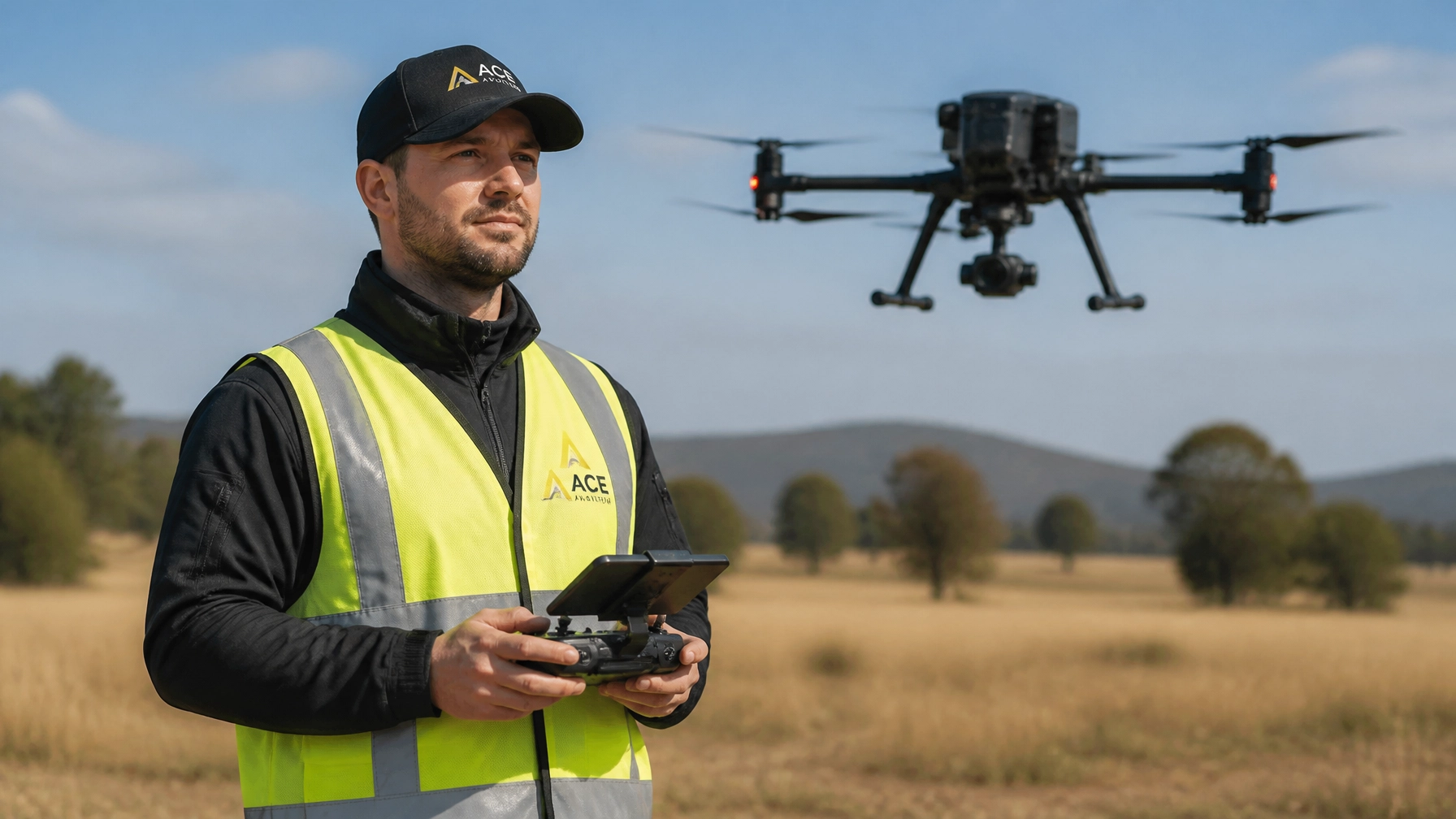
To get a drone licence in australia, you must complete a Remote Pilot Licence (RePL) course with a CASA-approved provider like Ace Aviation. This certification allows you to fly drones commercially, opening doors to high-paying careers in agriculture, surveying, mining, and cinematography across the country.
Meta description: Get your drone licence australia with Ace Aviation. Read 5 real student success stories and launch your drone career today. Book now.
The Rising Demand for Certified Drone Pilots
The aviation landscape in Australia is shifting rapidly. Today, drones are no longer just toys for enthusiasts. They have become essential tools for major industries. Consequently, the demand for a commercial drone licence australia has skyrocketed. Companies are looking for professionals who can operate safely and provide high-quality data.
At Ace Aviation Aerospace Academy, we have trained over 4,000 students. We take pride in being a leading authority under CASA.ReOC.1421. Our graduates do not just learn to fly; they learn to build careers. Whether you are in Brisbane or Perth, the opportunities are vast.
Importantly, that opportunity is not limited to Australia. Ace Aviation has a strong global footprint, with training delivered across Singapore, Dubai, Korea, and Malaysia as well as major Australian cities. This matters because many employers now operate across borders. They want pilots who understand professional standards, compliance, and safe workflows in different environments.
As a result, graduates who start with a drone licence australia often discover wider career pathways than they expected. Some move into multinational surveying projects. Others support agriculture, media, inspection, or mining programs that serve clients in several regions. In many cases, employers value candidates who trained with an academy known both in Australia and overseas.
Our international reach also gives students confidence. They know their training is not built for one small market alone. Instead, it is shaped by real operational needs seen in Australia, Singapore, Dubai, Korea, and Malaysia. That broad perspective helps graduates adapt faster, speak the language of compliance, and work well with global teams.
For students who want long-term growth, this is a major advantage. A strong foundation in CASA-aligned training can open doors to local work first, then create pathways into international contracts, regional partnerships, and specialist roles. Therefore, choosing the right provider is not just about passing a course. It is about building a career with room to grow.
This post highlights five incredible journeys. These stories show how a simple decision to get a drone licence australia changed lives forever.
1. Sarah’s Leap from Retail to Precision Agriculture in Brisbane
Sarah spent ten years in retail management in Brisbane. She felt stuck and wanted a change. She loved the outdoors and technology. After researching how to become a drone pilot australia, she found our RePL course.
Initially, Sarah was nervous about the technical side of aviation. However, our instructors guided her through every step. She learned about flight theory and CASA regulations. Most importantly, she gained hands-on experience with large agricultural drones.

After graduating, Sarah joined our Altitude+ program. This gave her access to much more than a simple graduate group. She received equipment discounts on industry-standard gear, invitations to advanced workshops, access to networking events, and ongoing CASA update alerts that helped her stay current with rule changes and operational expectations.
That support made a real difference early in her career. Instead of trying to work everything out alone, Sarah could ask questions, learn from other pilots, and stay close to industry developments. She also used Altitude+ to build contacts with employers and operators working in agriculture across Queensland and beyond.
Soon, she landed a role with a leading ag-tech firm. Today, Sarah manages a fleet of spraying drones. She helps farmers optimize their crop yields through precision mapping.
Sarah now earns over $120,000 per year. She travels across Queensland, enjoying the freedom of the skies. Her story proves that a career change is possible at any age with the right training.
2. James: Building a New Path in Sydney Surveying
James was a construction worker in Sydney for many years. The physical toll was becoming too much. He noticed drones appearing on his job sites. He saw how they could map entire areas in minutes. This sparked his interest in a commercial drone licence australia.
James enrolled in our Certificate III in Aviation. This formal qualification provided him with a deep understanding of the industry. He learned how to process aerial data into professional 3D models.
Because James already understood construction, he was a perfect fit for surveying. He now works for a major civil engineering firm in Sydney. Instead of lifting heavy materials, he manages a sophisticated drone fleet. He provides vital data for large-scale infrastructure projects. His experience shows how existing skills can be supercharged with a drone licence.
3. Priya’s Cinematic Journey in Melbourne’s Film Industry
Priya always had a passion for filmmaking in Melbourne. She worked as a camera assistant but felt limited by ground-level shots. She knew that aerial cinematography was the future. To work on professional sets, she needed a drone licence australia.
She chose Ace Aviation because of our global reputation. Our training in Singapore and Dubai gave her confidence in international standards. During her course in Melbourne, Priya mastered the art of smooth flight paths. She also obtained her AROC (Aeronautical Radio Operator Certificate).

Priya now works on major TV productions and feature films. She is known for her ability to capture breathtaking cinematic sequences. Her work has been featured in national tourism campaigns. By combining her creative eye with professional certification, Priya has reached the top of her field.
Just as importantly, Priya sees value in Ace Aviation’s international footprint. With training connected to Singapore, Dubai, Korea, and Malaysia, she feels better prepared for cross-border productions and international crews. For creative professionals, that wider exposure can be a real career advantage.
4. Tom: Mining Excellence in the Heart of Hobart
Tom grew up in Hobart and always wanted to work in the mining sector. He knew that the industry was becoming more tech-focused. He decided to get his commercial drone licence australia to stand out.
Mining sites are complex environments. Safety is the number one priority. Tom appreciated that Ace Aviation is a CASA-approved provider. He learned the strict protocols required for industrial operations.
Tom now operates drones for a major mining company in Tasmania. He performs routine inspections of high-risk areas. He also conducts volumetric surveys of stockpiles. This saves the company time and keeps staff safe. Tom’s role is essential for the mine's daily operations. He is a key member of the technical team, all thanks to his specialized training.
5. Marcus: Finding Success via DroneWork in Perth
Marcus lived in Perth and was struggling to find a stable job. He had a passion for drones but didn't know how to turn it into a career. He decided to invest in himself and took our Platinum training package.
One of the biggest benefits for Marcus was our DroneWork job board. After finishing his course, he uploaded his profile. Within weeks, a corporate mining company contacted him. They needed a drone operator for their Perth-based operations.

Marcus now manages environmental monitoring for the firm. He uses drones to track land rehabilitation progress. He loves his job and the stability it provides. Marcus often tells new students that the DroneWork platform was his bridge to success. It connected his new skills directly to an employer who needed them.
He also points out that Ace Aviation’s reputation extends beyond Australia. Because the academy trains students in Singapore, Dubai, Korea, and Malaysia, graduates enter the market with a stronger professional profile. That can help when employers want pilots who may later support regional or international operations.
Comparing Student Success Paths
The following table summarizes the diverse paths our students have taken. It shows that no matter your background, there is a place for you in the drone industry.
| Student | Location | Previous Industry | New Role | Key Certification |
|---|---|---|---|---|
| Sarah | Brisbane | Retail | Ag Drone Pilot | RePL + Altitude+ |
| James | Sydney | Construction | Surveying Operator | Cert III in Aviation |
| Priya | Melbourne | Media | Cinematographer | RePL + AROC |
| Tom | Hobart | Student | Mining Operations | RePL (Industrial) |
| Marcus | Perth | Unemployed | Corporate Mining | RePL + DroneWork |
Why Ace Aviation Students Succeed
Student success rarely comes from a licence alone. It comes from the quality of training, the support around the student, and the credibility of the provider. That is where Ace Aviation stands apart.
First, we deliver training under CASA.ReOC.1421. This matters because students need more than flying practice. They need a compliance-first mindset that reflects real commercial operations. Our training is built around safe procedures, current regulations, and industry-ready habits from day one.
Second, we have trained more than 4,000 students globally. That experience shapes how we teach. We understand the common questions, the typical learning barriers, and the skills employers actually want. Because of this, students get a clearer path from beginner to job-ready pilot.
Third, our industry partnerships help keep the curriculum relevant. We work closely with employers, operators, and aviation stakeholders so our students learn what the market needs now, not what it needed years ago. This creates stronger outcomes in fields like agriculture, surveying, mining, infrastructure, and media.
Our dedicated student support team also plays a major role. Learning aviation can feel intimidating at first. However, students do better when they can ask questions, get guidance, and move forward with confidence. We support learners before, during, and after training so they are never left guessing.
In addition, we offer flexible learning options. Students can complete theory online and then attend practical sessions for hands-on flight training. This makes it easier for working professionals, regional learners, and career changers to train without putting life on hold. Flexibility helps more people start, but support helps them finish.
Most importantly, our delivery stays focused on compliance. Safe commercial drone operations require good judgement, clear procedures, and respect for CASA rules. We teach students how to operate the right way, not the risky way. That approach protects both career opportunities and long-term reputation.
Ace Aviation also gives students a wider view of the industry. With training delivered across Australia, Singapore, Dubai, Korea, and Malaysia, our graduates benefit from an academy that understands both local standards and broader market expectations. For many students, that adds confidence and opens doors to opportunities beyond one city or one sector.
Your Step-by-Step Process to Success
Starting a new career can feel overwhelming. However, we have simplified the process for you. Follow these steps to join our community of over 4,000 successful pilots.
- Research Your Path: Use our Licence Finder to see which course fits your goals.
- Enrol in a Course: Choose from our RePL, AROC, or Certificate III options.
- Complete Theory Training: Learn about aviation laws, weather, and safety protocols.
- Hands-on Flight Training: Practice flying with our expert instructors in a safe environment.
- Obtain Your Licence: We handle the paperwork with CASA to get you certified.
- Join Altitude+: Gain access to ongoing support, discounts, and advanced workshops.
- Find Your Job: Use our DroneWork job board to connect with industry leaders.
Common Mistakes to Avoid
Many people try to enter the industry without proper guidance. This can lead to costly errors. Here are the most common mistakes we see:
- Flying Without a Licence: Commercial flying without an RePL is illegal and can result in heavy fines.
- Buying Cheap Equipment First: Do not buy a drone until you know what your specific job requires.
- Ignoring Data Processing: Flying is only half the job. Learning to process the data is where the real value lies.
- Skipping Networking: Most jobs are found through connections. Join a community like ours to stay informed.
- Neglecting Insurance: Always ensure you are covered for commercial operations.
- Not Leveraging Your Network: Many graduates do not use the DroneWork job board or the Altitude+ community after training. As a result, they miss prime job leads, introductions, and project opportunities that could accelerate their career.
Understanding the CASA Regulatory Context
The Civil Aviation Safety Authority (CASA) regulates all drone activity in Australia. To fly for money, you must be under a Remote Operator Certificate (ReOC). As an individual, you need a Remote Pilot Licence (RePL).
Ace Aviation operates under CASA.ReOC.1421. This means our training meets the highest safety standards. We ensure our curriculum is always up to date with the latest laws. This compliance protects you and your future employers. Understanding these rules is a core part of our training. It ensures you fly the right way, every time.
Frequently Asked Questions
1. How much does a drone licence cost in Australia?
The cost of a casa repl cost varies depending on the course level. We offer various packages from basic to advanced. You can use our Quote Calculator for an exact price.
2. Can I fly a drone commercially without a licence?
In Australia, you must have an RePL if the drone is over 2kg or if you are flying outside the standard operating conditions. Even for small drones, having a licence is preferred by employers for insurance reasons.
3. How long does the training take?
Our standard RePL course usually takes 5 days of intensive training. This includes both theory and practical flight sessions.
4. Do I need to own a drone before starting?
No, you do not. We provide all the equipment during your training. In fact, we recommend waiting until after the course to decide which drone suits your career path.
5. Is there a demand for drone pilots in Sydney?
Yes, Sydney has a massive demand in construction, real estate, and infrastructure inspection.
6. What is the AROC?
The Aeronautical Radio Operator Certificate (AROC) allows you to use aviation-grade radios. This is essential for flying near airports or in controlled airspace.
7. How does the Altitude+ program help?
Altitude+ provides our graduates with lifetime access to resources. This includes equipment discounts, advanced workshops, networking events, ongoing CASA update alerts, and a supportive community.
8. Can I work internationally with an Australian RePL?
While the RePL is an Australian licence, our training standards are recognized globally. Many of our students work in Dubai, Singapore, Korea, Malaysia, and beyond.
9. What is the difference between RePL and ReOC?
The RePL is your personal pilot licence. The ReOC is the certificate held by a business to conduct commercial operations. You can work for a company that has a ReOC.
10. Do you help with job placement?
Yes, our DroneWork platform is specifically designed to help our graduates find drone pilot jobs australia.
11. Is the Certificate III in Aviation a formal qualification?
Yes, it is a nationally recognized qualification. It is delivered in partnership with Reach Community College.
12. Can I use drones for agriculture in Brisbane?
Absolutely. Brisbane and surrounding areas are hotspots for agricultural drone applications like spraying and mapping.
13. What is the highest paying drone job?
Mining and specialized industrial inspections often offer the highest salaries. Some experienced pilots earn over $150,000.
14. Do I need to be good at math?
Basic math is helpful for flight planning and data analysis. However, our instructors explain everything in simple terms.
15. What happens if I fail the exam?
We pride ourselves on our high success rate. If you struggle, our instructors will provide extra support to help you pass.
16. Are there drone courses in Hobart?
Yes, we provide training across Australia, including Hobart.
17. How do I start a drone business?
Start by getting your RePL. Then, you can apply for your own ReOC or work as a contractor for existing companies.
18. What equipment do you use for training?
We use industry-standard DJI drones, including the Matrice and Phantom series. This ensures you are ready for professional work.
19. Is there an age limit for a drone licence?
You must be at least 15 years old to obtain an RePL in Australia.
20. Why choose Ace Aviation?
We are Australia's leading provider with a global footprint. With over 4,000 students trained and a focus on career outcomes, we offer the best start for your aviation journey.
Detailed Career Outlook for New Drone Pilots
A drone licence australia can lead to much more than one job title. In practice, licensed pilots work across many sectors, and each sector uses drone skills in a different way. Some roles focus on flying. Others combine flight operations with reporting, mapping, safety management, or client communication.
In agriculture, pilots may conduct crop health mapping, spraying missions, and property inspections. In surveying, they often collect imagery for topographic maps, stockpile calculations, and 3D models. In mining, they support inspections, environmental monitoring, and site planning. Meanwhile, in media, they capture aerial footage for ads, tourism campaigns, documentaries, and live events.
This range matters for new students because it means your background still counts. If you come from retail, trades, media, logistics, farming, construction, or customer service, you already have useful skills. Training helps you apply those skills in a new industry. Therefore, a drone career is often less about starting over and more about redirecting your experience.
Ace Aviation graduates also benefit from being trained for real commercial expectations. Employers want pilots who can work safely, communicate clearly, and follow procedures. They do not just want someone who can take off and land. They want a professional who understands airspace, risk, documentation, and the purpose of the mission.
That is why our courses focus on both technical skill and operational judgement. We teach students how to fly the right way, but also how to think like a commercial operator. As a result, graduates are better prepared for interviews, client work, and long-term progression.
Key Facts Table
Here is a quick summary of what matters most when choosing a training provider for your drone licence australia.
| Topic | What You Need to Know |
|---|---|
| Primary licence | RePL for commercial drone operations |
| Regulator | CASA |
| Ace approval | CASA.ReOC.1421 |
| Student outcomes | 4,000+ students trained globally |
| Global footprint | Australia, Singapore, Dubai, Korea, Malaysia |
| Flexible study | Online theory plus practical flight sessions |
| Graduate support | Altitude+, DroneWork job board, student support team |
| Career sectors | Agriculture, surveying, mining, media, inspections |
| Next step | Book your training or request a course quote |
More Examples of Where a Drone Licence Can Take You
The five stories in this article are powerful because they are real and relatable. Still, they are only part of the picture. Every year, students come to Ace Aviation with different goals. Some want a full career change. Others want to add drone capability to their current role. Both pathways can work well.
For example, a project manager in civil construction might use drone training to improve site reporting. A farmer may want to inspect large properties faster and safer. A photographer might want to add aerial content to existing packages. An operations worker in mining may use a commercial drone licence australia to move into a technical role with better pay and better long-term prospects.
Likewise, business owners can use training to bring drone capability in-house. This can reduce outsourcing costs and improve turnaround times. Instead of waiting for a contractor, a trained internal pilot can complete inspections, collect imagery, and support safer decisions on site.
Students who think globally can also see long-term value in Ace Aviation’s footprint across Singapore, Dubai, Korea, and Malaysia. Even when a graduate starts in Australia, exposure to an academy with international reach can help build confidence and credibility. Employers often notice providers that operate beyond one local market.
Building Confidence Through Ongoing Support
Getting certified is a major milestone, but it is not the end of the journey. New pilots often need help with equipment decisions, compliance questions, and career direction after the course ends. That is why post-course support can make such a big difference.
Ace Aviation’s support model is designed to reduce that uncertainty. Through Altitude+, students can continue learning after graduation. They can access equipment discounts, join advanced workshops, attend networking events, and receive CASA update alerts when rules or guidance change. These benefits help graduates stay informed and remain valuable to employers.
The support team also helps students navigate practical next steps. That may include understanding which course level fits a new goal, preparing for more advanced operations, or connecting with the right resources on the Ace Aviation homepage, Why Ace, and Contact page. In short, the learning relationship does not stop at course completion.
For many graduates, community matters just as much as content. Being part of a network means hearing about job openings, industry trends, and good operational habits. It also means not having to solve every problem alone. In a safety-driven field like aviation, that ongoing connection has real value.
Summary: Start Your Aviation Journey Today
The stories of Sarah, James, Priya, Tom, and Marcus show one thing. A drone licence australia is more than just a piece of paper. It is a ticket to a new, exciting career. Whether you want to work in the mines of Perth or the film sets of Melbourne, the sky is the limit.
At Ace Aviation, we provide the tools, the training, and the connections you need. Our Altitude+ program and DroneWork job board ensure you are never alone on your journey. We have helped thousands of people transition into the drone industry. Just as importantly, our presence across Australia, Singapore, Dubai, Korea, and Malaysia gives students a broader career outlook from day one. Now, it is your turn.
Ready to start? Book your training at aaa.edu.au or call 1300 336 366.
{“@type”:”Article”,”image”:”https://cdn.marblism.com/7oxCYoR3CIt.webp”,”author”:{“name”:”Ace Aviation Aerospace Academy”,”@type”:”Organization”},”@context”:”https://schema.org”,”headline”:”From Ground to Sky: 5 Real Student Success Stories That Prove Your Drone Career Starts Here”,”publisher”:{“logo”:{“url”:”https://cdn.marblism.com/oSFGyPj2nOO.png”,”@type”:”ImageObject”},”name”:”Ace Aviation Aerospace Academy”,”@type”:”Organization”},”description”:”Discover 5 real-world success stories of drone pilots in Australia. Learn how to get your drone licence and start a high-paying career in agriculture, mining, or cinematography.”,”datePublished”:”2026-07-27″}
{“@type”:”FAQPage”,”@context”:”https://schema.org”,”mainEntity”:[{“name”:”How much does a drone licence cost in Australia?”,”@type”:”Question”,”acceptedAnswer”:{“text”:”The cost of a drone licence (RePL) varies by package. Use our Quote Calculator at aaa.edu.au for an exact price.”,”@type”:”Answer”}},{“name”:”Can I fly a drone commercially without a licence?”,”@type”:”Question”,”acceptedAnswer”:{“text”:”No, if the drone is over 2kg or you fly outside standard rules, you need a Remote Pilot Licence (RePL) for commercial work.”,”@type”:”Answer”}},{“name”:”Do you help with job placement?”,”@type”:”Question”,”acceptedAnswer”:{“text”:”Yes, we provide the DroneWork job board to connect graduates with industry employers.”,”@type”:”Answer”}}]}
{“url”:”https://aaa.edu.au”,”logo”:”https://cdn.marblism.com/oSFGyPj2nOO.png”,”name”:”Ace Aviation Aerospace Academy”,”@type”:”Organization”,”sameAs”:[“https://www.facebook.com/aceaviation.edu.au/”,”https://www.instagram.com/aceaviation_au/”,”https://www.linkedin.com/company/ace-aviation-aerospace-academy/”],”@context”:”https://schema.org”}