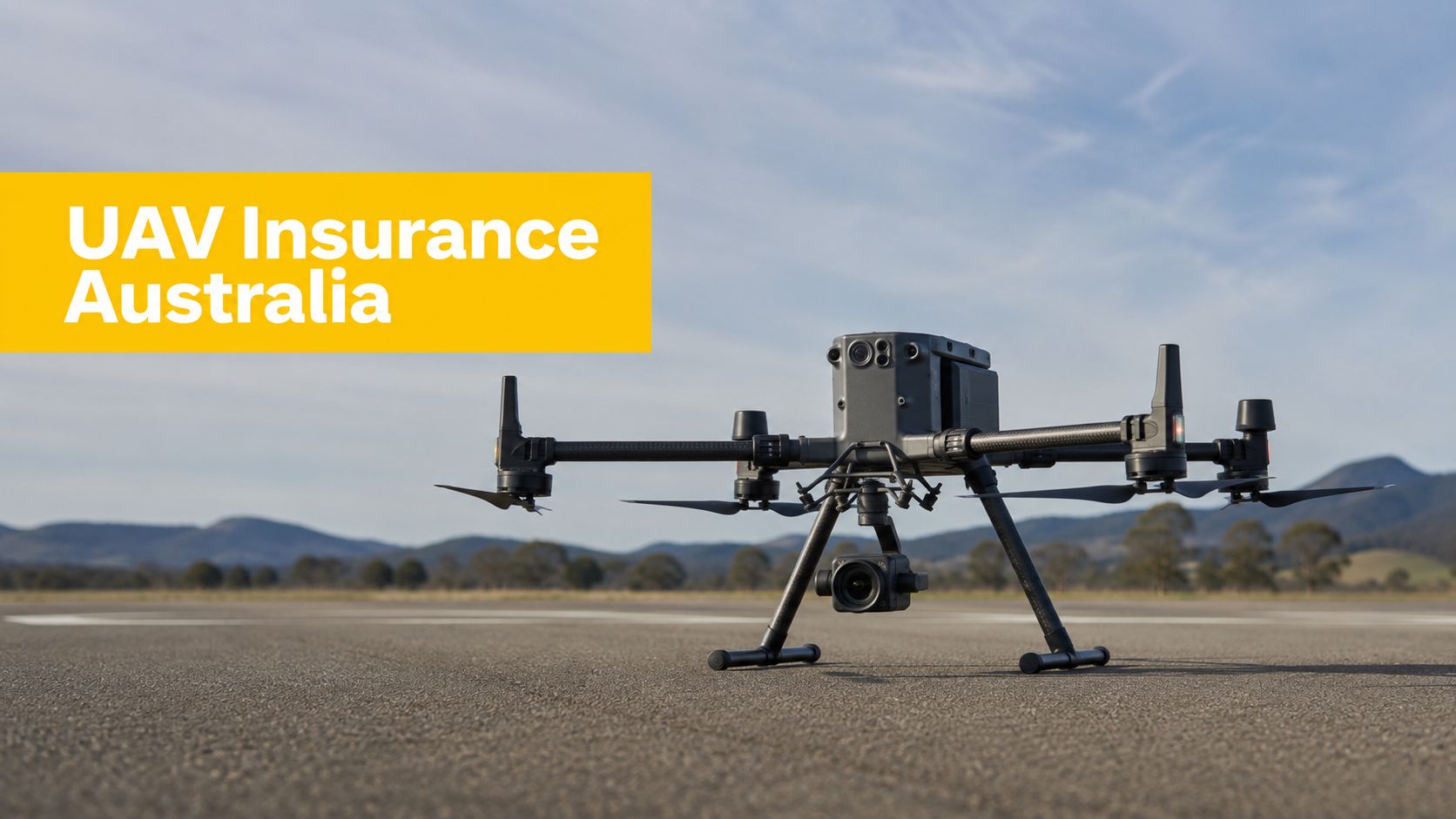
A commercial drone operator can do everything right on site, then discover the insurance file is useless after a loss. A business policy that looked broad enough at quote stage often turns out to exclude drone work, or to exclude the person flying the mission because the right CASA credential was missing. That gap is exactly where UAV Insurance Australia becomes a serious compliance issue, not a paperwork purchase.
For commercial operators, this is not about buying the cheapest cover and hoping for the best. Australian drone insurance sits beside CASA registration, pilot competency, and operational discipline, and insurers treat those things as part of the same risk picture. That matters because the Australian Government estimated the drones industry could add more than $18 billion in output over 2020 to 2040, with employment ranging from 6,640 to 14,655 FTEs under low and high uptake scenarios, so the insurance problem is growing with the market itself. The scale of activity means more liability exposure, more equipment at risk, and more contracts that demand proof of cover from the start. Australian Government economic benefit analysis of drones
Table of Contents
- Why UAV Insurance in Australia Demands Your Attention
- Understanding the Two Main Types of Drone Cover
- How CASA Compliance Determines Your Insurance Eligibility
- Realistic Cost Ranges and What Drives Your Premium
- Step-by-Step Process to Obtain UAV Insurance Cover
- Common Exclusions and Coverage Gaps That Leave Operators Exposed
- Risk Reduction Strategies That Lower Premiums and Strengthen Claims
- What to Do When an Incident Occurs and How to Navigate Claims
Why UAV Insurance in Australia Demands Your Attention
A contractor turns up to a site with a drone, a laptop, and a business policy that allegedly covers “equipment”. The aircraft clips a vehicle during take-off, the client asks for the insurer's details, and the operator discovers the policy never properly extended to commercial drone work. That's not bad luck, it's a basic underwriting failure that should have been caught before the first flight.
UAV insurance in Australia is tied to how the operation is conducted, not just what aircraft is being flown. QBE's Australian drone guidance makes that point plainly, because its Third Party Liability cover requires the operator to hold a Remote Pilot Licence (RePL) or a certificate from an approved registered CASA trainer. That links insurance access to recognised competency, which is exactly how commercial aviation risk is normally handled. QBE drone insurance guidance
Why the market size matters
The Australian Government's drones analysis is the clearest sign that this is now a real industry risk, not a hobbyist side issue. More commercial flights mean more chances for property damage, personal injury claims, payload damage, and downtime after an incident. It also means clients, councils, and government agencies are more likely to ask for insurance evidence before work starts. Australian Government economic benefit analysis of drones
Practical rule: if drone work contributes to revenue, it needs commercial-grade insurance and proof that the pilot meets the insurer's qualification threshold.
Operators moving into surveying, construction, agriculture, mining, inspection, and emergency support should treat insurance as part of entry requirements, not an afterthought. The reason is simple, insurers do. They look at the operator's compliance pathway, the mission profile, and the risk of third-party loss before they decide whether to quote at all. For beginners, a course such as ACE READY can be a sensible starting point because it covers drone fundamentals, aviation safety, CASA regulations, flight operations, and preparation for RePL training in Australia.
The blunt advice is this. Do not assume a general policy will hold up once a drone is involved. Check the wording, confirm the operator credentials, and verify that the policy matches the work being done.
Understanding the Two Main Types of Drone Cover
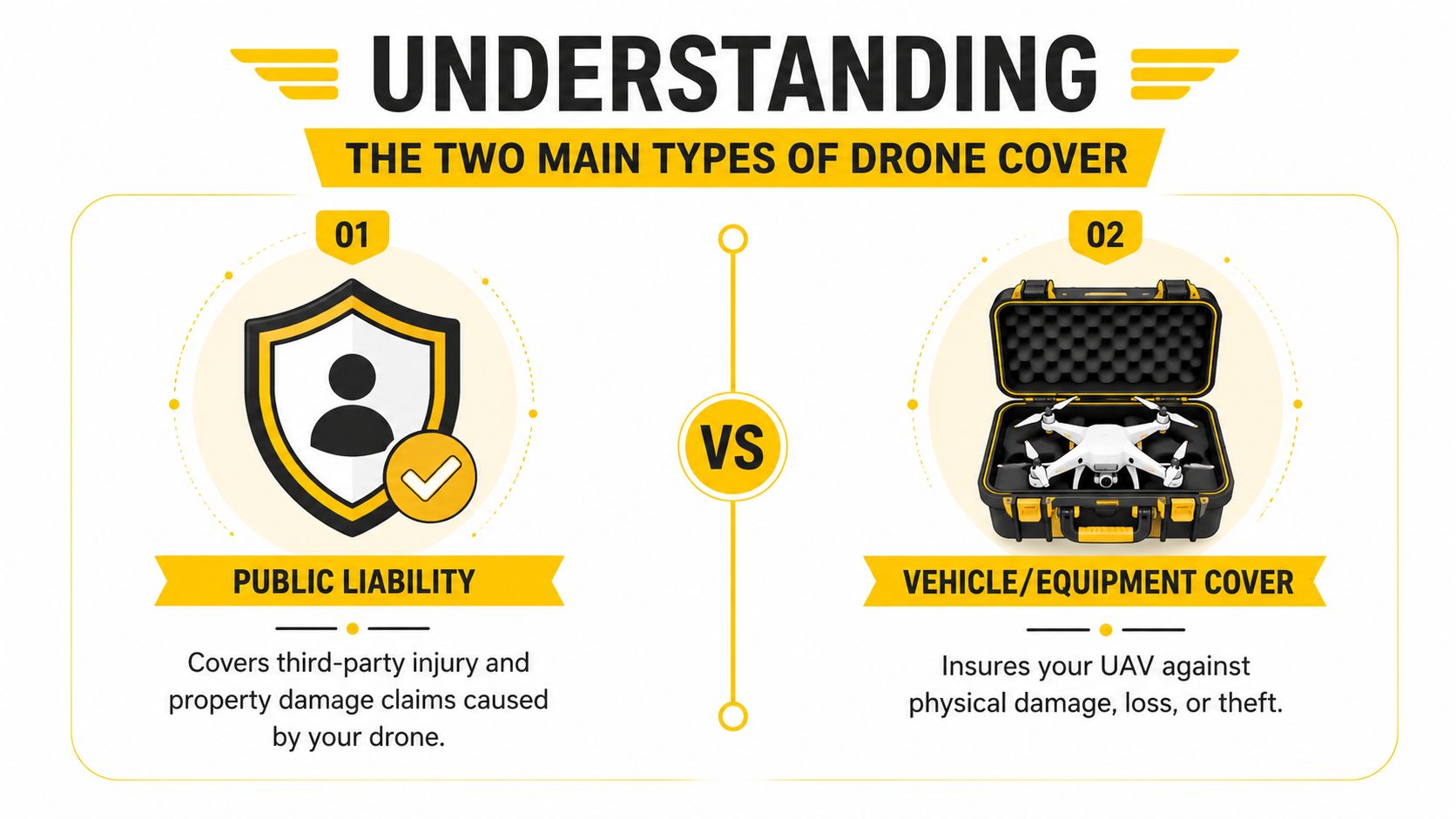
Australian drone insurance is usually built around two cover types, and the split matters. One protects other people and their property. The other protects the aircraft and the gear attached to it. If an operator only buys one of them, the weak spot usually shows up at claim time.
Public liability cover
Public liability responds when the drone causes third-party injury or property damage. That could mean a crashed drone hitting a parked car, damaging a roof, or injuring a bystander at a job site. In Australian commercial work, this is the cover that clients care about first because it answers the question, “Who pays if the operation harms someone else?”
Clear Insurance's guidance notes that commercial drone cover is commonly structured around public liability and hull or equipment protection, and it also points out that CASA does not mandate insurance for every commercial drone operation even though ReOC holders must still demonstrate adequate insurance or financial capacity to meet liabilities. That is the important distinction. Regulation and insurance are related, but they are not identical. Clear Insurance drone guidance
Vehicle and equipment cover
Vehicle or equipment cover protects the drone itself, plus related gear, against loss or damage. Finder describes this as the second main cover type in the Australian market, and it is the one that matters when the aircraft is damaged in transport, dropped during handling, or written off after a hard landing. Finder drone insurance guide
That said, equipment cover does not replace liability cover. A company can own a very expensive drone and still be exposed to a third-party claim if the aircraft injures someone or damages property. The reverse is also true. A strong liability policy can leave the operator paying to replace the drone out of pocket if equipment cover was never arranged.
A common misconception is that standard business or travel cover will absorb drone use. It usually doesn't. Compare Travel Insurance says travel insurers in its review do not cover personal liability for drones and that operators should check whether home-and-contents or separate UAV cover applies. That warning is worth taking seriously, because exclusions are often buried in the fine print. Compare Travel Insurance drone guidance
For commercial operators, the practical choice is rarely either-or. The important question is whether the policy aligns with the worksite, the payload, the client contract, and the pilot qualification pathway. If it doesn't, the cover is unfinished.
How CASA Compliance Determines Your Insurance Eligibility
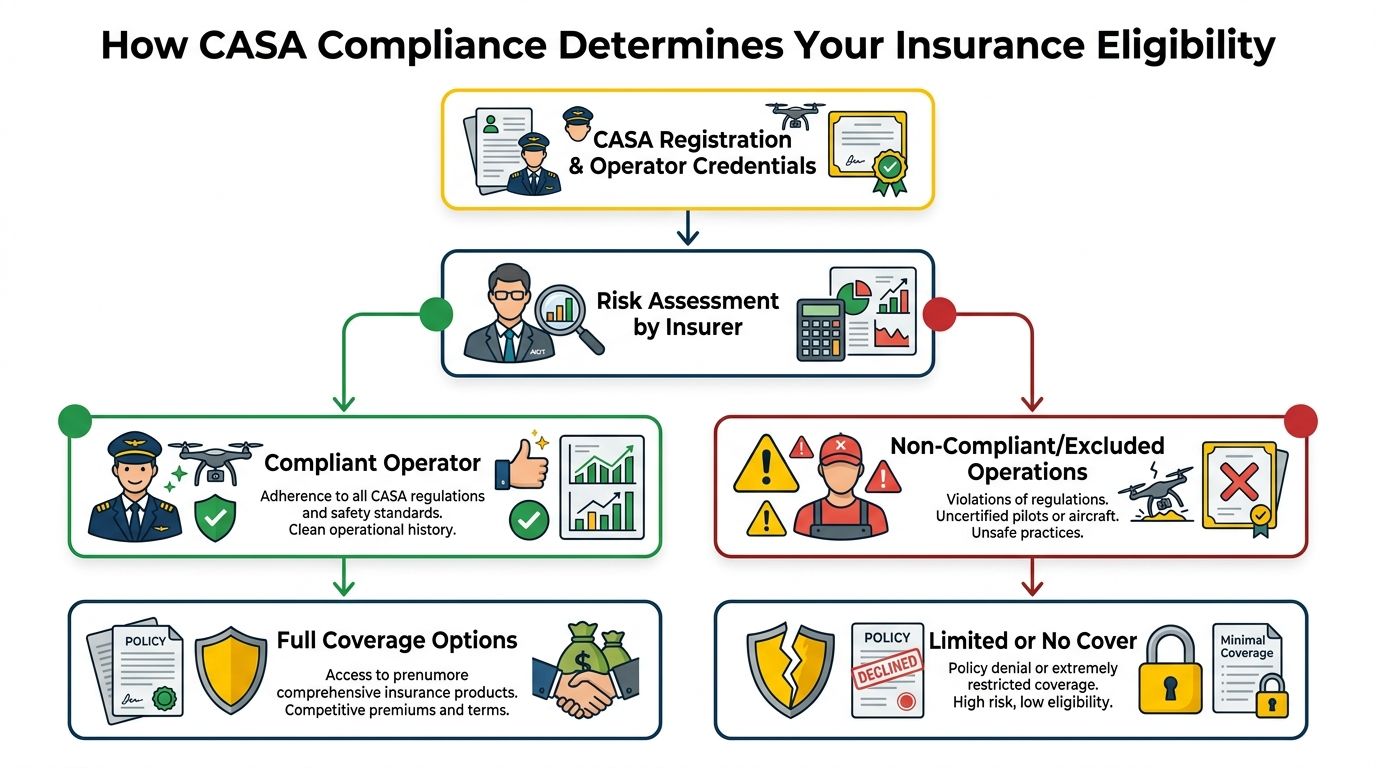
Insurers do not price drone work as a simple machine risk. They price the operator's legal pathway. That means the insurance decision often starts with the CASA status of the mission, the pilot's credentials, and whether the work sits inside the excluded category or requires a stronger approval structure.
Where the licence gate actually sits
QBE's Australian drone page is direct on this point. For Third Party Liability cover, the operator needs a RePL or a certificate from an approved CASA trainer. QBE also states that for RPAs under 2 kg flown commercially, the excluded category only applies if the operator notifies CASA and stays within Standard Operating Conditions. Outside those conditions, a RePL and a ReOC holder are required. QBE RPA cover guidance
That means the insurer's first question is not, “What drone is it?” It's, “Who is flying, under what authority, and inside what operational limits?” That is why the training pathway matters so much. It directly determines whether the operator is quoteable, what cover is available, and how much friction sits in the underwriting file.
What to get in place before asking for cover
Operators should treat CASA compliance as the front door to insurance, not the back office. A serious quote request normally needs a clean file with qualifications, operating authority, and evidence that the business understands the scope of its missions. For operators building toward commercial work, a pathway such as ACE SILVER can be relevant because it combines RePL training, AROC, and CASA-compliant certification with practical instruction for professional drone pilots.
Insurers rarely reward vague answers. They want to see that the pilot, the operation, and the aircraft all sit inside a defensible compliance framework.
For businesses moving into larger or more complex operations, ReOC support becomes part of the same conversation. That's why a resource such as the ultimate guide to ReOC in Australia belongs on the reading list before a commercial quote is requested. ReOC status affects how an insurer reads the whole operation, especially when the work involves multiple pilots, broader site access, or recurring client deliverables.
The hard truth is this. A drone operator without the right credential pathway can find the market closed before price is even discussed. That's not insurers being difficult, it's insurers doing their job.
Realistic Cost Ranges and What Drives Your Premium
Australian drone insurance pricing is not one-size-fits-all, and operators should stop pretending it is. One market estimate puts annual premiums at about $500 to $750 per year, but that figure is only a starting point and it changes with drone type, use case, and cover limits. Avian's Australian guide pairs that range with liability cover up to $1 million, which shows how different policies can look even before a broker starts tailoring them. Avian commercial drone insurance guide
What insurers price around
Insurers look hard at the mission, because mission drives loss potential. A routine roof inspection is not the same as a survey over traffic, a flight near controlled airspace, or an operation that uses expensive payloads. They also look at client contract requirements, because some customers insist on higher liability limits or extra insured status before work can begin.
For broader aviation-related cover, the Australian market estimate cited in the briefing places aerospace insurance at USD 18.42 million in 2025 and USD 23.42 million by 2034 at a 2.71% CAGR. That figure is broader than UAV insurance alone, but it signals that aviation risk transfer in Australia is expanding, not contracting. QBE drone insurance report
How to read a quote properly
A cheap quote can still be a bad quote if the policy limit, exclusions, or approval conditions make it unusable on site. That's why operators should compare the whole package, not just the premium.
| Factors That Influence UAV Insurance Premiums in Australia | Impact on Premium | Example |
|---|---|---|
| Mission profile | Higher risk work usually pushes premiums up | Inspections over people or infrastructure |
| Airspace complexity | More complex operating environments increase scrutiny | Flights near controlled airspace |
| Payload value | More expensive gear raises replacement exposure | High-value camera or sensor payloads |
| Cover limits | Higher liability limits usually cost more | Larger third-party liability requirement |
| Risk controls | Better records can improve quote quality | Documented checklists and logs |
| Client requirements | Contract conditions may force broader cover | Need for proof of insurance before mobilisation |
For operators wanting to benchmark their own quotes, the quote calculator is a practical planning tool, not a substitute for specialist broking. It helps frame the operation before underwriters start asking questions.
If the business is moving into enterprise work, ACE PLATINUM is relevant because it combines RePL, AROC, aviation English, Express ReOC, Certificate III in Aviation, advanced operations training, and preparation to operate and manage a commercial drone business. That kind of pathway matters because insurance often rewards operations that look organised, trained, and repeatable.
Step-by-Step Process to Obtain UAV Insurance Cover
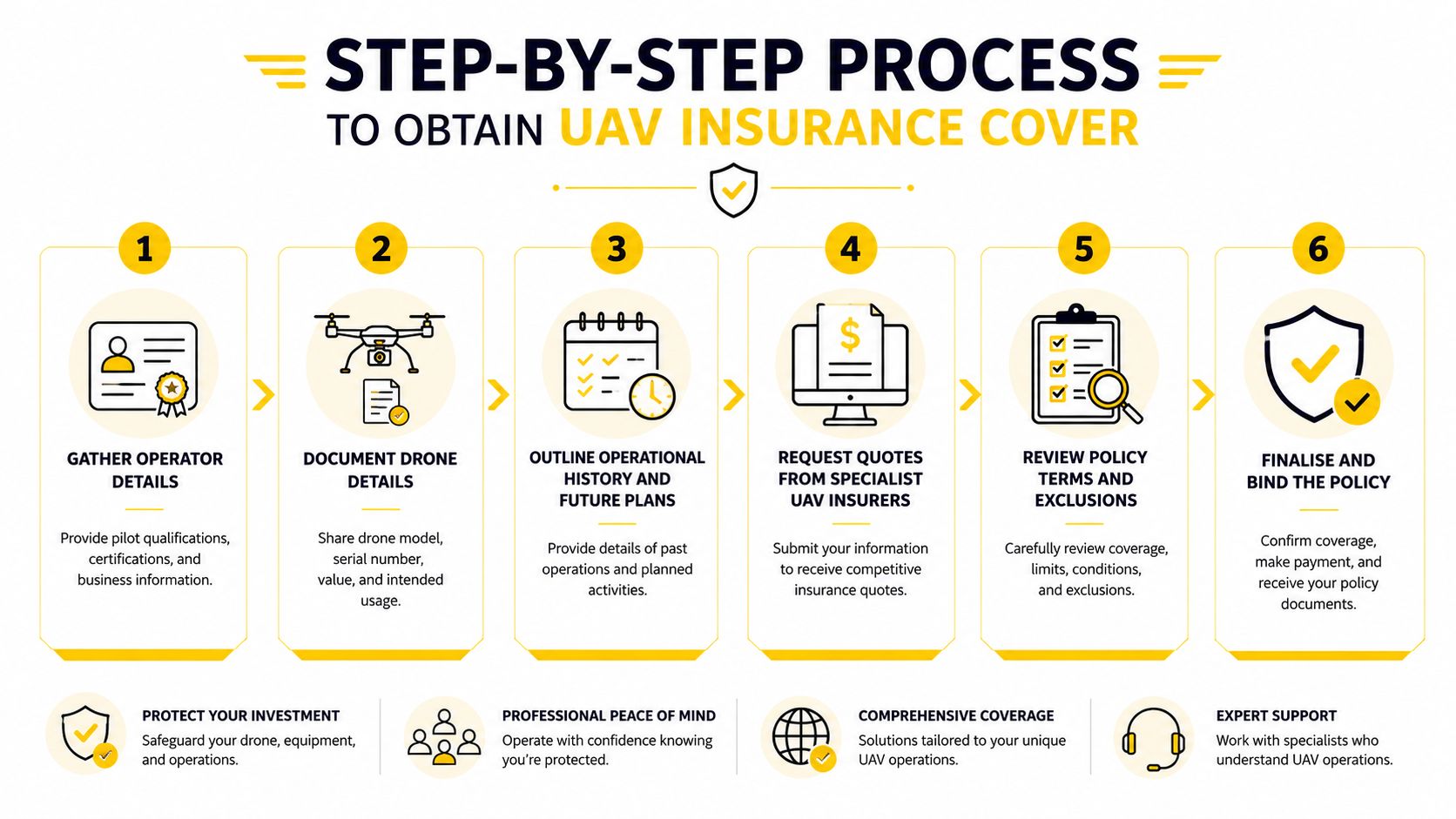
Good insurance placement starts before the broker call. Operators who arrive with half the facts end up with slower quotes, more exclusions, or a flat refusal if the risk looks unclear. The cleanest path is simple, gather the evidence first, then ask for cover that matches the operation instead of trying to retrofit a policy later.
What to prepare before requesting a quote
Start with the operator file. That means pilot qualifications, business details, RePL evidence where relevant, ReOC details if the operation needs them, and a clear description of the work. Add the drone model, the payload, and the gear list, because underwriters want to know exactly what is being exposed to loss.
Then write down how the drone is used. A quote for agricultural spraying support, for example, will look very different from one for a real estate content business or a mining inspection team. If the operation changes often, that needs to be disclosed too.
How to move through the quote process
- Gather operator details. Include pilot credentials, company structure, and any delegated operators.
- Document drone details. Model, value, payload, and whether the gear is owned or hired.
- Set out operational use. List the kind of jobs, airspace, and typical flight environment.
- Ask for specialist quotes. Go to brokers or underwriters that understand UAV risk.
- Read the exclusions. Many operators get caught here.
- Bind only when the policy matches the work. Cheap and vague is not a win.
The cheapest quote is often the one with the most awkward conditions attached.
Operators who need training support before they can present a stronger insurance file often benefit from structured aviation education. Ace Aviation Aerospace Academy is one option, because it provides CASA-aligned drone and aviation training that can help operators close the competence gap before they approach the market.
One more point matters here. If the insurer asks for extra controls, that is not a nuisance, it is a sign the risk is being reviewed properly. Provide what they asked for, but do not accept a policy that strips out the very activity the business needs to perform.
Common Exclusions and Coverage Gaps That Leave Operators Exposed
A policy can look solid and still fail at the exact moment a claim is tested. That usually happens because the operation drifted outside the policy wording, not because the insurer “changed its mind”. The operator assumed the cover was broad. The policy said otherwise.
The exclusions that matter most
The biggest problem is flying outside the approved operating conditions. If the mission steps beyond Standard Operating Conditions without the right authority, the insurer can treat the claim as outside cover. The same risk exists when an unlicensed pilot conducts the flight, when equipment has been modified in a way the insurer was never told about, or when the drone is used in a restricted area without approval.
The other weak spot is the mismatch between client contract language and the actual policy. A customer may ask for a certain level of liability protection or named coverage arrangements, but the policy on file may not deliver that structure. At claim time, that gap becomes the operator's problem.
Why this gets operators into trouble
Insurers investigate compliance because drone claims often turn on simple questions. Was the pilot authorised? Was the location permitted? Was the drone flown in the way the policy described? If the answer to any of those questions is shaky, the file gets difficult fast.
For operators who are still sorting out excluded category boundaries, the excluded category drone operations material is worth reviewing before assuming a flight is insured. The point is not to scare people off. It is to stop them treating a policy as a substitute for compliance.
Short version: if the operation changes, the insurance needs to change with it.
This is also why standard travel or business policies are a poor fallback. As noted earlier, they often exclude drone use entirely or leave personal liability out of scope. That leaves a very expensive false sense of security.
The safe approach is boring but effective. Match the policy to the actual operation, keep the paperwork clean, and don't test the limits on the day of the job.
Risk Reduction Strategies That Lower Premiums and Strengthen Claims
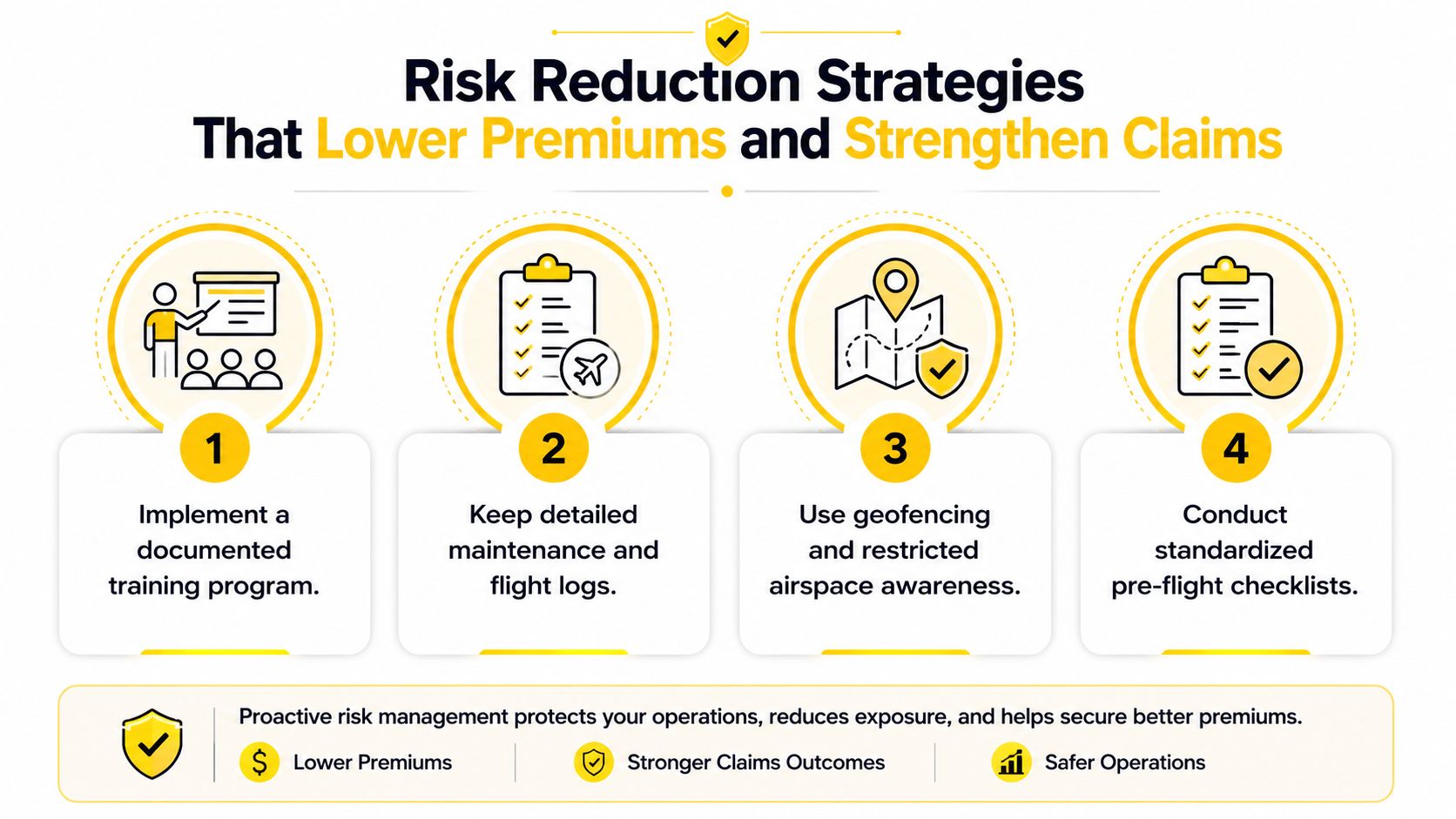
Insurance underwriters like evidence. They don't need theatre, they need proof that the operator runs a controlled operation. The businesses that keep good records, train properly, and check their equipment regularly usually present as lower risk than operators who rely on memory and good intentions.
Build a paper trail that insurers can trust
Detailed flight logs matter because they show how often the aircraft is flown, where it is flown, and by whom. Pre-flight checklists matter because they show the operator inspected the machine before take-off. Maintenance records matter because they show wear, repairs, and defects were not ignored.
Site-specific risk assessments help too, especially on jobs near people, roads, buildings, or controlled airspace. The operator who can show a consistent process looks far more credible than the one who treats every flight as ad hoc.
Training is part of risk control, not a nice extra
Ongoing training strengthens the business case for insurance. Enterprise Drone Training can help formalise repeatable operating habits, and AROC training is relevant when operations sit near controlled airspace and radio communication skills matter. Both support the same underwriting message, the business takes flight discipline seriously.
For operations that intersect with airports or helipads, the drone safety guide for airports and HLS in Australia is a useful reminder that proximity risk is never theoretical.
A practical resource from outside aviation also fits here. For teams using aerial data to reduce claims and improve site visibility, the case study on learn how AI improves insurance outcomes is a good example of how structured inspection workflows can support insurance decision-making.
Simple habits that help at claim time
- Document every flight. Keep a log that shows date, location, aircraft, pilot, and purpose.
- Inspect before launch. Use a standard checklist before each mission.
- Record maintenance. Keep servicing notes, repairs, and battery condition records.
- Track risk controls. Note geofencing, exclusion zones, and airspace checks.
These habits don't just support safety. They make the claim easier to defend because the operator can show a consistent process rather than a one-off story after the fact.
What to Do When an Incident Occurs and How to Navigate Claims
A drone incident doesn't start with the insurer. It starts with the scene. If the operator handles the first ten minutes badly, the claim can become harder before anyone has even spoken to a loss adjuster. Calm, documented action beats improvisation every time.
Immediate response
First, make the area safe. Stop the operation, secure the drone, and check whether anyone is injured or whether property has been damaged. If the incident involves a third party, do not argue liability on the spot.
Then collect evidence while it is still fresh. Photos, video, witness names, flight logs, maintenance notes, and the exact operating location all matter. If the job involved a client, notify the relevant contact promptly and keep the explanation factual.
The drone pilot emergency handbook is a useful companion resource because serious incidents often involve more than one reporting obligation, depending on what happened and where it happened.
Claim handling discipline
Tell the insurer quickly. Delayed notification creates avoidable friction, and claims teams dislike missing information even more than bad news. Provide the facts, not opinions, and avoid admitting fault before the insurer has had a chance to review the file.
Claim rule: documentation beats memory, and silence beats speculation.
Keep every email, message, invoice, repair quote, and incident note together. If the insurer asks for additional material, respond quickly and consistently. The goal is to make the file easy to follow, because complicated files are where avoidable disputes start.
Operators should also remember that third-party claimants may contact them directly. That doesn't mean the operator should negotiate alone. Route the matter through the insurer and keep the response measured. A tidy claim file is usually the difference between a manageable event and a costly one.
FAQ
Do all commercial drone operators in Australia need UAV insurance?
No. CASA does not mandate insurance for every commercial drone use, but ReOC holders must still demonstrate adequate insurance or financial capacity to meet liabilities, and many clients require proof of cover before work starts.
What is the main difference between public liability and equipment cover?
Public liability covers third-party injury and property damage. Equipment cover protects the drone and related gear against loss or damage.
Why does RePL matter for insurance?
Some insurers tie eligibility to pilot competency. QBE states that Third Party Liability cover requires a RePL or a certificate from an approved registered CASA trainer.
Can a standard business policy cover drone work?
Often no. Many standard business or travel policies exclude drone use, so the operator should check the wording before relying on it.
What should be ready before requesting a quote?
Pilot credentials, operator details, drone and payload information, operational use, and any ReOC or compliance documentation.
What is the biggest mistake operators make with UAV insurance?
Assuming any policy will respond after a claim. The primary risk is flying outside the policy wording or without the qualification pathway the insurer requires.
Ace Aviation Aerospace Academy trains commercial drone operators who need more than basic flight skills; it also builds the compliance pathway that insurers look for. If a pilot is serious about RePL training, AROC, ReOC support, or a structured route into commercial drone work, visit Ace Aviation Aerospace Academy and choose the training path that fits the operation.