Meta description: Follow a Sydney beginner’s drone licence Australia journey with Ace Aviation. Learn the RePL pathway and start commercial drone training today.
Short Direct Answer
A beginner can earn a drone licence in Australia by completing CASA-approved Remote Pilot Licence (RePL) training. With Ace Aviation, the pathway combines online theory, live support, practical flight training, exams and a flight assessment.
This case study follows Alex, an anonymised beginner from Sydney. He had no aviation background and wanted a practical route into commercial drone work.
Within one structured training pathway, Alex developed the knowledge, skills and confidence needed to work as a professional remote pilot.
Important: This story represents a typical beginner pathway. Training time, assessment results and career outcomes vary between students.
The Drone Licence Australia Pathway for Beginners in Sydney
Alex first became interested in drones through construction videos and aerial property photography. He enjoyed flying recreationally, but he wanted more than a hobby.
He wanted to understand aviation rules. He also wanted to work legally and build a new career.
At first, the industry looked complicated. Terms such as RePL, ReOC, AROC, VLOS and UAMP seemed difficult. However, Ace instructors explained each term in plain English.
The first key lesson was simple:
- A RePL is an individual Remote Pilot Licence.
- A ReOC is an operator certificate for a business or organisation.
- An AROC is an Aeronautical Radio Operator Certificate.
- VLOS means visual line of sight.
- UAMP means Unmanned Aircraft Management Plan.
The RePL became Alex’s first goal. It is the main professional qualification for people who want to fly drones commercially in Australia.
Ace Aviation delivers CASA-approved training under CASA.ReOC.1421. The academy has trained more than 4,000 students and supports learners across Australia and international locations.
Its wider footprint includes Singapore, Dubai, Korea and Malaysia. Therefore, students can access training shaped by both Australian aviation rules and global industry expectations.

Theory training helps beginners understand aviation law, safety and professional operating standards.
Why Alex Chose a Commercial Drone Licence
Alex did not want to purchase expensive equipment immediately. Instead, he wanted to understand the industry first.
He researched several possible career areas, including:
- Construction progress monitoring
- Roof and solar inspections
- Real estate photography
- Surveying and mapping
- Infrastructure inspections
- Environmental monitoring
- Agriculture and land management
- Film and media production
Sydney offered a strong starting point. The city has active construction, property, infrastructure and media sectors. As a result, Alex could see several possible career directions.
Still, he knew that a drone and a camera were not enough. Commercial work also requires planning, risk control and legal compliance.
That difference shaped his training decision. He did not want shortcuts. Instead, he wanted a recognised pathway that employers and clients could understand.
Ace’s Why Ace approach focuses on more than a certificate. It connects training with compliance, operations and employment support.
Key Facts from Alex’s Training Journey
| Area | Alex’s pathway |
|---|---|
| Starting experience | No aviation background |
| Location | Sydney, New South Wales |
| Primary qualification | Remote Pilot Licence, or RePL |
| Supporting qualification | Aeronautical Radio Operator Certificate, or AROC |
| Theory format | Online, self-paced study with instructor support |
| Practical training | Face-to-face supervised flight training |
| Assessment | CASA knowledge exam and practical flight assessment |
| Aircraft | Training aircraft supplied by Ace Aviation |
| Initial career direction | Commercial inspection, construction and mapping work |
| Student support | Human support, refresher access and Altitude+ benefits |
| Career support | DroneWork job board access |
| Training provider | CASA-approved Ace Aviation under CASA.ReOC.1421 |
| Graduate network | More than 4,000 students trained |
Course prices and inclusions can change. At the time of writing, Ace’s published course options include Starter, Silver, Gold and Platinum pathways.
The Silver course is designed for commercial pilots seeking RePL and AROC capability. The Gold pathway adds business and ReOC support.
Students who want larger aircraft, advanced operations or a nationally recognised qualification can explore the Platinum pathway.
Step-by-Step: How Alex Became a Commercial Drone Pilot
Step 1: Alex defined his career goal
Alex started with a broad goal: to become a commercial drone pilot.
That goal became clearer after speaking with an Ace training advisor. He learned that the right licence depends on the aircraft, operation and intended work.
For example, a pilot working with small camera drones may need a different pathway from someone operating an agricultural aircraft.
Therefore, Alex avoided choosing a course based only on price. He considered his future work and the aircraft weight class he might need.
Step 2: He obtained his Aviation Reference Number
An Aviation Reference Number, or ARN, is a personal aviation identification number issued by CASA.
Students use an ARN for aviation licensing and other CASA records. Alex completed this step before his licence application.
This process gave him his first experience with the aviation system. More importantly, it helped him understand that professional drone operations involve formal records.
Step 3: He began online theory
Alex completed the theory component online. This allowed him to study around work and family commitments.
The theory covered the foundations of safe remote piloting, including:
- Australian aviation law
- CASA operating conditions
- Airspace and aerodromes
- Weather and meteorology
- Navigation
- Human factors
- Flight planning
- Emergency procedures
- Risk management
- Radio procedures
- Aircraft systems
- Operational limitations
At first, airspace rules were the hardest topic. Alex had flown a drone in open areas, but he had not considered how nearby airports could affect operations.
The training connected each rule to a practical situation. For example, a flight near a construction site may involve nearby roads, workers, buildings, powerlines and controlled airspace.
As a result, Alex began to plan flights more carefully. He also learned that professional pilots must be able to explain their decisions.
Step 4: He used practice questions and instructor support
Alex did not rely on one weekend of study. Instead, he used the student learning resources regularly.
He completed practice questions and reviewed topics where he felt uncertain. He also asked instructors to explain aviation terms in simpler language.
This was important because beginners can feel overwhelmed by technical vocabulary. However, good training breaks complex topics into smaller decisions.
The Altitude+ program also supported Alex’s development. It provided continued learning benefits, refresher access and a wider connection to the Ace student community.
Step 5: He attended live training sessions
Online study gave Alex the foundation. Live sessions then helped him connect theory with operations.
The instructors discussed real flight scenarios. They explained how to identify hazards and create controls before take-off.
Alex learned that a professional flight begins long before the aircraft leaves the ground. A pilot must consider:
- The purpose of the flight
- The aircraft and payload
- The operating area
- People and property nearby
- Weather conditions
- Airspace restrictions
- Emergency landing areas
- Battery condition
- Communication needs
- The planned return and shutdown process
This process changed Alex’s view of drone work. He no longer saw the pilot as someone who simply controls a remote aircraft.
Instead, he began to see the role as a safety-critical aviation position.

Flight planning teaches students to assess airspace, hazards and operational limits before take-off.
Step 6: He completed supervised flight training
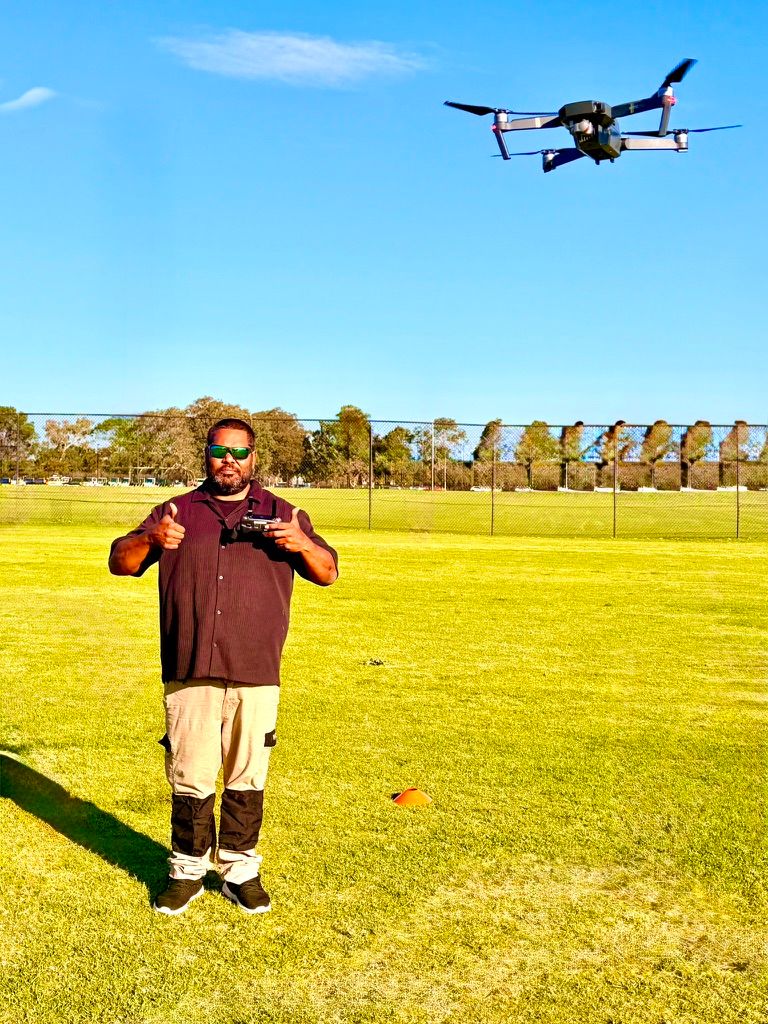
Alex then attended practical flight training in the Sydney area.
He used training aircraft supplied by Ace Aviation. Therefore, he did not need to buy a professional drone before learning the fundamentals.
The practical sessions covered:
- Pre-flight inspections
- Aircraft setup
- Controller checks
- Take-off and landing
- Hovering
- Climbing and descending
- Direction changes
- Square and circuit patterns
- Orientation
- Position keeping
- Emergency procedures
- Battery awareness
- Landing area selection
- Post-flight checks
At the start, Alex focused heavily on the controller. He watched every movement and sometimes overcorrected.
The instructor helped him slow down. Gradually, he learned to maintain a wider view of the aircraft, surroundings and mission.
That improvement was crucial. Commercial drone pilots must manage the whole operation, not just the aircraft’s movement.
Step 7: He completed the assessments
The RePL pathway includes knowledge and practical assessments.
The knowledge assessment tests the student’s understanding of aviation and operational subjects. The practical assessment tests safe and competent aircraft operation.
Alex prepared by repeating the full process. He reviewed the flight plan, checked the aircraft and explained the risks before starting.
During the flight assessment, he remained calm. He completed the required manoeuvres and responded correctly to instructor questions.
The assessment was not about performing tricks. It was about showing safe, controlled and repeatable operations.
Step 8: He received support with the application process
After Alex completed his training and assessments, Ace helped prepare the required documentation for the CASA application.
The final licence process involves accurate records. Therefore, students should check their personal details, licence category and supporting documents.
A RePL is a personal qualification. However, a pilot may still need to operate under an employer’s or business’s ReOC.
This distinction became one of Alex’s most valuable lessons.
What Alex Could Do After Training
After receiving his RePL, Alex had several possible directions.
Example 1: Construction and site monitoring
A licensed pilot can support construction teams with:
- Progress photographs
- Roof inspections
- Stockpile measurements
- Site documentation
- Asset records
- Survey data collection
- Marketing content
However, each project still requires its own risk assessment. A licence does not remove the need for safe planning.
Example 2: Property and media work
Alex also considered real estate and media work. These jobs may involve smaller aircraft, but they still require care around people, roads and private property.
A commercial pilot must also understand privacy and local legal obligations. CASA aviation rules are only one part of responsible operations.
Example 3: Mapping and surveying
Mapping work can require stronger technical skills. Pilots may need to understand mission planning, image overlap, ground control and data quality.
Alex saw this as a longer-term pathway. First, he wanted to build flight confidence. Then, he planned to develop specialised software and mapping skills.
Example 4: Working for an existing operator
Alex did not need to start a business immediately. He could apply for work with an organisation that already held a ReOC.
This option reduced the initial business burden. The operator would manage the organisation’s procedures, manuals and operational approvals.
For students who want to build a business, Ace’s Gold pathway includes ReOC setup support and Chief Remote Pilot training.
Training Options Across Australia
Although this case study focuses on Sydney, Ace Aviation supports students in several Australian locations.
Students can complete online theory from anywhere. They can then attend practical training in a suitable location.
- Melbourne drone training supports construction, surveying, media and agriculture pathways.
- Brisbane drone training supports Queensland agriculture, infrastructure and resources work.
- Perth drone training connects strongly with mining, resources, surveying and agriculture.
- Hobart drone training supports Tasmania’s agriculture, forestry and environmental sectors.
This national network gives graduates flexibility. It also helps students connect with work opportunities beyond their home city.
Common Mistakes Beginners Should Avoid
Mistake 1: Assuming recreational experience is enough
Flying a drone for fun does not prepare someone for every commercial situation.
Commercial pilots must understand airspace, risk, weather, people, property and documentation. Therefore, hobby experience is useful, but it is not a replacement for structured training.
Mistake 2: Choosing a course without checking the aircraft category
A licence applies to specific aircraft categories and weight classes.
Before enrolling, students should consider the type of drone they plan to fly. A small camera drone and a heavy-lift agricultural drone do not create the same training needs.
Mistake 3: Confusing a RePL with a ReOC
A RePL belongs to the pilot. A ReOC belongs to the operator or business.
A pilot with a RePL may work under an employer’s ReOC. However, a pilot who wants to operate an independent commercial business may need further operator approval.
Mistake 4: Buying equipment too early
Many beginners buy a drone before understanding their market.
Alex avoided this mistake. He first explored possible industries, completed training and then considered the equipment required.
This approach reduced unnecessary spending.
Mistake 5: Ignoring communication requirements
Some operations require radio knowledge and communication procedures. An AROC can support pilots who need to use an aviation radio in suitable operations.
Students should not assume that an AROC alone permits every controlled-airspace operation. Other approvals and conditions may apply.
Mistake 6: Treating the licence as a job guarantee
A RePL can open opportunities, but it does not guarantee income or employment.
Success also depends on communication, reliability, business development, technical skills and the local market.
Ace supports graduates through the DroneWork job board. Still, students must build their own professional reputation.
CASA Considerations for New Commercial Pilots
CASA rules can change. Always check the current requirements on the CASA drones website before operating.
In general, new commercial pilots should understand the following areas.
Standard operating conditions
Common operating conditions include:
- Flying within visual line of sight
- Staying at or below 120 metres above ground level
- Flying during the day, unless specifically approved
- Keeping a safe distance from people
- Not flying over people
- Avoiding prohibited and restricted areas
- Checking airspace before each flight
- Maintaining control of the aircraft
- Following aircraft manufacturer instructions
These rules apply to operations within the relevant regulatory framework. Specialised work may need additional approvals.
Drone registration
Commercial drones may need registration. Operator accreditation may also apply to certain operations and aircraft categories.
The requirement depends on the aircraft, operation and legal category. Students should confirm the current position before each job.
ReOC operations
A ReOC is important for organisations that conduct commercial drone operations.
A pilot may fly under an employer’s ReOC. Alternatively, a business owner can explore a pathway to obtain their own operator certificate.
Ace’s Gold and Platinum pathways include support for students who want to move towards business operations.
Night operations
Night flying is not automatically covered by standard operating conditions. It may require additional training, procedures or approval.
Ace provides specialised night operations training for students who want to expand their capability.
BVLOS operations
BVLOS means beyond visual line of sight. It allows an operation to extend beyond the pilot’s unaided visual range.
BVLOS work is more complex and usually requires specific approval, procedures and risk controls. It is not a standard outcome of an entry-level RePL course.
Understanding CASA RePL Cost
The cost of a commercial drone licence in Australia depends on several factors.
These include:
- The aircraft weight class
- RePL training requirements
- AROC inclusion
- Practical training days
- Assessment and application fees
- Business or ReOC support
- Advanced endorsements
- Specialised training
Ace’s published course information lists the Silver package at $1,799 and the Gold package at $3,099 during the current promotional period. Prices and inclusions may change.
Students should check the current courses and pricing before making a decision. They can also request a tailored training quote.
A lower upfront price may not include the same licence category, radio training or business support. Therefore, comparing inclusions is more useful than comparing headline prices alone.
Frequently Asked Questions
1. Can a complete beginner get a drone licence in Australia?
Yes. Ace Aviation designs its RePL training for complete beginners. Students do not need previous aviation experience.
2. What is the commercial drone licence in Australia called?
The main individual qualification is the Remote Pilot Licence, or RePL. It is commonly called a commercial drone licence.
3. How do I become a drone pilot in Australia?
Start by choosing a CASA-approved RePL pathway. Then complete the theory, pass the knowledge assessment, complete supervised flight training and pass the practical assessment.
4. Can I complete the theory online?
Yes. Ace delivers the theory component online. Practical training and assessment take place face-to-face at approved training sites.
5. How long does RePL training take?
Many students complete the practical component in about five days. The online theory can be completed at the student’s own pace.
6. Do I need to buy a drone before training?
No. Training aircraft are provided for practical training and assessment. Buying equipment later may be more sensible after choosing a career direction.
7. What is the difference between a RePL and a ReOC?
A RePL is an individual pilot licence. A ReOC is an operator certificate for a business or organisation.
8. Do I need a ReOC to get a drone pilot job?
Not always. If you work for an organisation with a ReOC, you may operate under that organisation’s approval. However, you may need your own ReOC to operate an independent business.
9. Is an AROC included with RePL training?
Some Ace packages include both RePL and AROC training. Check the current package inclusions before enrolling.
10. Does a RePL expire?
Ace’s published information states that the RePL does not expire. However, pilots must maintain their competence and follow current operating requirements.
11. Can I fly a drone commercially without a RePL?
Some limited operations may fall within an excluded category. However, the conditions are narrow. A RePL offers a stronger foundation for professional work.
12. Can I fly over people with a RePL?
A RePL does not automatically permit flights over people. CASA operating conditions and risk controls still apply.
13. Can I fly near an airport after getting my RePL?
A RePL does not provide unrestricted access to controlled airspace. Pilots must check airspace restrictions and obtain required permissions.
14. Can I fly at night after completing RePL training?
Not automatically. Night operations may require additional training, procedures or approval.
15. What jobs can I do with a commercial drone licence?
Potential work includes construction monitoring, inspections, mapping, surveying, real estate, media, agriculture, infrastructure and environmental projects.
16. Can Ace help me find drone work?
Ace graduates receive access to DroneWork, a job board and commercial opportunity platform. It can help qualified pilots find tasks and connect with employers.
17. Is drone pilot work available outside Sydney?
Yes. Ace delivers training across Australia, including Melbourne, Brisbane, Perth and Hobart.
18. What is the Altitude+ program?
Altitude+ provides ongoing student benefits, learning support and career resources. It helps students continue developing after their initial training.
19. Does Ace offer advanced drone training?
Yes. Ace offers pathways covering night operations, BVLOS theory, agriculture, industrial applications, heavier aircraft and Certificate III in Aviation.
20. What should I do first if I am unsure which course suits me?
Review the Ace Aviation course options or speak with a training advisor. The right choice depends on your aircraft, industry and business goals.
Summary: From Beginner to Professional Pilot
Alex’s journey began with a simple question: could a complete beginner become a commercial drone pilot?
The answer was yes, but training made the difference.
He did not rely on recreational flying alone. Instead, he followed a structured pathway:
- He defined his career goal.
- He obtained an Aviation Reference Number.
- He completed online theory.
- He used instructor support and practice assessments.
- He attended supervised practical training.
- He passed the required assessments.
- He completed the RePL application process.
- He began exploring commercial work through DroneWork.
The result was more than a licence. Alex gained a stronger understanding of aviation safety, operational planning and professional responsibility.
That is the purpose of a good drone course. It helps students overcome regulatory hurdles through education, preparation and practical experience.
Ace Aviation brings together CASA-approved training, CASA.ReOC.1421, more than 4,000 graduates, Altitude+ support, a global footprint and DroneWork career pathways.
Ready to start? Book your training at aaa.edu.au or call 1300 336 366.
{“@graph”:[{“@id”:”https://aaa.edu.au/blog#student-success-commercial-drone-pilot-sydney”,”@type”:”Article”,”image”:”https://cdn.marblism.com/hpPDln5jNQk.jpeg”,”author”:{“name”:”Ace Aviation Aerospace Academy”,”@type”:”Organization”},”headline”:”Student Success Story: From Absolute Beginner to Commercial Drone Pilot in Sydney with Ace Aviation”,”keywords”:[“drone licence australia”,”commercial drone licence australia”,”drone course sydney”,”how to become a drone pilot australia”,”casa repl cost”],”publisher”:{“url”:”https://aaa.edu.au/”,”name”:”Ace Aviation Aerospace Academy”,”@type”:”Organization”},”inLanguage”:”en-AU”,”description”:”Follow a beginner’s journey from no aviation experience to commercial drone pilot training in Sydney with Ace Aviation.”,”dateModified”:”2026-08-17″,”datePublished”:”2026-08-17″,”articleSection”:[“Student Success”,”Drone Pilot Training”,”CASA Compliance”,”Remote Pilot Licence”]},{“@id”:”https://aaa.edu.au/#organization”,”url”:”https://aaa.edu.au/”,”name”:”Ace Aviation Aerospace Academy”,”@type”:”Organization”,”telephone”:”1300 336 366″,”areaServed”:[“Australia”,”Singapore”,”Dubai”,”Korea”,”Malaysia”],”description”:”CASA-approved drone pilot training provider offering RePL, AROC, ReOC, advanced drone operations and aviation qualifications.”,”numberOfEmployees”:{“@type”:”QuantitativeValue”,”value”:4000}},{“@id”:”https://aaa.edu.au/blog#faq”,”@type”:”FAQPage”,”mainEntity”:[{“name”:”Can a complete beginner get a drone licence in Australia?”,”@type”:”Question”,”acceptedAnswer”:{“text”:”Yes. Ace Aviation designs its RePL training for complete beginners. Students do not need previous aviation experience.”,”@type”:”Answer”}},{“name”:”What is the commercial drone licence in Australia called?”,”@type”:”Question”,”acceptedAnswer”:{“text”:”The main individual qualification is the Remote Pilot Licence, or RePL. It is commonly called a commercial drone licence.”,”@type”:”Answer”}},{“name”:”How do I become a drone pilot in Australia?”,”@type”:”Question”,”acceptedAnswer”:{“text”:”Start by choosing a CASA-approved RePL pathway. Then complete the theory, pass the knowledge assessment, complete supervised flight training and pass the practical assessment.”,”@type”:”Answer”}},{“name”:”Can I complete the theory online?”,”@type”:”Question”,”acceptedAnswer”:{“text”:”Yes. Ace delivers the theory component online. Practical training and assessment take place face-to-face at approved training sites.”,”@type”:”Answer”}},{“name”:”How long does RePL training take?”,”@type”:”Question”,”acceptedAnswer”:{“text”:”Many students complete the practical component in about five days. The online theory can be completed at the student’s own pace.”,”@type”:”Answer”}},{“name”:”Do I need to buy a drone before training?”,”@type”:”Question”,”acceptedAnswer”:{“text”:”No. Training aircraft are provided for practical training and assessment.”,”@type”:”Answer”}},{“name”:”What is the difference between a RePL and a ReOC?”,”@type”:”Question”,”acceptedAnswer”:{“text”:”A RePL is an individual pilot licence. A ReOC is an operator certificate for a business or organisation.”,”@type”:”Answer”}},{“name”:”Do I need a ReOC to get a drone pilot job?”,”@type”:”Question”,”acceptedAnswer”:{“text”:”Not always. If you work for an organisation with a ReOC, you may operate under that organisation’s approval. You may need your own ReOC to operate an independent business.”,”@type”:”Answer”}},{“name”:”Is an AROC included with RePL training?”,”@type”:”Question”,”acceptedAnswer”:{“text”:”Some Ace packages include both RePL and AROC training. Students should check the current package inclusions before enrolling.”,”@type”:”Answer”}},{“name”:”Does a RePL expire?”,”@type”:”Question”,”acceptedAnswer”:{“text”:”Ace’s published information states that the RePL does not expire. Pilots must still maintain competence and follow current operating requirements.”,”@type”:”Answer”}},{“name”:”Can I fly a drone commercially without a RePL?”,”@type”:”Question”,”acceptedAnswer”:{“text”:”Some limited operations may fall within an excluded category. However, the conditions are narrow. A RePL offers a stronger foundation for professional work.”,”@type”:”Answer”}},{“name”:”Can I fly over people with a RePL?”,”@type”:”Question”,”acceptedAnswer”:{“text”:”A RePL does not automatically permit flights over people. CASA operating conditions and risk controls still apply.”,”@type”:”Answer”}},{“name”:”Can I fly near an airport after getting my RePL?”,”@type”:”Question”,”acceptedAnswer”:{“text”:”A RePL does not provide unrestricted access to controlled airspace. Pilots must check airspace restrictions and obtain required permissions.”,”@type”:”Answer”}},{“name”:”Can I fly at night after completing RePL training?”,”@type”:”Question”,”acceptedAnswer”:{“text”:”Not automatically. Night operations may require additional training, procedures or approval.”,”@type”:”Answer”}},{“name”:”What jobs can I do with a commercial drone licence?”,”@type”:”Question”,”acceptedAnswer”:{“text”:”Potential work includes construction monitoring, inspections, mapping, surveying, real estate, media, agriculture, infrastructure and environmental projects.”,”@type”:”Answer”}},{“name”:”Can Ace help me find drone work?”,”@type”:”Question”,”acceptedAnswer”:{“text”:”Ace graduates receive access to DroneWork, a job board and commercial opportunity platform that helps qualified pilots find tasks and connect with employers.”,”@type”:”Answer”}},{“name”:”Is drone pilot work available outside Sydney?”,”@type”:”Question”,”acceptedAnswer”:{“text”:”Yes. Ace delivers training across Australia, including Melbourne, Brisbane, Perth and Hobart.”,”@type”:”Answer”}},{“name”:”What is the Altitude+ program?”,”@type”:”Question”,”acceptedAnswer”:{“text”:”Altitude+ provides ongoing student benefits, learning support and career resources to help students continue developing after their initial training.”,”@type”:”Answer”}},{“name”:”Does Ace offer advanced drone training?”,”@type”:”Question”,”acceptedAnswer”:{“text”:”Yes. Ace offers pathways covering night operations, BVLOS theory, agriculture, industrial applications, heavier aircraft and Certificate III in Aviation.”,”@type”:”Answer”}},{“name”:”What should I do first if I am unsure which course suits me?”,”@type”:”Question”,”acceptedAnswer”:{“text”:”Review the Ace Aviation course options or speak with a training advisor. The right choice depends on your aircraft, industry and business goals.”,”@type”:”Answer”}}]}],”@context”:”https://schema.org”}