
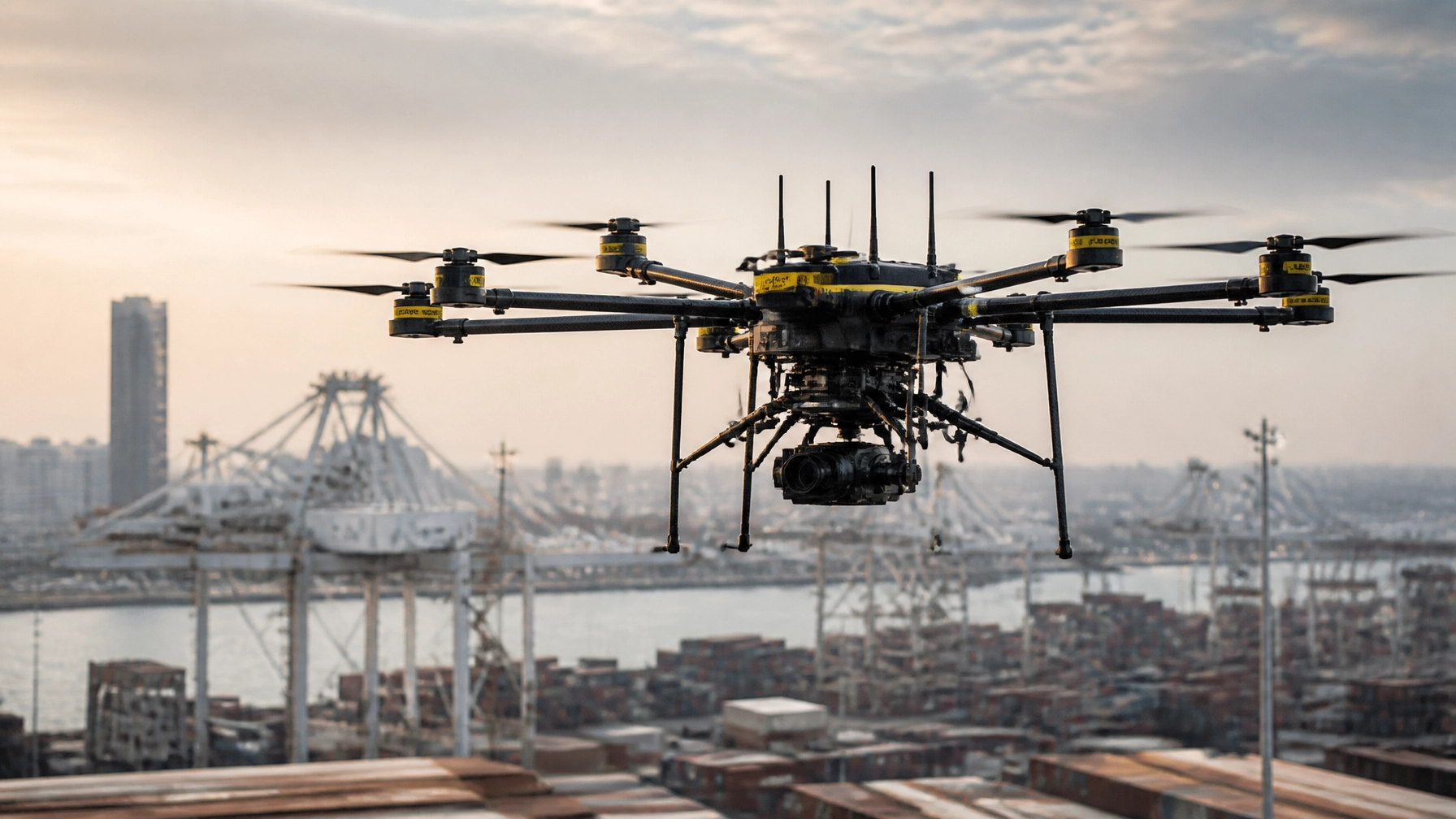
The Australian sky is undergoing a profound transformation. As we stand at the precipice of a new era in aviation, the traditional boundaries of drone operations are being redrawn, unveiling unprecedented opportunities for those prepared to navigate the evolving regulatory landscape. At the heart of this revolution is AusSORA: the Australian Specific Operations Risk Assessment.
Launched officially by the Civil Aviation Safety Authority (CASA) on 11 May 2026, AusSORA represents a visionary shift in how complex Remotely Piloted Aircraft Systems (RPAS) missions are planned, assessed, and authorised. No longer is the path to Beyond Visual Line of Sight (BVLOS) or high-density urban operations shrouded in ambiguity. Through AusSORA, CASA has provided a robust, globally aligned framework that empowers operators to scale their ambitions while maintaining the highest echelons of safety.
What is AusSORA? The New Standard for Safety
AusSORA, documented under Advisory Circular AC 101-06, is the definitive methodology for assessing the risks associated with complex drone operations in Australia. Based on the international JARUS SORA 2.5 framework, it serves as the essential bridge between standard flight rules and the high-impact, advanced missions that are currently redefining industries from logistics to emergency response.
For years, the industry relied on earlier iterations of risk assessment. However, as of May 2026, AusSORA has superseded previous SORA 2.0-based materials. It is not merely a set of rules; it is a structured, evidence-based process that allows a Remotely Piloted Aircraft Operator’s Certificate (ReOC) holder to demonstrate to CASA that their operation is safe, predictable, and manageable.

The Core Components of an AusSORA Assessment
Navigating an AusSORA application requires a meticulous approach. The framework breaks down the complexities of drone flight into digestible segments, ensuring every potential hazard is identified and mitigated. To succeed, an operator must master the following four pillars:
1. The Concept of Operations (CONOPS)
Before the first rotor turns, the operator must define the mission in exhaustive detail. The CONOPS is the foundational document of any AusSORA assessment. It details the aircraft’s technical specifications, the qualifications of the Remote Pilot Licence (RePL) holders involved, the geography of the flight path, and the specific technological buffers in place.
2. Ground Risk Class (GRC)
The GRC evaluates the potential impact on people and property on the ground. By assessing the population density of the flight area and the kinetic energy of the drone, AusSORA assigns a risk level. Operators can then apply mitigations: such as parachutes, MPSC (Modified Personnel Spacing Criteria), or restricted ground access: to lower the final GRC and simplify the approval process.
3. Air Risk Class (ARC)
The ARC determines the likelihood of a mid-air collision with crewed aircraft. This is particularly critical for missions near aerodromes or within controlled airspace. AusSORA provides a clear pathway to mitigate these risks through the use of Detect and Avoid (DAA) systems, strategic deconfliction, and robust communication protocols.
4. Operational Safety Objectives (OSOs)
Based on the combined ground and air risk, AusSORA identifies a specific set of OSOs that the operator must satisfy. These objectives cover technical, organisational, and procedural requirements, ensuring the entire operation is backed by a professional Safety Management System (SMS).

Unlocking BVLOS: The Gateway to Scalability
For many professional operators, the ultimate goal is BVLOS (Beyond Visual Line of Sight). Whether it is inspecting hundreds of kilometres of power lines or delivering medical supplies to remote communities, BVLOS is where the true ROI of drone technology is realised.
AusSORA is the key that unlocks these missions. By providing a standardised “safety case” that CASA can review with confidence, AusSORA reduces the time and uncertainty often associated with advanced approvals. It allows companies to move away from “one-off” experimental flights toward repeatable, scalable, and profitable commercial operations. At Ace Aviation Aerospace Academy, we have seen firsthand how proper education in these advanced frameworks can transform a pilot’s career trajectory from a hobbyist to an industry leader.
Integrating AusSORA with Your ReOC and RePL
It is important to understand that AusSORA does not replace the requirement for a Remote Pilot Licence (RePL) or a Remotely Piloted Aircraft Operator’s Certificate (ReOC). Instead, it enhances them.
- The Pilot (RePL): Must possess the technical skill and theoretical knowledge to execute the mission described in the AusSORA assessment.
- The Organisation (ReOC): Provides the legal and structural framework (the “Air Operator’s Certificate” equivalent) under which the AusSORA-approved missions are conducted.
Success in the modern aviation industry requires a symbiotic relationship between these certifications and a deep understanding of risk assessment methodologies.

The Path Forward: Education and Compliance
The hurdles of regulatory compliance are not barriers meant to stall progress; they are safeguards designed to ensure the longevity and public acceptance of our industry. Adhering to the AusSORA framework is a mark of professional maturity. It signals to clients, insurers, and regulators that your organisation operates at the highest standard of excellence.
As we look toward the future, the integration of drones into our daily lives: from urban air mobility to autonomous delivery fleets: will depend entirely on the rigorous safety standards we establish today. By mastering AusSORA, you are not just getting an approval; you are contributing to a safer, more efficient, and more connected world.
Checklist for Your Next Complex Operation:
- Verify Certification: Ensure all pilots hold a valid RePL and the organization has a current ReOC.
- Define CONOPS: Document every aspect of the mission profile, including emergency procedures.
- Determine Risk Classes: Use the AusSORA methodology to calculate your initial GRC and ARC.
- Implement Mitigations: Identify technical or procedural “layers of protection” to lower risk levels.
- Address OSOs: Collate evidence to prove you meet the required Operational Safety Objectives.
- Submit to CASA: Lodge your variation or application with a complete AusSORA safety case.

Partnering for Success
The transition to AusSORA marks a significant milestone in Australian aviation. While the process may seem daunting, you do not have to navigate it alone. Proper training is the most vital asset in any pilot’s toolkit. At Ace Aviation Aerospace Academy, we are committed to guiding our students through every complexity of the drone industry, from the fundamentals of flight to the intricacies of advanced risk management.
Are you ready to elevate your operations and master the new standard for complex drone missions? Whether you are looking to start your journey with a RePL or need to expand your business capabilities with a ReOC, we are here to support your ascent.
Contact us today to explore our CASA-approved training programs and take your place in the future of flight.
Ace Aviation Aerospace Academy acknowledges the traditional custodians of the land on which we fly and learn. We remain committed to fostering a community of responsible, safety-conscious aviators who respect the environment and the privacy of the public.