Short Direct Answer
In Australia, BVLOS flying is legal only with the right CASA approvals. Most operators need a RePL, access to a ReOC, the required BVLOS knowledge standard, approved procedures and a CASA authorisation. Since 11 May 2026, new complex applications use the AusSORA risk framework.
Meta description: Planning a drone licence Australia pathway in 2026? Learn BVLOS rules, AusSORA reforms and approval steps. Start today.
Detailed Explanation: What BVLOS Means in Australia
BVLOS means Beyond Visual Line of Sight. The remote pilot cannot keep the drone in direct visual sight during the flight.
The pilot may monitor the aircraft through telemetry, cameras, GPS and other systems. However, a live screen does not count as direct visual sight under standard VLOS rules.
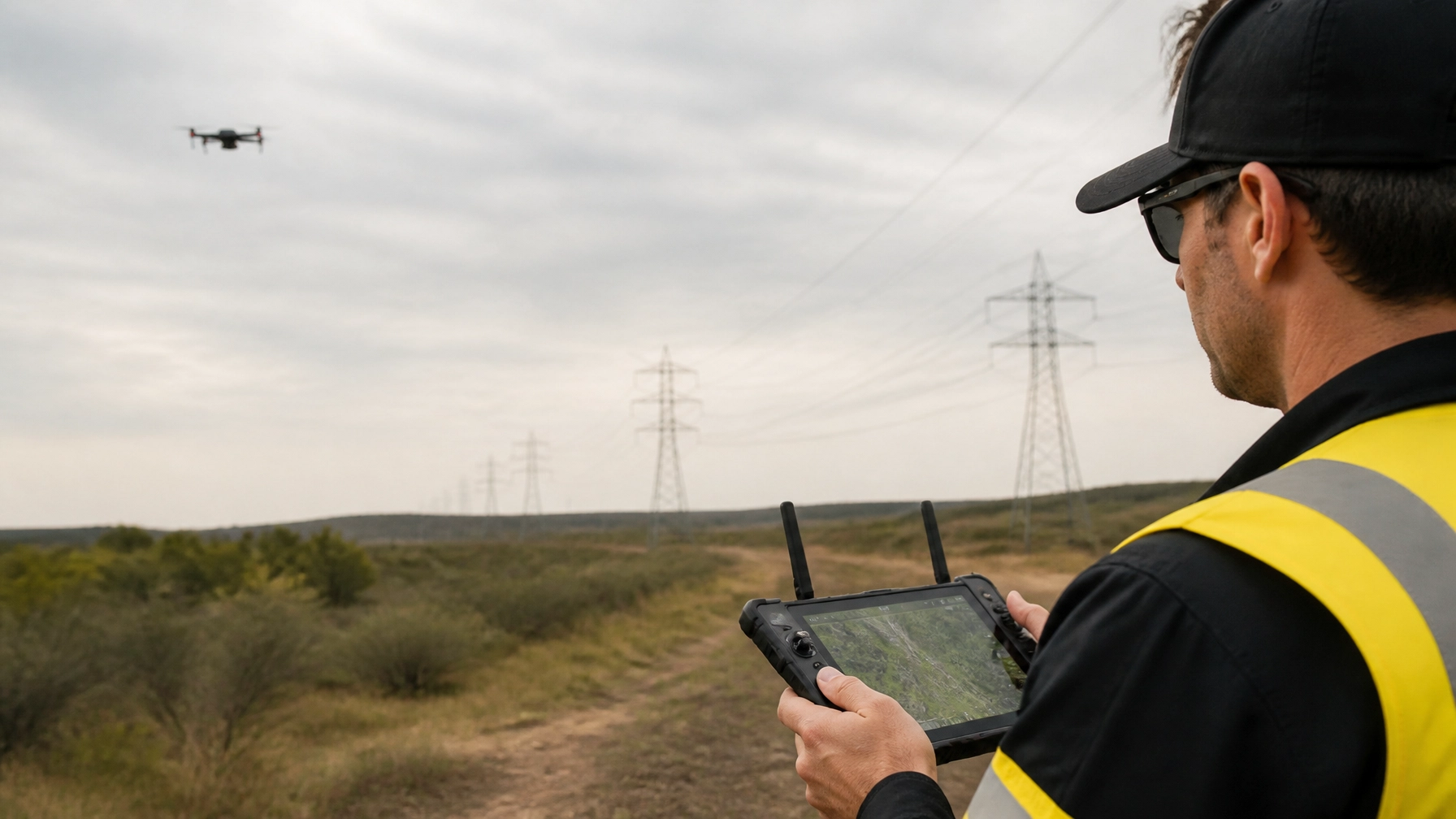
BVLOS is useful when a drone must travel farther than the pilot can safely see. For example, a single flight may inspect a long powerline corridor or survey a large farm.
However, BVLOS is not an automatic privilege that comes with a standard drone licence Australia pathway. It is a complex operation under the Civil Aviation Safety Regulations.
The operation needs a suitable organisation, trained personnel, documented procedures and a safety case. CASA then assesses the proposed activity and its risks.
Read CASA’s current drone guidance before planning any operation. Rules, instruments and approval conditions can change.
VLOS, EVLOS and BVLOS Compared
These terms describe how the remote pilot or observer maintains awareness of the aircraft.
- VLOS: The pilot keeps the drone in direct sight using normal vision.
- EVLOS: Trained observers maintain sight of the drone along the operating route.
- BVLOS: The drone operates beyond direct visual sight of the pilot and observers.
- Enclosed BVLOS: The operation takes place in a controlled or enclosed environment with specific safeguards.
EVLOS can extend operational range without becoming full BVLOS. It still requires appropriate approval when it falls outside standard operating conditions.
In 2026, certain EVLOS classes may not require an IREX or BVLOS exam pass. However, the RePL, ReOC, procedures and approval requirements still matter.
Why BVLOS Capability Matters Commercially
A standard VLOS operation often limits distance, coverage and productivity. BVLOS can remove those limits when the safety case supports the operation.
As a result, BVLOS can support:
- Linear infrastructure inspections.
- Pipeline and rail corridor monitoring.
- Wide-area mapping.
- Mining and quarry surveys.
- Agriculture and environmental monitoring.
- Emergency response.
- Search and rescue support.
- Remote asset inspections.
- Medical or industrial logistics trials.
- Large-scale construction progress surveys.
The commercial value comes from better coverage and fewer vehicle movements. It may also reduce the need for workers to enter difficult or hazardous areas.
Nevertheless, BVLOS does not remove the pilot’s responsibility. The operator must understand airspace, weather, aircraft limitations, communications and emergency procedures.
How a Drone Licence Australia Pathway Leads to BVLOS
A commercial drone licence Australia pathway usually starts with the Remote Pilot Licence, or RePL. The RePL confirms that the pilot has met CASA’s required training and competency standard for the relevant aircraft category.
The RePL alone does not authorise BVLOS. It is one part of a wider approval pathway.
1. Hobbyist Operations
A hobbyist flies for personal enjoyment rather than payment or business activity.
Most recreational operations remain within standard operating conditions. These conditions usually include:
- VLOS operation.
- Daytime flying.
- Maximum altitude of 120 metres above ground level.
- Safe separation from people.
- No flying over populous areas.
- Compliance with airspace restrictions.
- Registration where required.
A hobbyist cannot use the recreational category as a shortcut to BVLOS. If the aircraft leaves the pilot’s visual sight, the operation moves into a more complex regulatory pathway.
2. Excluded Category Operations
The excluded category covers lower-risk operations that meet strict standard conditions.
For example, some commercial operations with drones weighing 2 kilograms or less may qualify. A commercial operator may need CASA operator accreditation unless the pilot already holds a RePL.
A private landholder may also operate a drone between 2 and 25 kilograms over their own land. However, the operation must stay within the applicable rules.
Excluded category operations remain VLOS operations. They do not permit BVLOS, regardless of drone weight.
Therefore, a 1.5-kilogram drone cannot fly BVLOS simply because it is small. The pilot must move into the approved ReOC pathway.
3. ReOC Holder Operations
A ReOC is an operator certificate for an organisation. It demonstrates that the organisation can manage aviation risks through approved systems and procedures.
The ReOC holder controls the operating framework. It normally maintains:
- An operations manual.
- Pilot training and checking systems.
- Maintenance and aircraft records.
- Risk management processes.
- Emergency procedures.
- Incident reporting processes.
- Operational control arrangements.
- Chief Remote Pilot responsibilities.
A pilot may work under another organisation’s ReOC. They do not always need to hold their own ReOC.
For BVLOS, the ReOC must support the proposed operation. The organisation must also obtain the relevant CASA approval.
4. BVLOS-Endorsed or Approved Operations
People often describe a pilot as “BVLOS endorsed”. In practice, this phrase can mean several things.
Australia does not issue one universal personal BVLOS licence that permits every type of BVLOS flight. Instead, capability depends on the complete operating system.
That system may include:
- A valid RePL.
- A ReOC or employment under a ReOC holder.
- A BVLOS knowledge qualification where required.
- An approved operations manual.
- A safety case.
- An aircraft and technology assessment.
- A CASA BVLOS approval.
- Operating limits and conditions.
The approval may cover a particular route, location, aircraft, airspace type or operating concept. It may not transfer to a different organisation or mission.

Key Facts Table
| Topic | What it means in practice |
|---|---|
| BVLOS | Flying beyond the direct visual sight of the pilot and observers |
| VLOS | The pilot maintains direct visual sight of the aircraft |
| EVLOS | Trained observers maintain visual contact along the route |
| Hobbyist | Recreational flying under applicable standard conditions |
| Excluded category | Lower-risk operations within strict standard conditions |
| RePL | Personal Remote Pilot Licence |
| ReOC | Organisation-level operator certificate |
| BVLOS approval | CASA authorisation for the proposed complex operation |
| AusSORA | CASA’s risk assessment method for new complex operations |
| ReB1 | CASA BVLOS OCTA knowledge examination |
| IREX | Instrument Rating Exam accepted for broader BVLOS knowledge requirements |
| Broad-area BVLOS | A CASA trial pathway for eligible ReOC holders |
| CASA.ReOC.1421 | Ace Aviation’s stated CASA operator credential |
| Commercial drone licence Australia | Usually refers to RePL-based professional training and operation |
| CASA RePL cost | Varies by provider, package, aircraft category and included support |
| BVLOS approval cost | Varies by complexity, documentation, CASA fees and technical requirements |
CASA’s 2026 BVLOS Reforms
The major 2026 change is the introduction of AusSORA for new complex operation applications.
AusSORA adapts the JARUS Specific Operations Risk Assessment method for Australian conditions. It helps CASA assess ground risk, air risk and operational mitigations.
From 11 May 2026, new applications for BVLOS and other complex operations generally use the AusSORA method. Applications already progressing before that date may follow the earlier process.
What AusSORA Changes
AusSORA places greater focus on the actual risk profile of the mission. The applicant must explain how the operation will control those risks.
Important changes include:
- An updated ground risk classification table.
- A new band for extremely remote areas.
- Continued recognition of VLOS risk reductions.
- Revised operational safety objectives.
- Updated mitigation expectations.
- CASA assessment of the containment area.
Sub-250-gram aircraft may receive a lower ground-risk classification. However, a lighter drone does not automatically qualify for BVLOS.
The proposed operation still needs suitable systems, procedures and approval. CASA will consider the aircraft, location, population density, airspace and safety controls.
Broad-Area BVLOS Trial Pathways
CASA also introduced broad-area BVLOS trial pathways for eligible operators. These pathways can reduce the need for separate approvals across every small operating area.
The trial applies to eligible small RPA operations up to 25 kilograms. It is available to ReOC holders that meet the pathway conditions.
An applicant may need to show:
- A suitable ReOC.
- A qualified RePL pilot.
- The required BVLOS knowledge standard.
- A responsible person for the organisation.
- Documented operating procedures.
- Aircraft and technology suitability.
- Compliance with speed and population limits.
- Appropriate emergency and containment controls.
The trial does not create a general BVLOS right. CASA must still approve the application.

Step-by-Step Process to Qualify for BVLOS
Step 1: Define the Operation
Start with the mission, not the qualification.
Write down:
- The purpose of the flight.
- The aircraft type and weight.
- The planned route or area.
- Maximum altitude and speed.
- Airspace classification.
- Population density.
- Take-off and landing locations.
- Expected weather.
- Communications coverage.
- Emergency landing options.
This information determines the most suitable approval pathway.
Step 2: Obtain the Right RePL
Most professional BVLOS pathways begin with a RePL.
Your RePL category should match the aircraft you intend to operate. Training should cover aviation law, meteorology, human factors, aircraft systems, risk management and practical flight skills.
If you are comparing pathways, review Ace Aviation’s professional drone courses. The right course may include RePL, AROC, ReOC support and advanced theory.
Step 3: Join or Establish a ReOC
You can work under an existing ReOC or develop an organisation that holds its own certificate.
A new ReOC pathway requires more than a form. You need a suitable management structure, documented procedures and evidence of operational control.
Ace Aviation supports advanced operations through its stated CASA.ReOC.1421 credential and compliance-focused training.
Step 4: Choose the Knowledge Pathway
For many non-enclosed BVLOS operations outside controlled airspace, the pilot may need one of the following:
- The CASA BVLOS OCTA examination, known as ReB1.
- The Instrument Rating Exam, known as IREX.
- Supervision under an approved pathway and relevant CASA instrument.
The ReB1 pathway is aimed at BVLOS operations outside controlled airspace. IREX provides a broader aeronautical knowledge pathway.
The correct option depends on the airspace and approval. Confirm the current requirement with CASA and your ReOC’s Chief Remote Pilot.
Step 5: Build the Concept of Operations
The concept of operations explains how the mission will work.
It should cover:
- The aircraft.
- The pilot and support team.
- The operating area.
- Airspace access.
- Communications.
- Navigation.
- Detect-and-avoid capability.
- Lost-link procedures.
- Weather limits.
- Battery and fuel planning.
- Emergency response.
- Public safety controls.
The concept must match the actual mission. Generic documents create gaps during assessment and operations.
Step 6: Complete the AusSORA Assessment
Use AusSORA to identify the risks of the proposed operation.
The assessment considers ground risk and air risk. It then identifies safety objectives and mitigations.
Examples of mitigations include:
- Defined containment areas.
- Strategic route planning.
- Aircraft reliability controls.
- Flight termination procedures.
- Crew training.
- Airspace coordination.
- Tactical conflict management.
- Geofencing and alert systems.
- Emergency landing zones.
The strongest safety case is clear, specific and evidence-based.
Step 7: Update the Operations Manual
The operations manual turns the safety case into repeatable procedures.
It should explain who may conduct the flight and how the organisation controls it. It should also define limits that stop the operation when conditions change.
Include procedures for:
- Pre-flight planning.
- Crew briefings.
- Communications checks.
- Airspace checks.
- Launch and recovery.
- Normal flight.
- Lost communications.
- Navigation failure.
- Intruder aircraft.
- Weather deterioration.
- Technical faults.
- Incident reporting.
Step 8: Submit the CASA Application
The ReOC holder submits the relevant application and supporting evidence.
CASA may request clarification or further information. Therefore, allow time for review and amendments.
Approval time and cost vary. A simple low-risk operation may require less work than a long-range operation near controlled airspace or populated areas.
Step 9: Train, Test and Maintain Currency
Approval is not the end of the process.
The operator must maintain pilot competency, aircraft records and operational control. It must also review incidents, near misses and changes to the operation.
Recurrent training is especially important for BVLOS. A pilot must understand the approved procedures before operating without direct visual sight.
Practical Examples
Example 1: Recreational Pilot with a Small Camera Drone
A pilot flies a sub-250-gram drone at a local rural property for personal enjoyment. The pilot keeps the aircraft in sight and stays below 120 metres.
This is not a BVLOS operation. The pilot must still follow applicable recreational rules and airspace restrictions.
Example 2: Small Commercial Drone for Roof Inspections
A building company uses a 1.5-kilogram drone for VLOS roof inspections. The pilot remains within standard conditions.
The business may qualify for the excluded category if it meets all requirements. It cannot fly the drone beyond visual sight under that category.
Example 3: EVLOS Infrastructure Survey
An operator surveys a long construction corridor. Trained observers stand at planned positions and maintain sight of the aircraft.
This may qualify as EVLOS rather than BVLOS. However, the operator still needs the relevant ReOC approval, procedures and CASA authorisation.
Example 4: BVLOS Powerline Inspection
An energy contractor wants to inspect 30 kilometres of powerline in one mission. The drone will travel beyond the sight of the pilot and any observers.
The contractor will need a suitable ReOC, qualified remote pilots, a BVLOS approval and an AusSORA-based safety case. The approval may also require specific aircraft systems and communication controls.
Example 5: Agriculture in a Remote Area
A farm operator wants to survey crops across a large property. The area has low population density and limited nearby traffic.
Remote location may reduce ground risk. It does not remove the need for approval. The operator must still assess airspace, people, roads, neighbouring properties and emergency landing areas.
Common BVLOS Mistakes
Mistake 1: Treating a Screen as Visual Line of Sight
A controller screen shows camera information. It does not replace direct visual sight under VLOS rules.
Mistake 2: Assuming Small Drones Can Fly BVLOS
Weight affects risk. It does not create an automatic BVLOS exemption.
Mistake 3: Confusing RePL and ReOC
A RePL belongs to the pilot. A ReOC belongs to the operator organisation.
You need both elements for most commercial BVLOS operations.
Mistake 4: Using an Excluded Category for BVLOS
Excluded category operations must remain within standard conditions. BVLOS moves the operation outside that category.
Mistake 5: Buying an Aircraft Before Designing the Operation
The aircraft must suit the safety case. A long-range system may still lack the required reliability, communications or containment features.
Mistake 6: Copying an Old SORA Document
New complex applications use AusSORA from 11 May 2026. Old documents may not address the current method.
Mistake 7: Ignoring Controlled Airspace
A remote location may still sit near an aerodrome, controlled airspace or a regular aircraft route.
Airspace assessment must occur before every operation.
Mistake 8: Treating Approval as a Permanent Licence
CASA approval may include aircraft, location, altitude, route and time limits. A new mission may require a variation or new approval.
Mistake 9: Leaving Observers Untrained
EVLOS observers need clear responsibilities and reliable communications. They must understand what to report and when to stop the operation.
Mistake 10: Focusing Only on the Exam
Passing ReB1 or IREX does not independently authorise BVLOS. The operational approval remains essential.
CASA Considerations for 2026
Always check the current rules before operating. CASA may update instruments, guidance and application processes.
The key compliance principles are:
- Stay within your approval. Do not extend the route, altitude or aircraft type without checking the approval conditions.
- Maintain operational control. The ReOC holder must know who is flying, where and under which procedures.
- Use competent crews. Pilot qualifications, observer training and role clarity all matter.
- Record the operation. Keep flight logs, maintenance records, training records and incident reports.
- Plan for abnormal events. Lost-link, low battery, weather and intruder aircraft procedures must be practical.
- Manage airspace actively. Check relevant restrictions before launch and during the mission.
- Review the safety case. Changes to aircraft, route, software or population density may alter the risk.
- Protect people and property. A remote area is not automatically risk-free.
- Use approved systems. Telemetry and navigation systems should support the operation described in the documents.
- Seek specialist advice early. Poor planning can create delays and extra approval costs.
Ace Aviation has trained more than 4,000 students and supports pilots across Australia and internationally. Its footprint includes Singapore, Dubai, Korea and Malaysia.
The Altitude+ program adds ongoing student benefits and support beyond the initial course. Graduates can also access the DroneWork job board for commercial opportunities.
For organisations, that wider ecosystem can connect training, compliance, operational support and career development. Learn more about why Ace Aviation supports professional outcomes.
Training Locations
Professional training pathways are available for learners seeking a drone course in:
Availability can change by intake and course type. Contact the academy before booking.
Frequently Asked Questions
1. What is BVLOS?
BVLOS means Beyond Visual Line of Sight. It describes a drone flight where the pilot and observers cannot maintain direct visual sight of the aircraft.
2. Is BVLOS legal in Australia?
Yes, BVLOS is legal in Australia when CASA authorises the operation. The operator must meet the relevant RePL, ReOC, knowledge, safety case and approval requirements.
3. Do I need a drone licence australia for BVLOS?
Yes, most BVLOS operations require a RePL-qualified remote pilot. The pilot may also need ReB1, IREX or an approved supervision pathway.
4. What is EVLOS?
EVLOS means Extended Visual Line of Sight. Trained observers maintain visual contact with the drone while the pilot operates from a different position.
5. What is the difference between EVLOS and BVLOS?
EVLOS keeps the aircraft within the sight of trained observers. BVLOS operates without direct visual sight from the pilot or observers.
6. Can hobbyists fly BVLOS?
Generally, no. Recreational operations must follow standard conditions, which include VLOS. BVLOS requires a more complex approved operating framework.
7. Can excluded category operators fly BVLOS?
No. Excluded category operations must remain within the applicable standard conditions. BVLOS requires the operator to move into the relevant approved pathway.
8. Do I need a ReOC for BVLOS?
Most BVLOS operations require access to a ReOC. You may work under an existing ReOC rather than holding your own.
9. Does a RePL automatically allow BVLOS?
No. A RePL demonstrates pilot competency for the relevant aircraft category. It does not independently authorise BVLOS.
10. What exam is needed for BVLOS?
The required exam depends on the operation and airspace. ReB1 may support BVLOS outside controlled airspace, while IREX provides a broader pathway.
11. What is AusSORA?
AusSORA is CASA’s risk assessment framework for complex drone operations. New complex applications generally use it from 11 May 2026.
12. How much does BVLOS approval cost?
There is no single BVLOS approval price. Cost depends on CASA fees, the operation’s complexity, safety case preparation, technical evidence and professional support.
13. How much does a CASA RePL cost?
The CASA RePL cost varies by training provider, aircraft category, delivery method and included support. Compare the complete package rather than the advertised course fee alone.
14. Which industries use BVLOS drones?
Infrastructure, agriculture, mining, emergency response, logistics, environmental monitoring and large-area surveying can use BVLOS systems.
15. Can BVLOS operations enter controlled airspace?
They may do so only with the required airspace permissions, knowledge standard, procedures and CASA approval. Controlled airspace usually requires more detailed planning.
16. Can a sub-250-gram drone fly BVLOS?
A sub-250-gram drone is not automatically allowed to fly BVLOS. Its lower weight may affect risk assessment, but approval and operational controls still apply.
17. Can I operate BVLOS under another company’s ReOC?
Yes, this may be possible when you operate within that organisation’s approved procedures and supervision structure. The ReOC holder remains responsible for operational control.
18. What is the broad-area BVLOS trial?
It is a CASA pathway for eligible ReOC holders operating qualifying small drones across defined areas. Applicants must meet specific aircraft, crew, population and procedure requirements.
19. Is EVLOS easier to approve than BVLOS?
EVLOS can be simpler because observers maintain visual awareness. However, it still requires proper procedures, crew training and approval outside standard conditions.
20. Where can I train for a commercial drone licence Australia pathway?
You can review Ace Aviation’s training options and discuss your intended operation before enrolling. The correct pathway depends on the aircraft, work type, location and approval goal.
Summary: Build Capability Before You Fly Beyond Sight
BVLOS creates valuable opportunities for professional drone operators. However, it also introduces higher safety and compliance duties.
The clearest pathway is:
- Define the proposed operation.
- Obtain the appropriate RePL.
- Join or establish a suitable ReOC.
- Complete the required BVLOS knowledge pathway.
- Build the concept of operations.
- Complete the AusSORA assessment.
- Update the operations manual.
- Apply for CASA approval.
- Train the crew and maintain operational currency.
A drone licence Australia pathway is the foundation. It is not the complete BVLOS authorisation.
If you want to compare training, ReOC support and advanced operations pathways, start with the Ace Aviation homepage. For advice about your project, book your training or consultation.
Ready to start? Book your training at aaa.edu.au or call 1300 336 366.
{“@graph”:[{“@id”:”https://aaa.edu.au/blog/drone-licence-australia-2026-bvlos-rules-reforms#article”,”@type”:”Article”,”about”:[“BVLOS drone operations”,”Drone licence Australia”,”AusSORA”,”CASA drone regulations”,”Remote Pilot Licence”,”ReOC”],”image”:”https://cdn.marblism.com/Mwrdo0WsVyO.webp”,”author”:{“url”:”https://aaa.edu.au/”,”name”:”Ace Aviation Aerospace Academy”,”@type”:”Organization”},”headline”:”Drone Licence Australia 2026: BVLOS Rules, Reforms and How to Qualify”,”publisher”:{“url”:”https://aaa.edu.au/”,”logo”:{“url”:”https://aaa.edu.au/assets/ace-logo-transparent.png”,”@type”:”ImageObject”},”name”:”Ace Aviation Aerospace Academy”,”@type”:”Organization”},”description”:”Planning a drone licence Australia pathway in 2026? Learn BVLOS rules, AusSORA reforms and approval steps. Start today.”,”dateModified”:”2026-08-21″,”datePublished”:”2026-08-21″,”mainEntityOfPage”:{“@id”:”https://aaa.edu.au/blog/drone-licence-australia-2026-bvlos-rules-reforms”,”@type”:”WebPage”}},{“@id”:”https://aaa.edu.au/#organization”,”url”:”https://aaa.edu.au/”,”logo”:”https://aaa.edu.au/assets/ace-logo-transparent.png”,”name”:”Ace Aviation Aerospace Academy”,”@type”:”Organization”,”sameAs”:[“https://dronework.com.au/”],”telephone”:”+61 1300 336 366″,”description”:”CASA-approved professional drone pilot training and aviation education provider.”},{“@id”:”https://aaa.edu.au/blog/drone-licence-australia-2026-bvlos-rules-reforms#faq”,”@type”:”FAQPage”,”mainEntity”:[{“name”:”What is BVLOS?”,”@type”:”Question”,”acceptedAnswer”:{“text”:”BVLOS means Beyond Visual Line of Sight. It describes a drone flight where the pilot and observers cannot maintain direct visual sight of the aircraft.”,”@type”:”Answer”}},{“name”:”Is BVLOS legal in Australia?”,”@type”:”Question”,”acceptedAnswer”:{“text”:”Yes, BVLOS is legal in Australia when CASA authorises the operation and the operator meets the relevant RePL, ReOC, knowledge, safety case and approval requirements.”,”@type”:”Answer”}},{“name”:”Do I need a drone licence australia for BVLOS?”,”@type”:”Question”,”acceptedAnswer”:{“text”:”Most BVLOS operations require a RePL-qualified remote pilot. The pilot may also need ReB1, IREX or an approved supervision pathway.”,”@type”:”Answer”}},{“name”:”What is EVLOS?”,”@type”:”Question”,”acceptedAnswer”:{“text”:”EVLOS means Extended Visual Line of Sight. Trained observers maintain visual contact with the drone while the pilot operates from a different position.”,”@type”:”Answer”}},{“name”:”What is the difference between EVLOS and BVLOS?”,”@type”:”Question”,”acceptedAnswer”:{“text”:”EVLOS keeps the aircraft within the sight of trained observers. BVLOS operates without direct visual sight from the pilot or observers.”,”@type”:”Answer”}},{“name”:”Can hobbyists fly BVLOS?”,”@type”:”Question”,”acceptedAnswer”:{“text”:”Generally, no. Recreational operations must follow standard conditions, which include VLOS. BVLOS requires a more complex approved operating framework.”,”@type”:”Answer”}},{“name”:”Can excluded category operators fly BVLOS?”,”@type”:”Question”,”acceptedAnswer”:{“text”:”No. Excluded category operations must remain within the applicable standard conditions. BVLOS requires the operator to move into the relevant approved pathway.”,”@type”:”Answer”}},{“name”:”Do I need a ReOC for BVLOS?”,”@type”:”Question”,”acceptedAnswer”:{“text”:”Most BVLOS operations require access to a ReOC. A pilot may work under an existing ReOC rather than holding their own.”,”@type”:”Answer”}},{“name”:”Does a RePL automatically allow BVLOS?”,”@type”:”Question”,”acceptedAnswer”:{“text”:”No. A RePL demonstrates pilot competency for the relevant aircraft category. It does not independently authorise BVLOS.”,”@type”:”Answer”}},{“name”:”What exam is needed for BVLOS?”,”@type”:”Question”,”acceptedAnswer”:{“text”:”The required exam depends on the operation and airspace. ReB1 may support BVLOS outside controlled airspace, while IREX provides a broader pathway.”,”@type”:”Answer”}},{“name”:”What is AusSORA?”,”@type”:”Question”,”acceptedAnswer”:{“text”:”AusSORA is CASA’s risk assessment framework for complex drone operations. New complex applications generally use it from 11 May 2026.”,”@type”:”Answer”}},{“name”:”How much does BVLOS approval cost?”,”@type”:”Question”,”acceptedAnswer”:{“text”:”There is no single BVLOS approval price. Cost depends on CASA fees, operation complexity, safety case preparation, technical evidence and professional support.”,”@type”:”Answer”}},{“name”:”How much does a CASA RePL cost?”,”@type”:”Question”,”acceptedAnswer”:{“text”:”The CASA RePL cost varies by training provider, aircraft category, delivery method and included support.”,”@type”:”Answer”}},{“name”:”Which industries use BVLOS drones?”,”@type”:”Question”,”acceptedAnswer”:{“text”:”Infrastructure, agriculture, mining, emergency response, logistics, environmental monitoring and large-area surveying can use BVLOS systems.”,”@type”:”Answer”}},{“name”:”Can BVLOS operations enter controlled airspace?”,”@type”:”Question”,”acceptedAnswer”:{“text”:”They may do so only with the required airspace permissions, knowledge standard, procedures and CASA approval.”,”@type”:”Answer”}},{“name”:”Can a sub-250-gram drone fly BVLOS?”,”@type”:”Question”,”acceptedAnswer”:{“text”:”A sub-250-gram drone is not automatically allowed to fly BVLOS. Its lower weight may affect risk assessment, but approval and operational controls still apply.”,”@type”:”Answer”}},{“name”:”Can I operate BVLOS under another company’s ReOC?”,”@type”:”Question”,”acceptedAnswer”:{“text”:”Yes, this may be possible when you operate within that organisation’s approved procedures and supervision structure.”,”@type”:”Answer”}},{“name”:”What is the broad-area BVLOS trial?”,”@type”:”Question”,”acceptedAnswer”:{“text”:”It is a CASA pathway for eligible ReOC holders operating qualifying small drones across defined areas.”,”@type”:”Answer”}},{“name”:”Is EVLOS easier to approve than BVLOS?”,”@type”:”Question”,”acceptedAnswer”:{“text”:”EVLOS can be simpler because observers maintain visual awareness. However, it still requires proper procedures, crew training and approval outside standard conditions.”,”@type”:”Answer”}},{“name”:”Where can I train for a commercial drone licence Australia pathway?”,”@type”:”Question”,”acceptedAnswer”:{“text”:”Ace Aviation offers professional drone training pathways. The correct option depends on the aircraft, work type, location and approval goal.”,”@type”:”Answer”}}]}],”@context”:”https://schema.org”}