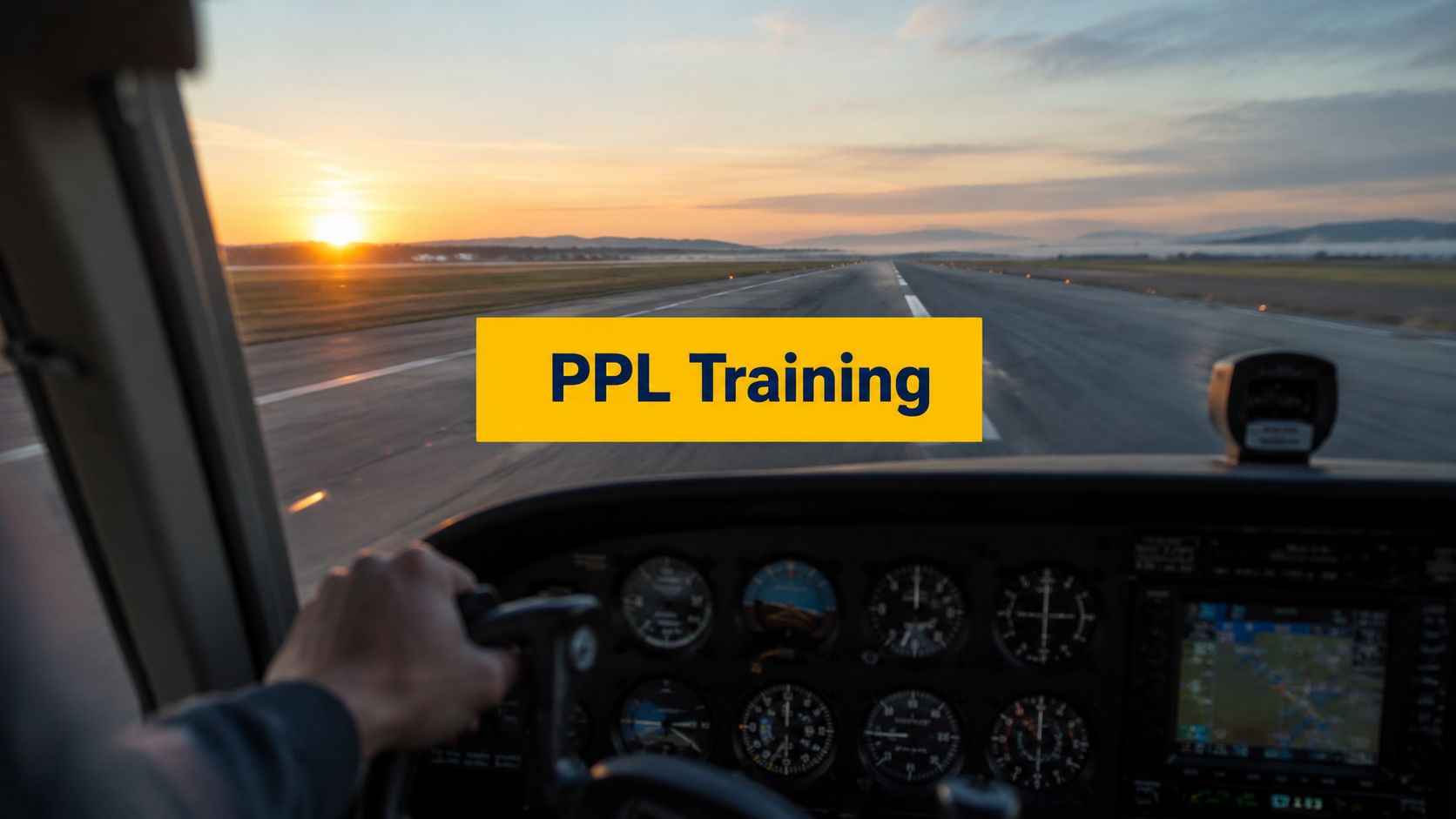
The first lesson usually starts before anyone climbs into the aircraft. A student has read a few licence guides, asked about weather, and tried to work out whether a Private Pilot Licence is a weekend hobby, a career step, or both. In Australia, the answer sits inside CASA's Part 61 framework, where private flying is built around competence, not just an hour total, and where real training conditions matter as much as the paperwork.
That matters because many new students expect a neat path from booking to licence issue. In practice, Australian private pilot license training asks a student to learn the aircraft, the airspace, the weather, the radio, and the decision-making that keeps a flight safe when the conditions change. For a first-time student, that can feel like a lot, but it's also what makes the licence useful.
Table of Contents
- What a Private Pilot Licence Means in Australia
- CASA Eligibility and Medical Requirements
- Integrated vs Modular Training Pathways
- Ground School and Flight Hour Breakdown
- Realistic Costs and Timelines in Australia
- A Recommended Study Plan and Training Habits
- Currency, Proficiency and What Comes After the PPL
- Private Pilot License Training Frequently Asked Questions
- How long does private pilot license training usually take in Australia?
- Is a Basic Class 2 medical enough for every PPL student?
- What happens if the student doesn't pass the flight test?
- How does PPL training compare with a RePL for drone operations?
- Can international students train under CASA rules?
What a Private Pilot Licence Means in Australia
A prospective pilot often starts with a simple question, usually after a first trial lesson or a visit to a local airfield. The question sounds practical, not romantic. What does a Private Pilot Licence let someone do in Australia, and how does it differ from just flying for recreation?
Under CASA's licensing structure, the PPL sits as a regulated licence for private flying, not a casual permission slip. It is part of a training and competency pathway, which means the student has to show safe performance across the aircraft and the operating environment, not just meet a minimum hour count. That is why a school's approach matters so much, because the licence is earned through training quality as much as time in the cockpit.
For many students, the simplest way to think about it is this. A PPL is the licence that turns a passenger into a pilot who can plan, launch, fly, and return under Australian rules with passengers on board, within the limits of the licence and the aircraft. It is also the standard starting point for people who later decide to pursue more advanced aviation qualifications.
Practical rule: if the flight can't be explained, planned, and flown safely under supervision first, it is not ready for private solo decision-making yet.
Australian training puts real weight on that idea. Some overseas guides reduce the licence to an hour target, but CASA Part 61 training asks for more than time in the seat. Instructor sign-off, airspace awareness, radio work, and aircraft handling all matter, because a student has to perform in the conditions they will meet at Australian aerodromes, not only in ideal weather. A crosswind on a regional strip, a busy CTAF circuit, or a long taxi in changing conditions can expose weak preparation quickly.
That is also why many students do better when they first check which licence path fits their flying goals. The licence finder can help narrow that choice, but the larger point is simpler. Private flying starts with the right training structure, and the best early habits are the ones that make each lesson build on the last one. If the goal is to learn safely and keep progressing, the licence is less about getting airborne and more about building a dependable set of habits from the first lesson.
CASA Eligibility and Medical Requirements
A student can't begin meaningful training until the basics are in place. In Australia, that means meeting CASA's eligibility requirements, understanding the medical pathway, and checking any personal health issues early so the training doesn't stall later.
Start with the licence prerequisites
CASA's Part 61 framework requires aeronautical knowledge and flight competency, but the student also needs to be eligible to train and fly legally. English proficiency matters because radio work, briefings, and examiner questions all depend on clear communication. Age and solo limits also matter, because the path from first lesson to first solo isn't the same as the path to full licence issue.
The medical side is where new students often get confused. Some operations use a Basic Class 2 Medical, while others require a Class 2 medical certificate. The right choice depends on the flying being planned, the stage of training, and the specific aviation activity. A doctor authorised to issue the required certificate needs to assess whether the applicant is fit to fly under CASA's standards.
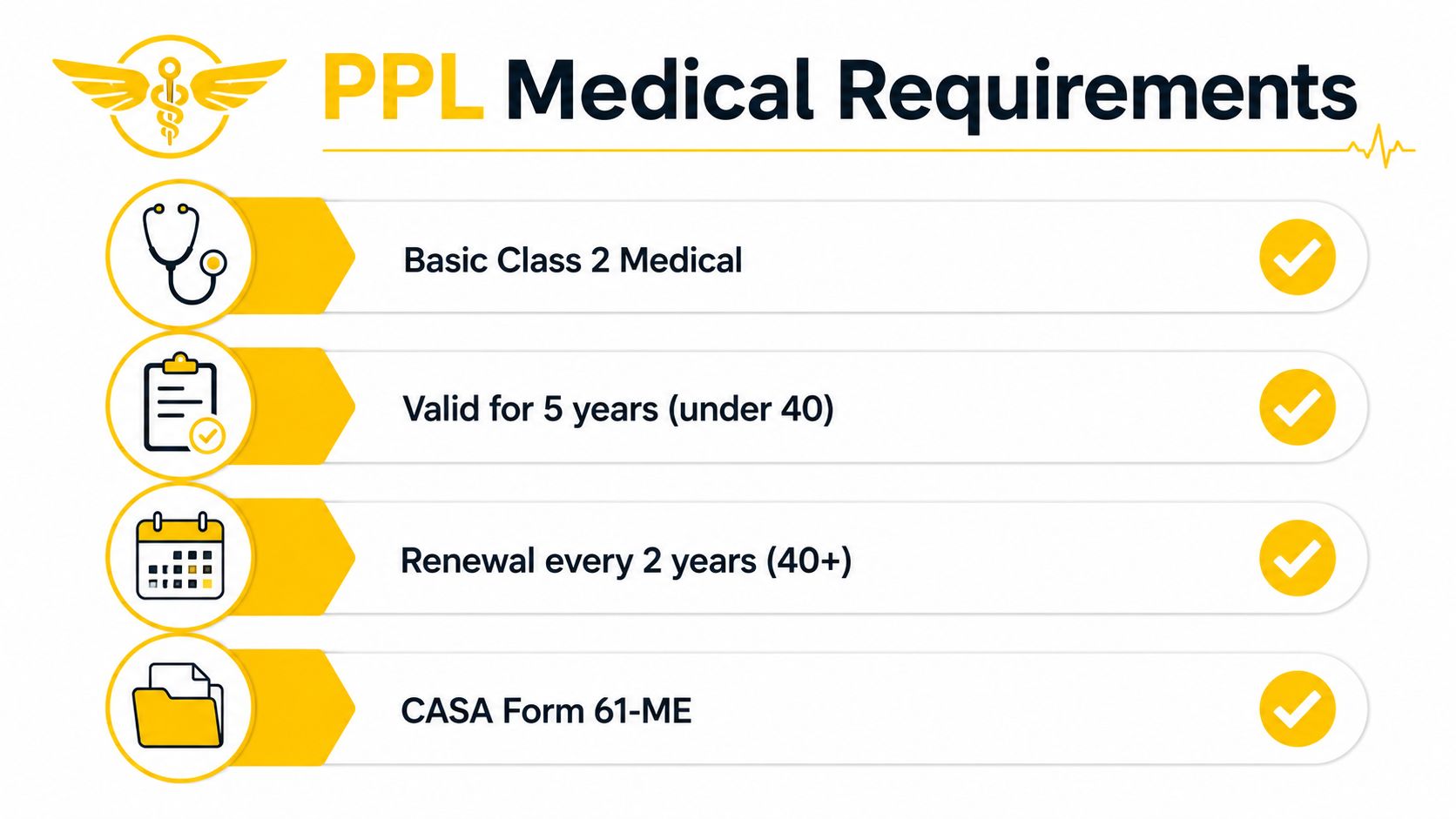
A medical appointment should be treated like an operational check, not a formality. Any ongoing health issue, medication, vision concern, or previous medical history that could affect fitness to fly needs to be discussed early, because fixing a clearance problem after lessons have started can interrupt progress and add avoidable cost.
Keep the solo stage in context
Before the full licence is issued, a student can still fly solo once the instructor has signed off the relevant training and competency requirements. That solo flying is limited by the training stage and the school's supervision process. It's not the same as unrestricted private flying, and that distinction matters for safety and confidence.
A useful way to think about readiness is simple. If the student can't explain the flight, the weather, the runway choice, and the go or no-go decision, then the medical paperwork isn't the only thing that needs attention. The training system is designed to make those decisions routine before the pilot ever carries passengers alone.
For students who also work in drones or plan to later move into RPAS operations, a course such as ACE SILVER can sit naturally alongside aviation study because it includes commercial RePL training, classroom instruction, practical flight training, CASA-compliant certification, AROC, and aviation English proficiency. It's a different pathway, but the same discipline around safety and communication applies.
If there's uncertainty about which medical path fits, the safest move is to use the academy contact point at Ace Aviation Aerospace Academy contact and get the medical and training sequence clear before the first paid lesson.
Integrated vs Modular Training Pathways
A student can start PPL training in Australia and still end up with two very different day-to-day experiences. One school may run the course like a fixed flight roster, another may let the student build it around work, family, or university. The legal licence target is the same. The pace, continuity, and amount of repetition needed to get there can look very different.
How the two pathways feel in real life
Integrated training suits students who can commit to a set timetable and want the course to move in a steady sequence from the first lesson. Flights, ground theory, and instructor oversight are usually arranged inside one system, so the student sees the same training rhythm week after week. That consistency helps keep the learning fresh, which matters when a new pilot is still building basic aircraft handling and decision-making habits.
Modular training suits students who need to fit flying around work, family, or study. Each unit can be completed as time allows, so many Australian beginners can start without rearranging their whole life. The trade-off is easy to understand. If there are long gaps between lessons, the aircraft handling that felt natural last week can feel rusty by the next booking, so more time may be spent revising rather than progressing.
| Factor | Integrated | Modular |
|---|---|---|
| Schedule | Full-time, fixed progression | Flexible, student-paced progression |
| Instructor continuity | Usually stronger | Can vary more with availability |
| Ground school delivery | Often bundled into one syllabus | Often mixed with self-study and lesson-by-lesson learning |
| Aircraft availability | Planned around a fixed course | Depends more on booking patterns |
| Best for | Career-track candidates | Students balancing flying with other commitments |
A student looking at ACE SILVER may recognise a similar training shape even though it is a commercial drone pathway, because it combines drone operations, flight safety, aviation theory, and practical skill development for students starting out in aviation. That comparison is useful. Whether the training is for drones or private flying, the lesson remains the same, structure affects how well knowledge sticks.
Students who want to see how aviation courses are arranged across the academy can review the Ace Aviation Aerospace Academy courses page. It gives context for how different training pathways sit beside one another, but the private pilot decision still comes down to the same practical question. Which rhythm can the student keep going long enough to finish safely, without long breaks, repeated catch-up, or fading confidence?
How to choose without guessing
The choice is about lifestyle and learning pattern, not status. A student who can protect regular flying time and revise between lessons may do well in either pathway. A student with an unpredictable diary usually benefits from modular training, but that flexibility only helps if the student accepts the extra work needed to stay current from one lesson to the next.
A fixed timetable works a bit like a metronome. Every lesson arrives in order, so the student can build on the last one before the details go cold. Modular training works more like a set of separate practice sessions, which can still produce a solid pilot if the gaps are managed carefully and the student keeps up the studying between flights.
Rule of thumb: the right pathway is the one the student can actually finish without long gaps, repeated catch-up, or lost confidence.
Ground School and Flight Hour Breakdown
The written side of training is not a side issue. A PPL candidate has to know enough aeronautical theory to make decisions before the aircraft leaves the ground, and that knowledge has to hold up when the weather changes or the runway picture looks different from the textbook.
Ground school covers the thinking behind the flying
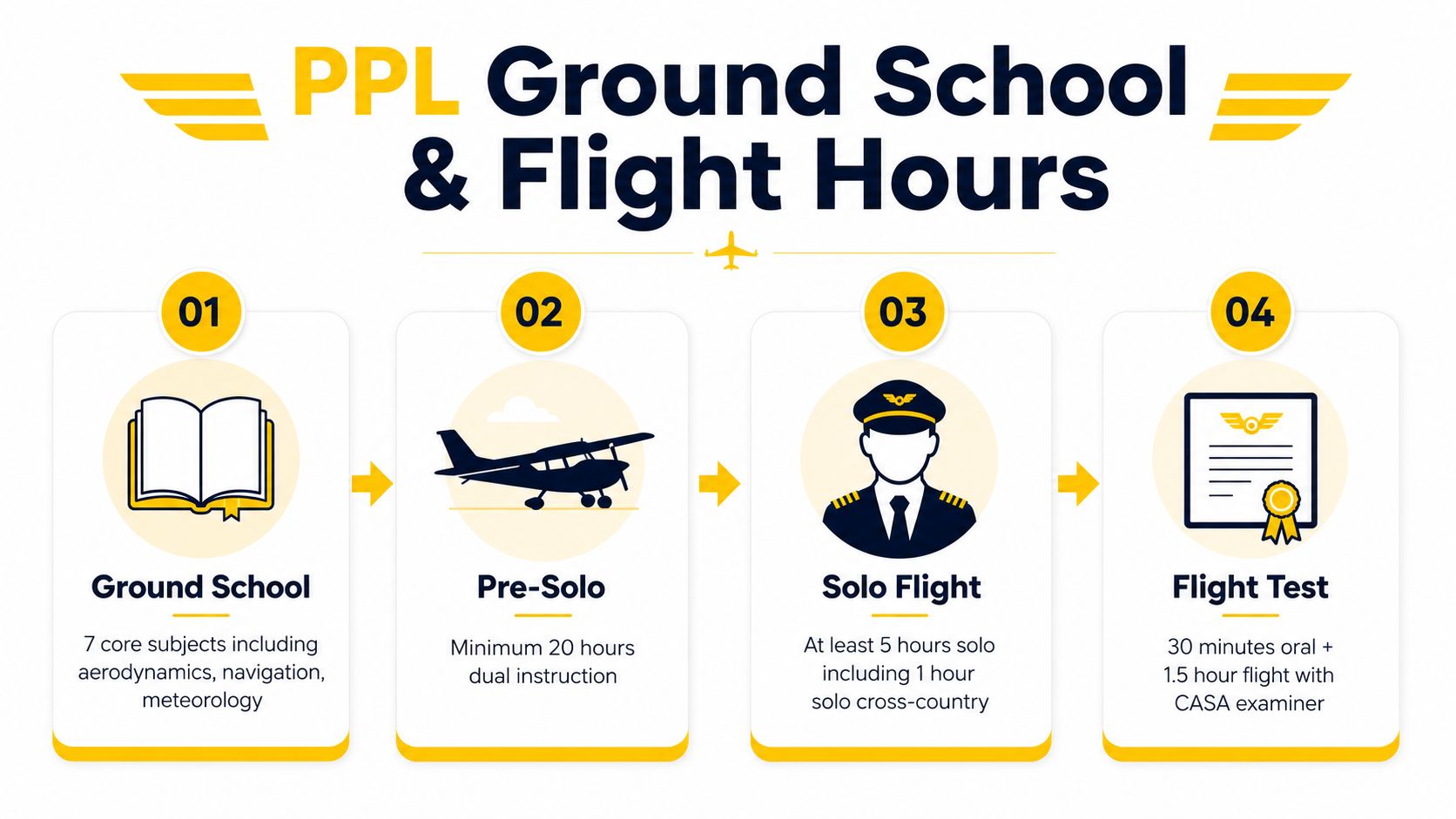
The core subjects are familiar, but each one shows up in the air. Air law matters when a pilot is deciding what can be done legally in controlled or uncontrolled airspace. Meteorology matters every time a student checks cloud, wind, or local conditions. Navigation is what keeps a pilot oriented after leaving the circuit. Aerodynamics explains why the aircraft behaves the way it does during take-off, climb, turns, and landing.
There is also flight planning, human factors, weight and balance, and performance planning. Those topics are not abstract. On a hot day, at a coastal strip, or from an aerodrome with changing conditions, they affect whether the lesson should continue, be reshaped, or be postponed. That local reality is why many public guides miss the point when they focus only on generic hour counts.
The flight phase builds judgement, not just stick and rudder skill
The flight side usually starts with dual instruction, then moves into solo work once the instructor is satisfied with consistency and safety. The student practises take-offs, landings, stalls, navigation, radio calls, and emergency handling until those actions become repeatable rather than lucky.
Industry benchmarks suggest the typical private pilot candidate completes around 76 flight hours over a median of 24 weeks to reach a private pilot certificate, well above the 40-hour minimum often cited in basic hour-based rules, according to VectoredOps flight training index. That benchmark is not Australia-specific, but it matches the practical reality of CASA-compliant training, where the student must be ready for actual performance, not just a minimum total.
Training truth: a lesson that has to be repeated because the student wasn't ready costs more than a lesson that was delayed until the student was ready.
That is why continuity matters so much. A weekly rhythm keeps the learning fresh, which usually means less time is spent re-teaching old material and more time is spent building new skills. The flight test then becomes a check of integrated competence, not a rescue mission.
Realistic Costs and Timelines in Australia
A PPL asks for money and patience at the same time. A new student often looks at the hourly rate first, then discovers the true cost sits in the way training unfolds, lesson by lesson, across changing weather and aircraft availability.
What drives the budget
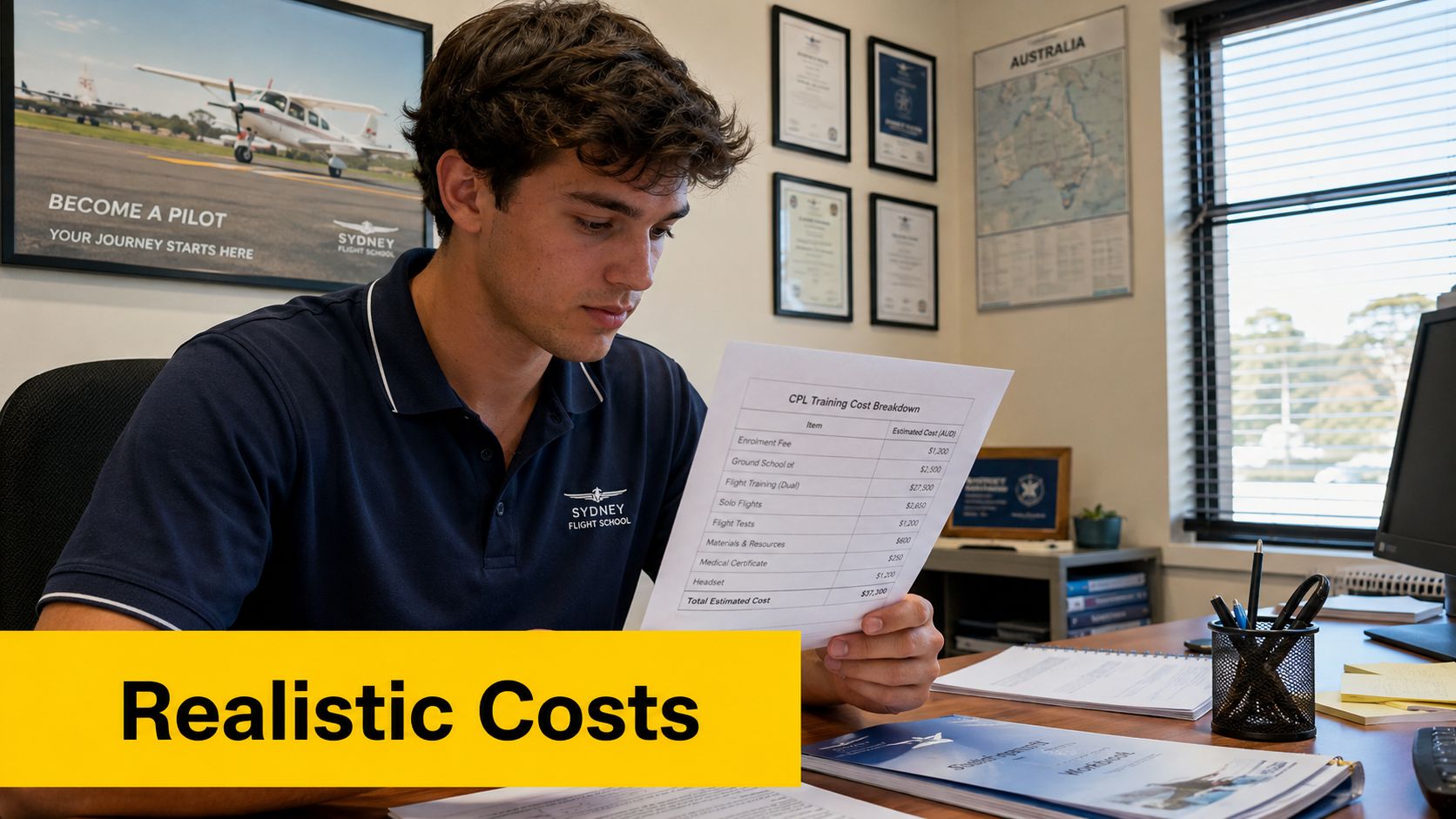
The main cost items are straightforward, even if schools bundle them in different ways. Aircraft hire, instructor fees, ground school materials, exam fees, the medical certificate, and the flight test all belong in the budget. What tends to lift the total is not one single large bill, but the extra flying needed when a lesson has to be repeated or the weather breaks the planned sequence.
Training rhythm is the biggest cost driver. A student who flies consistently usually keeps more of each lesson in memory. A student who leaves long gaps often needs more refresher work, especially on landings, radio calls, or navigation. In practical terms, irregular flying can end up costing more, even when the hourly rate looks appealing on paper.
Build the timeline around what can be sustained
A sound budget starts with a training tempo that can hold up in real life. A student flying regularly may move from first lesson to licence issue faster than someone who books only when time opens up, but only if the theory work and pre-briefing are kept up as well. Weather, aircraft availability, instructor continuity, and personal study all shape the timeline.
The common mistake is budgeting for the legal minimum and assuming that will be the finish line. In practice, private training usually runs beyond that because the student has to show competence across several skill areas, and those skills do not always arrive together. A good landing circuit may come early, while radio work or navigation needs more repetition, and the calendar stretches whenever one part lags behind the others.
The quote calculator at Ace Aviation Aerospace Academy quote calculator can help frame those planning conversations, while a training programme that works keeps the learning sequence realistic from the start. The main point stays simple. A realistic budget is built around the student's actual flying rhythm, not an ideal one.
Budgeting rule: if the student cannot keep flying regularly, the calendar will grow faster than the confidence does.
A conservative plan usually works better. It leaves room for weather delays, revision flights, and the practical reality of learning to land smoothly in Australian conditions.
A Recommended Study Plan and Training Habits
A student who turns up prepared tends to learn faster and waste less time. That doesn't mean rushing. It means making each lesson count by doing the quiet work beforehand and reviewing carefully afterwards.
A practical weekly rhythm
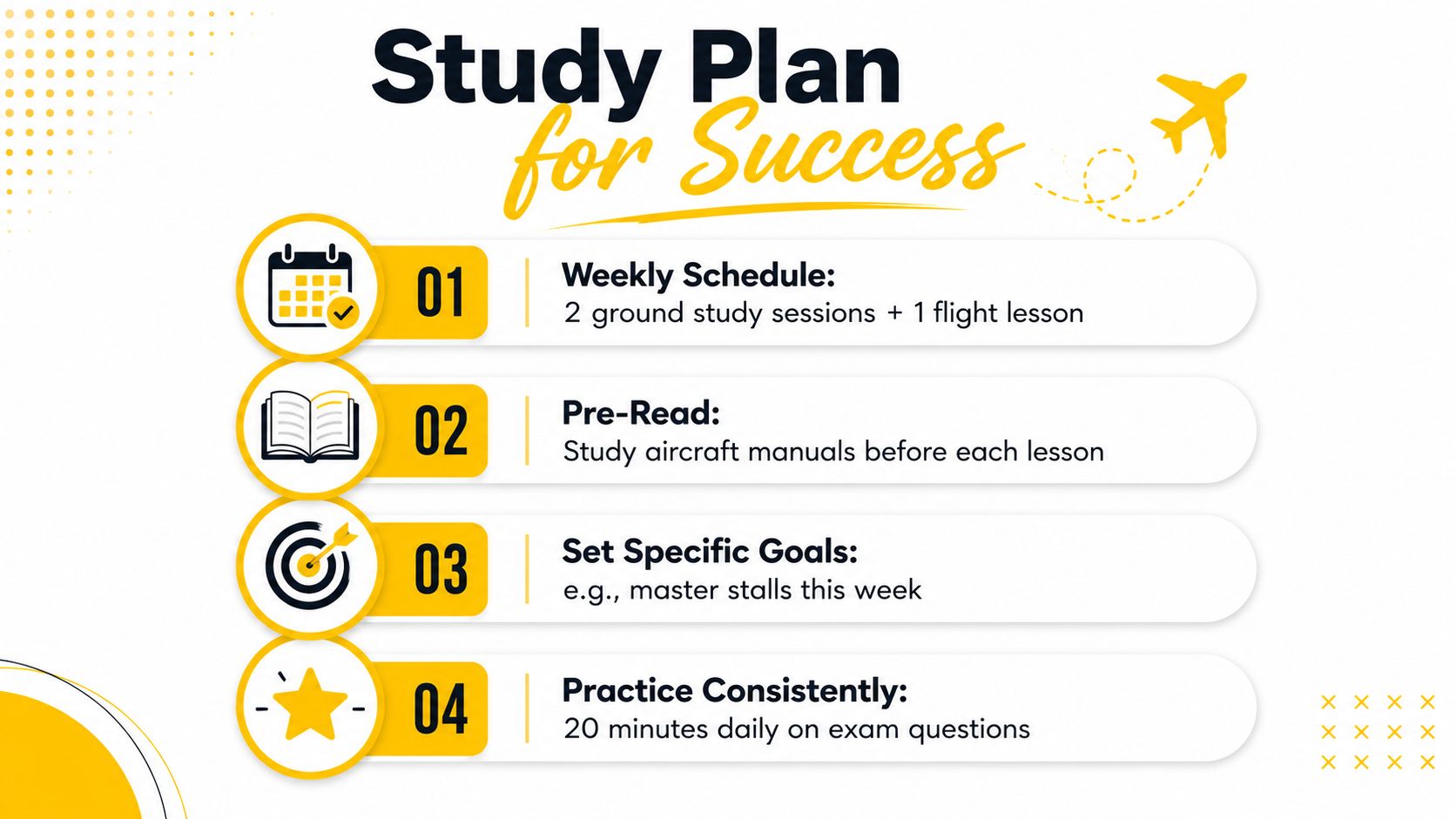
A sensible training pattern starts with regular study between lessons. One useful rhythm is two ground study sessions and one flight lesson each week, with a short review after every flight while the details are still fresh. That keeps the instructor's briefing and the student's preparation aligned, which is especially important when lessons build on one another.
The best study habit is active, not passive. The student should pre-read the aircraft notes, write down questions, and know what the lesson is meant to practise before the engine starts. During the debrief, the instructor's corrections should be recorded in plain language, not left as vague memory.
What good preparation looks like
- Review lesson objectives: Know which manoeuvre, radio task, or navigation exercise is coming up, then focus study on that.
- Build personal minimums early: Write down weather and comfort limits that reflect training, not bravado.
- Use short daily revision: A few minutes on exam questions or procedures is easier to retain than one long, occasional session.
- Debrief properly: Note what went well, what was unstable, and what needs to be checked next time.
A useful external reference for building that discipline is the idea of a training programme that works, because the same principle applies to pilot learning. The structure has to be realistic, repeatable, and easy to follow under pressure.
A student who treats training like a programme, not a series of random bookings, usually avoids the classic trap of forgetting half the lesson before the next one. That habit matters because confidence in the air comes from consistency, not luck.
Currency, Proficiency and What Comes After the PPL
Passing the flight test is a milestone, not a finish line. The aircraft may be quieter after the examiner leaves, but the pilot's responsibility doesn't stop there. In fact, the job starts once the licence arrives.
Currency is not the same as proficiency
Currency means the pilot meets the recent experience threshold needed to exercise privileges. Proficiency means the pilot can still make good decisions, handle workload, and manage the aircraft well in current conditions. Those two ideas often get mixed up by new pilots, but they're different.
A pilot can be legal and still rusty. That is why recurrent practice matters, especially after long gaps or unfamiliar avionics changes. Human factors also remain important, because fatigue, pressure, and go or no-go judgement don't disappear once the licence is printed.
The licence can lead in several directions
A PPL can lead to more advanced flying, including additional ratings or a future Commercial Pilot Licence. It also builds a foundation for people who later move into drone and RPAS work, because the habits of planning, airspace awareness, radio discipline, and decision-making transfer well to that environment.
That crossover matters in Australia, where aviation knowledge is useful across more than one operational domain. A pilot who understands weather, procedures, and personal minimums tends to adapt more quickly when moving between manned aircraft and drone operations.
Good habit: the safest pilots keep learning after the test, because confidence without currency usually fades faster than expected.
The smart post-PPL plan is simple. Keep flying often enough to stay comfortable, review the aircraft and airspace rules regularly, and treat every new flight as a chance to confirm, not guess, what the pilot can still do well.
Private Pilot License Training Frequently Asked Questions
How long does private pilot license training usually take in Australia?
It depends on training rhythm, weather, and aircraft availability. Industry benchmarks suggest many students take longer than the legal minimum and complete around 76 flight hours over a median of 24 weeks to reach a private pilot certificate, according to VectoredOps.
Is a Basic Class 2 medical enough for every PPL student?
Not automatically. The correct medical depends on the training stage and the flying being planned, so the safest approach is to confirm the exact CASA medical requirement before lessons start.
What happens if the student doesn't pass the flight test?
The instructor usually identifies the weak areas, the student completes the required retraining, and the flight test is attempted again once competency is back to standard. A missed test is not unusual, but it does mean more preparation is needed before rebooking.
How does PPL training compare with a RePL for drone operations?
They're different qualifications for different aircraft, but both depend on aviation judgement, planning, and compliance. A PPL gives a strong manned-aircraft foundation, while a RePL is the licence path for commercial drone operations in Australia.
Can international students train under CASA rules?
Yes, if they meet CASA's eligibility, medical, and language requirements, and they train through an appropriate Australian provider. The exact entry path should be confirmed before booking, because documentation and medical steps can differ from one student to another.
For broader training questions, the Ace Aviation Aerospace Academy FAQ is a sensible next stop for checking common academy and course questions in one place.
Ace Aviation Aerospace Academy supports students who want a clear aviation pathway, whether that means starting with drone training or building the communication and safety habits that sit behind all good flying. For anyone comparing pilot training options in Australia, Ace Aviation Aerospace Academy is a practical place to explore courses, ask questions, and plan the next step with real CASA-aware guidance.