Meta description: See how a drone licence australia can lead to agriculture, surveying and enterprise work. Read six Ace success stories and start today.
Short Direct Answer
Yes. A drone licence Australia pathway can lead to paid work in surveying, construction, agriculture, mining, utilities and media. The usual starting point is a CASA Remote Pilot Licence, or RePL. However, your results also depend on practical skills, compliance knowledge, industry connections and your ability to find work.
Ace Aviation Aerospace Academy has trained more than 4,000 students over 10+ years. Its CASA-approved training pathway includes RePL, AROC, advanced endorsements and business support. Graduates can also access DroneWork, a job platform designed for commercial drone pilots.
The six stories below show different ways students have used their training. Some started with no aviation background. Others wanted to change careers, add drone services to a business or operate specialised aircraft.
Important: A licence does not guarantee a job or income. Your work options depend on location, equipment, experience, insurance, compliance and market demand.
Why a Drone Licence Australia Can Open Real Career Doors
A RePL is the foundation for most professional drone work in Australia. It shows that you have completed recognised training and can operate safely within your approved category.
You may then work under:
- Your employer’s ReOC, or Remote Operator’s Certificate.
- Your own ReOC if you operate a drone business.
- A specialist operator that contracts licensed pilots.
- A corporate or government team with an approved aviation system.
The work itself can vary widely. For example, a construction company may need progress images and site mapping. A farm may need crop monitoring or spraying. A utility may need inspections of towers, powerlines or solar assets.
Ace supports this broader pathway through professional drone courses, compliance guidance and career tools. Its ecosystem covers training, operations, compliance and employment rather than stopping at the licence.
Ace also highlights its CASA approval, ReOC 1421, 4,000+ graduates, a 4.9-star rating and more than 250 job placements. Training is available across Australia and through its global footprint in Singapore, Dubai, Korea and Malaysia.
Key Facts at a Glance
| Fact | What it means for students |
|---|---|
| CASA-approved training provider | Training is aligned with Australian aviation requirements. |
| RePL pathway | You can qualify for professional remote piloting work. |
| ReOC 1421 | Ace has an established operator and compliance background. |
| 4,000+ students trained | The academy has experience with beginners and working professionals. |
| 10+ years in aviation training | Training systems have developed over time. |
| 4.9-star rating | Graduates report strong satisfaction with their experience. |
| 250+ job placements | Ace tracks employment outcomes across its support network. |
| DroneWork access | Graduates can find commercial tasks and job opportunities. |
| Global footprint | Students can access training in several international locations. |

Six Ace Student Success Stories
1. Sydney Construction and Surveying Pathway
Construction and surveying are two of the strongest pathways for a licensed drone pilot in Sydney. Sites need regular aerial data, but they also need operators who understand safety, airspace and project requirements.
One Ace graduate used RePL training to move into construction survey work. Their role involved collecting aerial images and data that supported site planning, progress reporting and project documentation.
This type of work requires more than knowing how to move a drone. A professional pilot must plan the flight, assess risks, maintain separation from people and assets, and deliver useful results to the client.
Sydney students can complete theory online and attend practical training through the Sydney drone training location. They can then build skills in mapping, photogrammetry and construction documentation.
A RePL may be the first step. Many graduates later add a larger aircraft category, mapping training or an AROC. These additions can make their profile more useful to survey firms and civil contractors.
2. Sarah Mitchell: From XAG Training to an Agricultural Contract
Sarah Mitchell completed her RePL with Ace and secured her first agricultural contract within three weeks of graduating.
“Completed my RePL with ACE and landed my first agricultural contract within three weeks of graduating. The XAG training was invaluable , no other school offers anything close to that level of practical experience.”
Her story shows the value of targeted training. Agricultural drone work often involves large aircraft, spray systems, farm safety and careful mission planning. It also requires an understanding of local conditions and the limits of each aircraft.
For students in Brisbane or regional Queensland, agriculture can offer a practical career direction. Queensland’s farming regions create demand for crop monitoring, spraying, spreading, stock checks and infrastructure inspections.
However, ag-drone work has additional requirements. Operators may need chemical handling credentials, site-specific approvals and suitable equipment. They must also follow the conditions that apply to the operation.
XAG training can help students understand the equipment. It does not replace every other licence, approval or workplace requirement. Instead, it gives aspiring operators a more relevant practical foundation.
3. Enterprise Training for Mining, Utilities and Defence
A corporate drone programme needs a different approach from an individual RePL course. An enterprise client must consider governance, risk management, records, training currency and operational consistency.
Ace provides corporate and enterprise training for organisations that need certified staff. Its industry relationships span mining, utilities, infrastructure, Defence, government and emergency services. Organisations associated with Ace’s industry network include Rio Tinto, BHP, Telstra and Ausgrid.
Many operational details remain confidential. Even so, the business case is clear. A trained internal team can collect data without relying on an external pilot for every task. That can support inspections, progress reporting, surveying and emergency response.
Enterprise training may include:
- RePL training for selected employees.
- AROC training where radio operations apply.
- Medium-category or advanced aircraft training.
- Night operations or BVLOS pathway guidance.
- UAMP compliance software access.
- Operations manual and risk-management support.
- Chief Remote Pilot training.
- Refresher and professional development sessions.
For a mining or utilities client, the goal is not simply to produce a capable pilot. The goal is to build a repeatable and compliant operating system.

4. Luke Patterson: Three Job Offers After the Gold Package
Luke Patterson used Ace’s Gold package and then accessed the DroneWork platform.
“The DroneWork platform alone is worth the course fee. Had three job offers within a month of completing my Gold package. ACE genuinely invests in your career beyond just the licence.”
The Gold package is designed for people who want to build a commercial drone business. It includes a sub-25kg RePL, AROC, ReOC pathway support, business setup guidance, night VLOS training and UAMP software access.
It also includes access to DroneWork. This matters because many new pilots struggle after certification. They have a licence, but they do not yet have clients, a portfolio or a reliable way to find contracts.
Luke’s result is not a promise that every graduate will receive three offers. It does show what can happen when training connects with a live commercial network.
How DroneWork Turns a Licence Into Income
A licence proves that you can meet the required training standard. DroneWork helps connect that qualification with commercial opportunities.
The platform can help pilots:
- Create a professional profile.
- Show their credentials and capabilities.
- Find jobs in sectors such as construction, agriculture, inspection and surveying.
- Apply for work across metropolitan and regional areas.
- Build reviews and a work history.
- Connect with clients that need qualified pilots.
You can explore current drone pilot opportunities through Ace or visit DroneWork directly.
DroneWork also supports clients that need pilots. A company can post a task, identify suitable operators and manage the project through a dedicated platform.
The network is not a substitute for business development. Pilots still need to respond quickly, price work fairly, maintain equipment and deliver professional results. Nevertheless, it can reduce the time spent searching for leads.
5. James Thornton: Zero Aviation Background to Survey Work
James Thornton began with no aviation background.
“I came in with zero aviation background. The instructors broke everything down into plain English and never made me feel behind. Passed first attempt and I'm now doing survey work for a major construction firm in Queensland.”
This is a common concern among beginners. Many people assume they need military, aviation or engineering experience before starting. In practice, a good RePL course begins with the fundamentals.
Students learn about:
- Aviation terminology.
- CASA rules and operational limits.
- Weather and its effect on flight.
- Airspace and aeronautical charts.
- Navigation and flight planning.
- Human factors and fatigue.
- Aircraft systems and batteries.
- Emergency procedures.
- Risk management.
- Radio communication where required.
The practical component then turns that knowledge into safe flight decisions. Students learn how to inspect the aircraft, plan a mission, respond to changes and complete post-flight tasks.
James’s transition also shows the benefit of choosing an industry direction early. Survey work often requires accurate data, careful flight patterns and reliable reporting. A pilot who learns these skills can be more useful to a construction or engineering employer.
6. Jordani Azambuja: Support for Specialised and Global Pathways
Jordani Azambuja needed guidance about a specific and uncommon drone type.
“I was searching for a licence to pilot a very specific, uncommon type of drone. The guys at ACE were the only company who knew what I was talking about and explained the whole process clearly and with knowledge.”
Not every drone operation fits a standard pathway. Aircraft weight, design, payload, operating environment and mission purpose can all affect the training required.
This is particularly important for international students and overseas operators. Rules differ between Australia, Singapore, Dubai, Korea and Malaysia. A qualification in one country does not automatically authorise operations in another.
Ace’s global footprint gives students access to an aviation training organisation with experience across several markets. The correct process still depends on the local regulator and the proposed operation.
For example, a student may need to clarify:
- Which country will issue the qualification.
- Whether a local conversion is available.
- What aircraft category applies.
- Whether an operator certificate is required.
- Which airspace rules apply.
- What insurance and employment conditions are needed.
Jordani’s story demonstrates the importance of asking these questions before buying equipment or accepting work.
What Altitude+ Includes
Altitude+ is Ace’s ongoing student benefits programme. It is designed to support graduates after they complete initial training.
| Altitude+ benefit | How it supports your career |
|---|---|
| Free refresher training | Revisit key topics and rebuild confidence after time away from flying. |
| 24/7 human support | Ask questions about study, operations and compliance when issues arise. |
| Unlimited learning pass | Continue learning through available training resources. |
| Career development pathway | Plan additional endorsements and industry skills. |
| UAMP compliance software | Support operational records, manuals and compliance processes. |
| Industry events | Meet other pilots, trainers, employers and aviation professionals. |
| DroneWork access | Find commercial jobs and connect with potential clients. |
The programme helps address a common problem in aviation training. Students may remember the theory at assessment, then lose confidence when they face a real job months later.
Ongoing support can help pilots review procedures, understand regulatory changes and prepare for new work. It also encourages a professional mindset rather than a “complete the course and go alone” approach.
How to Become a Drone Pilot Australia: A Practical Process
If you are asking how to become a drone pilot Australia, the usual path is straightforward.
Step 1: Define your intended work
Start with the industry you want to enter. Consider:
- Surveying and construction.
- Agriculture.
- Mining and resources.
- Utilities and asset inspection.
- Media and real estate.
- Emergency services.
- Drone cleaning.
- Enterprise operations.
Your intended work will influence the package, aircraft category and extra training you need.
Step 2: Choose the right RePL pathway
Most commercial beginners start with a sub-25kg multirotor RePL. However, advanced agricultural or industrial operations may need a larger category.
Review the available Ace Aviation course pathways. You can also speak with an advisor before enrolling.
Step 3: Complete the theory
Ace delivers online theory that students can complete around work and family commitments. Topics include air law, meteorology, navigation, human factors and aircraft systems.
Ask questions as you study. Understanding the reason behind a rule is more useful than memorising a test answer.
Step 4: Attend practical training
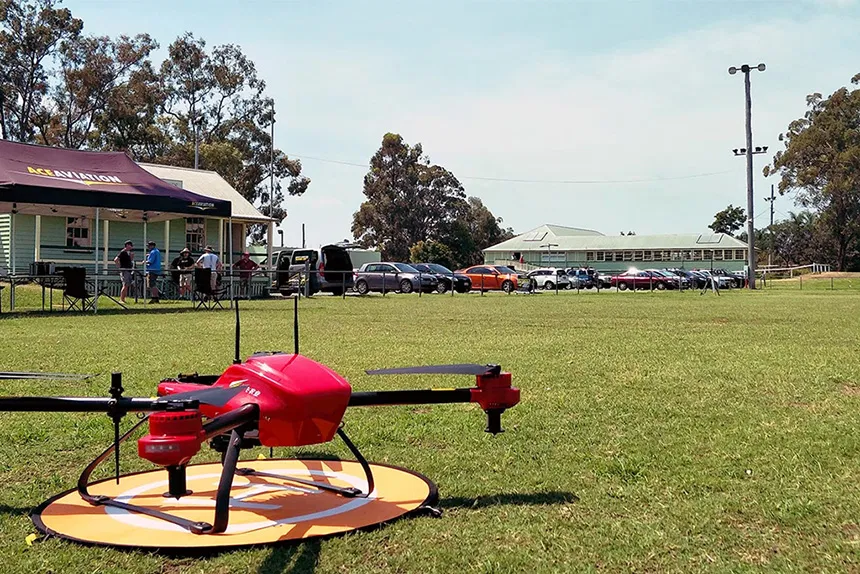
Practical training gives you time with instructors and industry-standard aircraft. You will practise pre-flight inspections, safe operations, emergency responses and mission planning.
Training is available in locations including Melbourne, Perth and Hobart, as well as other Australian cities.
Step 5: Complete your assessments
You must demonstrate the required knowledge and practical competence. Preparation matters because the assessment tests safe decision-making, not just manual control.
Step 6: Build your employability
After qualification, create a professional profile and identify the skills employers need. Consider DroneWork, industry events, additional endorsements and a small portfolio of compliant work.
Step 7: Work under the correct operating structure
A RePL makes you a qualified remote pilot. It does not automatically authorise every commercial operation.
You may need to work under an employer’s ReOC or establish your own. Check the requirements for each job before you fly.
Common Mistakes New Drone Pilots Make
Buying equipment before understanding the rules
A large or specialised drone can create extra training and compliance requirements. Choose your pathway before you buy.
Assuming a RePL equals a business licence
A RePL qualifies you as a pilot. A ReOC relates to the operator and the business system. They are different approvals.
Focusing only on flying skills
Clients also value safety records, communication, data quality, punctuality and professional reporting.
Ignoring insurance
Many commercial clients require public liability and equipment cover. Confirm the policy conditions before accepting work.
Treating DroneWork as guaranteed employment
A job board creates opportunities. It does not guarantee offers. You still need to apply well and deliver reliable work.
Forgetting local conditions
Rules can change with location, airspace, people, roads, buildings and sensitive sites. Plan every operation separately.
CASA Considerations for Professional Drone Work
CASA regulates drone operations in Australia. Before flying for work, review the latest information on CASA drone rules and requirements.
Key considerations include:
- Keep the aircraft within visual line of sight unless an approved pathway applies.
- Follow the applicable distance rules around people and property.
- Check controlled airspace and temporary restrictions.
- Complete a risk assessment before each operation.
- Maintain safe separation from aircraft.
- Follow privacy and workplace safety requirements.
- Use the correct aircraft category and endorsements.
- Operate under the correct ReOC structure.
- Keep required records and maintenance information.
- Confirm client-site rules before arriving.
Regulations are not designed to block professional drone work. They create a framework that protects people, property and airspace users.
That framework can feel complex at first. Proper education helps turn the regulatory hurdles into a workable operating process.
Frequently Asked Questions
1. How long does it take to get a drone licence in Australia?
Many students complete online theory first, then attend about five days of practical training and assessment. The exact timing depends on your study pace, course schedule and assessment outcome.
2. What is the CASA RePL?
The RePL is the Remote Pilot Licence. It is the recognised qualification for pilots who want to conduct many professional drone operations in Australia.
3. How much does a commercial drone licence cost in Australia?
Costs vary by aircraft category, training provider and package inclusions. At the time of writing, Ace course pages listed Silver from $1,799 and Gold at $3,099. Check the current course pricing before enrolling.
4. What is the CASA RePL cost?
There is no single national price for RePL training. The total cost usually includes tuition, practical assessment, aircraft use and any relevant CASA or administration fees. Ask for an itemised quote.
5. Do I need previous aviation experience?
No. Ace trains complete beginners. You need to study the theory, follow instructions and demonstrate safe competence.
6. Do I need to own a drone?
Usually, no. Training aircraft are provided for practical sessions. You can decide what equipment to buy after you understand your intended work.
7. Can I train in Brisbane?
Yes. Ace provides RePL training in Brisbane, with online theory and face-to-face practical training.
8. Can I train in Sydney?
Yes. Students can access Sydney drone training. Course dates and availability can change, so check the calendar.
9. Is drone training available in Melbourne, Perth or Hobart?
Yes. Ace lists training locations in Melbourne, Perth and Hobart, along with other locations.
10. Does Ace help graduates find work?
Ace provides access to DroneWork, career development support and industry connections. These tools can improve your chances, but they do not guarantee employment.
11. What is DroneWork?
DroneWork is a commercial drone network that connects CASA-qualified pilots with clients and paid tasks across Australia. Work can include surveying, construction, agriculture, inspection and utilities.
12. What is Altitude+?
Altitude+ is Ace’s student benefits programme. It includes refresher training, human support, learning resources, career development, UAMP access, industry events and DroneWork access.
13. What drone pilot jobs are available in Australia?
Common roles include survey pilot, construction progress pilot, agricultural operator, asset inspector, mining pilot, media pilot and utility inspection pilot.
14. What salary can a drone pilot expect?
Income varies greatly. Employment salaries, contract rates and business revenue are different. Experience, location, equipment, compliance and specialisation all affect earnings.
15. Is a RePL valid for life?
Ace states that the RePL remains valid for life. However, you must maintain current competence and meet the requirements that apply to each operation.
16. Do I need a ReOC to work commercially?
You generally need to operate under a ReOC for many commercial activities. This can be your own ReOC or your employer’s ReOC. Ask for advice about your specific operation.
17. Is an AROC needed for every drone job?
No. AROC requirements depend on the operation and radio environment. It can be valuable for work near controlled airspace or in aviation radio environments.
18. Can international students train with Ace?
Ace has a global footprint that includes Singapore, Dubai, Korea and Malaysia. The correct qualification depends on where you intend to work and which regulator applies.
19. Is the Gold package suitable for a beginner?
It can suit a beginner who wants to build a business and needs broader support. It includes RePL, AROC, ReOC pathway support, business guidance and DroneWork access.
20. How do I choose the right drone course?
Start with your intended work, aircraft category and location. Then compare course content, practical training, compliance support and post-course career services.
Summary: Build Your Own Drone Career Story
These six pathways show that a drone career can begin in many ways.
A student may start in Sydney construction. Another may move into agricultural work near Brisbane. A corporate team may build an internal capability for mining or utilities. A Gold graduate may use DroneWork to find opportunities. A beginner may enter surveying without aviation experience. An international student may need help understanding a specialised aircraft pathway.
The common theme is preparation. A licence gives you a foundation. Practical training, compliance knowledge, professional support and industry connections help you turn that foundation into work.
Ace Aviation combines CASA-approved training with ReOC 1421 experience, Altitude+, DroneWork and a global learning network. Its graduates include Sarah Mitchell, James Thornton, Luke Patterson, Scott Warriner, Warren Withers and Jordani Azambuja, each highlighting a different part of the journey.
Read more student reviews and graduate experiences, or explore the right pathway for your goals.
Ready to start? Book your training at aaa.edu.au or call 1300 336 366.
{“@graph”:[{“@id”:”https://aaa.edu.au/blog/drone-licence-australia-student-success-stories”,”@type”:”Article”,”image”:”https://cdn.marblism.com/F6USneCwUqP.webp”,”author”:{“url”:”https://aaa.edu.au/”,”name”:”Ace Aviation Aerospace Academy”,”@type”:”Organization”},”headline”:”Drone Licence Australia: 6 Real Student Success Stories That Prove Your Drone Career Can Take Off”,”keywords”:[“drone licence australia”,”drone pilot jobs australia”,”commercial drone licence australia”,”how to become a drone pilot australia”,”casa repl cost”],”publisher”:{“url”:”https://aaa.edu.au/”,”logo”:{“url”:”https://aaa.edu.au/assets/ace-logo-transparent.png”,”@type”:”ImageObject”},”name”:”Ace Aviation Aerospace Academy”,”@type”:”Organization”},”description”:”See how a drone licence australia can lead to agriculture, surveying and enterprise work. Read six Ace success stories and start today.”,”dateModified”:”2026-08-20″,”datePublished”:”2026-08-20″,”mainEntityOfPage”:{“@id”:”https://aaa.edu.au/blog/drone-licence-australia-student-success-stories”,”@type”:”WebPage”}},{“@id”:”https://aaa.edu.au/#organization”,”url”:”https://aaa.edu.au/”,”logo”:”https://aaa.edu.au/assets/ace-logo-transparent.png”,”name”:”Ace Aviation Aerospace Academy”,”@type”:”Organization”,”telephone”:”1300 336 366″,”areaServed”:[“Australia”,”Singapore”,”Dubai”,”Korea”,”Malaysia”],”description”:”CASA-approved aviation training provider delivering professional drone pilot training, RePL, AROC and aviation qualifications.”},{“@type”:”FAQPage”,”mainEntity”:[{“name”:”How long does it take to get a drone licence in Australia?”,”@type”:”Question”,”acceptedAnswer”:{“text”:”Many students complete online theory first, then attend about five days of practical training and assessment. Timing depends on study pace, course dates and assessment outcome.”,”@type”:”Answer”}},{“name”:”What is the CASA RePL?”,”@type”:”Question”,”acceptedAnswer”:{“text”:”The RePL is the Remote Pilot Licence, the recognised qualification for pilots conducting many professional drone operations in Australia.”,”@type”:”Answer”}},{“name”:”How much does a commercial drone licence cost in Australia?”,”@type”:”Question”,”acceptedAnswer”:{“text”:”Costs vary by aircraft category, provider and inclusions. Check Ace Aviation’s current course pricing before enrolling.”,”@type”:”Answer”}},{“name”:”Do I need previous aviation experience?”,”@type”:”Question”,”acceptedAnswer”:{“text”:”No. Ace Aviation trains complete beginners who can study the theory, follow instructions and demonstrate safe competence.”,”@type”:”Answer”}},{“name”:”Can I train in Brisbane?”,”@type”:”Question”,”acceptedAnswer”:{“text”:”Yes. Ace Aviation provides RePL training in Brisbane, with online theory and face-to-face practical training.”,”@type”:”Answer”}},{“name”:”Can I train in Sydney?”,”@type”:”Question”,”acceptedAnswer”:{“text”:”Yes. Ace Aviation provides Sydney drone training. Course dates and availability can change.”,”@type”:”Answer”}},{“name”:”Does Ace help graduates find work?”,”@type”:”Question”,”acceptedAnswer”:{“text”:”Ace provides DroneWork access, career development support and industry connections. These services can improve opportunities but do not guarantee employment.”,”@type”:”Answer”}},{“name”:”What is DroneWork?”,”@type”:”Question”,”acceptedAnswer”:{“text”:”DroneWork is a commercial drone network connecting CASA-qualified pilots with clients and paid tasks across Australia.”,”@type”:”Answer”}},{“name”:”What is Altitude+?”,”@type”:”Question”,”acceptedAnswer”:{“text”:”Altitude+ is Ace Aviation’s student benefits programme, offering refresher training, human support, learning resources, career development, UAMP access, industry events and DroneWork access.”,”@type”:”Answer”}},{“name”:”What drone pilot jobs are available in Australia?”,”@type”:”Question”,”acceptedAnswer”:{“text”:”Common roles include survey pilot, construction progress pilot, agricultural operator, asset inspector, mining pilot, media pilot and utility inspection pilot.”,”@type”:”Answer”}},{“name”:”What salary can a drone pilot expect?”,”@type”:”Question”,”acceptedAnswer”:{“text”:”Income varies by employment type, experience, location, equipment, compliance and specialisation. No salary is guaranteed.”,”@type”:”Answer”}},{“name”:”Do I need a ReOC to work commercially?”,”@type”:”Question”,”acceptedAnswer”:{“text”:”Many commercial operations require the pilot to work under a ReOC. This may be the pilot’s own ReOC or an employer’s ReOC.”,”@type”:”Answer”}},{“name”:”Can international students train with Ace?”,”@type”:”Question”,”acceptedAnswer”:{“text”:”Ace Aviation has a global footprint including Singapore, Dubai, Korea and Malaysia. The correct pathway depends on the country and regulator.”,”@type”:”Answer”}},{“name”:”Is the Gold package suitable for a beginner?”,”@type”:”Question”,”acceptedAnswer”:{“text”:”It can suit a beginner who wants to build a drone business and needs RePL, AROC, ReOC pathway support, business guidance and DroneWork access.”,”@type”:”Answer”}},{“name”:”How do I choose the right drone course?”,”@type”:”Question”,”acceptedAnswer”:{“text”:”Choose based on your intended work, aircraft category, location, practical training needs, compliance support and post-course career services.”,”@type”:”Answer”}}]}],”@context”:”https://schema.org”}