Short Direct Answer
A corporate drone team usually needs trained RePL pilots, suitable radio training, aircraft registration, and documented operating procedures. Depending on the work, the business may also need a ReOC. Ace Aviation delivers flexible corporate training across Australia.
Meta description: Explore a drone licence australia corporate training case study and build a CASA-compliant team with Ace Aviation. Book today.
Why Companies Need Certified Drone Teams
Drones now support infrastructure inspection, surveying, construction, mining, agriculture, and emergency response. However, buying aircraft is only one part of building a safe drone program.
Companies also need capable people, clear procedures, and strong operational oversight. Without these controls, a drone project can create safety risks, legal exposure, and costly delays.
The right training pathway depends on the company’s aircraft, locations, mission types, and operating conditions. Therefore, a corporate program should begin with an operational review.
RePL: the individual pilot licence
The Remote Pilot Licence, or RePL, belongs to an individual pilot. It confirms that the pilot has completed approved theory and practical training for the relevant aircraft category.
A RePL is commonly required when pilots operate professionally with larger drones or work under a company’s ReOC. It gives the pilot a formal foundation in:
- Aviation law and responsibilities
- Flight planning
- Risk management
- Weather and airspace
- Emergency procedures
- Aircraft preparation
- Practical flight control
- Safe launch and recovery
A RePL is not the same as a business certificate. It qualifies the person flying the aircraft. The business still needs an appropriate operating system.
ReOC: the company-level authorisation
A Remote Operator’s Certificate, or ReOC, applies to an organisation. It supports commercial drone operations that require a structured management system.
A ReOC commonly involves:
- A nominated Chief Remote Pilot
- An operations manual
- Operating procedures
- Maintenance and aircraft records
- Pilot competency records
- Risk management processes
- Incident and emergency procedures
- CASA approval for certain advanced operations
A company may need more than pilot licences when its work involves complex sites, multiple pilots, heavier aircraft, or operations outside standard conditions.
Ace Aviation operates under CASA.ReOC.1421. This experience helps the academy teach corporate teams how licensing and business operations connect.
AROC: aviation radio communication
The Aeronautical Radio Operator Certificate, or AROC, focuses on the safe use of aviation radio equipment.
Not every drone flight requires an AROC. However, it becomes important when a pilot must use an aviation radio or communicate within an aviation environment.
Corporate teams may benefit from AROC training when they work:
- Near controlled aerodromes
- In complex airspace
- Around manned aviation activity
- Under approved operational procedures
- On infrastructure projects with aviation coordination requirements
For this reason, many professional training pathways combine RePL and AROC education.
Registration and operating rules
Commercial operators must also consider aircraft registration and current CASA operating rules. Registration does not replace pilot training or business approval.
The company should check:
- Aircraft registration status
- Remote pilot credentials
- Airspace restrictions
- Site permissions
- Privacy requirements
- Insurance terms
- Maintenance records
- Mission documentation
- Local land or workplace rules
The CASA drone information and licensing guidance should remain the final reference for current regulatory requirements.
The Ace Aviation Corporate Training Model
A corporate drone program works best when training reflects the company’s real work. Generic training can teach the basics. It may not prepare a team for rail corridors, power assets, construction sites, or remote locations.
Ace Aviation begins by reviewing the company’s intended operations. The training team then creates a delivery plan around the business.
The model can include:
- Candidate and role review
- Aircraft and payload assessment
- Operational risk review
- Online theory preparation
- Virtual classroom instruction
- Onsite practical flight training
- RePL and AROC assessments
- Procedures and documentation support
- Refresher and recurrent training
- Deployment support after qualification
Flexible theory delivery
Corporate learners often work across different rosters and locations. They may also have existing technical roles.
Ace supports this through online learning and structured virtual classrooms. The current course model allows theory sessions to be completed together or spread around operational commitments.
This approach helps companies avoid removing an entire team from the workplace at once. It also gives students time to revisit difficult topics before practical assessments.
Onsite practical training
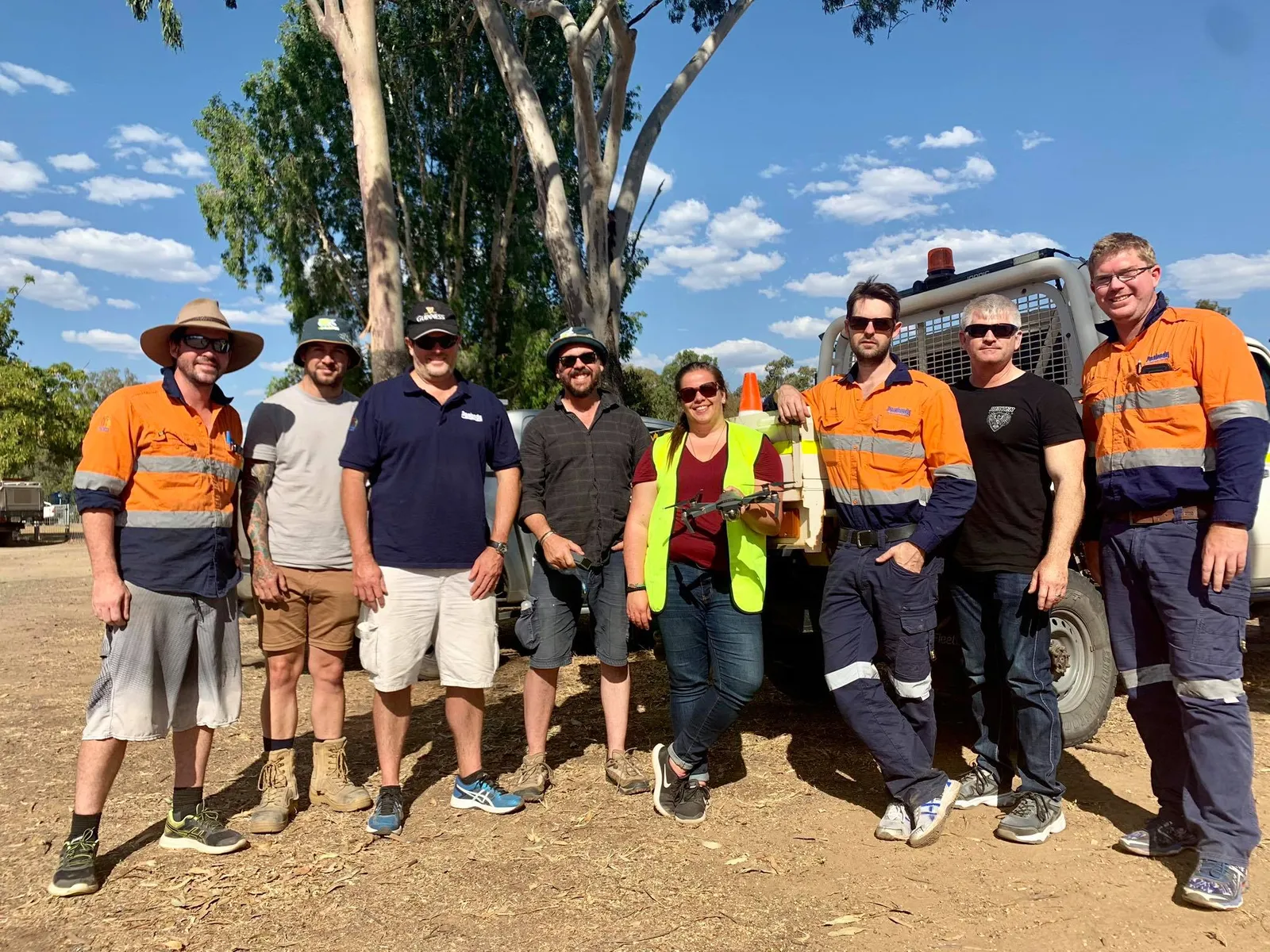
Practical training becomes more useful when it reflects the work environment. Ace can bring instructors, aircraft, and training equipment to the company site.
Onsite delivery can address:
- Local terrain
- Site access
- Safety zones
- Ground team roles
- Aircraft selection
- Battery handling
- Emergency planning
- Pre-flight briefings
- Data capture workflows
The Ace Aviation corporate training program supports teams across mining, surveying, agriculture, construction, infrastructure, energy, utilities, and government.
National delivery
Ace provides national training availability, including corporate delivery in major cities and regional locations.
Companies can explore:
- RePL training in Brisbane
- RePL training in Sydney
- RePL training in Melbourne
- RePL training in Perth
- RePL training in Hobart
This national model helps organisations use one training partner across multiple offices.

Corporate Case Study: A National Infrastructure Firm
The following case study is a representative corporate example. It combines common delivery patterns from infrastructure operations. The company remains anonymous, and the outcomes are illustrative rather than independently audited.
The challenge
A national infrastructure firm managed inspection projects across several states. Its teams worked on roads, bridges, rail assets, utilities, and remote facilities.
The company already owned several enterprise drones. However, it relied heavily on external contractors for flight operations.
This created four key problems:
- Different contractors used different procedures.
- Project managers lacked a consistent pilot competency system.
- Internal staff had limited flight confidence.
- Operations teams needed clearer CASA compliance processes.
The company also faced geographic challenges. Staff worked in Brisbane, Sydney, Melbourne, Perth, and Hobart.
Sending every employee to one training location would create travel costs and scheduling problems. The company needed a scalable national approach.
The solution
Ace Aviation first reviewed the company’s proposed missions. The review considered aircraft, locations, payloads, airspace, site risks, and the roles of each team member.
The company then selected a mixed training group. It included engineers, project supervisors, asset inspectors, and field technicians.
Ace developed a staged pathway:
- Online theory before the practical sessions
- Virtual classroom instruction
- RePL training for selected pilots
- AROC training for staff requiring aviation radio skills
- Onsite practical training with enterprise aircraft
- Standardised pre-flight and post-flight procedures
- Guidance on records and competency tracking
- A pathway toward broader ReOC support
The company also reviewed whether it needed advanced operational training. Its future plans included longer infrastructure corridors and more complex inspection work.
Ace therefore introduced the team to the requirements for BVLOS and EVLOS operations. These operations require additional planning, documentation, technology, and CASA approval.

The representative results
The program focused on building internal capability. It did not treat the licence as the final outcome.
| Business measure | Before the program | Representative result |
|---|---|---|
| Staff nominated for the first intake | 0 | 18 |
| Staff completing RePL training | Limited internal capability | 14 pilots |
| Staff completing AROC training | Ad hoc | 12 team members |
| States supported | External contractors varied | 5 states |
| Internal operating procedures | Inconsistent | Standardised core procedures |
| Contractor reliance | High for routine inspections | Reduced for suitable work |
| Future capability | Basic VLOS inspection | BVLOS planning pathway identified |
| Ongoing support | Project by project | Refresher and compliance planning |
The company did not place every employee into the same role. Instead, it created several levels of responsibility.
Some staff became remote pilots. Others became observers, ground support team members, asset specialists, or operational managers.
This role-based model improved efficiency. It also reduced the risk of giving people responsibilities beyond their training.
The operational impact
The firm could now plan routine drone work earlier. Project managers understood which staff held the required credentials.
The company also created a central record of:
- Pilot licences
- Aircraft details
- Training dates
- Currency checks
- Site approvals
- Mission records
- Maintenance actions
- Incident reports
As a result, drone operations became part of the company’s normal project planning. They no longer depended entirely on one external contractor.
The business still used specialist providers for some complex missions. However, its internal team could complete suitable VLOS work with greater consistency.
What the Students Say
The following comments represent the type of feedback commonly heard during corporate delivery. They are anonymised for this case study.
“The training made the rules practical. We could connect each lesson to an inspection we already perform.”
, Infrastructure project supervisor
“The onsite flying helped our team understand the difference between controlling the aircraft and managing the whole operation.”
, Asset inspection technician
“The biggest benefit was consistency. Everyone now follows the same briefing and pre-flight process.”
, National operations manager
“The radio training gave our field staff more confidence around aviation environments and controlled airspace.”
, Senior remote pilot
Step-by-Step: How to Certify Your Team
A company should avoid choosing training based only on the lowest advertised course price. The correct pathway depends on the work.
1. Define the business purpose
List the tasks your team wants to complete. Examples include:
- Progress photography
- Roof inspections
- Bridge inspections
- Stockpile measurement
- Surveying
- Asset mapping
- Agricultural spraying
- Emergency response
- Linear infrastructure inspection
Then record the expected locations and frequency.
2. Identify the aircraft and mission profile
Document each aircraft and payload. Include the aircraft weight, software, sensors, batteries, and intended operating range.
Next, identify whether the team will fly:
- Within visual line of sight
- At night
- Near people
- Near controlled airspace
- Over complex infrastructure
- Beyond visual line of sight
- With aviation radio communication
This information shapes the training and compliance pathway.
3. Select the right team members
Not every employee needs to become a remote pilot. Some workers may support missions without controlling the aircraft.
Consider selecting:
- Primary pilots
- Backup pilots
- Chief Remote Pilot candidates
- Visual observers
- Ground safety staff
- Data specialists
- Project managers
Companies should also plan for leave, turnover, and peak project periods.
4. Arrange Aviation Reference Numbers
Candidates may need an Aviation Reference Number before completing CASA-related licensing steps. The training provider can explain the current process and required documents.
Early preparation prevents delays before the course begins.
5. Complete RePL training
Candidates complete the required theory, practical training, and assessments for their aircraft category.
Ace’s professional drone courses use online preparation, instructor-led learning, and practical flight training.
6. Add AROC where needed
If the team will use aviation radios, include AROC training in the program. The certificate supports safe and professional radio communication.
The exact need depends on the operating environment and approval conditions.
7. Establish company procedures
The business should document how it will manage drone operations. Procedures may cover:
- Mission planning
- Site assessment
- Weather checks
- Airspace checks
- Battery management
- Public separation
- Privacy
- Emergency response
- Data storage
- Maintenance
- Pilot currency
8. Assess ReOC requirements
A ReOC may be appropriate for a company running a larger or more complex drone program. It becomes especially important when the business needs advanced approvals or multiple pilots operating within a formal system.
A training provider or aviation consultant can review the company’s specific needs.
9. Start with controlled missions
Begin with lower-risk work that matches the team’s training. Use these missions to build confidence and improve procedures.
Do not begin advanced work until the company has the required approvals, technology, and competency.
10. Review and improve the program
A corporate drone program should evolve. Review the operation after early missions.
Track:
- Near misses
- Delays
- Equipment faults
- Weather cancellations
- Data quality
- Pilot workload
- Client feedback
- Procedure gaps
Continuous improvement protects the business and strengthens the safety culture.
Common Mistakes Companies Make With Drone Compliance
Corporate operators often face compliance problems because they treat drone work as a simple equipment purchase.
Avoid these common mistakes:
- Assuming a drone licence covers the business: A RePL belongs to the pilot. It does not automatically authorise company operations.
- Training only one employee: One pilot creates a single point of failure during leave or resignation.
- Ignoring aircraft categories: A licence must match the relevant aircraft and operational requirements.
- Using generic procedures: A construction site needs different controls from a remote agricultural property.
- Flying before checking airspace: A clear-looking site may still sit near a controlled aerodrome or restricted area.
- Treating AROC as optional in every environment: Radio requirements depend on the operation and airspace.
- Starting BVLOS work too early: BVLOS requires additional approval, planning, risk assessment, and technical controls.
- Failing to record competency: Companies need evidence of training, currency, and role allocation.
- Forgetting maintenance: Batteries, aircraft, propellers, sensors, and software require regular checks.
- Choosing pilots without considering workload: A skilled pilot may still make poor decisions when rushed.
- Using contractors without checking credentials: Verify licences, insurance, approvals, and operating procedures.
- Failing to brief non-pilots: Ground staff can create risks if they do not understand exclusion zones.
- Relying on old regulatory advice: CASA rules and guidance can change. Review current requirements before each major program.
Altitude+ and DroneWork for Teams
Corporate training should continue after assessment day. Teams need support when they move from training exercises to real missions.
Ace’s Altitude+ program supports students with benefits such as:
- Refresher training access
- Ongoing learning support
- Night VLOS training options
- UAMP compliance software access
- Industry events and networking
- Career development resources
- Human support when questions arise
These benefits can help companies maintain a stronger internal capability. They also help individual employees stay engaged with aviation standards.

Connecting qualified pilots with opportunities
DroneWork is Ace’s jobs and opportunities network. It connects qualified pilots with commercial tasks, employers, and career pathways across Australia.
For corporate teams, this provides two useful benefits.
First, employees can explore future career pathways. Second, businesses can connect with qualified pilots when internal capacity is limited.
The DroneWork job network is part of Ace’s broader ecosystem. Training, compliance, and employment support work together rather than sitting in separate systems.
CASA Considerations for Corporate Operators
CASA compliance is not a single certificate. It is a system of decisions and controls.
A company should review the following areas before launch.
Operations under standard conditions
Some operations may fit within standard operating conditions. These conditions can limit factors such as location, distance from people, time of day, and visual line of sight.
If the company stays within those conditions, its pathway may be simpler. However, the team must still follow all applicable rules.
Operations outside standard conditions
More complex work may require additional approval. This can include:
- BVLOS operations
- EVLOS operations
- Night operations
- Operations near controlled airspace
- Flights near people
- Heavy-lift aircraft
- Complex urban missions
These activities require proper planning. They should not begin because a pilot has completed a basic RePL course.
Insurance and workplace safety
CASA approval does not replace insurance. Companies should discuss drone activities with their insurer before beginning commercial work.
They should also align the drone program with existing workplace systems. This may include:
- Job safety and environmental analysis
- Safe work method statements
- Contractor management
- Privacy policies
- Incident reporting
- Public liability insurance
- Equipment cover
- Cyber and data protection
National consistency
A team operating in Melbourne may face different site conditions from one operating in Perth. Airspace, local permissions, weather, terrain, and worksite controls can vary.
However, the company should maintain one central governance model. Local procedures can then sit beneath a common national standard.
For organisations seeking a broader qualification, the Certificate III in Aviation AVI30419 adds nationally recognised aviation training to the RePL pathway.
Extensive FAQ
1. Does every company need a RePL-qualified pilot?
No. The requirement depends on the aircraft, operation, and applicable CASA rules. However, a RePL is commonly used for professional operations involving larger aircraft or work managed under a ReOC.
2. What is the difference between RePL and ReOC?
A RePL is an individual pilot licence. A ReOC is an organisational certificate that supports a company’s commercial drone operations.
3. Is a ReOC required for every commercial drone job?
No. Some lower-risk commercial operations may fit within standard conditions without a ReOC. The company must assess its aircraft and mission profile carefully.
4. What does AROC mean?
AROC means Aeronautical Radio Operator Certificate. It covers the knowledge and skills needed to use aviation radio equipment.
5. Does every RePL pilot need an AROC?
No. AROC is not automatically required for every drone pilot. It becomes relevant when the pilot must use an aviation radio or communicate within an aviation environment.
6. How many pilots does a company need?
There is no universal number. A company should consider its sites, operating hours, aircraft, roster, leave coverage, and project volume.
Many businesses start with two or more pilots. This provides backup capacity and reduces reliance on one employee.
7. Can a company train employees who have no aviation background?
Yes. Corporate courses can support beginners and experienced aviation personnel. Good training explains aviation terms clearly and builds practical confidence step by step.
8. Can training take place at the company site?
Yes. Ace Aviation provides onsite corporate delivery where suitable. The location must support safe training and practical assessment requirements.
9. Can a team study online?
Theory preparation and virtual classroom delivery can be completed online. Practical flying and assessments still require appropriate instructor-led arrangements.
10. How long does corporate RePL training take?
The timeframe depends on the course, aircraft category, learner preparation, scheduling, weather, and assessment availability.
Ace’s standard course structure includes online study, virtual classroom sessions, and practical flight training.
11. What is the CASA RePL cost?
The cost varies by provider, aircraft category, training format, location, and inclusions. Companies should compare the full program rather than the advertised base price.
Ask whether the quote includes practical training, assessments, AROC, travel, equipment, support, and post-course resources.
12. What is the CASA ReOC cost?
ReOC costs depend on the organisation’s scope, documentation, operational complexity, CASA fees, and support required.
A simple operation may need fewer resources than a national business seeking advanced approvals. A tailored quote is usually more accurate than a standard price.
13. Does a Certificate III replace a RePL?
No. Certificate III in Aviation is a nationally recognised qualification. The RePL is the CASA pilot licence. Ace’s AVI30419 pathway incorporates RePL training and additional aviation units.
14. Can a company operate in Brisbane, Sydney, Melbourne, Perth, and Hobart?
Yes, a company can operate nationally when it meets the relevant requirements in each operating environment.
It should still review local airspace, site permissions, safety procedures, weather, and project controls.
15. Does a RePL allow BVLOS flight?
No. A RePL alone does not automatically authorise BVLOS operations.
BVLOS work requires additional planning, technology, documentation, and CASA approval. It commonly operates under a suitable ReOC framework.
16. Does corporate drone insurance come with a RePL?
No. A pilot licence does not provide insurance. The business must arrange suitable insurance for its aircraft, activities, employees, and contractors.
17. Can Altitude+ help corporate teams after training?
Altitude+ can provide ongoing student benefits, including refresher access, support, learning resources, and other program features.
Companies should confirm current inclusions when planning a corporate enrolment.
18. What is DroneWork?
DroneWork is Ace Aviation’s jobs and opportunities network. It helps qualified pilots connect with commercial work, employers, and industry opportunities.
It may also help businesses find qualified pilots for suitable projects.
Summary
A strong corporate drone program needs more than aircraft and a basic licence. It needs capable pilots, suitable credentials, clear procedures, practical experience, and ongoing review.
The right drone licence australia pathway depends on the company’s operation. RePL training may support individual pilots. AROC may support aviation radio use. A ReOC may support the organisation’s broader commercial and advanced operations.
Ace Aviation combines CASA-approved training, corporate delivery, practical instruction, and operational support. Under CASA.ReOC.1421, the academy understands the link between pilot competency and business compliance.
Ace has trained more than 4,000 students and supports learners across Australia, Singapore, Dubai, Korea, and Malaysia. Its Altitude+ program and DroneWork job board extend the value beyond assessment day.
Companies can begin with a focused VLOS program. They can then build toward national operations, Certificate III qualifications, specialist aircraft, and BVLOS capability.
Ready to start? Book your training at aaa.edu.au or call 1300 336 366.
{“@graph”:[{“@id”:”https://aaa.edu.au/#organization”,”url”:”https://aaa.edu.au/”,”logo”:{“url”:”https://cdn.marblism.com/4Us45emMyQU.png”,”@type”:”ImageObject”},”name”:”Ace Aviation Aerospace Academy”,”@type”:”Organization”,”telephone”:”1300 336 366″,”areaServed”:[“Australia”,”Singapore”,”Dubai”,”Korea”,”Malaysia”],”description”:”Ace Aviation Aerospace Academy provides CASA-approved drone pilot training, RePL, AROC, Certificate III in Aviation, corporate training and advanced RPAS pathways.”,”contactPoint”:{“@type”:”ContactPoint”,”telephone”:”1300 336 366″,”areaServed”:”AU”,”contactType”:”customer service”}},{“@id”:”https://aaa.edu.au/blog/drone-licence-australia-2026-corporate-training-case-study#article”,”@type”:”Article”,”image”:”https://aaa.edu.au/assets/image_1783082568536.webp”,”author”:{“@id”:”https://aaa.edu.au/#organization”},”headline”:”Drone Licence Australia 2026: Corporate Training Case Study — How Ace Aviation Builds CASA-Compliant Drone Teams”,”keywords”:[“drone licence australia”,”commercial drone licence australia”,”corporate drone training”,”RePL”,”ReOC”,”AROC”,”CASA compliance”],”publisher”:{“@id”:”https://aaa.edu.au/#organization”},”inLanguage”:”en-AU”,”description”:”Explore a drone licence australia corporate training case study and learn how Ace Aviation builds CASA-compliant drone teams.”,”dateModified”:”2026-08-31″,”datePublished”:”2026-08-31″,”articleSection”:[“Corporate Drone Training”,”CASA Compliance”,”RePL”,”ReOC”,”AROC”],”mainEntityOfPage”:”https://aaa.edu.au/blog/drone-licence-australia-2026-corporate-training-case-study”},{“@id”:”https://aaa.edu.au/blog/drone-licence-australia-2026-corporate-training-case-study#faq”,”@type”:”FAQPage”,”mainEntity”:[{“name”:”Does every company need a RePL-qualified pilot?”,”@type”:”Question”,”acceptedAnswer”:{“text”:”No. The requirement depends on the aircraft, operation, and applicable CASA rules. However, a RePL is commonly used for professional operations involving larger aircraft or work managed under a ReOC.”,”@type”:”Answer”}},{“name”:”What is the difference between RePL and ReOC?”,”@type”:”Question”,”acceptedAnswer”:{“text”:”A RePL is an individual pilot licence. A ReOC is an organisational certificate that supports a company’s commercial drone operations.”,”@type”:”Answer”}},{“name”:”Is a ReOC required for every commercial drone job?”,”@type”:”Question”,”acceptedAnswer”:{“text”:”No. Some lower-risk commercial operations may fit within standard conditions without a ReOC. The company must assess its aircraft and mission profile carefully.”,”@type”:”Answer”}},{“name”:”What does AROC mean?”,”@type”:”Question”,”acceptedAnswer”:{“text”:”AROC means Aeronautical Radio Operator Certificate. It covers the knowledge and skills needed to use aviation radio equipment.”,”@type”:”Answer”}},{“name”:”Does every RePL pilot need an AROC?”,”@type”:”Question”,”acceptedAnswer”:{“text”:”No. AROC is not automatically required for every drone pilot. It becomes relevant when the pilot must use an aviation radio or communicate within an aviation environment.”,”@type”:”Answer”}},{“name”:”How many pilots does a company need?”,”@type”:”Question”,”acceptedAnswer”:{“text”:”There is no universal number. A company should consider its sites, operating hours, aircraft, roster, leave coverage, and project volume. Many businesses start with two or more pilots.”,”@type”:”Answer”}},{“name”:”Can a company train employees who have no aviation background?”,”@type”:”Question”,”acceptedAnswer”:{“text”:”Yes. Corporate courses can support beginners and experienced aviation personnel. Good training explains aviation terms clearly and builds practical confidence step by step.”,”@type”:”Answer”}},{“name”:”Can training take place at the company site?”,”@type”:”Question”,”acceptedAnswer”:{“text”:”Yes. Ace Aviation provides onsite corporate delivery where suitable. The location must support safe training and practical assessment requirements.”,”@type”:”Answer”}},{“name”:”Can a team study online?”,”@type”:”Question”,”acceptedAnswer”:{“text”:”Theory preparation and virtual classroom delivery can be completed online. Practical flying and assessments still require appropriate instructor-led arrangements.”,”@type”:”Answer”}},{“name”:”How long does corporate RePL training take?”,”@type”:”Question”,”acceptedAnswer”:{“text”:”The timeframe depends on the course, aircraft category, learner preparation, scheduling, weather, and assessment availability. Ace’s standard structure includes online study, virtual classroom sessions, and practical flight training.”,”@type”:”Answer”}},{“name”:”What is the CASA RePL cost?”,”@type”:”Question”,”acceptedAnswer”:{“text”:”The cost varies by provider, aircraft category, training format, location, and inclusions. Companies should compare the full program rather than the advertised base price.”,”@type”:”Answer”}},{“name”:”What is the CASA ReOC cost?”,”@type”:”Question”,”acceptedAnswer”:{“text”:”ReOC costs depend on the organisation’s scope, documentation, operational complexity, CASA fees, and support required. A tailored quote is usually more accurate than a standard price.”,”@type”:”Answer”}},{“name”:”Does a Certificate III replace a RePL?”,”@type”:”Question”,”acceptedAnswer”:{“text”:”No. Certificate III in Aviation is a nationally recognised qualification. The RePL is the CASA pilot licence. Ace’s AVI30419 pathway incorporates RePL training and additional aviation units.”,”@type”:”Answer”}},{“name”:”Can a company operate in Brisbane, Sydney, Melbourne, Perth, and Hobart?”,”@type”:”Question”,”acceptedAnswer”:{“text”:”Yes, a company can operate nationally when it meets the relevant requirements in each operating environment. It should still review local airspace, site permissions, weather, and project controls.”,”@type”:”Answer”}},{“name”:”Does a RePL allow BVLOS flight?”,”@type”:”Question”,”acceptedAnswer”:{“text”:”No. A RePL alone does not automatically authorise BVLOS operations. BVLOS work requires additional planning, technology, documentation, and CASA approval.”,”@type”:”Answer”}},{“name”:”Does corporate drone insurance come with a RePL?”,”@type”:”Question”,”acceptedAnswer”:{“text”:”No. A pilot licence does not provide insurance. The business must arrange suitable insurance for its aircraft, activities, employees, and contractors.”,”@type”:”Answer”}},{“name”:”Can Altitude+ help corporate teams after training?”,”@type”:”Question”,”acceptedAnswer”:{“text”:”Altitude+ can provide ongoing student benefits, including refresher access, support, learning resources, and other program features. Companies should confirm current inclusions when planning a corporate enrolment.”,”@type”:”Answer”}},{“name”:”What is DroneWork?”,”@type”:”Question”,”acceptedAnswer”:{“text”:”DroneWork is Ace Aviation’s jobs and opportunities network. It helps qualified pilots connect with commercial work, employers, and industry opportunities.”,”@type”:”Answer”}}]}],”@context”:”https://schema.org”}