Short Direct Answer
For commercial drone operations, an AROC is needed when you must transmit on an aviation radio frequency. It complements your RePL and does not replace it. RePL covers pilot competence, while AROC covers safe aeronautical radio communication.
Meta description: Drone licence Australia 2026 explained: learn AROC, RePL, ReOC and radio compliance. Start CASA-aligned training with Ace Aviation today.
Why radio skills matter for a drone licence Australia pathway
A commercial drone pilot needs more than flying skills. You must also understand airspace, communication, risk and operational control.
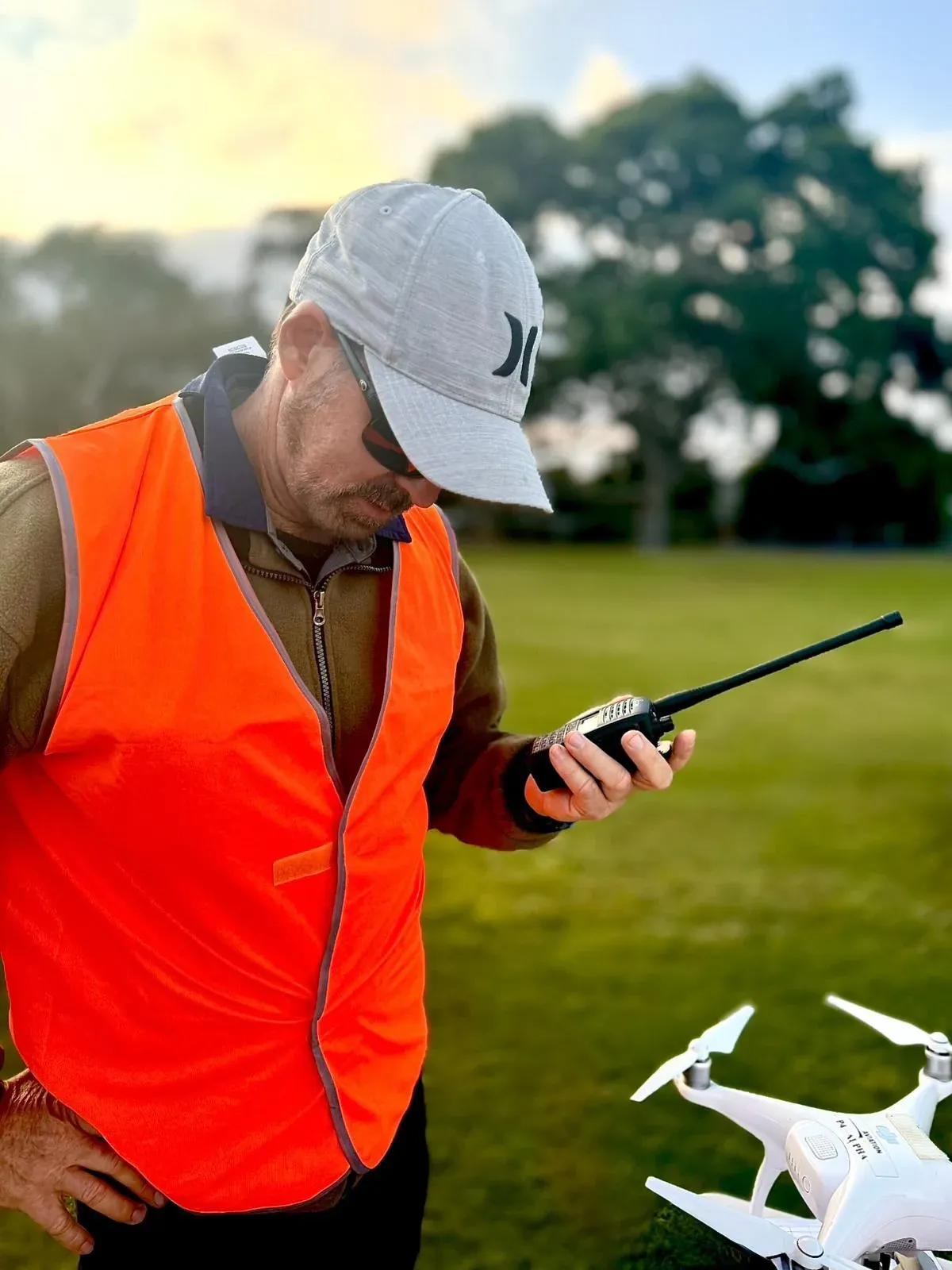
The Aeronautical Radio Operator Certificate, or AROC, is the qualification that supports aviation radio operations. It is relevant when a remote pilot needs to use an aviation air-band radio to communicate with air traffic services or other aircraft.
However, an AROC is not a replacement for a Remote Pilot Licence. It is an additional competency. Your RePL shows that you can operate the aircraft. Your AROC shows that you can use the radio correctly.
This distinction matters when you are considering a commercial drone licence Australia pathway. A pilot may hold a RePL but still lack authority to transmit on an aviation frequency. Similarly, a business may hold a ReOC but must ensure each pilot using the radio is appropriately qualified.
CASA rules and operational approvals can change. Always confirm current requirements with CASA’s radio operator guidance before planning a flight.
What is an AROC?
An Aeronautical Radio Operator Certificate authorises a person to operate an aeronautical radio station. For drone pilots, this normally means using an aviation VHF radio from the ground during an approved operation.
The certificate covers more than pressing the transmit button. It supports:
- Correct radio phraseology.
- Clear and concise transmissions.
- Understanding of callsigns.
- Position and intention reports.
- Listening before transmitting.
- Readback of important instructions.
- Handling blocked or missed transmissions.
- Radio failure procedures.
- Communication with air traffic services and aircraft.
Aviation radio is structured for a reason. Pilots and controllers need to exchange information quickly. Ambiguous or lengthy calls can increase risk, especially around aerodromes.
An AROC therefore supports safe coordination. It does not, by itself, give you permission to enter controlled airspace or operate near an aerodrome. You still need to meet the applicable Part 101 rules, permissions, approvals and operator procedures.
What an AROC does not do
An AROC does not:
- Give you a RePL.
- Create a ReOC for your business.
- Approve a flight in controlled airspace.
- Remove the need for an operations manual.
- Replace airspace checks.
- Permit flights outside your approved operating scope.
- Authorise every type of radio frequency.
The certificate is one part of a wider safety system. Treat it as a professional radio qualification, not as an all-purpose flight approval.
RePL, ReOC and AROC: how the qualifications fit together
These terms describe different responsibilities. Confusing them is one of the most common compliance mistakes among new operators.
| Credential | Main purpose | Who holds it? | Does it authorise aviation radio use? |
|---|---|---|---|
| RePL | Demonstrates remote pilot competence for specified aircraft categories | Individual pilot | No, not by itself |
| ReOC | Allows an organisation to conduct approved commercial drone operations | Business or organisation | No, not by itself |
| AROC | Demonstrates competence to operate an aeronautical radio station | Individual radio operator | Yes, within the certificate’s scope |
| Operator accreditation | Supports lower-risk operations under applicable excluded-category rules | Individual operator | No |
| Manned pilot radio endorsement | Supports radio use for holders of relevant manned pilot licences | Individual pilot | May remove the need for a separate AROC, subject to current CASA requirements |
A RePL belongs to the pilot. A ReOC belongs to the operator. An AROC belongs to the person using the aviation radio.
For example, a company may hold a ReOC and employ six remote pilots. If three pilots will transmit on aviation radio, those three pilots need the required radio authority. The company cannot simply “share” one person’s AROC.
Ace Aviation provides structured pathways through its drone courses and RePL training. The right combination depends on the aircraft, the mission, the operating area and the organisation’s approval structure.
When does a drone pilot need an AROC?
The key question is not simply whether the flight is commercial. The key question is whether the pilot needs to operate an aeronautical radio.
An AROC may be required when your operation involves:
- Transmitting on an aviation VHF frequency.
- Communicating with air traffic control.
- Working at or near an aerodrome where radio procedures apply.
- Coordinating with crewed aircraft during an approved operation.
- Following radio procedures in your ReOC operations manual.
- Conducting complex work that requires aviation radio communication.
- Supporting emergency, inspection or infrastructure missions near aircraft activity.
A pilot flying a commercial job far from aerodromes may not need an AROC if the operation does not use aviation radio. The pilot must still meet all other requirements.
Controlled airspace deserves special care. Entering controlled airspace usually requires authorisation, coordination and strict procedures. If those procedures require air-band radio transmissions, the person transmitting must hold the appropriate qualification unless another recognised authorisation applies.
The reverse is also important. An operation outside controlled airspace may still require an AROC if the pilot uses an aeronautical radio. A non-controlled location does not automatically remove radio obligations.
How radio supports safe commercial operations
Radio communication creates a shared information channel. It can help a remote pilot:
- Announce the location and nature of the operation.
- Monitor nearby traffic information.
- Receive relevant instructions.
- Coordinate with a crewed aircraft.
- Report changes to the planned operation.
- Manage unexpected traffic.
- Stop or suspend the flight when communication is unclear.
Radio is not a substitute for visual observation. It also does not guarantee that every aircraft will hear or respond to your call. A safe operation uses radio as one layer within a broader risk control system.
The AROC connection to controlled airspace and advanced operations
Advanced drone operations often involve more planning. They may include controlled airspace, night operations, extended operating areas, higher-risk sites or beyond visual line of sight.
A RePL and AROC may be part of the competency profile for these operations. However, the exact requirements depend on the approval and the operation.
For example, a BVLOS operation may require:
- A suitable RePL and aircraft category.
- A ReOC or other approved operating framework.
- A detailed operations manual.
- A risk assessment.
- Communication and contingency procedures.
- Detect-and-avoid controls.
- Airspace coordination.
- Appropriate approvals from CASA.
- Trained and current crew.
An AROC alone does not satisfy those requirements. It addresses aeronautical radio use. It does not approve BVLOS flight.
The same principle applies to flights near controlled aerodromes. Radio training may be essential, but the operator must also confirm airspace access, aircraft limitations, separation requirements and local procedures.
Example: a tower inspection near an aerodrome
A utilities company plans a tower inspection near a controlled aerodrome. The operation may require:
- A RePL-qualified remote pilot.
- A ReOC or approved operator structure.
- An operations manual covering the task.
- Airspace coordination.
- A safety observer or additional crew.
- An AROC for the pilot transmitting on the aviation frequency.
- A documented lost-link and emergency procedure.
The organisation should not treat the AROC as the final approval. Instead, it should identify every requirement before the job is accepted.
Key facts for commercial pilots in 2026
| Question | Practical answer |
|---|---|
| Is AROC required for every commercial drone flight? | No. It is required when the pilot must operate an aviation radio, subject to applicable CASA rules and exemptions. |
| Does a RePL include AROC? | No. They are separate credentials. |
| Does a ReOC include AROC? | No. A ReOC applies to the organisation, not automatically to each pilot. |
| Can a pilot use an aviation radio without AROC? | Only if another recognised authorisation applies. Confirm the current CASA position. |
| Is AROC automatically required in controlled airspace? | Not solely because the airspace is controlled. It is required where aviation radio operation is part of the task or approval. |
| Is AROC useful outside controlled airspace? | It can be, where the operation uses aviation radio or requires structured coordination. |
| Does AROC permit controlled-airspace entry? | No. Separate approval and operating requirements still apply. |
| Does every team member need AROC? | Each person who transmits on the aviation radio needs the required authority. |
| Is radio monitoring the same as transmitting? | Not always. Confirm the applicable requirement and your operation’s procedures. |
| Are requirements fixed for all aircraft? | No. They depend on the aircraft, location, mission, airspace and approval. |
How to become a drone pilot in Australia with radio capability
If you are researching how to become a drone pilot Australia, use a staged approach. This helps you avoid paying for training that does not match your intended work.
Step 1: Define your career goal
Start with the work you want to perform. Common pathways include:
- Real estate and media.
- Surveying and mapping.
- Construction progress.
- Asset inspection.
- Agriculture.
- Emergency services.
- Mining and infrastructure.
- Night operations.
- BVLOS operations.
The mission determines the aircraft, operating category and training requirements.
Step 2: Identify the aircraft and weight category
A small camera drone may require a different pathway from a heavy-lift agricultural aircraft. Consider the aircraft’s maximum take-off weight, payload, performance and intended operating environment.
Do not rely only on the aircraft’s empty weight. Payloads, batteries and accessories can affect the relevant category.
Step 3: Choose the correct pilot credential
For many professional roles, a RePL is the expected foundation. Lower-risk operations may fall under a different pathway, such as operator accreditation, if all applicable conditions are met.
If you are comparing the casa repl cost, look beyond the course price. Consider the aircraft category, assessment, support, travel, refresher training and additional qualifications such as AROC.
Step 4: Assess the radio requirement
Ask:
- Will I transmit on aviation VHF?
- Will I work near an aerodrome?
- Will the approval require radio communication?
- Will I coordinate with crewed aircraft?
- Does the client require AROC-qualified personnel?
- Does the operator’s manual include aviation radio procedures?
If the answer is yes, include AROC training in your pathway.
Step 5: Understand the operator structure
If you work for an established operator, you may fly under that organisation’s ReOC and procedures. If you plan to run your own commercial operation, you may need additional operator certification and compliance support.
A RePL does not automatically allow you to run a drone business under your own name.
Step 6: Build operational competence
Good training should cover more than the assessment. It should include:
- Pre-flight inspections.
- Airspace research.
- Weather assessment.
- Battery and equipment management.
- Flight planning.
- Crew roles.
- Radio procedures.
- Emergency actions.
- Incident reporting.
- Post-flight records.
This is where practical instruction becomes valuable. Ace Aviation’s approach to training combines certification with operational preparation.
Step 7: Maintain currency
A licence is not the same as current competence. Operators should maintain flight records, complete required recurrent training and follow their organisation’s currency rules.
Review your radio procedures when equipment, airspace, crew or mission conditions change.
City pathways: Brisbane, Sydney, Melbourne, Perth and Hobart
Radio and drone compliance principles apply nationally. However, local operating conditions vary.
A drone course Brisbane student may work near busy metropolitan airspace, industrial areas or controlled aerodromes. Training should therefore include airspace awareness and practical planning.
A drone course Sydney student may face dense urban environments, harbour restrictions, controlled aerodromes and high public exposure. Strong site planning is essential.
For a drone course Melbourne, weather changes and urban operating constraints can affect planning. Pilots must assess wind, visibility, temperature and local airspace before each flight.
A drone course Perth student may work across large industrial, mining or coastal areas. Distance can create communication and emergency-response challenges.
A drone course Hobart student may operate around changing terrain, weather and regional airspace. Local knowledge still matters, even when the site appears quiet.
Ace delivers training across these locations, including Brisbane, Sydney, Melbourne, Perth and Hobart.
Real-world examples
Example 1: Real estate photography
A pilot uses a small drone to photograph a property. The flight remains within standard operating limits and does not involve aviation radio.
The pilot still needs to confirm commercial registration, operator requirements, privacy considerations, airspace restrictions and safe separation. An AROC may not be necessary if no aviation radio is used.
Example 2: Agricultural operations
An agricultural operator uses a heavier drone to spread product across a large property. The operator needs aircraft-specific training, suitable RePL privileges and an approved business structure.
The operation may not require AROC if it is remote and does not use aviation radio. However, the operator should assess whether future work near aerodromes or other aircraft activity will require it.
Example 3: Infrastructure inspection
A powerline inspection team works near an active aerodrome. The operation requires coordination with the aerodrome and may include radio communication.
The pilot needs the appropriate RePL, operating approval and AROC where they will transmit on the aviation frequency. The team must also document emergency procedures and communication responsibilities.
Example 4: BVLOS planning
A company wants to inspect a remote pipeline beyond visual line of sight. It cannot rely on RePL and AROC alone.
The company must address the full approval pathway. This may include a ReOC, risk assessment, operating limitations, communications planning, detect-and-avoid measures and CASA approval.
Common AROC and drone compliance mistakes
1. Treating RePL as permission to use aviation radio
A RePL confirms pilot competence. It does not automatically authorise aviation radio transmissions.
2. Assuming every commercial flight needs AROC
The opposite mistake is also common. AROC is linked to aeronautical radio operation. It is not automatically required for every commercial drone job.
3. Assuming controlled airspace approval is automatic
An AROC does not grant airspace access. You still need to follow CASA and airspace requirements.
4. Using the wrong frequency
A pilot must use the correct frequency and follow the applicable local procedure. Guessing can create confusion and increase risk.
5. Making long or unclear calls
Aviation calls should be brief and structured. Include the information other airspace users need.
6. Failing to listen first
Transmit only after checking that the frequency is not already in use, unless an emergency requires immediate action.
7. Allowing an unqualified person to transmit
A team member, client or spotter should not transmit on an aviation frequency unless they hold the required authority.
8. Forgetting the operations manual
Your manual should explain radio responsibilities, callsigns, frequencies, communication loss and escalation procedures.
9. Ignoring local conditions
A familiar site can still have temporary restrictions, events, emergency activity or unusual aircraft movements.
10. Failing to check current CASA requirements
Rules, guidance and approval processes can change. Review official information before every new type of operation.
CASA considerations for 2026
CASA compliance is based on the whole operation. It is not based on one certificate alone.
Before accepting a commercial job, confirm:
- The purpose of the flight.
- The aircraft and maximum take-off weight.
- The pilot’s RePL privileges.
- Whether operator accreditation applies.
- Whether a ReOC is required.
- Aircraft registration obligations.
- Airspace classification.
- Aerodrome and helicopter landing site proximity.
- Radio requirements.
- AROC status for each transmitting pilot.
- Night, BVLOS or over-people restrictions.
- Client, landowner and privacy obligations.
- Insurance and record-keeping requirements.
Operators should also check official CASA drone information and current airspace sources. The CASA drone guidance should be treated as the primary reference for current regulatory requirements.
Ace Aviation operates under CASA.ReOC.1421 and has trained more than 4,000 students across Australia and international locations. Its training footprint includes Singapore, Dubai, Korea and Malaysia.
Students also receive access to benefits through the Altitude+ program. The wider Ace ecosystem connects training with compliance support and the DroneWork job board. These resources can help graduates move from certification toward real operational work.
Still, no training provider can guarantee that one course covers every future mission. You should match your qualifications to each operation and confirm requirements with CASA.
Frequently asked questions
1. What is an AROC?
An AROC is an Aeronautical Radio Operator Certificate. It demonstrates that an individual is qualified to operate an aeronautical radio station within the applicable scope.
2. Do I need an AROC for a commercial drone licence in Australia?
Not for every commercial flight. You generally need it when you must transmit on an aviation air-band radio and do not already hold another recognised authorisation.
3. Does a RePL include AROC?
No. A RePL and AROC are separate qualifications. The RePL covers remote aircraft operation. The AROC covers aeronautical radio operation.
4. Does a ReOC include AROC?
No. A ReOC applies to the organisation. Each pilot who transmits on an aviation radio must hold the required radio qualification or authorisation.
5. Do I need AROC in controlled airspace?
You may need it if the approved operation requires aviation radio transmissions. Controlled-airspace access also requires separate authorisation and compliance with the applicable rules.
6. Do I need AROC outside controlled airspace?
Possibly. If you use an aeronautical radio outside controlled airspace, the radio requirement can still apply. The location alone does not decide the question.
7. Can I monitor aviation radio without AROC?
Monitoring and transmitting are different activities. You should confirm the current CASA requirements and follow your operator’s procedures before operating any radio equipment.
8. Can I use a two-way radio instead?
A general-purpose two-way radio is not the same as an aviation radio. You must use approved equipment, frequencies and procedures for the operation.
9. Who can issue an AROC?
Training and assessment must be completed through an approved pathway. Confirm the provider’s current authority and the application process with CASA.
10. What are the usual AROC entry requirements?
Applicants generally need an Aviation Reference Number, suitable English language proficiency and successful completion of the required training and assessment. Check current CASA criteria before enrolling.
11. Is there a fixed AROC cost in Australia?
No single price applies to every provider or situation. Training, assessment and application costs can vary. Ask for a current quote and confirm any CASA fees.
12. Is the AROC needed for BVLOS operations?
It may be required if the BVLOS approval or operating procedures include aviation radio communication. BVLOS also involves broader approval, risk and equipment requirements.
13. Is AROC required for night drone operations?
Night operations do not automatically create an AROC requirement. The need depends on whether the operation uses aviation radio and what the approval requires.
14. Can one AROC cover an entire company?
No. The qualification applies to the individual operator. Every person transmitting on the aviation radio needs the required authority.
15. Can a RePL pilot work under another company’s ReOC?
Yes, an individual pilot may work under an organisation’s ReOC, provided the pilot meets the operator’s training, currency and competency requirements.
16. What should I study before AROC training?
Review basic aviation terms, callsigns, phonetic alphabet use, listening discipline and simple radio communication principles. Formal training will develop the required procedures.
17. Does Ace offer AROC and RePL training together?
Ace offers pathways that combine RePL and AROC training. The right package depends on your aircraft, career goal and intended operation. Review the current course options before enrolling.
18. Does an AROC let me fly near any airport?
No. It only addresses radio competency. You still need to check airspace, obtain approvals and follow the applicable aerodrome and CASA requirements.
19. Where can I complete a drone course in Australia?
Ace provides training pathways across Australia, including Brisbane, Sydney, Melbourne, Perth and Hobart. Delivery options can vary by course and intake.
20. How do I start a professional drone career?
Define your target industry, identify the aircraft and operating category, select the correct RePL pathway, assess the need for AROC and understand the operator structure. Then book training with an approved provider.
Summary
An AROC is an important compliance skill for commercial drone pilots who use aviation radio. It works alongside a RePL and, where relevant, a ReOC. It does not replace either qualification or provide automatic access to controlled airspace.
The safest pathway is to match training to the mission. Consider aircraft weight, airspace, radio use, crew roles, operating approvals and future career goals.
Ace Aviation supports pilots and organisations through CASA-aligned training, practical instruction and industry pathways. With CASA.ReOC.1421, more than 4,000 students trained, global delivery across Australia, Singapore, Dubai, Korea and Malaysia, Altitude+ support and access to DroneWork, the academy helps students prepare for professional operations.
Always check current CASA requirements before conducting a flight.
Ready to start? Book your training at aaa.edu.au or call 1300 336 366.
{“@graph”:[{“@id”:”https://aaa.edu.au/#organization”,”url”:”https://aaa.edu.au/”,”logo”:{“url”:”https://aaa.edu.au/assets/ace-logo-transparent.png”,”@type”:”ImageObject”},”name”:”Ace Aviation Aerospace Academy”,”@type”:”Organization”,”telephone”:”1300 336 366″,”contactPoint”:{“@type”:”ContactPoint”,”telephone”:”1300 336 366″,”areaServed”:”AU”,”contactType”:”customer service”}},{“@id”:”https://aaa.edu.au/blog#drone-licence-australia-aroc-2026″,”@type”:”Article”,”image”:”https://aaa.edu.au/assets/aroc-radio.webp”,”author”:{“@id”:”https://aaa.edu.au/#organization”},”headline”:”Drone Licence Australia 2026: AROC, Radio Operations and the Compliance Skills Commercial Pilots Need”,”publisher”:{“@id”:”https://aaa.edu.au/#organization”},”inLanguage”:”en-AU”,”description”:”Drone licence Australia 2026 explained, including AROC, RePL, ReOC, aviation radio operations and commercial compliance requirements.”,”dateModified”:”2026-09-07″,”datePublished”:”2026-09-07″,”mainEntityOfPage”:”https://aaa.edu.au/blog”},{“@type”:”FAQPage”,”mainEntity”:[{“name”:”What is an AROC?”,”@type”:”Question”,”acceptedAnswer”:{“text”:”An AROC is an Aeronautical Radio Operator Certificate. It demonstrates that an individual is qualified to operate an aeronautical radio station within the applicable scope.”,”@type”:”Answer”}},{“name”:”Do I need an AROC for a commercial drone licence in Australia?”,”@type”:”Question”,”acceptedAnswer”:{“text”:”Not for every commercial flight. You generally need it when you must transmit on an aviation air-band radio and do not already hold another recognised authorisation.”,”@type”:”Answer”}},{“name”:”Does a RePL include AROC?”,”@type”:”Question”,”acceptedAnswer”:{“text”:”No. A RePL and AROC are separate qualifications. The RePL covers remote aircraft operation, while the AROC covers aeronautical radio operation.”,”@type”:”Answer”}},{“name”:”Does a ReOC include AROC?”,”@type”:”Question”,”acceptedAnswer”:{“text”:”No. A ReOC applies to the organisation. Each pilot who transmits on an aviation radio must hold the required radio qualification or authorisation.”,”@type”:”Answer”}},{“name”:”Do I need AROC in controlled airspace?”,”@type”:”Question”,”acceptedAnswer”:{“text”:”You may need it if the approved operation requires aviation radio transmissions. Controlled-airspace access also requires separate authorisation and compliance with the applicable rules.”,”@type”:”Answer”}},{“name”:”Do I need AROC outside controlled airspace?”,”@type”:”Question”,”acceptedAnswer”:{“text”:”Possibly. If you use an aeronautical radio outside controlled airspace, the radio requirement can still apply. The location alone does not decide the question.”,”@type”:”Answer”}},{“name”:”Can I monitor aviation radio without AROC?”,”@type”:”Question”,”acceptedAnswer”:{“text”:”Monitoring and transmitting are different activities. Confirm the current CASA requirements and follow your operator’s procedures before operating any radio equipment.”,”@type”:”Answer”}},{“name”:”Can I use a two-way radio instead?”,”@type”:”Question”,”acceptedAnswer”:{“text”:”A general-purpose two-way radio is not the same as an aviation radio. You must use approved equipment, frequencies and procedures for the operation.”,”@type”:”Answer”}},{“name”:”Who can issue an AROC?”,”@type”:”Question”,”acceptedAnswer”:{“text”:”Training and assessment must be completed through an approved pathway. Confirm the provider’s current authority and the application process with CASA.”,”@type”:”Answer”}},{“name”:”What are the usual AROC entry requirements?”,”@type”:”Question”,”acceptedAnswer”:{“text”:”Applicants generally need an Aviation Reference Number, suitable English language proficiency and successful completion of the required training and assessment. Check current CASA criteria before enrolling.”,”@type”:”Answer”}},{“name”:”Is there a fixed AROC cost in Australia?”,”@type”:”Question”,”acceptedAnswer”:{“text”:”No single price applies to every provider or situation. Training, assessment and application costs can vary. Ask for a current quote and confirm any CASA fees.”,”@type”:”Answer”}},{“name”:”Is the AROC needed for BVLOS operations?”,”@type”:”Question”,”acceptedAnswer”:{“text”:”It may be required if the BVLOS approval or operating procedures include aviation radio communication. BVLOS also involves broader approval, risk and equipment requirements.”,”@type”:”Answer”}},{“name”:”Is AROC required for night drone operations?”,”@type”:”Question”,”acceptedAnswer”:{“text”:”Night operations do not automatically create an AROC requirement. The need depends on whether the operation uses aviation radio and what the approval requires.”,”@type”:”Answer”}},{“name”:”Can one AROC cover an entire company?”,”@type”:”Question”,”acceptedAnswer”:{“text”:”No. The qualification applies to the individual operator. Every person transmitting on the aviation radio needs the required authority.”,”@type”:”Answer”}},{“name”:”Can a RePL pilot work under another company’s ReOC?”,”@type”:”Question”,”acceptedAnswer”:{“text”:”Yes. An individual pilot may work under an organisation’s ReOC, provided the pilot meets the operator’s training, currency and competency requirements.”,”@type”:”Answer”}},{“name”:”Does an AROC let me fly near any airport?”,”@type”:”Question”,”acceptedAnswer”:{“text”:”No. It only addresses radio competency. You still need to check airspace, obtain approvals and follow the applicable aerodrome and CASA requirements.”,”@type”:”Answer”}},{“name”:”How do I start a professional drone career?”,”@type”:”Question”,”acceptedAnswer”:{“text”:”Define your target industry, identify the aircraft and operating category, select the correct RePL pathway, assess the need for AROC and understand the operator structure. Then book training with an approved provider.”,”@type”:”Answer”}}]}],”@context”:”https://schema.org”}