Meta description: Learn how to become a drone pilot Australia-wide in 2026. Compare RePL pathways, costs and salaries, then book training with Ace.
How to become a drone pilot Australia: short answer
To become a drone pilot in Australia, choose a CASA-approved RePL course, complete theory and practical training, pass the required assessments, and apply for your Remote Pilot Licence. Then build experience under a ReOC, add specialist skills, and apply for commercial drone work.
What does a professional drone pilot do?
A professional drone pilot operates remotely piloted aircraft for business, government, industrial or public safety work. The role involves much more than controlling a drone.
You may plan missions, check airspace, assess risks, manage batteries, complete pre-flight inspections and capture accurate data. You may also create maps, inspect infrastructure or support agricultural operations.
Therefore, successful pilots combine flying skills with sound judgement. Employers also value communication, documentation and technical knowledge.
Common industries include:
- Construction and surveying
- Mining and resources
- Agriculture
- Utilities and infrastructure
- Real estate and media
- Asset inspection
- Emergency services
- Environmental monitoring
- Government and defence support
- Drone cleaning and industrial services
A drone pilot may work as an employee, contractor or business owner. Each pathway has different equipment, compliance and income requirements.
Drone licence Australia: what qualification do you need?
The main personal qualification is the Remote Pilot Licence, or RePL. It is the qualification most people mean when they search for a drone licence Australia.
A RePL confirms that you have completed approved training for a particular aircraft category and weight class. It is designed for professional remote pilots.
However, the RePL is not the same as a business approval. A business usually needs a Remotely Piloted Aircraft Operator’s Certificate, known as a ReOC, to conduct commercial operations.
The simplest way to understand the difference is:
- RePL: Your personal remote pilot qualification
- ReOC: The operator or business approval
- AROC: Aeronautical Radio Operator Certificate for aviation radio operations
- Aircraft registration: Registration for drones used in applicable business operations
- Operator accreditation: A pathway for some limited, lower-risk operations
Some low-risk operations may fall within an excluded category or use RPA Operator Accreditation. The rules depend on the drone, operation and location.
For a long-term career, a RePL provides a stronger foundation. Always confirm the current rules with CASA’s Remote Pilot Licence guidance before you fly.
Key facts about becoming a drone pilot
| Question | Practical answer |
|---|---|
| Main personal licence | Remote Pilot Licence, or RePL |
| Main business approval | ReOC |
| Aviation radio qualification | AROC |
| Prior flying experience | Usually not required |
| Theory topics | Air law, meteorology, navigation, human factors and operations |
| Practical training | Supervised flight training and assessment |
| Common entry category | Multi-rotor aircraft under 7 kg or under 25 kg |
| Advanced pathway | Aircraft up to 150 kg, specialist operations and BVLOS theory |
| Licence duration | The RePL generally does not expire, but recency matters |
| Typical course format | Online theory plus face-to-face practical training |
| Commercial work | Usually conducted under your employer’s or your own ReOC |
| Main career advantage | Combine flying with industry skills such as GIS, inspection or agriculture |
How to become a drone pilot in Australia step by step
1. Decide which drone career you want
First, choose the type of work that interests you. This decision affects your licence category and future training.
For example, aerial photography may require different skills from mining surveys. Agricultural spraying requires specialist aircraft knowledge and additional operational controls.
Consider these questions:
- Do you want employment or your own business?
- Will you fly small or heavy-lift drones?
- Do you prefer indoor, urban or rural work?
- Are you interested in mapping, inspection or data?
- Will you need night, controlled-airspace or BVLOS capability?
- Do you want to work locally or travel for projects?
If you are unsure, use Ace Aviation’s Licence Finder before selecting a course.
2. Apply for an Aviation Reference Number
An Aviation Reference Number, or ARN, identifies you within CASA’s aviation system.
You generally need an ARN before applying for a RePL. The process is completed through CASA’s online services.
Use your correct legal name and keep your ARN details safe. Delays can occur when personal information does not match your application.
3. Choose a CASA-approved training provider
RePL training must follow CASA requirements. Therefore, check the provider’s approval, course scope and assessment process.
Ace Aviation identifies its approval as CASA.ReOC.1421. The academy has trained more than 4,000 students and provides courses across Australia.
Training can include:
- RePL under 7 kg
- RePL under 25 kg
- Advanced aircraft categories
- AROC
- ReOC support
- Chief Remote Pilot training
- BVLOS and EVLOS theory
- Certificate III in Aviation
- Agricultural drone operations
- Industry-specific training
You can compare current pathways on the Ace Aviation courses page.

4. Complete the theory training
Theory gives you the knowledge needed to make safe decisions. It also explains how drones operate within Australia’s aviation system.
Typical subjects include:
- CASA regulations and air law
- Airspace classifications
- Aeronautical charts
- Weather and wind
- Human performance and fatigue
- Radio procedures
- Flight planning
- Risk management
- Emergency procedures
- Maintenance and battery safety
- Privacy and public safety
You do not need to memorise every rule without context. A good course explains how each rule affects real missions.
Ace Aviation combines online study with virtual classroom sessions, practice exams and instructor support. This format helps students balance training with work and family commitments.
5. Attend practical flight training
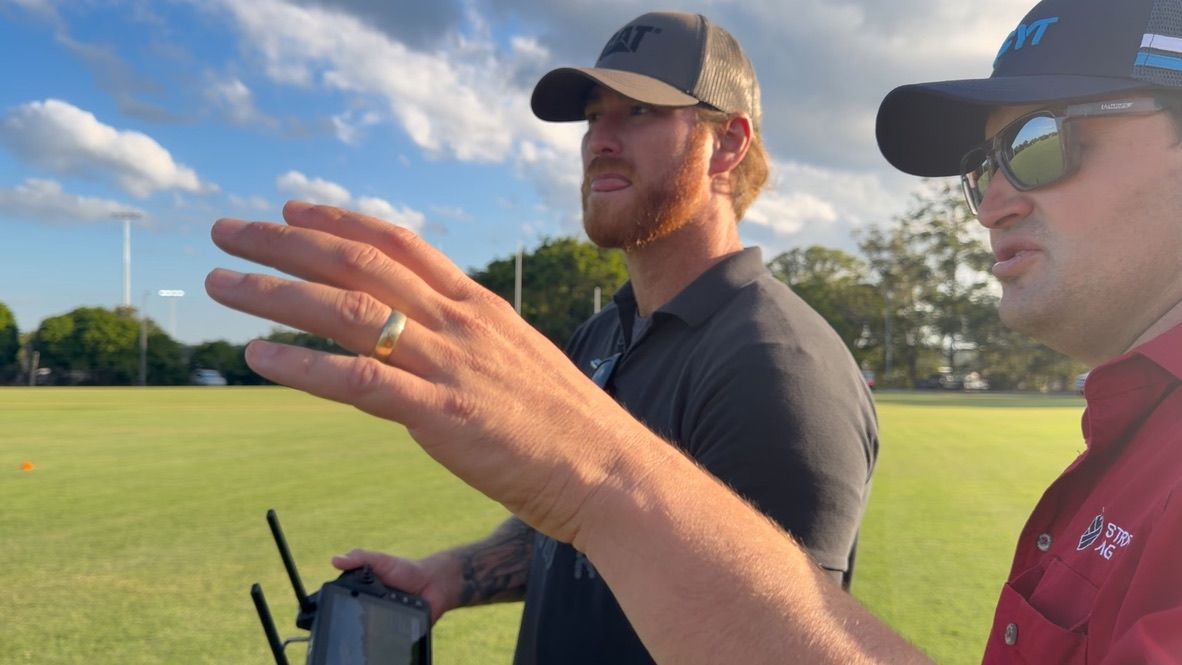
Practical training develops your confidence and control skills. You fly the relevant aircraft category under instructor supervision.
Training may cover:
- Pre-flight checks
- Safe take-off and landing
- Hovering and orientation
- Climbing and descending
- Square and circuit patterns
- Navigation
- Emergency procedures
- Loss-of-link responses
- Battery management
- Mission planning
- Post-flight checks
You should learn to manage the entire operation, not just the aircraft. That includes checking the site, people, weather, airspace and equipment.
Training aircraft are often supplied by the provider. This allows you to practise on professional equipment without buying a drone immediately.
6. Pass the assessments
Your training normally includes theory assessment and a practical flight assessment.
The practical assessment tests whether you can operate safely and consistently. It may include normal manoeuvres, navigation tasks and emergency responses.
If you do not pass an assessment on your first attempt, ask for a debrief. A clear debrief helps you target the exact skills that need improvement.
7. Receive your RePL and maintain competence
After you meet the required standards, your application is processed through the appropriate CASA pathway.
The RePL generally remains valid without regular renewal. However, you still need to maintain operational recency and competency.
Employers and operators may require:
- Recent flight records
- Refresher training
- Aircraft-specific training
- Emergency drills
- Safety management training
- Medical or fitness declarations
- Internal checks under the ReOC
A licence is the starting point. Professional competence is built through regular, safe practice.
Where can you complete a drone course?
Ace Aviation offers online theory with practical training locations across Australia. This creates a flexible pathway for students who cannot attend a full-time classroom course.
You can explore local options for:
- Drone course Sydney
- Drone course Melbourne
- Drone course Brisbane
- Drone pilot course Perth
- Drone training Hobart
Sydney students may train for work across construction, media, real estate and agriculture. Melbourne and Brisbane offer strong links to infrastructure, property and commercial services.
Meanwhile, Perth can suit students interested in mining, resources and remote operations. Hobart provides access to work across agriculture, environment, infrastructure and regional services.
Course dates, venues and practical arrangements can change. Check the Ace Aviation calendar before enrolling.
CASA RePL cost: how much does drone training cost?
The CASA RePL cost depends on the aircraft category and the package you choose. It also depends on whether you add AROC, ReOC support or advanced qualifications.
Ace Aviation’s published package pricing in August 2026 includes:
| Package | Published price | Suitable for |
|---|---|---|
| Starter | $1,299 | Entry-level and very light commercial operations |
| Silver | $1,799 | Commercial pilots seeking RePL and AROC |
| Gold | $3,699 | Pilots starting a compliant drone business |
| Platinum | $5,999 | Advanced, enterprise and heavy-lift pathways |
Prices and inclusions may change. Therefore, request a current personalised drone training quote.
The Silver package includes RePL training for relevant multi-rotor categories and an AROC certificate. Gold adds ReOC setup support and Chief Remote Pilot training.
Platinum adds advanced aircraft training and the Certificate III in Aviation pathway. This nationally recognised qualification is delivered in partnership with Reach Community College.
When comparing prices, look beyond the headline number. Check whether the package includes:
- CASA application fees
- Practical training days
- Assessment fees
- Aircraft hire
- AROC training
- Refresher access
- ReOC documentation support
- Business compliance support
- Career assistance
Payment plans may also be available. Ask the provider for a complete written quote before you commit.
Drone pilot salary Australia: what can you earn?
CASA does not set drone pilot salaries. Your income depends on experience, location, industry, technical skills and employment model.
Indicative Australian salary ranges in 2026 include:
| Career stage | Indicative annual salary |
|---|---|
| Entry-level commercial pilot | $60,000–$85,000 |
| Experienced general pilot | $75,000–$110,000 |
| Surveying or inspection specialist | $90,000–$140,000+ |
| Mining, utilities or advanced technical pilot | $110,000–$160,000+ |
| Chief Remote Pilot or program manager | $130,000–$200,000+ |
These are broad market estimates, not guaranteed outcomes. Contractors may charge day rates, but they must cover insurance, travel, equipment, software, tax and downtime.
Specialist pilots often earn more because they deliver valuable data, not only flight time. For example, an inspection client may need a report, defect assessment and asset history.
To improve your income potential, combine your RePL with one or more of these skills:
- Photogrammetry
- GIS and mapping
- LiDAR
- Thermal imaging
- Construction reporting
- Asset inspection
- Agriculture and spraying
- Data processing
- Project management
- Aviation safety systems
You can also review current opportunities through the DroneWork career pathway.
Career pathways for qualified drone pilots
Surveying and mapping
Surveying pilots capture data for construction, earthworks, mining and land development. GIS, photogrammetry and data-processing skills can increase your value.
Infrastructure inspection
Pilots inspect roofs, towers, bridges, solar farms, power assets and industrial sites. Safety planning and accurate reporting are essential.
Agriculture
Agricultural pilots may support crop monitoring, spreading or spraying. Heavy-lift work requires suitable aircraft training, risk controls and additional compliance.
Media and content
Media pilots work in film, television, advertising, tourism and real estate. Strong camera skills and creative judgement matter as much as flight control.
Government and emergency services
Public agencies use drones for emergency response, environmental monitoring, incident mapping and infrastructure planning. These roles may require additional screening and operational approvals.
Business ownership
Business owners must manage clients, pricing, contracts, insurance and compliance. A RePL alone does not create a complete commercial operation.
Ace Aviation’s Why Ace pathway connects training with compliance, operations and career development. Its Altitude+ program also provides ongoing student benefits, including support and professional development resources.

Examples of real career pathways
Example 1: Starting in construction
A new pilot completes a sub-25 kg RePL and AROC. They begin as a junior operator for a construction company.
At first, they assist with site photos and progress records. Later, they learn mapping software and create repeatable survey outputs.
After two or three years, they may manage drone missions across several project sites.
Example 2: Moving into agriculture
A regional pilot begins with a standard RePL. They then complete heavy-lift and agricultural drone training.
They learn application planning, battery logistics, weather checks and field safety. Over time, they support growers or establish a specialist agricultural service.
Example 3: Building a drone business
An entrepreneur completes RePL, AROC, ReOC support and Chief Remote Pilot training. They focus on roof inspections and solar asset reporting.
They start with smaller projects and build a portfolio. Next, they invest in better sensors and reporting software.
This pathway requires business discipline. The pilot must price jobs correctly and maintain reliable compliance records.
Common mistakes new drone pilots make
Choosing the cheapest course only
Low price may mean fewer practical hours or limited support. Compare course outcomes, equipment, assessment support and post-course assistance.
Assuming a RePL is a business licence
A RePL belongs to you as a pilot. It does not automatically authorise your business to conduct every type of operation.
Buying expensive equipment too early
Start by understanding your target market. A high-end drone cannot replace a good business plan or sound operational procedures.
Ignoring specialist skills
Flying is only one part of many commercial jobs. Learn how to collect, process and present useful information.
Failing to maintain recency
Skills decline when you stop flying. Keep records and complete refresher training when required by your employer or operator.
Treating airspace checks as optional
Every mission needs a proper location and airspace check. Urban, airport-adjacent and controlled-airspace operations need extra care.
Making unrealistic income forecasts
A drone business may take time to build. Account for equipment costs, insurance, travel, marketing and non-billable work.
Skipping a written quote
Before enrolling, confirm the complete course cost and inclusions. The Ace reviews page can also help you assess student experiences.
CASA considerations for professional drone pilots
CASA rules apply to recreational and commercial drone operations. You remain responsible for safe and lawful flying, even when a client asks for a particular shot or deadline.
Before each operation, consider:
- Aircraft weight and category
- Registration requirements
- Operator accreditation
- RePL category
- ReOC permissions
- Airspace restrictions
- Distance from people
- Visual line of sight
- Night operation requirements
- Weather and wind
- Privacy and property concerns
- Battery transport and storage
- Emergency procedures
- Insurance requirements
- Maintenance and defect reporting
More advanced operations may require additional approvals, procedures or endorsements. This can include BVLOS, controlled-airspace work, night operations or flights near people.
The safest approach is to plan the operation first. Then select the licence, aircraft and approval pathway that supports it.
Regulatory requirements can feel complex. However, proper education turns those hurdles into a practical operating system.
Why train with Ace Aviation?
Ace Aviation is built around more than a single certificate. Its training ecosystem connects licensing, compliance, operations and employment.
Key differences include:
- CASA.ReOC.1421 approval
- More than 4,000 students trained
- Training access across Australia
- Global footprint in Singapore, Dubai, Korea and Malaysia
- RePL, AROC and ReOC pathways
- Certificate III in Aviation partnership
- Altitude+ student benefits program
- Access to the DroneWork job board
- Industry relationships with major organisations
- Practical training using professional equipment
- Ongoing support after training
This career-focused model helps students move from learning to real work. It also supports companies that need trained and compliant drone teams.
Frequently asked questions
1. Do I need a licence to fly a drone commercially in Australia?
For most professional drone work, you need a CASA Remote Pilot Licence. Some limited, lower-risk operations may use RPA Operator Accreditation instead. The correct pathway depends on the aircraft and operation.
2. Is a RePL the same as a drone licence?
Yes. RePL means Remote Pilot Licence. “Drone licence”, “UAV licence” and “commercial drone licence” are common informal terms for this qualification.
3. How long does it take to become a drone pilot?
Many students complete online theory first, followed by about five days of practical training and assessment. Your total time depends on study pace, course format and assessment readiness.
4. Do I need previous flying experience?
No. Most entry-level RePL courses are designed for beginners. However, basic computer skills, safe judgement and willingness to practise will help.
5. How much does a RePL cost in Australia?
The cost varies by aircraft category and inclusions. Ace Aviation’s published 2026 packages range from $1,299 to $5,999. Request a current quote because prices and course inclusions can change.
6. Does the RePL expire?
The RePL generally does not expire. However, you must maintain recency and competency before conducting operations. Employers and ReOC holders may set additional currency requirements.
7. Do I need a ReOC to work as a drone pilot?
A ReOC is usually held by the operator or business. If you work for a company, you may operate under its ReOC. If you start your own business, you may need your own operator approval.
8. What is an AROC?
An AROC is an Aeronautical Radio Operator Certificate. It provides training in aviation radio procedures. It may support pilots who work in more complex aviation environments.
9. What drone category should beginners choose?
Many beginners choose a multi-rotor RePL pathway under 7 kg or under 25 kg. The best option depends on your target industry. Heavier agricultural and industrial work needs additional planning.
10. Can I become a drone pilot without owning a drone?
Yes. Training providers often supply aircraft for practical lessons. It is usually better to understand your career market before buying expensive equipment.
11. Can I study for a RePL online?
Many providers offer online theory study. Practical training and assessment generally require face-to-face attendance. Ace Aviation combines online learning with practical training locations.
12. Where can I complete a drone course in Australia?
Ace Aviation offers training pathways in cities including Sydney, Melbourne, Brisbane, Perth and Hobart. Theory may be completed online, while practical venues depend on the course schedule.
13. What is the highest-paying drone career?
Specialist roles in mining, surveying, LiDAR, infrastructure, utilities and advanced inspection can offer strong salaries. However, income depends on technical ability, location and experience.
14. Can drone pilots work for mining companies?
Yes. Mining companies use drones for surveying, stockpile measurement, inspection and site monitoring. These roles may require FIFO availability, safety training and specialist data skills.
15. Can I start a drone business after getting my RePL?
You can begin planning a business, but a RePL alone may not cover every commercial operation. You may also need a ReOC, insurance, procedures, equipment and client-specific risk controls.
16. What is BVLOS drone training?
BVLOS means Beyond Visual Line of Sight. It involves operations where the pilot cannot continuously see the aircraft. BVLOS work requires additional training, procedures and approvals.
17. How can I find work after completing training?
Build a portfolio, contact local operators and develop an industry specialty. Ace Aviation students can also access DroneWork, a platform connecting qualified pilots with commercial tasks and employers.
18. Is drone piloting a good career in 2026?
It can be a strong career for people who combine aviation knowledge with useful technical skills. Demand is growing across inspection, surveying, agriculture, infrastructure and government. Success still requires effort, compliance and business awareness.
Summary: start your drone career with the right pathway
The process for how to become a drone pilot Australia-wide is clear:
- Choose your target industry.
- Apply for an ARN.
- Select a CASA-approved RePL course.
- Complete theory and practical training.
- Pass the required assessments.
- Build experience under a ReOC.
- Add AROC, specialist training or Certificate III qualifications.
- Develop technical skills and pursue paid work.
The right training can help you overcome regulatory hurdles before they become expensive problems. It can also give you a clearer path into employment, contracting or business ownership.
Ace Aviation combines CASA.ReOC.1421 approval, more than 4,000 graduates, global training access, Altitude+ benefits and DroneWork career support.
Ready to start? Book your training at aaa.edu.au or call 1300 336 366.
{“@graph”:[{“@id”:”https://aaa.edu.au/blog/how-to-become-a-drone-pilot-australia-2026#article”,”@type”:”Article”,”image”:”https://cdn.marblism.com/UjAn-Mkw4uU.jpeg”,”author”:{“url”:”https://aaa.edu.au/”,”name”:”Ace Aviation Aerospace Academy”,”@type”:”Organization”},”headline”:”How to Become a Drone Pilot in Australia 2026: Career Pathways, Licensing & Salary Guide”,”keywords”:[“how to become a drone pilot australia”,”drone licence australia”,”commercial drone licence australia”,”drone course Sydney”,”drone course Melbourne”,”drone course Brisbane”,”drone pilot course Perth”,”drone training Hobart”,”CASA RePL cost”],”publisher”:{“url”:”https://aaa.edu.au/”,”logo”:{“url”:”https://aaa.edu.au/assets/ace-logo-transparent.png”,”@type”:”ImageObject”},”name”:”Ace Aviation Aerospace Academy”,”@type”:”Organization”},”description”:”Learn how to become a drone pilot Australia-wide in 2026, including RePL pathways, CASA requirements, costs, careers and salary expectations.”,”dateModified”:”2026-08-13″,”datePublished”:”2026-08-13″,”mainEntityOfPage”:{“@id”:”https://aaa.edu.au/blog/how-to-become-a-drone-pilot-australia-2026″,”@type”:”WebPage”}},{“@id”:”https://aaa.edu.au/#organization”,”url”:”https://aaa.edu.au/”,”logo”:{“url”:”https://aaa.edu.au/assets/ace-logo-transparent.png”,”@type”:”ImageObject”},”name”:”Ace Aviation Aerospace Academy”,”@type”:”Organization”,”telephone”:”1300 336 366″,”areaServed”:[“Australia”,”Singapore”,”Dubai”,”Korea”,”Malaysia”],”description”:”Ace Aviation Aerospace Academy provides professional drone pilot training, RePL, AROC, ReOC support and Certificate III in Aviation pathways.”},{“@id”:”https://aaa.edu.au/blog/how-to-become-a-drone-pilot-australia-2026#faq”,”@type”:”FAQPage”,”mainEntity”:[{“name”:”Do I need a licence to fly a drone commercially in Australia?”,”@type”:”Question”,”acceptedAnswer”:{“text”:”For most professional drone work, you need a CASA Remote Pilot Licence. Some limited, lower-risk operations may use RPA Operator Accreditation instead. The correct pathway depends on the aircraft and operation.”,”@type”:”Answer”}},{“name”:”Is a RePL the same as a drone licence?”,”@type”:”Question”,”acceptedAnswer”:{“text”:”Yes. RePL means Remote Pilot Licence. Drone licence, UAV licence and commercial drone licence are common informal terms for this qualification.”,”@type”:”Answer”}},{“name”:”How long does it take to become a drone pilot?”,”@type”:”Question”,”acceptedAnswer”:{“text”:”Many students complete online theory first, followed by about five days of practical training and assessment. Total time depends on study pace, course format and assessment readiness.”,”@type”:”Answer”}},{“name”:”Do I need previous flying experience?”,”@type”:”Question”,”acceptedAnswer”:{“text”:”No. Most entry-level RePL courses are designed for beginners. Basic computer skills, safe judgement and willingness to practise will help.”,”@type”:”Answer”}},{“name”:”How much does a RePL cost in Australia?”,”@type”:”Question”,”acceptedAnswer”:{“text”:”The cost varies by aircraft category and inclusions. Ace Aviation’s published 2026 packages range from $1,299 to $5,999. Prices and course inclusions can change.”,”@type”:”Answer”}},{“name”:”Does the RePL expire?”,”@type”:”Question”,”acceptedAnswer”:{“text”:”The RePL generally does not expire. However, pilots must maintain recency and competency before conducting operations. Employers and ReOC holders may set additional currency requirements.”,”@type”:”Answer”}},{“name”:”Do I need a ReOC to work as a drone pilot?”,”@type”:”Question”,”acceptedAnswer”:{“text”:”A ReOC is usually held by the operator or business. Employees may operate under their company’s ReOC. Pilots starting their own business may need their own operator approval.”,”@type”:”Answer”}},{“name”:”What is an AROC?”,”@type”:”Question”,”acceptedAnswer”:{“text”:”An AROC is an Aeronautical Radio Operator Certificate. It provides training in aviation radio procedures and may support pilots working in more complex aviation environments.”,”@type”:”Answer”}},{“name”:”What drone category should beginners choose?”,”@type”:”Question”,”acceptedAnswer”:{“text”:”Many beginners choose a multi-rotor RePL pathway under 7 kg or under 25 kg. The best option depends on the target industry. Heavier agricultural and industrial work needs additional planning.”,”@type”:”Answer”}},{“name”:”Can I become a drone pilot without owning a drone?”,”@type”:”Question”,”acceptedAnswer”:{“text”:”Yes. Training providers often supply aircraft for practical lessons. It is usually better to understand your career market before buying expensive equipment.”,”@type”:”Answer”}},{“name”:”Can I study for a RePL online?”,”@type”:”Question”,”acceptedAnswer”:{“text”:”Many providers offer online theory study. Practical training and assessment generally require face-to-face attendance. Ace Aviation combines online learning with practical training locations.”,”@type”:”Answer”}},{“name”:”Where can I complete a drone course in Australia?”,”@type”:”Question”,”acceptedAnswer”:{“text”:”Ace Aviation offers training pathways in cities including Sydney, Melbourne, Brisbane, Perth and Hobart. Theory may be completed online, while practical venues depend on the course schedule.”,”@type”:”Answer”}},{“name”:”What is the highest-paying drone career?”,”@type”:”Question”,”acceptedAnswer”:{“text”:”Specialist roles in mining, surveying, LiDAR, infrastructure, utilities and advanced inspection can offer strong salaries. Income depends on technical ability, location and experience.”,”@type”:”Answer”}},{“name”:”Can drone pilots work for mining companies?”,”@type”:”Question”,”acceptedAnswer”:{“text”:”Yes. Mining companies use drones for surveying, stockpile measurement, inspection and site monitoring. These roles may require FIFO availability, safety training and specialist data skills.”,”@type”:”Answer”}},{“name”:”Can I start a drone business after getting my RePL?”,”@type”:”Question”,”acceptedAnswer”:{“text”:”You can begin planning a business, but a RePL alone may not cover every commercial operation. You may also need a ReOC, insurance, procedures, equipment and client-specific risk controls.”,”@type”:”Answer”}},{“name”:”What is BVLOS drone training?”,”@type”:”Question”,”acceptedAnswer”:{“text”:”BVLOS means Beyond Visual Line of Sight. It involves operations where the pilot cannot continuously see the aircraft. BVLOS work requires additional training, procedures and approvals.”,”@type”:”Answer”}},{“name”:”How can I find work after completing training?”,”@type”:”Question”,”acceptedAnswer”:{“text”:”Build a portfolio, contact local operators and develop an industry specialty. Ace Aviation students can also access DroneWork, a platform connecting qualified pilots with commercial tasks and employers.”,”@type”:”Answer”}},{“name”:”Is drone piloting a good career in 2026?”,”@type”:”Question”,”acceptedAnswer”:{“text”:”Drone piloting can be a strong career for people who combine aviation knowledge with useful technical skills. Demand exists across inspection, surveying, agriculture, infrastructure and government. Success requires effort, compliance and business awareness.”,”@type”:”Answer”}}]}],”@context”:”https://schema.org”}