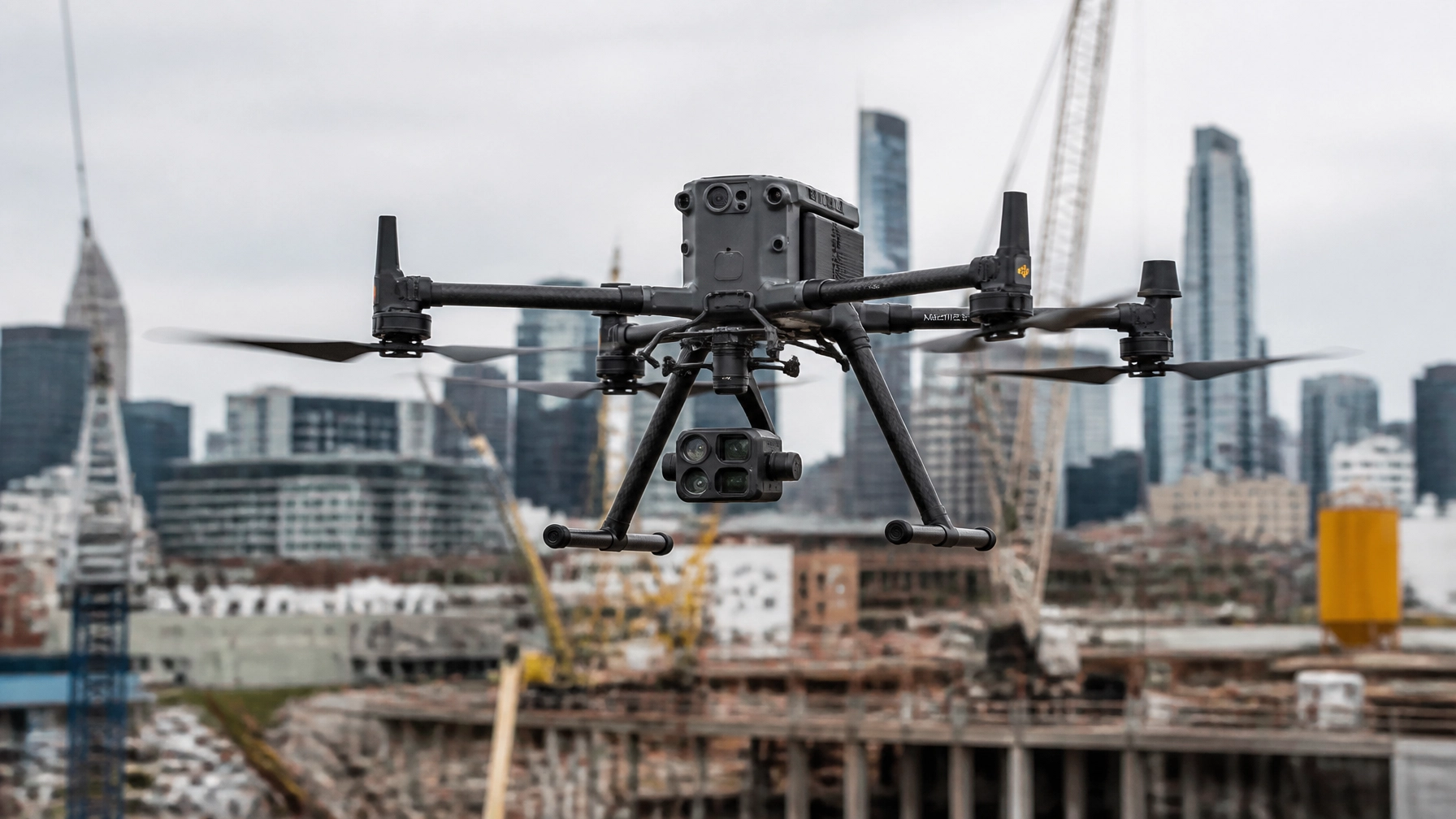
Do you want to fly beyond visual line of sight or operate heavy drones in populated areas? You need to understand AusSORA. AusSORA is CASA’s risk assessment framework for complex drone operations. It allows operators to safely transition from standard visual flights to high-risk commercial missions by proving safety through structured data.
Why AusSORA is the Future of Your Drone Licence Australia
The drone industry is moving fast. Simple photography and mapping are now standard. However, the real growth lies in complex operations. These include long-range inspections, heavy-lift delivery, and emergency response. To perform these, a standard drone licence australia (RePL) is just the beginning.
CASA recently introduced AusSORA to streamline these approvals. AusSORA stands for Australian Specific Operations Risk Assessment. It is based on the international JARUS SORA framework but tailored for our local environment. Whether you are in Brisbane, Sydney, Melbourne, or Perth, this framework is your roadmap to advanced flight approvals.
At Ace Aviation, we have trained over 4,000 students. We see the shift toward "Specific Category" operations every day. Understanding this framework ensures you stay ahead of the competition. It transforms a simple pilot into a high-level aviation professional capable of handling multi-million dollar contracts.
Detailed Explanation: What is AusSORA?
AusSORA is a methodology. It doesn't just tell you "yes" or "no." Instead, it asks you to define your risk. It looks at two main factors: what is on the ground and what is in the air. By identifying these risks, you can apply mitigations to bring the overall risk level down to an acceptable standard.
CASA uses this framework to assess applications for:
- BVLOS (Beyond Visual Line of Sight): Flying where the pilot cannot see the drone.
- One-to-Many: One pilot controlling multiple drones.
- Operations over People: Flying close to or over crowds.
- Large RPA: Operating drones weighing more than 150kg.
The Role of AC 101-06
CASA published Advisory Circular (AC) 101-06 to explain these requirements. This document is essential reading. It details how to calculate your Specific Assurance and Integrity Level (SAIL). Your SAIL determines how much evidence you must provide to CASA. A higher SAIL means more rigorous testing and documentation.

Key Facts Table: The AusSORA Framework
| Component | Definition | Why It Matters |
|---|---|---|
| CONOPS | Concept of Operations | The "Who, What, Where, and How" of your mission. |
| iGRC | Intrinsic Ground Risk Class | The raw risk to people on the ground without mitigations. |
| ARC | Air Risk Class | The risk of colliding with other aircraft in that airspace. |
| SAIL | Specific Assurance & Integrity Level | The overall risk score (I to VI) that dictates safety goals. |
| OSO | Operational Safety Objectives | Specific requirements for training, tech, and maintenance. |
| TMP | Tactical Mitigation Performance | Procedures to avoid other aircraft during flight. |
The Step-by-Step Process to AusSORA Approval
Navigating the AusSORA process can seem daunting. However, if you follow these ten steps, you can secure approvals even for the most complex missions.
Step 1: Define Your CONOPS
You must describe your operation in detail. Where are you flying? What drone are you using? Who is the crew? This document is the foundation of your entire application.
Step 2: Determine Ground Risk (iGRC)
Check the population density of your flight area. A flight over a remote farm in Perth has a lower iGRC than a flight over a construction site in Sydney.
Step 3: Apply Ground Mitigations
Can you reduce the risk? Using a parachute system or restricting ground access can lower your GRC score. This is a crucial step to lower your final SAIL level.
Step 4: Determine Air Risk (ARC)
What kind of airspace are you in? If you are near a major airport in Melbourne, your air risk is high. In rural areas, it is usually low.
Step 5: Apply Air Mitigations (TMP)
How will you see and avoid other planes? You might use ADS-B In, observers, or electronic detect-and-avoid systems.
Step 6: Finalize the SAIL
Combine your ground and air risk scores. This gives you a SAIL level from I (lowest) to VI (highest). Most commercial BVLOS operations fall into SAIL II or III.
Step 7: Address Operational Safety Objectives (OSOs)
Based on your SAIL, CASA requires you to meet certain OSOs. These cover things like pilot training, drone reliability, and weather buffers. For SAIL III and above, you need high levels of "robustness" in your evidence.
Step 8: Analyze Adjacent Areas
What happens if the drone leaves the flight zone? You must prove that your "containment" is strong enough that the drone won't cause a disaster in the next town over.
Step 9: Comprehensive Safety Portfolio
Gather all your manuals, risk assessments, and technical logs. This is where your Remote Pilot Licence (RePL) and AROC qualifications provide the base for your professional standing.
Step 10: Submission to CASA
Submit your safety case through the CASA portal. Since Ace Aviation is a CASA-approved training provider (CASA.ReOC.1421), we often help corporate clients structure these applications to ensure success.

Examples of AusSORA in Action
Scenario A: Rural Infrastructure Inspection
An operator in Brisbane wants to inspect 50km of power lines using BVLOS.
- Ground Risk: Low (unpopulated).
- Air Risk: Low (Class G airspace).
- SAIL: Usually SAIL II.
- Requirements: Standard RePL, specific BVLOS training, and basic detect-and-avoid procedures.
Scenario B: Urban Delivery Testing
A company in Sydney wants to test drone delivery in a suburb.
- Ground Risk: High (populated).
- Air Risk: Medium (near controlled airspace).
- SAIL: Likely SAIL IV or V.
- Requirements: This requires "High" robustness. The drone must have certified parachutes, redundant links, and the pilots must have advanced Certificate III in Aviation qualifications.
Common Mistakes to Avoid
- Underestimating Population Density: CASA uses specific grid data. Don't guess. If you fly over a "populated" area without the right SAIL level, your application will be rejected.
- Weak Containment Plans: You must prove the drone cannot fly away. Simply saying "the software handles it" is not enough for high SAIL operations.
- Generic Manuals: Using a template for a complex SORA application rarely works. CASA wants to see that you understand the specific risks of your unique mission.
- Ignoring OSOs: Each OSO has a required "Robustness" level (Low, Medium, or High). Ensure your evidence matches the SAIL requirement.
CASA Considerations and Compliance
Compliance is not just about getting the permit. It is about maintaining it. Under your ReOC, you are responsible for ongoing safety. AusSORA approvals are often tied to specific conditions. If you change your drone or your flight area, you may need to re-assess your SORA.
CASA is very strict about BVLOS. They require pilots to hold an AROC to communicate with manned aircraft. At Ace Aviation, we integrate these requirements into our advanced training tracks. This ensures our graduates aren't just pilots; they are compliant aviation operators.

Extensive FAQ: Everything You Need to Know
1. Is AusSORA mandatory for all drone flights?
No. It is only required for complex operations in the "Specific" category, such as BVLOS or heavy drones near people.
2. Can I do a SORA with a sub-2kg drone?
Yes. If you want to fly a small drone BVLOS, you still need to follow the AusSORA process.
3. How much does a CASA AusSORA application cost?
CASA charges based on the time taken to assess. Complex applications can cost several thousand dollars in regulatory fees.
4. Do I need a RePL to apply for AusSORA?
Yes. A drone licence australia (RePL) is a prerequisite for the pilot flying under a SORA approval.
5. What is the difference between SORA and AusSORA?
AusSORA is the Australian version. It uses local population density data and air risk classifications specific to our region.
6. Can I use SORA-Mate for my application?
Yes. SORA-Mate is a helpful tool that helps structure your data for CASA submission.
7. How long does approval take?
Standard approvals take 2 to 4 months. More complex cases can take longer depending on the SAIL level.
8. Do I need a ReOC for AusSORA?
Yes. Most complex operations require the operator to hold a Remote Operator Certificate (ReOC).
9. What is SAIL?
Specific Assurance and Integrity Level. It is a score from I to VI that determines how safe your operation must be.
10. What is an OSO?
Operational Safety Objectives. These are specific safety goals you must meet, like "Pilot is competent" or "Drone is reliable."
11. Does Ace Aviation help with AusSORA?
Yes. We provide the advanced training (RePL, AROC, Cert III) and consulting needed to build a strong safety case.
12. Can I fly BVLOS in Sydney?
It is possible but very difficult. It requires a high SAIL level and significant air/ground mitigations.
13. What is M1, M2, and M3 mitigation?
These are categories of ground risk mitigation, such as reducing the number of people at risk or using technical systems like parachutes.
14. Is the Certificate III in Aviation helpful for AusSORA?
Absolutely. It provides the formal educational foundation that CASA looks for in high-risk safety cases.
15. Can I fly over a crowd with AusSORA?
It is highly regulated. You would typically need a SAIL V or VI and a drone with high-integrity safety systems.
16. What is "Robustness" in AusSORA?
Robustness describes the level of proof you provide. It ranges from "Low" (declaration) to "High" (third-party audit or testing).
17. Do I need an AROC for rural BVLOS?
Generally, yes. CASA usually requires radio monitoring to ensure you stay clear of manned aircraft.
18. What happens if I fly without AusSORA approval?
You risk heavy fines from CASA and the suspension of your drone licence australia.
19. Is AusSORA used in Perth?
Yes, it is used Australia-wide for any operation requiring a safety case under Part 101.
20. How do I start?
Start by getting your RePL and then define your Concept of Operations (CONOPS).
Summary: Elevate Your Aviation Career
Moving into complex drone operations is the best way to increase your earning potential. Whether you are conducting agricultural spraying in rural Perth or industrial inspections in Melbourne, AusSORA is the key. It provides a logical, safe path to some of the most exciting work in aviation.
At Ace Aviation, we are more than just a flight school. We are your partners in compliance. With our global footprint and Altitude+ program, we give you the tools to succeed. Don't let regulations hold you back. Use them to prove your professionalism.
Ready to take the next step? Get your drone licence australia with Ace Aviation today and start your journey toward complex operations.
{“@type”:”Article”,”image”:”https://cdn.marblism.com/_LqD0phLiH3.webp”,”author”:{“name”:”Ace Aviation Aerospace Academy”,”@type”:”Organization”},”faqPage”:{“@type”:”FAQPage”,”@context”:”https://schema.org”,”mainEntity”:[{“name”:”Is AusSORA mandatory for all drone flights?”,”@type”:”Question”,”acceptedAnswer”:{“text”:”No. It is only required for complex operations in the ‘Specific’ category, such as BVLOS or heavy drones near people.”,”@type”:”Answer”}},{“name”:”Do I need a RePL to apply for AusSORA?”,”@type”:”Question”,”acceptedAnswer”:{“text”:”Yes. A drone licence australia (RePL) is a prerequisite for the pilot flying under a SORA approval.”,”@type”:”Answer”}},{“name”:”What is SAIL in drone operations?”,”@type”:”Question”,”acceptedAnswer”:{“text”:”SAIL stands for Specific Assurance and Integrity Level. It is a score from I to VI that determines how safe your operation must be.”,”@type”:”Answer”}}]},”@context”:”https://schema.org”,”headline”:”The Ultimate Guide to AusSORA: Upgrading Your Drone Licence Australia for Complex Flights”,”publisher”:{“logo”:{“url”:”https://cdn.marblism.com/4Us45emMyQU.png”,”@type”:”ImageObject”},”name”:”Ace Aviation Aerospace Academy”,”@type”:”Organization”},”articleBody”:”Do you want to fly beyond visual line of sight or operate heavy drones in populated areas? You need to understand AusSORA. AusSORA is CASA’s risk assessment framework for complex drone operations…”,”description”:”Learn how to use AusSORA to level up your drone licence australia. Master BVLOS and complex missions in Sydney, Melbourne, Perth, and Brisbane with our guide.”,”mainEntityOfPage”:{“@id”:”https://aaa.edu.au/blog/aussora-explained-complex-drone-operations”,”@type”:”WebPage”}}