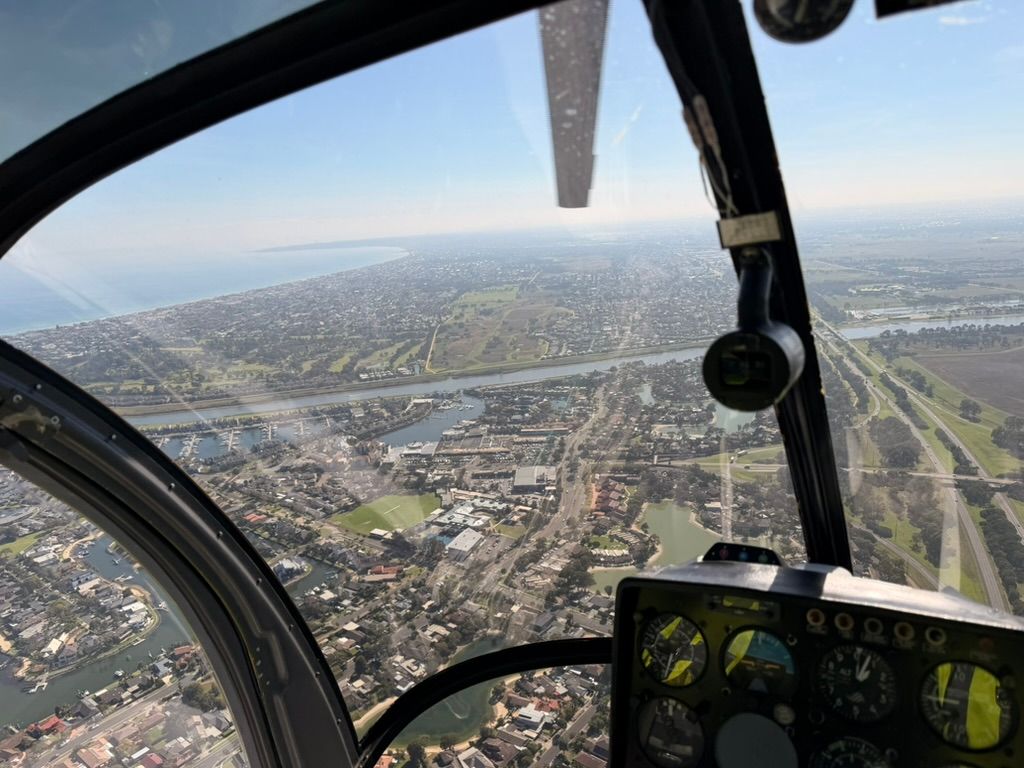
Offshore Meteorological Weather Interpretation Training (OMWIT) is a specialized program designed for drone pilots operating in marine environments. This training teaches you to decode complex maritime weather systems, sea states, and coastal wind patterns. Consequently, it ensures safety and compliance for high-stakes commercial drone operations across Brisbane and beyond.
Mastering Coastal Skies: Why Weather Training Matters
Operating a drone in Brisbane requires more than just basic flight skills. When you transition from inland parks to offshore platforms, the rules of nature change. Marine environments present unique challenges like high salt spray, sudden sea mists, and aggressive wind shear. Therefore, a standard Remote Pilot Licence (RePL) might not cover the depth needed for these zones.
At Ace Aviation, we recognized a gap in the industry. Many commercial pilots were entering the oil, gas, and renewable energy sectors without deep weather knowledge. To address this, we integrated Offshore Meteorological Weather Interpretation into our specialized curriculum. This ensures our graduates are prepared for the harshest conditions on the Australian coastline.
Whether you are looking for drone training Brisbane or seeking a commercial drone licence Australia, understanding the elements is non-negotiable. Specifically, offshore pilots must understand how the "Marine Boundary Layer" affects flight stability and signal transmission.
Detailed Explanation: The Science of Offshore Weather
Weather offshore is significantly different from land-based meteorology. On land, friction from buildings and trees slows down the wind. However, the ocean is a flat surface that allows wind to accelerate quickly. This results in higher average wind speeds and more frequent gusts.
The Marine Boundary Layer
The Marine Boundary Layer (MBL) is the part of the atmosphere directly influenced by the ocean. It is often characterized by high humidity and stable temperatures. For a drone pilot, this means your sensors might behave differently. For instance, obstacle avoidance sensors can be triggered by thick sea mist or heavy spray.
Sea State and Beaufort Scale
Unlike land operations, offshore work requires monitoring the sea state. High waves can create localized air turbulence near the surface. Our training teaches you to use the Beaufort Scale alongside traditional aviation forecasts. This dual-monitoring approach is vital for landing drones on moving vessels or offshore wind turbines.
Coastal Convergence
In cities like Brisbane, Sydney, and Perth, coastal convergence occurs when sea breezes meet land air. This meeting creates a "curtain" of rising air. If you are unaware of this phenomenon, your drone could experience unexpected altitude gains or losses. Consequently, our course focuses on identifying these invisible hazards before they become emergencies.
| Feature | Standard RePL Meteorology | Offshore Met Training |
|---|---|---|
| Wind Analysis | Basic TAF/METAR decoding | Analysis of sea state and gusts |
| Visibility | Standard cloud base rules | Focus on sea fret and salt haze |
| Hardware Care | Dust and heat management | Corrosion and moisture protection |
| Risk Assessment | General airspace safety | Vessel-specific landing protocols |
| CASA Alignment | Part 101 basic compliance | Advanced ReOC risk mitigation |
Step-by-Step Process: Integrating Weather Training into Your Career
Transitioning into offshore drone work requires a structured approach. You cannot simply fly over the ocean without the right credentials and knowledge. Here is how you can achieve this through Ace Aviation.
- Obtain Your RePL: Start with a drone course Brisbane or in your local city to get your basic Remote Pilot Licence.
- Complete AROC Training: Specialized radio training is essential for communicating with maritime vessels and coastal air traffic.
- Enroll in Specialised Modules: Join our Offshore Meteorological Weather Interpretation module. This is often delivered as part of our advanced industry-ready packages.
- Hands-on Simulation: Practice interpreting real-time Bureau of Meteorology (BOM) marine data in our simulated mission planning sessions.
- Certification and Job Board Access: Once certified, use our DroneWork platform to find high-paying offshore roles in the energy and environmental sectors.

Examples of Offshore Weather Challenges
To understand the value of this training, consider these real-world scenarios our pilots face.
Scenario 1: The Brisbane River Mouth Survey
A pilot is tasked with inspecting a jetty at the Port of Brisbane. The morning forecast looks clear. However, a sudden "sea fret" (coastal fog) rolls in from the bay. Without OMWIT training, the pilot might not recognize the pressure changes that precede this fog. With our training, they know to land the aircraft before visibility drops below the legal 3nm limit.
Scenario 2: Offshore Wind Farm Inspection in Melbourne
A pilot in Melbourne is flying near a wind turbine 10km offshore. The wind at the surface is 15 knots, but at 400 feet, it is 35 knots. This is called wind shear. Our training teaches pilots how to calculate this gradient using lapse rates. This knowledge prevents the drone from being swept away or draining its battery too quickly.
Common Mistakes in Marine Drone Operations
Many pilots make the same errors when they first start flying near the coast. Avoiding these can save your equipment and your reputation.
- Ignoring the Salt Factor: Salt crystals can accumulate on rotors and sensors in minutes. Always wipe down equipment after a coastal flight.
- Over-reliance on Apps: Consumer weather apps often use land-based stations. They rarely reflect the true conditions 5km out at sea.
- Underestimating Turbulence: Airflow over a ship's deck is highly turbulent. Without specialized landing training, crashes are common.
- Misjudging Distance: The lack of visual landmarks over water makes it hard to judge distance and height. Always rely on your telemetry data.
CASA Considerations and Compliance
CASA (Civil Aviation Safety Authority) requires commercial operators to manage risks effectively. If you operate under a Remote Operator's Certificate (ReOC), your operations manual must include weather limitations.
Ace Aviation (CASA.ReOC.1421) provides the gold standard for these safety systems. By taking our weather training, you demonstrate "proactive safety management." This is highly valued during CASA audits. It also helps lower your insurance premiums, as underwriters see you as a lower-risk pilot.

Frequently Asked Questions (FAQ)
1. What is the "casa repl cost" for this specialized training?
The cost varies based on whether you bundle it with your initial RePL. Generally, a standalone specialized module ranges from $400 to $800. We recommend checking our course pricing page for the latest deals.
2. Can I take this drone course in Brisbane or Sydney?
Yes! We offer training in Brisbane, Sydney, Melbourne, and Perth. We also have a global footprint in Singapore and Dubai.
3. Do I need this training to fly a drone as a hobbyist?
It is not legally required for hobbyists. However, if you live near the coast, it is highly recommended for the safety of your aircraft.
4. How long does the offshore weather course take?
The theoretical component takes approximately one full day of intensive study.
5. Is this course recognized by the Bureau of Meteorology?
We use official BOM data and standards, but the certification is an Ace Aviation industry credential designed for drone pilots.
6. Will this help me get a job on an oil rig?
Absolutely. Companies like Shell and BHP look for pilots who understand maritime safety and weather interpretation.
7. What happens if I fly in high salt spray?
Salt is highly corrosive. Without proper cleaning, it can ruin your motors and electronic speed controllers (ESCs) within days.
8. Does the Altitude+ program cover this training?
Yes, members of our Altitude+ program often get exclusive access to these advanced modules.
9. Can I do this training online?
We offer the theoretical components via a live webinar. However, we recommend a practical session to practice landing in coastal winds.
10. How does offshore weather affect battery life?
Cold marine air and high winds force the motors to work harder. This can reduce your flight time by up to 30%.
11. What is a "sea breeze front"?
It is a weather boundary where cold sea air pushes into warm land air. It can cause sudden turbulence and wind shifts.
12. Do I need an AROC for offshore work?
Yes. To communicate with ships and coastal towers, an Aeronautical Radio Operator Certificate is mandatory.
13. Is the training different for heavy-lift drones?
Yes. Heavy-lift drones have different aerodynamic profiles and are more affected by gusty offshore conditions.
14. What tools do I need for weather interpretation?
We teach you to use the NAIPS system, BOM Aviation Weather Services, and specialized marine apps like Windy.
15. Why choose Ace Aviation over competitors?
We have trained over 4,000 students and hold a CASA ReOC. Our instructors have real-world experience in offshore sectors, providing you with practical, not just theoretical, knowledge.
Summary: Elevate Your Career with Ace Aviation
Mastering the elements is the hallmark of a professional pilot. Our Offshore Meteorological Weather Interpretation Training provides you with the tools to fly safely where others cannot. By understanding the unique coastal conditions of Brisbane, Sydney, and beyond, you position yourself as a top-tier operator.
At Ace Aviation, we are committed to your success. From your first drone course Brisbane to your first offshore contract through DroneWork, we are with you every step of the way. Don't let the weather dictate your career: learn to navigate it with precision.
Ready to take the next step? Book your course today and join the elite ranks of certified offshore drone pilots.
{“@type”:”BlogPosting”,”image”:”https://cdn.marblism.com/wNm3wvEPB6l.jpeg”,”author”:{“name”:”Ace Aviation Aerospace Academy”,”@type”:”Organization”},”@context”:”https://schema.org”,”headline”:”Navigating the Elements: Introducing our Offshore Meteorological Weather Interpretation Training in Brisbane”,”publisher”:{“logo”:{“url”:”https://cdn.marblism.com/oSFGyPj2nOO.png”,”@type”:”ImageObject”},”name”:”Ace Aviation Aerospace Academy”,”@type”:”Organization”},”mainEntity”:{“@type”:”FAQPage”,”mainEntity”:[{“name”:”What is the casa repl cost for this specialized training?”,”@type”:”Question”,”acceptedAnswer”:{“text”:”The cost varies but generally ranges from $400 to $800 as a standalone module. Bundling with a RePL course often provides significant savings.”,”@type”:”Answer”}},{“name”:”Can I take this drone course in Brisbane or Sydney?”,”@type”:”Question”,”acceptedAnswer”:{“text”:”Yes, Ace Aviation offers training across Australia including Brisbane, Sydney, Melbourne, and Perth, as well as international locations.”,”@type”:”Answer”}},{“name”:”Why is offshore weather training important for drone pilots?”,”@type”:”Question”,”acceptedAnswer”:{“text”:”Offshore environments have unique challenges like high wind shear, salt spray, and rapid visibility changes that are not covered in standard training.”,”@type”:”Answer”}}]},”description”:”Discover our new Offshore Meteorological Weather Interpretation Training for drone pilots in Brisbane. Learn to fly safely in marine environments and boost your career.”,”datePublished”:”2026-07-19″,”mainEntityOfPage”:{“@id”:”https://aaa.edu.au/blog/offshore-meteorological-training”,”@type”:”WebPage”}}