In 2026, a Remote Pilot Licence (RePL) is the essential gatekeeper for high-paying drone careers. While basic flying is common, a professional drone licence in Australia allows you to earn between $75,000 and $200,000 per year. It unlocks complex, high-value operations that uncertified hobbyists simply cannot perform legally.
The State of the Aviation Industry in 2026
The drone industry has moved far beyond simple photography. Today, uncrewed aircraft are vital tools in mining, construction, and agriculture. As technology advances, the gap between "flying for fun" and "flying for a living" has widened significantly.
In cities like Sydney, Melbourne, Brisbane, and Perth, major infrastructure projects now require certified pilots. You might wonder if you can just use the "Excluded Category" rules. These rules allow small drones under 2kg to fly for work without a full licence. However, these pilots face strict limits. They cannot fly at night. They cannot fly near people. Most importantly, they rarely see the six-figure salaries of their licensed peers.
A commercial drone licence in Australia is no longer just a legal hurdle. It is a professional badge of honor. It tells employers you understand air law, meteorology, and risk management. In a world where safety is the top priority, being "CASA-certified" is your most valuable asset.
What Are Drone Pilot Salaries in 2026?
Salaries for drone pilots in Australia have reached new heights. Data from 2026 shows a clear trend: specialization leads to higher pay. An entry-level pilot might start with a decent wage. However, those who master specific sensors like LiDAR or thermal imaging can command premium rates.
Here is a breakdown of what you can expect to earn across different sectors and experience levels.
National Salary Averages
Across the country, the average base pay for a full-time drone pilot sits around $85,000. If you are just starting after your drone licence in Australia course, you may earn between $65,000 and $85,000.
Once you reach three to five years of experience, your value jumps. Mid-career pilots often see packages between $90,000 and $125,000. If you move into management or specialized heavy-industry roles, you can exceed $150,000. Some Chief Pilots in the mining sector even report earnings over $200,000 including bonuses and FIFO allowances.
City-Specific Trends: Sydney, Melbourne, Brisbane, and Perth
Location matters just as much as your skill set. Each major Australian city has its own economic drivers for drone work.
- Sydney: As the hub for major infrastructure and media, Sydney offers high demand. Construction progress reporting and high-end cinematography are the big winners here. Average salaries hover around $95,000.
- Melbourne: Known for tech and logistics, Melbourne is seeing a surge in drone delivery testing and urban planning surveys. Expect salaries to range from $80,000 to $110,000.
- Perth: The gateway to the mining sector. Perth-based pilots often work on FIFO (Fly-In Fly-Out) contracts. Because of the specialized nature of mining inspections, Perth often has the highest average salaries, frequently topping $130,000.
- Brisbane: With a mix of resources and a booming construction sector ahead of the Olympics, Brisbane is a hotspot. Salaries are competitive, usually sitting between $85,000 and $105,000.
Key Facts: 2026 Drone Pilot Career Outlook
| Factor | Details |
|---|---|
| Entry-Level Salary | $65,000 – $85,000 |
| Specialist Salary | $120,000 – $160,000+ |
| Growth Industries | Mining, Renewables, Construction, Agriculture |
| Top Cities | Perth (Mining), Sydney (Infrastructure) |
| Required Qualification | CASA Remote Pilot Licence (RePL) |
| Advanced Certificate | Aeronautical Radio Operator Certificate (AROC) |

Why a Professional Drone Licence in Australia Outshines the "Excluded Category"
Many beginners try to save money by operating in the "Excluded Category." This allows you to fly drones under 2kg for commercial purposes after a simple online notification. While this is a cheap entry point, it often leads to a "salary ceiling."
The Limitations of Being Unlicensed
If you do not have a full commercial drone licence in Australia, you are restricted. You cannot operate drones over 2kg for hire or reward. You cannot apply for night flying approvals. You cannot fly in controlled airspace near major airports in Melbourne or Sydney without extra permissions that are hard to get without a ReOC.
Most corporate clients, especially in mining and government, will not hire "Excluded Category" pilots. They view it as a liability. They want the assurance that comes with a CASA-approved training provider like Ace Aviation.
The Benefits of a RePL and ReOC
When you hold a RePL, you can fly under a Remote Operator’s Certificate (ReOC). This allows you to:
- Operate Heavy Aircraft: Use drones up to 25kg or more for industrial spraying or heavy lifting.
- Fly in Restricted Areas: Gain access to airspace that is off-limits to hobbyists.
- Night Operations: Capture stunning night-time thermal data or cinematography.
- BVLOS Skills: Fly "Beyond Visual Line of Sight," which is the future of the industry.
By investing in your education, you position yourself as a professional. This shift in perception is what leads to the $100k+ salary bracket.
How to Become a Certified Drone Pilot: A Step-by-Step Process
Starting your journey toward a commercial drone licence in Australia is straightforward when you follow the right path.
- Choose a CASA-Approved Training Provider: Look for a provider with a long history and high ratings. Ace Aviation has trained over 4,000 students and holds CASA.ReOC.1421.
- Enrol in a RePL Course: You can find our upcoming drone courses here. Most courses take about five days and cover both theory and practical flying.
- Obtain your AROC: The Aeronautical Radio Operator Certificate is usually included. It allows you to communicate with air traffic control.
- Pass Your Exams: You will take a theory test and a practical flight assessment.
- Apply for Jobs: Use specialized platforms like the DroneWork job board to find your first role.
- Join a Program: Consider joining our Altitude+ program for ongoing mentorship and industry discounts.
Real-World Examples of High-Paying Drone Roles
To understand the salary potential, let's look at three common career paths in 2026.
The Mining Inspector (Perth/Remote)
In Western Australia, mining companies use drones for "volumetric surveys." They measure how much ore is in a pile. This requires high-end drones like the DJI Matrice. A pilot with a RePL and LiDAR experience can earn $145,000 per year. They often work two weeks on and one week off.
The Construction Site Manager (Sydney/Brisbane)
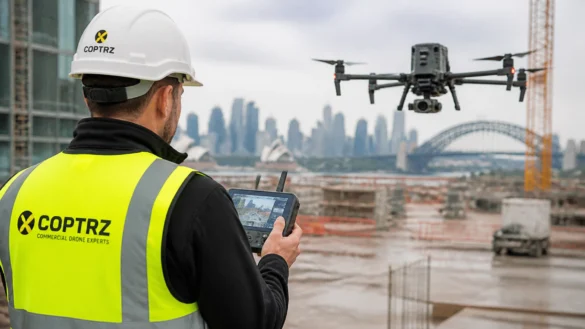
Major builders use drones to track progress. They create 3D maps of skyscrapers and bridges. A pilot who can process this data into a "Digital Twin" is invaluable. These roles typically pay $110,000 plus a vehicle allowance.
The Agricultural Specialist (Regional/Brisbane)
Farmers are now using massive spraying drones to protect crops. This work is seasonal but highly lucrative. A pilot operating a 25kg+ spraying drone can earn $1,200 per day during peak seasons.

Common Mistakes New Pilots Make
Even with a drone licence in Australia, some pilots struggle to find high-paying work. Avoid these common traps:
- Focusing Only on Flying: Flying is only 20% of the job. The other 80% is data processing, safety planning, and client communication.
- Ignoring Radio Skills: If you cannot talk to pilots in nearby helicopters, you are a safety risk. Always get your AROC.
- Buying the Wrong Gear: Don't buy a $20,000 drone before you have your first contract. Learn on school equipment first.
- Undercharging for Services: If you charge hobbyist rates, you will be treated like a hobbyist. Know your worth.
CASA Considerations and Compliance
The Civil Aviation Safety Authority (CASA) sets the rules for a reason. In 2026, enforcement is stricter than ever. If you fly commercially without the proper commercial drone licence in Australia, you face massive fines. More importantly, you could lose your insurance coverage.
When you train with Ace Aviation, we ensure you meet every regulatory hurdle. We don't just teach you how to move the sticks. We teach you how to navigate the complex world of Australian aviation law. This knowledge protects your career and your bank account.
You can learn more about official regulations at the CASA website.
Frequently Asked Questions (FAQ)
1. Is a RePL worth it if I only fly small drones?
Yes. Many high-paying corporate jobs require a RePL regardless of the drone's weight. It shows professional competence and safety knowledge.
2. How much does a drone licence in Australia cost in 2026?
Costs vary, but expect to invest between $2,000 and $3,500 for a quality course. This often includes your AROC and practical training.
3. Can I get a job immediately after finishing my RePL?
Many students do. However, building a portfolio and networking through our DroneWork board will speed up the process.
4. Which city has the best drone pilot jobs?
Perth leads for mining, while Sydney is best for infrastructure and media.
5. Do I need a pilot's licence to fly a drone for work?
You need a Remote Pilot Licence (RePL), not a traditional manned aircraft licence.
6. What is the average salary for a drone pilot in Brisbane?
The average is between $85,000 and $105,000 depending on the sector.
7. Does Ace Aviation offer training in Singapore or Dubai?
Yes, we have a global footprint with training available in Singapore, Dubai, Korea, and Malaysia.
8. What is the Altitude+ program?
It is our exclusive student benefit program providing gear discounts, job alerts, and ongoing support.
9. Can I fly at night with a RePL?
Yes, but you must operate under a ReOC that has a night-flying approval from CASA.
10. How long does a RePL last?
A RePL does not expire. It is a lifelong qualification.
11. Is drone pilot training harder than it looks?
The flying is intuitive, but the theory (air law and meteorology) requires dedicated study.
12. Can I use my drone licence in Australia to work overseas?
Many countries recognize Australian CASA qualifications, though you may need local bridge training.
13. What is the best industry for drone pilots in Melbourne?
Infrastructure, urban planning, and emergency services are top sectors in Victoria.
14. Do I need insurance if I have a RePL?
Yes, commercial insurance is vital. Most insurers require you to have a RePL to offer professional coverage.
15. Can I fly a drone over 25kg?
Yes, but you need a specific endorsement on your RePL for the weight category.
16. What is the difference between RePL and ReOC?
The RePL is for the individual pilot. The ReOC is for the business or organization.
17. How do I upgrade my skills after getting my licence?
You can take specialized courses in LiDAR, thermal imaging, or BVLOS operations.
18. Is there a demand for drone pilots in the renewable energy sector?
Absolutely. Inspecting wind turbines and solar farms is a massive growth area for 2026.
Summary: Your Future in the Skies
The truth about drone pilot salaries in 2026 is clear. The "easy" hobbyist days are over. Professionalism is the new standard. By obtaining your drone licence in Australia, you open doors to specialized industries. You can earn six figures in Perth, Sydney, Brisbane, or Melbourne if you have the right training.
Don't let the "Excluded Category" trap limit your potential. Invest in yourself. Choose a CASA-approved provider. Build a career that reaches new heights.
Ready to start? Book your RePL course today and join the ranks of Australia's elite drone operators.
{“@type”:”Article”,”image”:”https://cdn.marblism.com/Jm7NIqUBUe5.webp”,”author”:{“name”:”Ace Aviation Aerospace Academy”,”@type”:”Organization”},”@context”:”https://schema.org”,”headline”:”Does a RePL Really Matter in 2026? The Truth About Drone Pilot Salaries”,”publisher”:{“logo”:{“url”:”https://cdn.marblism.com/oSFGyPj2nOO.png”,”@type”:”ImageObject”},”name”:”Ace Aviation Aerospace Academy”,”@type”:”Organization”},”mainEntity”:{“@type”:”FAQPage”,”mainEntity”:[{“name”:”Is a RePL worth it if I only fly small drones?”,”@type”:”Question”,”acceptedAnswer”:{“text”:”Yes. Many high-paying corporate jobs require a RePL regardless of the drone’s weight. It shows professional competence and safety knowledge.”,”@type”:”Answer”}},{“name”:”How much does a drone licence in Australia cost in 2026?”,”@type”:”Question”,”acceptedAnswer”:{“text”:”Costs vary, but expect to invest between $2,000 and $3,500 for a quality course. This often includes your AROC and practical training.”,”@type”:”Answer”}},{“name”:”Which city has the best drone pilot jobs?”,”@type”:”Question”,”acceptedAnswer”:{“text”:”Perth leads for mining, while Sydney is best for infrastructure and media.”,”@type”:”Answer”}}]},”description”:”Discover drone pilot salaries in Australia for 2026. Learn how a commercial drone licence (RePL) impacts earnings in Sydney, Melbourne, Brisbane, and Perth.”,”datePublished”:”2026-07-19″}