Meta description: Discover how a drone licence Australia pathway can lead to high-paying agricultural pilot jobs. Learn CASA rules and start training today.
Short Direct Answer
Agricultural drone pilots in Australia need training that matches the operation. Spraying is a complex operation. Commercial work, flights over land you do not own, and larger aircraft generally require a RePL and ReOC. Experienced agricultural contractors may earn about $120–$250 per hour, depending on the work and contract.
Why Agricultural Drones Are Growing So Quickly
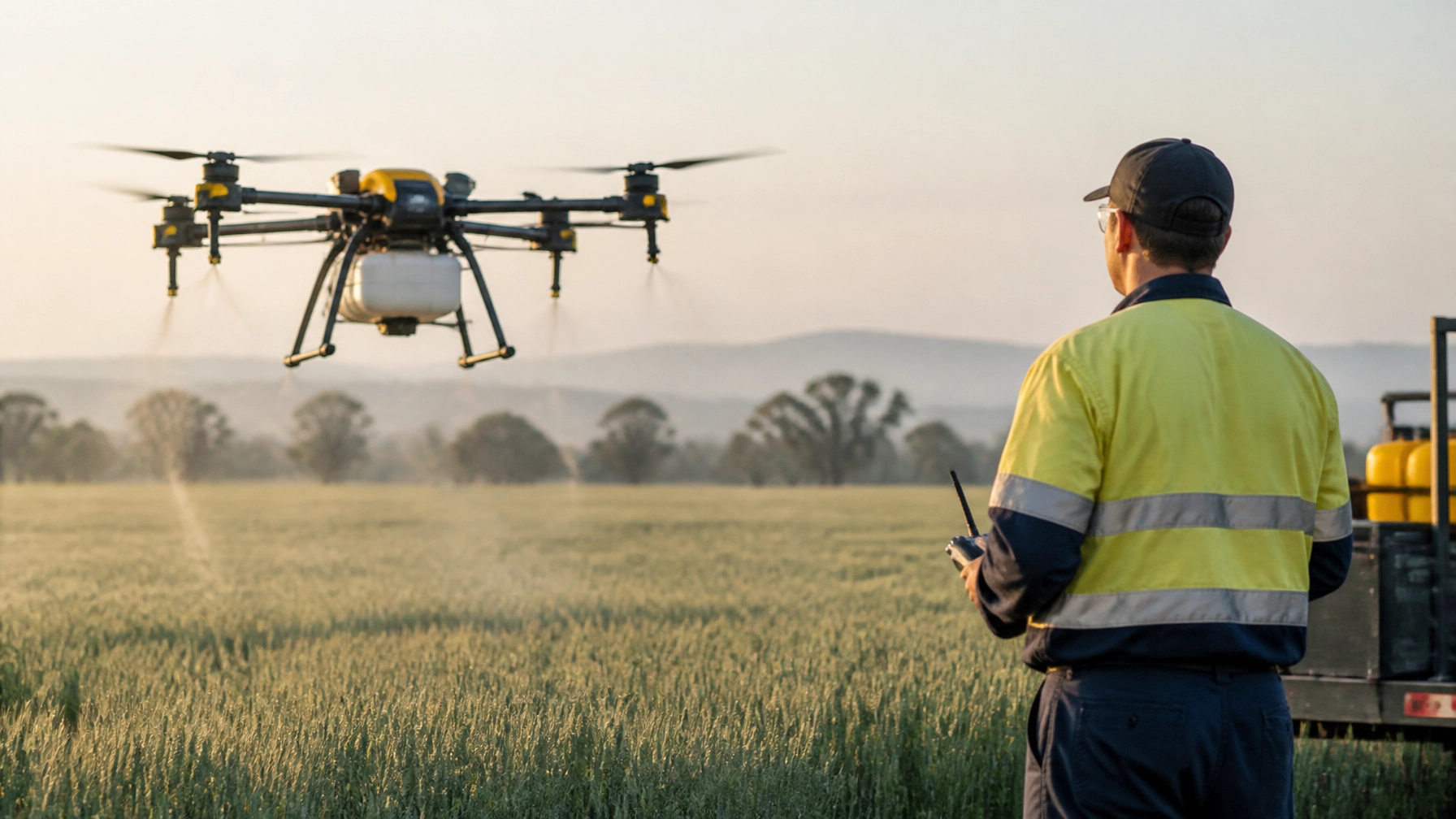
Australian agriculture is adopting drones at a remarkable pace. Farmers now use remotely piloted aircraft systems, or RPAS, to spray crops, spread seed, map paddocks and monitor livestock.
The change is practical. Farms face rising labour costs, difficult terrain and seasonal worker shortages. Drones can also reach areas that are unsafe or inefficient for tractors and crewed aircraft.
Furthermore, drones collect detailed data before a farmer spends money on water, fertiliser or chemicals. This helps producers target inputs more accurately. As a result, farmers can reduce waste while improving crop decisions.
Market forecasts indicate that Australia’s agriculture drone market could approach USD 578 million by 2034. The sector is still developing, but its growth is already creating new work for trained operators.
However, owning a drone does not make someone a professional pilot. Agricultural work combines aviation, chemical safety, farm operations and business risk. Therefore, a pilot needs more than basic flight skills.
What Agricultural Drones Do on Australian Farms
Modern agricultural platforms can carry large liquid or granular payloads. Depending on the aircraft, they may support:
- Crop spraying
- Fertiliser and seed spreading
- Weed treatment
- Viticulture spraying
- Cotton crop monitoring
- Sugarcane scouting
- Livestock mustering
- Thermal animal tracking
- NDVI and multispectral mapping
- Irrigation checks
- Damage assessment after storms
- Precision input management
NDVI means Normalised Difference Vegetation Index. It uses reflected light to show differences in plant health. A pilot or agronomist can use this data to find crop stress before it becomes obvious from the ground.
Similarly, thermal cameras can identify heat signatures from animals, machinery or water leaks. This makes them useful for livestock checks and infrastructure inspections.
The strongest commercial opportunities usually come from combining flying with useful farm data. A pilot who only moves a drone may compete on price. A pilot who produces accurate maps and clear recommendations can offer a higher-value service.
What Drone Licence Australia Rules Apply to Farm Operations?
The correct licence depends on several factors. These include who owns the land, who pays for the work, the drone’s weight, the payload and whether the aircraft remains within visual line of sight.
The following table provides a practical starting point. It does not replace a formal CASA assessment or legal advice.
Key Facts Table: Agricultural Drone Licence Requirements
| Agricultural scenario | Likely requirement | Important conditions |
|---|---|---|
| Recreational flying on private land | Recreational rules and basic safety requirements | The operation must remain within applicable Part 101 limits. |
| Operating a 2–25 kg drone on your own private land for limited farm work | CASA operator accreditation may be enough in a narrow pathway | The operator must meet the conditions of the excluded or basic operation rules. No paid third-party service should be provided. |
| Spraying your own private land with an RPA under 25 kg | Free online operator accreditation may be enough in a limited case | Spraying remains a complex operation. Payload, chemical, safety and state requirements still apply. Confirm the exact operation with CASA. |
| Spraying your own land with an RPA over 25 kg | RePL required | The aircraft class and operation may also require additional approvals. |
| Commercial agricultural spraying | RePL and ReOC generally required | Spray work needs suitable operational procedures and authorisation. |
| Spraying land owned by another person | RePL and ReOC generally required | A paid contractor must operate under an approved business framework. |
| Mapping or crop monitoring for clients | RePL and ReOC generally required in most commercial cases | The operator needs appropriate procedures, insurance and client risk controls. |
| BVLOS agricultural mapping | Specific CASA approval required | ReOC holders may use a suitable BVLOS pathway when they meet its conditions. |
| EVLOS or extended visual operations | Specific approval may be required | The operation must follow the approved safety case and conditions. |
| Swarm or coordinated multi-drone flights | Specific CASA authorisation likely required | Multiple aircraft increase separation, control and contingency risks. |
| Handling agricultural chemicals | State or territory requirements may apply | For example, check SafeWork NSW rules and relevant chemical licensing obligations. |
CASA treats spraying as a complex operation. This is important because the word “commercial” does not describe every risk. Spraying introduces chemical exposure, drift, environmental harm and ground-person risks.
As a result, a pilot should never assume that a basic accreditation covers every farm job. The operation must be assessed as a complete system.
How Agricultural Drone Pilot Pay Works
Agricultural drone flying can command strong rates because the work involves specialist equipment and operational risk. In 2026, experienced operators are commonly reported in the range of $120–$250 per hour.
That figure is a guide, not a guaranteed wage. Public rate data remains limited. Many contractors quote per hectare, per paddock or per job instead of charging by the hour.
A rate may include:
- Pilot labour
- Aircraft and batteries
- Maintenance
- Transport
- Data processing
- Chemical loading
- Insurance
- Regulatory compliance
- Weather delays
- Equipment depreciation
- Ground support
For example, a spray contractor may price a job by area. A mapping specialist may charge for capture, processing and a final crop report. A livestock operator may quote a daily field rate.
Therefore, the highest earners usually operate as business owners or specialist contractors. They understand farm economics, maintain reliable equipment and keep their compliance documents current.
Why Farmers Pay for Specialist Operators
A capable pilot can create value in several ways.
First, drones can reduce the need to place heavy machinery into wet or fragile paddocks. This protects soil structure and reduces crop damage.
Second, targeted spraying can reduce chemical use. The result depends on the product, weather, application method and agronomic plan. However, accurate application may limit unnecessary passes and improve coverage.
Third, drones can work in steep, narrow or irregular areas. This is especially useful in vineyards, orchards, sugarcane and specialty crops.
Finally, drone data can help a farmer act earlier. Finding water stress or pest pressure days sooner may protect yield and reduce treatment costs.
The return on investment depends on the farm. A producer should compare the cost of a drone service with machinery, labour, chemicals, crop loss and timing. A fast service is not automatically valuable. It must improve the farm’s decision or outcome.

Step-by-Step: How to Become an Agricultural Drone Pilot
1. Choose Your Agricultural Specialisation
Start by choosing the work you want to perform. The best training plan depends on the operation.
Possible specialisations include:
- Spray and spreading operations
- Broadacre mapping
- Viticulture and horticulture
- Cotton and sugarcane monitoring
- Livestock scouting
- Thermal imaging
- NDVI and multispectral surveys
- BVLOS operations
- Drone business management
Spraying may offer strong revenue, but it also has more complex compliance obligations. Mapping may require stronger data and software skills. Livestock work may require careful planning over large properties.
2. Complete the Correct Core Training
A Remote Pilot Licence, or RePL, is the foundation for many professional operations. It provides structured training in aviation law, safety, meteorology, flight planning, risk management and practical piloting.
Ace Aviation Aerospace Academy is a CASA-approved training provider operating under CASA.ReOC.1421. Its RePL and specialist aviation courses help students build skills for professional drone work.
A course should include more than controller practice. You should learn how to identify hazards, manage battery risk, create emergency plans and communicate with clients.
3. Build Agricultural Skills
Aviation training is only one part of farm drone work. You should also understand:
- Crop stages
- Spray drift
- Wind and weather
- Chemical labels and safety data sheets
- Mixing and loading procedures
- Farm traffic and exclusion zones
- Biosecurity
- Privacy and data management
- Agronomic reporting
- Basic GIS and mapping software
Some skills may come from a separate chemical handling course. State rules differ, so check the requirements where you plan to work.
4. Learn the Aircraft and Payload System
Agricultural aircraft can be much larger than camera drones. They may carry liquid tanks, granular spreaders, radar, terrain sensors and multiple batteries.
You need to understand:
- Payload limits
- Pump and nozzle settings
- Battery charging
- Return-to-home behaviour
- Obstacle sensing
- Terrain following
- Emergency landing
- Cleaning and decontamination
- Safe transport and storage
Practice should occur with equipment that reflects the work you want. Professional training should connect theory with realistic field procedures.
5. Work Under an Approved Operator
Many new pilots gain experience by joining an established agricultural contractor. This offers exposure to real farm conditions without immediately carrying every business obligation.
You can learn how to:
- Brief a landholder
- Set up a launch zone
- Read a paddock map
- Manage a support crew
- Record flight and chemical data
- Handle weather changes
- Close out a job professionally
You can also search the DroneWork job board for aviation and drone opportunities. Job availability changes by season and region.
6. Progress Towards ReOC Operations
A ReOC, or Remotely Piloted Aircraft Operator’s Certificate, allows an organisation to conduct approved commercial operations. It applies to the business, not simply to the individual pilot.
A ReOC system normally includes:
- Operations manuals
- Pilot competency records
- Maintenance procedures
- Risk assessments
- Incident reporting
- Emergency procedures
- Training and checking systems
- Aircraft records
- Insurance arrangements
Some employers already hold a ReOC. Others may help an experienced pilot progress into an operator role.
7. Add BVLOS and Advanced Authorisations
Visual line of sight, or VLOS, means the pilot can directly see the aircraft. BVLOS means the pilot cannot maintain direct visual contact throughout the flight.
Large agricultural areas can make BVLOS attractive. For example, a drone might inspect distant paddocks or monitor extensive grazing country. Yet BVLOS creates more airspace and contingency risks.
CASA’s TMI 2025-03 framework provides streamlined pathways for some broad-area BVLOS operations. The framework supports agriculture and other industries. It is not blanket permission to fly anywhere.
The operator must meet the pathway conditions and hold the required approvals. EVLOS and swarm operations may also need specific CASA authorisation.
8. Build a Credible Service Business
Finally, create a service that farmers can trust. Your offer should explain:
- What the drone can do
- What the farmer receives
- How long the work takes
- What weather limits apply
- What data you provide
- What the service costs
- What approvals cover the operation
A professional quote is often more persuasive than a low hourly rate. Farmers want reliable results, clear communication and minimal disruption.

Regional Examples Across Australia
Brisbane and Queensland Broadacre and Cane Country
Queensland offers several agricultural use cases. Broadacre grain farms can use drones for crop scouting, weed identification and targeted applications.
Sugarcane operations may use drones to inspect crop health, drainage and difficult-to-access areas. In the state’s grain-growing regions, spray drones can also support smaller or irregular paddocks.
A drone course Brisbane pathway can suit students who want to work across Queensland’s agricultural and industrial sectors. However, local employment may require travel between properties and seasonal flexibility.
Sydney and New South Wales
New South Wales combines broadacre farming, cotton, horticulture and livestock production. A pilot may support crop inspections, thermal surveys or targeted treatment work.
State chemical safety rules also matter. For example, operators should review SafeWork NSW guidance and any relevant pesticide or chemical handling requirements before accepting spray work.
The Sydney region can also provide access to technology, agribusiness and data-processing employers. This creates opportunities beyond field flying. Students exploring this pathway can consider a drone course Sydney option alongside agricultural and commercial training goals.
Melbourne, Viticulture and Horticulture
Victoria has strong opportunities in vineyards, orchards and specialty crops. Drones can operate in tight rows where tractors may cause soil compaction or damage.
The work requires careful route planning. Buildings, workers, trellises, powerlines and neighbouring properties all affect the risk assessment.
Students interested in this pathway can explore a drone course Melbourne option and then add mapping, night or specialised training.
Perth and Western Australia Broadacre
Western Australia’s broadacre farms cover large distances. Mapping drones can help identify crop stress, failed emergence and areas requiring closer inspection.
Long travel distances make battery planning, field logistics and data management especially important. BVLOS may eventually support wider operations, but pilots must follow the approved CASA pathway.
A drone pilot course Perth can provide a starting point for operators who want to work in agriculture, mining and infrastructure.
Hobart and Tasmanian Specialty Crops
Tasmania supports vineyards, berries, orchards and other specialty crops. These operations may benefit from detailed crop health mapping and careful spot treatment.
The cooler climate can create changing weather conditions. Pilots should monitor wind, rain, temperature and visibility throughout the job.
For local students, drone training Hobart can support a pathway into Tasmanian agriculture and broader commercial operations.
Common Mistakes New Agricultural Pilots Make
Mistake 1: Treating Every Farm Flight as Low Risk
A private property is not automatically a risk-free environment. Workers, visitors, roads, livestock, powerlines and neighbouring properties may be nearby.
Complete a site assessment before every operation. Then set clear exclusion zones and emergency procedures.
Mistake 2: Assuming a Small Drone Needs No Training
Weight matters, but it is not the only factor. The purpose of the flight, the payload and the people affected also matter.
A small aircraft carrying a chemical payload can create serious safety and environmental risks.
Mistake 3: Confusing RePL With ReOC
A RePL qualifies a person to pilot certain RPA. A ReOC authorises an organisation to conduct approved commercial operations.
They work together, but they are not interchangeable.
Mistake 4: Ignoring State Chemical Rules
CASA controls aviation safety. State and territory agencies may control chemical handling, workplace safety and environmental requirements.
Check both systems before spraying.
Mistake 5: Promising Results Without Agronomic Advice
A drone can collect data or apply a product. It does not replace an agronomist, label directions or a farm management plan.
Stay within your competence. Work with qualified agricultural professionals where appropriate.
Mistake 6: Underpricing the Service
A low hourly rate may not cover travel, batteries, maintenance, insurance and data processing. Calculate the full cost of every job.
Then explain the value clearly to the client.
CASA Considerations for 2026
CASA rules can change as new aircraft and operational models develop. Always check current requirements before beginning work.
CASA identifies spraying as a complex operation. Therefore, a spray pilot must consider the aircraft, chemical, location, people, weather and emergency response together.
For commercial work, or work performed on land that you do not own, a RePL and ReOC will generally form the core compliance pathway. Operations involving aircraft over 25 kg require particular attention, even when the landholder owns the property.
Broad-area BVLOS can improve agricultural efficiency. However, TMI 2025-03 only streamlines certain approvals. It does not remove the need for an approved operator, safe operating procedures and compliance with the pathway conditions.
Operators should also maintain:
- Current pilot qualifications
- Aircraft registration where required
- Accurate maintenance records
- Operational risk assessments
- Site and airspace checks
- Chemical documentation
- Incident and flight records
- Suitable public liability insurance
- Client contracts and privacy controls
Read CASA’s agriculture drone guidance and confirm the rules that apply to your proposed operation.
Training also matters because regulation is only useful when pilots can apply it under pressure. Ace Aviation has trained more than 4,000 students and supports learners across Australia, Singapore, Dubai, Korea and Malaysia.
Students can also access the Altitude+ program, which adds career and learning benefits beyond the initial qualification. This broader support helps distinguish professional training from a short equipment demonstration.
Frequently Asked Questions
1. Do I need a drone licence to spray crops in Australia?
Often, yes. Spraying is a complex operation. The exact requirement depends on the aircraft, land ownership, payment, operation type and approvals.
2. Can I spray my own farm with a drone under 25 kg?
A narrow private-land pathway may allow an operator accreditation instead of a RePL. However, the operation must meet all conditions. Confirm the details with CASA before flying.
3. What if the agricultural drone weighs more than 25 kg?
A RePL is required for many operations involving an RPA over 25 kg. Additional approvals may also apply.
4. Do commercial agricultural drone pilots need a ReOC?
Commercial operators generally need to work under a ReOC. An employer or contractor may already hold one.
5. Is spraying treated differently from crop mapping?
Yes. Spraying is a complex operation because it involves chemical payloads and drift risks. Mapping has different hazards and approval requirements.
6. Can I operate on a neighbour’s property with their permission?
Permission to enter land does not automatically provide aviation approval. Commercial work on land you do not own generally requires the correct RePL and ReOC framework.
7. What is a RePL?
A RePL is a Remote Pilot Licence. It demonstrates that an individual has completed approved training for relevant RPA operations.
8. What is a ReOC?
A ReOC is a Remotely Piloted Aircraft Operator’s Certificate. It authorises an organisation to conduct approved commercial drone operations.
9. How much can an agricultural drone pilot earn?
Experienced contractors may earn about $120–$250 per hour. Actual income varies by region, aircraft, service, season and contract structure.
10. Do agricultural pilots charge by the hour?
Some do. Many quote per hectare, paddock or project. The price may include equipment, travel, data processing and compliance costs.
11. Is agriculture a good career for a drone pilot?
It can be. Agriculture offers work in spraying, mapping, livestock monitoring and precision input management. Seasonal demand and travel should be expected.
12. What skills should an agricultural drone pilot develop?
Build aviation, weather, risk management and aircraft skills. Then add mapping, chemical safety, farm operations and client communication.
13. Can drones replace agricultural aircraft?
Drones may complement ground equipment and crewed aircraft. They are not suitable for every farm, payload or weather condition.
14. Can drones spray vineyards?
Yes, specialist platforms may support vineyard spraying. The operator must still manage chemical, airspace, people and neighbouring property risks.
15. Are BVLOS agricultural flights allowed?
They may be allowed with specific CASA approval. TMI 2025-03 provides pathways for some broad-area BVLOS operations.
16. Can one pilot operate a drone swarm?
Not automatically. Swarm and coordinated multi-aircraft operations may require specific CASA authorisation and robust procedures.
17. Do I need a chemical handling licence?
Possibly. Requirements vary by state and territory. Check the workplace safety and chemical rules in the location where you will work.
18. Is crop mapping profitable without spraying?
Yes. Mapping can support crop health reports, irrigation planning, damage assessment and precision farm decisions.
19. Where can I find drone pilot jobs in Australia?
Look at specialist aviation employers, agricultural contractors and the DroneWork job board. Networking with agribusinesses can also help.
20. How do I start training?
Begin with a CASA-aligned RePL course. Then choose specialist training that matches spraying, mapping, BVLOS or livestock work.
Summary: Start Your Agricultural Drone Career
Agricultural drones are changing how Australian farms manage crops, chemicals, livestock and labour. The strongest opportunities are emerging in spraying, seeding, mapping, thermal scouting and precision input management.
However, professional work requires more than a capable aircraft. You need the right licence, operating structure, safety systems and agricultural knowledge.
A RePL is often the first major step. Commercial and third-party work generally requires access to a ReOC. Spraying, BVLOS, EVLOS and swarm operations may require additional approvals.
Ace Aviation Aerospace Academy provides CASA-approved training under CASA.ReOC.1421. With more than 4,000 students trained, global delivery across five countries, Altitude+ benefits and DroneWork career support, Ace Aviation prepares pilots for real commercial work.
Ready to start? Book your training at aaa.edu.au or call 1300 336 366.
{“@graph”:[{“@type”:”Article”,”image”:”https://cdn.marblism.com/Bf10QKVEFfz.webp”,”author”:{“name”:”Ace Aviation Aerospace Academy”,”@type”:”Organization”},”headline”:”Drone Licence Australia 2026: How Agricultural Drones Are Creating High-Paying Farm Pilot Jobs”,”publisher”:{“url”:”https://aaa.edu.au/”,”logo”:{“url”:”https://cdn.marblism.com/oSFGyPj2nOO.png”,”@type”:”ImageObject”},”name”:”Ace Aviation Aerospace Academy”,”@type”:”Organization”},”inLanguage”:”en-AU”,”description”:”Discover how agricultural drones are creating new farm pilot jobs in Australia and learn which CASA licences and approvals operators need.”,”dateModified”:”2026-09-09″,”datePublished”:”2026-09-09″,”mainEntityOfPage”:{“name”:”Drone Licence Australia 2026: How Agricultural Drones Are Creating High-Paying Farm Pilot Jobs”,”@type”:”WebPage”}},{“url”:”https://aaa.edu.au/”,”name”:”Ace Aviation Aerospace Academy”,”@type”:”Organization”,”telephone”:”1300 336 366″,”areaServed”:[“Australia”,”Singapore”,”Dubai”,”Korea”,”Malaysia”],”knowsAbout”:[“Remote Pilot Licence training”,”Agricultural drone operations”,”Commercial drone operations”,”CASA compliance”,”BVLOS operations”,”Aviation radio operations”],”description”:”CASA-approved drone pilot and aviation training provider offering RePL, AROC and aviation qualifications across Australia and internationally.”},{“@type”:”FAQPage”,”mainEntity”:[{“name”:”Do I need a drone licence to spray crops in Australia?”,”@type”:”Question”,”acceptedAnswer”:{“text”:”Often, yes. Spraying is a complex operation. Requirements depend on the aircraft, land ownership, payment, operation type and approvals.”,”@type”:”Answer”}},{“name”:”Can I spray my own farm with a drone under 25 kg?”,”@type”:”Question”,”acceptedAnswer”:{“text”:”A narrow private-land pathway may allow operator accreditation instead of a RePL. The operation must meet all CASA conditions.”,”@type”:”Answer”}},{“name”:”What if the agricultural drone weighs more than 25 kg?”,”@type”:”Question”,”acceptedAnswer”:{“text”:”A RePL is required for many operations involving an RPA over 25 kg. Additional approvals may also apply.”,”@type”:”Answer”}},{“name”:”Do commercial agricultural drone pilots need a ReOC?”,”@type”:”Question”,”acceptedAnswer”:{“text”:”Commercial operators generally need to work under a ReOC. An employer or contractor may already hold one.”,”@type”:”Answer”}},{“name”:”Is spraying treated differently from crop mapping?”,”@type”:”Question”,”acceptedAnswer”:{“text”:”Yes. Spraying is a complex operation because it involves chemical payloads and drift risks.”,”@type”:”Answer”}},{“name”:”Can I operate on a neighbour’s property with their permission?”,”@type”:”Question”,”acceptedAnswer”:{“text”:”Permission to enter land does not automatically provide aviation approval. Commercial work generally requires the correct RePL and ReOC framework.”,”@type”:”Answer”}},{“name”:”What is a RePL?”,”@type”:”Question”,”acceptedAnswer”:{“text”:”A RePL is a Remote Pilot Licence. It demonstrates that an individual has completed approved training for relevant RPA operations.”,”@type”:”Answer”}},{“name”:”What is a ReOC?”,”@type”:”Question”,”acceptedAnswer”:{“text”:”A ReOC is a Remotely Piloted Aircraft Operator’s Certificate. It authorises an organisation to conduct approved commercial drone operations.”,”@type”:”Answer”}},{“name”:”How much can an agricultural drone pilot earn?”,”@type”:”Question”,”acceptedAnswer”:{“text”:”Experienced contractors may earn about $120–$250 per hour. Actual income varies by region, aircraft, service, season and contract structure.”,”@type”:”Answer”}},{“name”:”Do agricultural pilots charge by the hour?”,”@type”:”Question”,”acceptedAnswer”:{“text”:”Some do. Many quote per hectare, paddock or project, including equipment, travel, data processing and compliance costs.”,”@type”:”Answer”}},{“name”:”Is agriculture a good career for a drone pilot?”,”@type”:”Question”,”acceptedAnswer”:{“text”:”It can be. Agriculture offers work in spraying, mapping, livestock monitoring and precision input management.”,”@type”:”Answer”}},{“name”:”What skills should an agricultural drone pilot develop?”,”@type”:”Question”,”acceptedAnswer”:{“text”:”Develop aviation, weather, risk management and aircraft skills. Add mapping, chemical safety, farm operations and client communication.”,”@type”:”Answer”}},{“name”:”Can drones replace agricultural aircraft?”,”@type”:”Question”,”acceptedAnswer”:{“text”:”Drones may complement ground equipment and crewed aircraft. They are not suitable for every farm, payload or weather condition.”,”@type”:”Answer”}},{“name”:”Can drones spray vineyards?”,”@type”:”Question”,”acceptedAnswer”:{“text”:”Specialist platforms may support vineyard spraying. Operators must manage chemical, airspace, people and neighbouring property risks.”,”@type”:”Answer”}},{“name”:”Are BVLOS agricultural flights allowed?”,”@type”:”Question”,”acceptedAnswer”:{“text”:”They may be allowed with specific CASA approval. TMI 2025-03 provides pathways for some broad-area BVLOS operations.”,”@type”:”Answer”}},{“name”:”Can one pilot operate a drone swarm?”,”@type”:”Question”,”acceptedAnswer”:{“text”:”Not automatically. Swarm and coordinated multi-aircraft operations may require specific CASA authorisation.”,”@type”:”Answer”}},{“name”:”Do I need a chemical handling licence?”,”@type”:”Question”,”acceptedAnswer”:{“text”:”Possibly. Requirements vary by state and territory. Check the workplace safety and chemical rules where you will work.”,”@type”:”Answer”}},{“name”:”Is crop mapping profitable without spraying?”,”@type”:”Question”,”acceptedAnswer”:{“text”:”Yes. Mapping can support crop health reports, irrigation planning, damage assessment and precision farm decisions.”,”@type”:”Answer”}},{“name”:”Where can I find drone pilot jobs in Australia?”,”@type”:”Question”,”acceptedAnswer”:{“text”:”Look at specialist aviation employers, agricultural contractors and the DroneWork job board. Networking with agribusinesses can also help.”,”@type”:”Answer”}},{“name”:”How do I start training?”,”@type”:”Question”,”acceptedAnswer”:{“text”:”Begin with a CASA-aligned RePL course. Then choose specialist training for spraying, mapping, BVLOS or livestock work.”,”@type”:”Answer”}}]}],”@context”:”https://schema.org”}