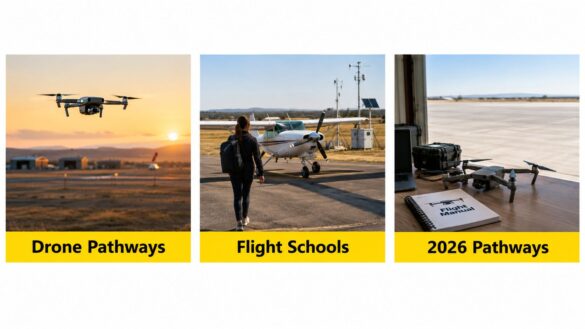
What does a flight school in Australia prepare a student to do, and why does that answer change so much once drones enter the picture? The short version is that crewed aircraft training follows a long, licence-based pathway under CASA, while drone training often starts with the work the operator wants to do, then works backwards to the right credential. That distinction matters because the right first course depends on whether the goal is recreational flying, commercial drone work, or operator-level compliance.
For readers comparing flight schools in Australia, the useful question is not “which course looks best”, it's “which pathway fits the operation”. Some students need only a strong foundation in aviation safety and regulations. Others need a Remote Pilot Licence (RePL), Aeronautical Radio Operator Certificate (AROC), or support for ReOC operations. The four pathways below map that progression in plain language. how AdManage.ai speeds up campaigns
Table of Contents
- 1. ACE Ready
- 2. ACE Bronze
- 3. ACE Silver
- 4. ACE Gold
- Australian Flight Schools, ACE Tier Comparison
- Choosing the Right Drone Pathway for Your Goals
- FAQ
1. ACE Ready
The strongest starting point for a beginner is usually the one that teaches how aviation works before any licence pressure begins. ACE Ready fits that stage. It is the entry point for students who need a structured introduction to drone fundamentals, aviation safety, CASA rules, and flight operations, before moving into more advanced training.
Start with the operating environment, not the aircraft
A beginner does not need to master every commercial rule on day one, but they do need to understand the framework they're entering. CASA's licensing system is built on documented training, examinations, and competency checks, and Australia's aviation workforce is spread across metropolitan and regional markets rather than sitting in one city alone, as the CASA annual report and Jobs and Skills Australia data show CASA annual report. That makes a foundation course useful for more than hobby flying. It helps students see how a drone pilot fits into the broader aviation system.
ACE Ready is best suited to someone who wants a safe first step before committing to commercial pathways. It prepares learners for later RePL study, but it does not replace it. It also does not turn a new student into a commercial operator, or cover the business-side requirements that come with operating for hire or reward.
Practical rule: if the student can't yet explain when a drone job is recreational, excluded, or commercial, foundational training is the right place to start.
That matters because many first-time learners focus on aircraft handling alone. In practice, the decision-making around where, why, and under what authority a drone flies is what keeps an operation lawful. A course like ACE Ready makes room for that thinking before the student reaches licence training.
For readers comparing flight schools in australia, that is the true value of a beginner pathway. It creates aviation awareness first, then lets the student choose the next stage with more confidence. The course information is available directly from ACE Aviation Aerospace Academy, and students who want to see how early drone learning connects to broader aviation study can also review the academy's guide on drone pilot careers and Certificate III in Aviation.
What this pathway does and does not cover
ACE Ready suits students who want:
- A structured introduction to drone fundamentals and safety.
- A clear bridge into more advanced RePL preparation.
- Plain-language context on CASA expectations before practical training.
It does not suit students who already need a commercial credential, radio qualification, or operator support. Those learners are better served by a pathway built for professional use from the outset.
2. ACE Bronze
Commercial intent changes the order of learning. ACE Bronze is built for students who already know they are heading toward professional drone work, but still need a foundation before licence-level training.
CASA separates recreational flying, excluded operations, and commercial work. A learner needs to understand those boundaries early, because the rules change with the aircraft, the operating conditions, and the kind of work being done. For a wider plain-language overview of those categories, see drone laws in Australia for 2026.
A commercial pathway is more than extra airtime. It brings together operational judgement, safety habits, aviation theory, and the way a regulated flight is organised. CASA's guidance on RePL guidance shows when a remote pilot licence is required, and CASA ReOC guidance explains the certificate a business needs to operate as a drone service provider. A RePL is the pilot-side credential, while a ReOC sits at the operator level.
That distinction matters because many new students mix up the person flying with the business authorising the work. ACE Bronze helps separate those roles. It gives learners a first commercial frame for thinking about airspace, limits, and flight planning before they reach the more formal licence stages.
A commercial drone pilot needs more than control inputs. They need to understand the job, the airspace, the paperwork, and the operating limits before takeoff.
Readers comparing flight schools in Australia often want a single course that covers every possible drone use. The progression usually works in stages instead. ACE Bronze suits the learner who is past the beginner phase and wants to build toward commercial competence without jumping straight into operator-level complexity.
The course is listed by ACE Aviation Aerospace Academy, where the bronze stage sits alongside later training options for students who continue along the pathway.
Best fit and limits
ACE Bronze suits:
- Learners moving toward commercial drone flying.
- Students who need aviation theory and practical confidence.
- Candidates preparing for a later RePL pathway.
Once a learner needs a RePL or AROC on the record, ACE Silver is the next step.
3. ACE Silver
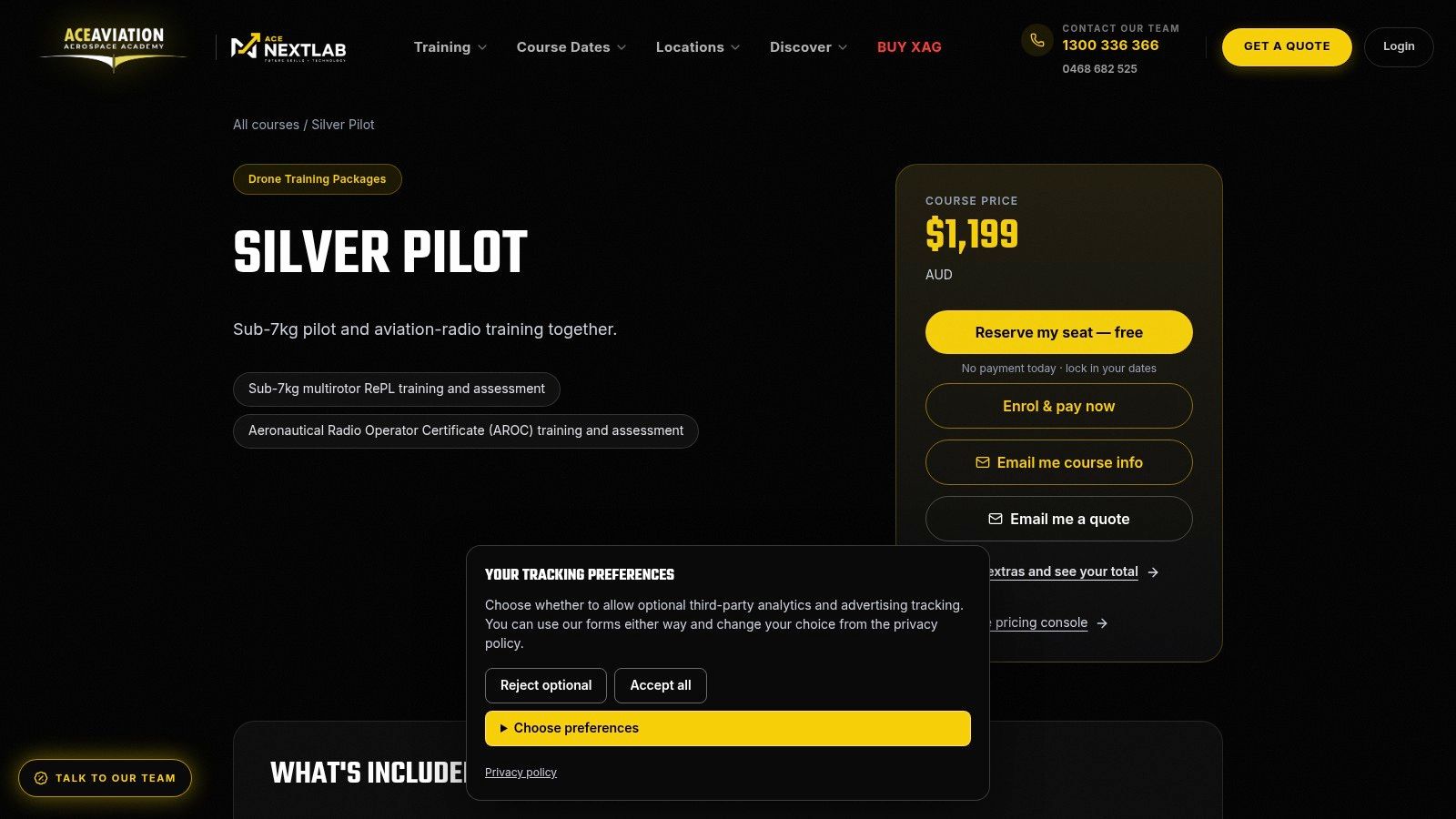
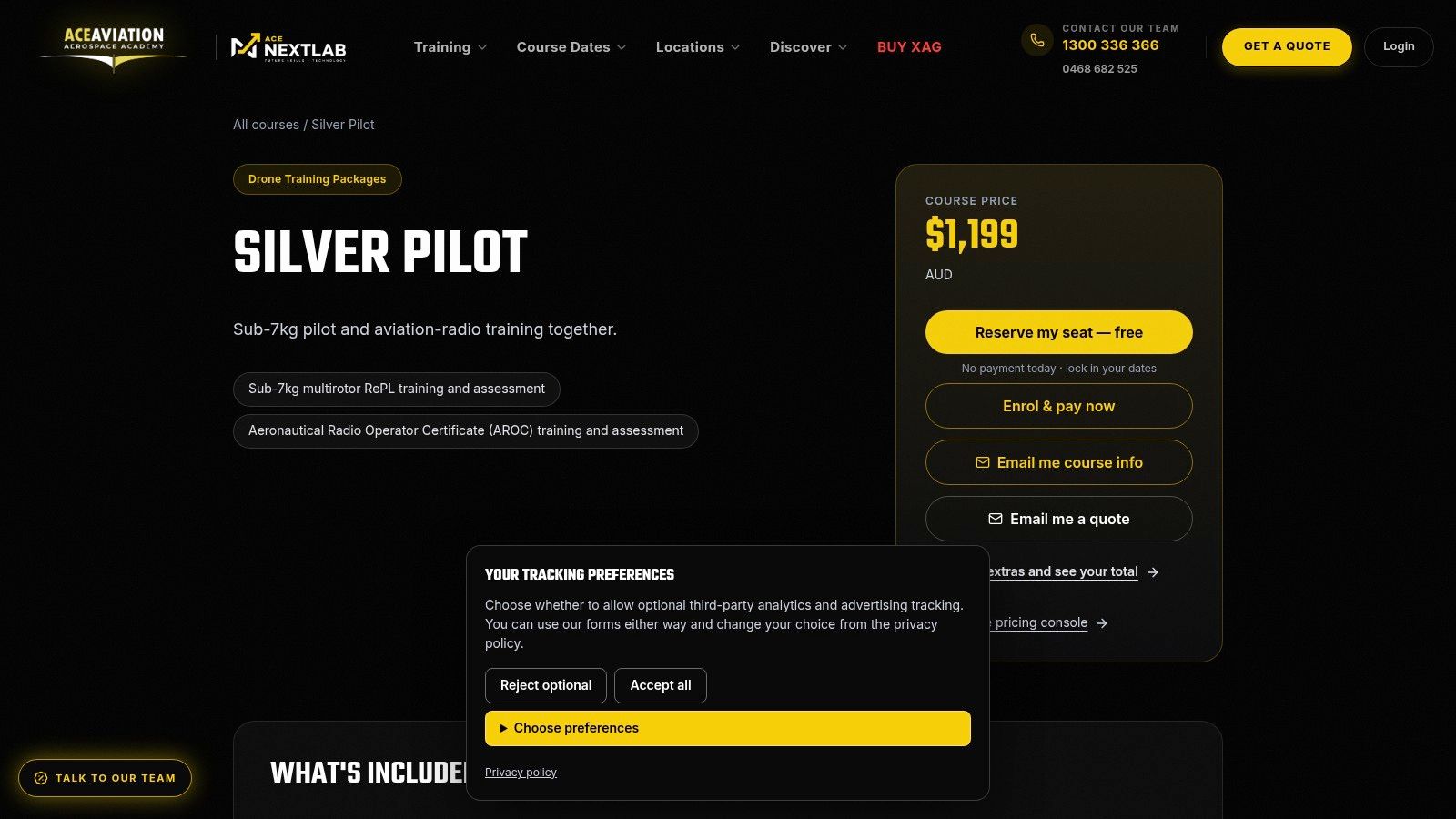
Once the work involves clients, radio calls, or controlled airspace, the credential question becomes concrete. ACE Silver is built for that stage. It sits between basic flight confidence and the more formal requirements of professional drone work, with RePL training, practical flying, AROC, and aviation English support in one pathway.
CASA treats the pilot role and the operating environment as separate matters. The pilot credential comes first. The rules around who can fly, where they can fly, and what extra permissions may apply come next. That is why ACE Silver is not just about stick control, it is about understanding what the flight is allowed to become.
The school's ACE Silver Pilot page places the course in that commercial progression, which helps students see where this stage fits before they move into operator-level work.
A simple scenario makes the need clearer. If a pilot must speak on aviation air-band radio frequency, CASA says an AROC may be required, along with approved training, an Aviation Reference Number, competency evidence, and current English language proficiency at the accepted level AROC guidance. That is separate from flying the aircraft well. It is the communication side of the job, and for some operations it matters just as much as flight handling.
ACE Silver is the stage for learners who need that broader picture. The course listing from ACE Aviation Aerospace Academy places it alongside the other steps in the training ladder, but this one is aimed at students who are past the starter phase and want training that relates directly to professional duties.
A useful way to read the pathway is as a progression:
- first, learn the aircraft and the basic operating limits,
- then connect those skills to commercial rules and radio work,
- then prepare for the responsibility that comes with professional flying.
Operational insight: if the intended work includes clients, crews, or controlled sites, training should cover compliance and communication, not only flight manoeuvres.
ACE Silver suits students who are aiming for professional drone work and want a course that reflects real regulatory requirements. It does not replace business authorisation, and it does not by itself make a business ready to trade. It prepares the pilot side of the job, while the operator structure still has to be built around it.
4. ACE Gold
At operator level, the question shifts from “can this pilot fly” to “can this business operate compliantly”. ACE Gold is built for that stage. It combines RePL training with ReOC support, practical flying, compliance thinking, and the business side of commercial drone operations.
Operator-level work is a different problem
CASA treats the operator and the pilot as connected but separate parts of the system. A ReOC is the business authorisation that lets a company act as a drone service provider, while a RePL covers the pilot. The operator still has to put procedures, manuals, training, and records in place under the Part 101 Manual of Standards 2019, and the certificate conditions have to be followed CASA flight approvals and permissions.
That is why this pathway matters. A pilot can be solid in the air and still be unprepared for the discipline a commercial operation needs on the ground. ACE Gold sits at that higher stage, where training has to support compliance systems as well as flight skill.
Some higher-risk work also needs separate CASA authorisation, including flights above 120 m or within 5.5 km of a controlled aerodrome in specified circumstances. Those applications sit with the chief remote pilot of a ReOC holder, which is why the operator structure matters as much as the flying itself.
A business planning inspections, mapping, agriculture, infrastructure, or emergency-support work needs more than a licence holder. It needs procedures, records, radio discipline, and a clear compliance chain.
Readers who want the course details can look at the ACE Gold Pilot pathway from ACE Aviation Aerospace Academy. That route suits organisations aiming for commercial operations, while a solo photographer who only needs safe flying will usually find this level of compliance work unnecessary.
Australian Flight Schools, ACE Tier Comparison
| Course | Implementation complexity 🔄 | Resource requirements ⚡ | Expected outcomes ⭐📊 | Ideal use cases 📊 | Key advantages 💡 |
|---|---|---|---|---|---|
| ACE READY | Low, basic theory and introductory flights | Minimal, consumer drone, short course time, online materials | ⭐ Basic drone fundamentals; readiness for advanced RePL training | Beginners and hobbyists exploring drone careers | First-party entry course; quick onboarding to regulations and safety |
| ACE BRONZE | Moderate, commercial foundations with practical practice | Moderate, training drone access, classroom and practical sessions | ⭐⭐ Foundation commercial competency; stepping stone to RePL | Aspiring commercial pilots beginning certification pathway | Commercial-focused syllabus; prepares students for licensing steps |
| ACE SILVER | High, full RePL training with CASA-compliant assessments | High, certified instructors, required flight hours, AROC and English testing | ⭐⭐⭐⭐ RePL certification; qualified for professional commercial operations | Candidates seeking certified professional pilot status | CASA-compliant RePL; practical flight training and professional credentialing |
| ACE GOLD | Very high, RePL plus ReOC support, compliance and business integration | Very high, extensive flight hours, regulatory support, business modules | ⭐⭐⭐⭐⭐ Ready for commercial operations and company-level ReOC processes | Professionals aiming to operate or run commercial drone businesses | Advanced compliance and business readiness; end-to-end commercial training |
Choosing the Right Drone Pathway for Your Goals
The right choice starts with the operation, not the course brochure. A student should first confirm what work they intend to do, whether the activity is recreational or commercial, whether a RePL is required, and whether a ReOC or other approval will be needed for the business model. CASA's rules are activity-specific and aircraft-specific, so the same drone can fall under different obligations depending on how it is used.
That's why flight schools in Australia shouldn't be compared only on course names. They should be compared on how clearly they explain the regulatory pathway. A beginner course should build confidence and awareness. A commercial foundation course should prepare the student for licensing. A RePL pathway should align with CASA requirements. An operator-focused course should address compliance, radio, records, and business readiness.
For many readers, the practical order is straightforward. Start with the current skill level, identify the intended job, check the current CASA requirements, then choose the pathway that matches the next legal and operational step. If the work involves radio, controlled airspace, higher-risk flight, or business operations, the training has to reflect those realities before the aircraft is launched.
The safest approach is to verify course details directly with the provider before enrolling, especially where licensing, compliance, and future operator needs overlap. Drone rules evolve, and training should stay aligned with current CASA expectations, not assumptions carried over from older guidance. For business use, it's also sensible to think ahead about insurance and operational risk, including insuring drones for business use.
Ace Aviation Aerospace Academy provides structured drone and aviation training for students, operators, and organisations that need a clear path through CASA-aligned education. Its courses cover the stages discussed above, from beginner grounding to RePL, AROC, and operator-focused support, so readers can match training to the work they intend to do. Visit Ace Aviation Aerospace Academy to review the current course details and speak with the team about the pathway that fits your goals.
FAQ
Do all drone pilots in Australia need a RePL?
No. CASA rules depend on the aircraft, the operating conditions, and the type of work. Some recreational or excluded-category operations don't require a RePL, while commercial work for a business holding a ReOC generally does.
What is the difference between a RePL and a ReOC?
A RePL is a remote pilot licence. A ReOC is the certificate that lets a business operate as a drone service provider. They serve different roles, and one doesn't replace the other.
When does an AROC become relevant?
An AROC becomes relevant when a person needs to communicate on aviation air-band radio frequency and doesn't already hold an applicable qualification. RePL holders may need one depending on the operation.
Which course should a beginner start with?
A beginner should usually start with a foundation pathway that teaches drone basics, safety, and CASA context before moving into licence training. That reduces confusion later and makes the next step easier.
Can one course prepare someone for business-level drone work?
A single course can build part of the pathway, but business-level work usually needs more than flying skill. Compliance, records, operational procedures, and the correct CASA permissions still have to be in place.