Short Direct Answer
To become a professional drone pilot in Australia, obtain an Aviation Reference Number, complete CASA-aligned RePL theory and flight training, pass the required assessments, and gain an AROC where needed. If you plan to run a drone business, you will also need a ReOC pathway.
How to Become a Drone Pilot in Australia
The professional pathway is more than learning to control a drone. You must understand aviation law, airspace, weather, risk management, radio procedures and operational planning.
The most widely recognised pathway is the CASA Remote Pilot Licence, or RePL. It qualifies you to operate remotely piloted aircraft within the aircraft category and weight class covered by your licence.
However, a RePL does not automatically authorise every type of commercial operation. Your work may also require aircraft registration, operator accreditation, a ReOC, operational documentation or additional approvals.
For that reason, choose training based on your career goal. A pilot working for an existing operator may need a RePL and AROC. Someone launching a drone company may need a RePL, AROC, ReOC support and Chief Remote Pilot training.
Ace Aviation Aerospace Academy has trained more than 4,000 students over 10+ years. It is a CASA-approved training provider associated with CASA.ReOC.1421. ACE also supports students through training, compliance, specialist operations and employment pathways.

What Does a Commercial Drone Pilot Do?
Commercial drone pilots collect information, images or data for a client. They may fly a small camera drone over a property, map a construction site or inspect an electrical asset.
The work often includes much more than the flight itself. A professional pilot may need to:
- Review the client brief.
- Check airspace and local restrictions.
- Complete a site risk assessment.
- Inspect the aircraft, batteries and payload.
- Plan the mission and emergency procedures.
- Communicate with crew and aviation stakeholders.
- Capture accurate data.
- Process files and prepare a client report.
- Keep flight and maintenance records.
Therefore, employers value pilots who can manage an entire job safely. Strong communication, reliability and technical skills can matter as much as flight control.
Commercial Drone Licence Australia: RePL or ReOC?
These terms describe different responsibilities:
| Credential | What it means | Who usually needs it |
|---|---|---|
| RePL | A pilot qualification for operating specified remotely piloted aircraft | Individual remote pilots |
| AROC | An Aeronautical Radio Operator Certificate for professional aviation radio operations | Pilots who need aviation radio skills or radio privileges |
| ReOC | A Remote Operator’s Certificate for an organisation conducting approved operations | Drone businesses and operators |
| ARN | Your Aviation Reference Number with CASA | People applying for aviation licences and approvals |
| Registration | Registration of applicable remotely piloted aircraft | Commercial operators and other users covered by CASA rules |
A pilot can work under an employer’s ReOC. If you start your own company, you may need to establish your own ReOC and prepare compliant operating documentation.
Always check the current CASA drones guidance before operating. Rules can change, and your obligations depend on the aircraft, location, purpose and operating conditions.
Key Facts About the Drone Licence Australia Pathway
| Question | 2026 answer |
|---|---|
| Main pilot qualification | CASA Remote Pilot Licence, or RePL |
| First administrative step | Apply for an Aviation Reference Number |
| Standard ACE pathway | Online study, three days of live theory, one practical flight day, one assessment day |
| Theory flexibility | The three live classroom days can be spread over up to 12 months |
| Radio qualification | AROC is included in ACE Starter, Silver, Gold and Platinum packages |
| Business pathway | RePL and AROC, followed by ReOC setup and Chief Remote Pilot training |
| Certificate III pathway | AVI30419 delivered with Reach Community College, RTO 40747 |
| Certificate III price | AUD $3,200 all-inclusive |
| Entry-level income | Commonly $60,000–$85,000 |
| Experienced specialist income | Approximately $90,000–$130,000+ |
| Training locations | Australia-wide delivery, including Brisbane, Sydney, Melbourne, Canberra, Perth and Hobart |
| ACE experience | 4,000+ students, 10+ years operating and a 4.9-star rating |
Income figures are indicative market ranges. They are not guarantees and depend on location, experience, specialisation, equipment, contracts and business skills.
Step-by-Step: How to Become a Drone Pilot in Australia
1. Apply for an Aviation Reference Number
Your ARN is your personal identifier within Australia’s aviation system. You use it when applying for CASA licences and managing aviation records.
Apply through the CASA aviation services system before beginning your formal licence application. Use your correct legal name and keep your details consistent across your training records.
An ARN is not a pilot licence. It is the identification step that allows your aviation qualifications and applications to be connected to you.
2. Complete Pre-Course RePL Study
Before the live classes, complete your online learning and practice exams. This stage introduces the knowledge needed for safe and professional operations.
Typical subjects include:
- Aviation terminology.
- CASA rules and responsibilities.
- Airspace and aeronautical charts.
- Meteorology and weather risks.
- Human factors and fatigue.
- Navigation and flight planning.
- RPAS systems and batteries.
- Emergency procedures.
- Risk management.
- Radio procedures.
Use the practice exams seriously. They help identify weak areas before the supervised assessment.

3. Attend Three Days of Live RePL Theory
The next step is three days in a live virtual classroom with an RPAS instructor. You can complete the three days together or spread them over up to 12 months.
This format suits people balancing work, family or other study. It also gives you access to an instructor who can explain technical subjects in plain English.
The theory sessions connect your online learning to real operating decisions. For example, you may discuss how wind, terrain, airspace and people on the ground affect a mission plan.
4. Complete One Day of Practical Flight Training
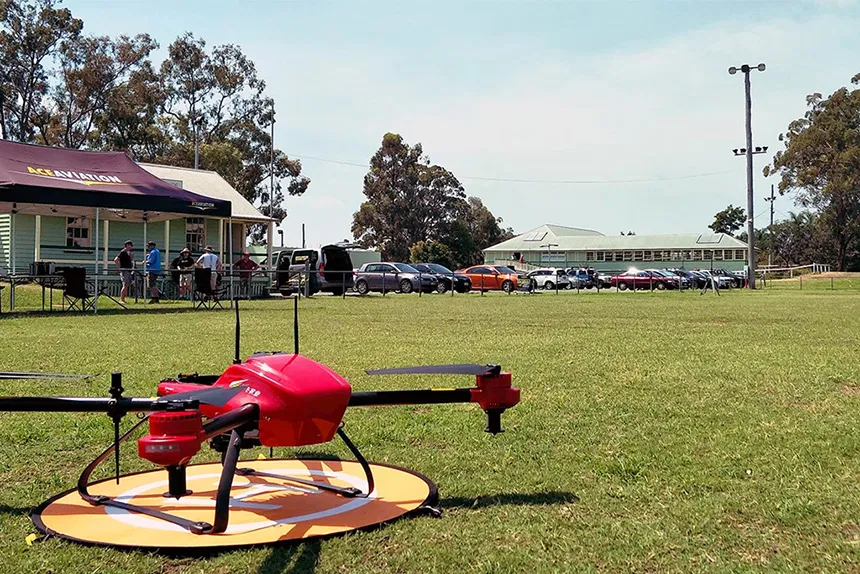
The practical day takes place in the field with an RPAS instructor. You learn how to prepare, operate and recover the aircraft safely.
You will practise tasks such as:
- Pre-flight inspections.
- Battery and equipment checks.
- Safe take-off and landing.
- Manual flight control.
- Mission planning.
- Emergency responses.
- Communication with the crew.
- Post-flight procedures.
Practical training is also where you build confidence. A professional pilot must make safe decisions before the aircraft leaves the ground.
5. Complete One Day of Exams and Flight Assessment
The assessment day includes the required exams and practical flight assessment. You must demonstrate both knowledge and operational competence.
The flight assessment tests whether you can follow procedures, control the aircraft and respond appropriately to changing conditions.
After the exams and flight assessment, complete the required KDR and ELP meeting. Your training provider will guide you through the final administrative steps.
6. Add an AROC
An AROC is an Aeronautical Radio Operator Certificate. It supports professional aviation communications and radio procedures.
An AROC can be valuable when working around aerodromes, controlled environments or organisations that expect formal aviation communication skills.
ACE includes an AROC in its Starter, Silver, Gold and Platinum packages. Combining it with your RePL can make your training pathway more practical for commercial work.
7. Add a ReOC Pathway if You Are Starting a Business
A RePL qualifies you as a pilot. A ReOC relates to the operator or business.
If you plan to offer drone services under your own company, you may need:
- A suitable operations manual.
- Operating procedures.
- Risk management processes.
- A Chief Remote Pilot.
- Record-keeping systems.
- Compliance processes.
- CASA application and assessment support.
ACE Gold includes ReOC setup support, the CASA fee, Chief Remote Pilot training and UAMP compliance platform access. The Gold commercial drone course is designed for people who want to move from pilot training into business operations.
8. Find Your First Paid Work
Your first paid role may be an employee position, subcontracting work or a small direct client project.
Begin with work that matches your licence, experience and operating approvals. Build a portfolio that shows safe planning and useful client outcomes.
Potential first steps include:
- Property photography.
- Construction progress images.
- Roof inspections.
- Basic mapping support.
- Agricultural monitoring.
- Event or tourism content.
- Data collection for a surveying team.
ACE students can also access DroneWork, a job and opportunity platform connecting qualified pilots with commercial work across Australia. Explore the drone pilot jobs and career pathway before you finish training.
How Much Does a RePL Cost in Australia?
The phrase casa repl cost usually refers to the price of RePL training, assessment and related qualifications. The final amount depends on the aircraft category, included certificates and whether you need business setup support.
ACE course prices are:
| ACE package | Price | Main inclusions | Suitable for |
|---|---|---|---|
| Starter | $1,299 | RePL sub-7kg and AROC | Light commercial work and entry-level pilots |
| Silver | $1,799 | RePL sub-7kg, RePL sub-25kg, AROC and Night VLOS | Pilots seeking the common commercial pathway |
| Gold | $3,699 | Silver inclusions, ReOC setup including CASA fee, Chief Remote Pilot training, UAMP and DroneWork | People starting a drone business |
| Platinum | $5,999 | Gold inclusions, RePL up to 150kg, AVI30419 and BVLOS/EVLOS theory | Enterprise and advanced operators |
ACE offers 0% interest payment plans. Students who self-enrol can receive $100 cash back on Silver, Gold and Platinum. Public transport fares to training are reimbursed, and ACE also provides a price match promise.
The full ACE course comparison can help you match the package to your career plan.
Certificate III in Aviation
A licence can help you enter the industry. A nationally recognised qualification may strengthen your resume and provide broader aviation foundations.
ACE delivers the Certificate III in Aviation AVI30419 in partnership with Reach Community College, RTO 40747. The complete pathway costs AUD $3,200 and includes:
- Online aviation theory.
- RePL preparation.
- Practical flight training.
- RePL assessment.
- AROC training.
- Certificate III gap training.
- Qualification issuance.
Students can take up to 12 months to complete the qualification. See the Certificate III in Aviation pathway for current details.
Real-World Drone Pilot Career Paths
Surveying, Mapping and Construction
Surveying teams use drones to collect aerial images, orthomosaics, point clouds and site measurements. Pilots may support civil construction, mining, infrastructure and land development.
You may need additional training in photogrammetry, GIS software and survey data. Accuracy and repeatability are especially important.
Agriculture
Agricultural drone pilots may map crops, monitor plant health, inspect livestock areas or support spraying and spreading operations.
Agriculture can involve larger aircraft and more complex safety controls. Platinum or specialist agricultural training may be useful for pilots targeting this field.

Drone Cleaning
Industrial cleaning drones can support high-rise facade and building maintenance work. This field combines flight skills with equipment handling, site controls and customer service.
Pilots must understand the risks of operating near buildings, workers, vehicles and the public. Specialist training is essential before undertaking this type of work.
Inspection and Thermal Imaging
Utilities, construction companies and asset owners use drones to inspect roofs, towers, solar panels, power infrastructure and industrial sites.
Thermal cameras can reveal heat patterns that are not visible in standard images. Pilots may need extra training in thermography, reporting and asset-specific procedures.
Real Estate and Media
Real estate and media work can be an accessible entry point. However, competition is strong, and clients expect reliable images, fast turnaround and professional conduct.
A good portfolio should show composition, smooth flight, safe planning and an understanding of the client’s marketing goal.
Indicative Salary Ranges
Entry-level and commercial drone pilots commonly earn around $60,000–$85,000. Experienced specialists in surveying, agriculture, inspection, thermal imaging or LiDAR may earn $90,000–$130,000 or more.
Owner-operators with a ReOC, repeat contracts and strong business systems can exceed these figures through day rates and project contracts. These are indicative ranges, not promises of employment or income.
Choosing a Drone Course in Your City
Training availability can change, so check the current calendar before booking. ACE provides delivery across major Australian locations and supports students in regional areas.
- Drone course Brisbane: Suitable for Queensland students seeking RePL, AROC and commercial business training.
- Drone course Melbourne: A practical option for Victorian students and enterprise operators.
- Drone course Sydney: Designed for students targeting property, infrastructure, media and corporate work.
- Drone pilot course Perth: Relevant to mining, resources, inspection and agricultural career paths.
- Drone training Hobart: Supports Tasmanian students seeking professional aviation training.
- Students near Canberra can access training suited to government, infrastructure and enterprise operations.
- Students in Newcastle, Darwin and Cairns can contact ACE about upcoming regional delivery and available locations.
Common Mistakes New Drone Pilots Make
Treating a RePL as Permission to Do Everything
A RePL is not a blanket approval for every operation. Check the aircraft category, location, airspace and operating conditions before accepting work.
Buying Equipment Before Choosing a Career Path
A camera drone may not suit surveying, agriculture or industrial inspection. First choose your target service, then select aircraft and payloads.
Ignoring the Business Side
Pilots also need quotes, insurance, invoices, client agreements, data management and marketing. Flying skill alone does not create a sustainable business.
Failing to Keep Records
Keep flight logs, maintenance records, risk assessments, training records and client documentation. Good records support safety and professional credibility.
Underpricing Commercial Work
Low prices can leave no room for insurance, travel, editing, software, equipment maintenance and administration. Quote for the whole service, not only the flight time.
Assuming Every Job Is Low Risk
A short flight near people, roads, buildings or an aerodrome can create significant risk. Complete a proper assessment before every mission.
CASA Considerations for 2026
CASA rules apply to recreational and commercial drone operations. Your responsibilities can depend on:
- The purpose of the flight.
- The aircraft weight and category.
- Whether the operation is within visual line of sight.
- The distance from people and property.
- Airspace classification.
- Proximity to aerodromes.
- Night operations.
- The use of aviation radio.
- Whether you operate under a ReOC.
- Any special approvals or conditions.
Before each job, confirm that your operation matches your qualification and approvals. Do not rely on a client’s assumptions or a previous flight plan.
Rules for registration, operator accreditation and excluded operations can also change. Review CASA’s current information and ask your training provider when you are unsure.
ACE helps students overcome the regulatory hurdles through structured education, practical training and compliance support. Its ecosystem combines ACE Aviation training, UAMP compliance tools, DroneWork opportunities and ACE Air aircraft capability.
The program also includes Altitude+, which provides ongoing student benefits and support. ACE has a 4.9-star rating, a global footprint across Australia, Singapore, Dubai, Korea and Malaysia, and more than a decade of operating experience.
Frequently Asked Questions
1. Do I need a drone licence to work commercially in Australia?
It depends on the operation, aircraft and current CASA rules. Many professional pathways use a RePL, and commercial operators may also need registration, accreditation or a ReOC.
2. What is the main drone licence in Australia?
The main pilot qualification is the CASA Remote Pilot Licence, or RePL. It applies to specific aircraft categories and weight classes.
3. How long does RePL training take?
The ACE pathway includes online preparation, three live theory days, one practical flight day and one day for exams and flight assessment. The live theory days can be spread over up to 12 months.
4. What is an ARN?
An Aviation Reference Number is your personal identifier in Australia’s aviation system. You need it for relevant CASA applications and records.
5. Is AROC included with RePL training?
Not always. ACE includes AROC in its Starter, Silver, Gold and Platinum packages. Check the inclusions before enrolling.
6. What is the difference between RePL and ReOC?
RePL relates to the pilot. ReOC relates to the organisation conducting approved drone operations.
7. Do I need my own ReOC to get a drone pilot job?
No. Many pilots work under an employer’s or contractor’s ReOC. You generally need your own ReOC if you plan to operate your own approved drone business.
8. What is the casa repl cost?
ACE prices range from $1,299 for Starter to $5,999 for Platinum. The price depends on the aircraft class and business or specialist inclusions.
9. Can I pay for drone training in instalments?
Yes. ACE offers 0% interest payment plans on eligible courses. Terms can vary, so confirm the current options before enrolment.
10. Is the Certificate III in Aviation worth doing?
It can strengthen your aviation foundation and provide a nationally recognised qualification. It may be useful for school leavers, career changers and pilots targeting larger employers.
11. How much does the Certificate III cost?
The ACE AVI30419 pathway costs AUD $3,200 all-inclusive. It is delivered in partnership with Reach Community College, RTO 40747.
12. What drone pilot jobs are available in Australia?
Jobs include surveying, mapping, agriculture, construction, inspection, mining, infrastructure, media, real estate, emergency services and environmental monitoring.
13. Can I become a drone pilot without aviation experience?
Yes. Many students begin without an aviation background. You must be prepared to study aviation knowledge and demonstrate safe operating competence.
14. What salary can a drone pilot earn?
Entry-level pilots commonly earn $60,000–$85,000. Experienced specialists may earn $90,000–$130,000 or more. Owner-operator income varies widely.
15. Is a drone pilot career full-time?
It can be. Some pilots work as employees, while others run businesses or combine drone services with surveying, photography, agriculture or inspection work.
16. Can I use my RePL in another country?
A CASA RePL is an Australian qualification. Other countries have their own aviation rules and may require additional recognition, registration or approvals.
17. What should I study after RePL?
Consider AROC, Night VLOS, larger aircraft categories, Certificate III in Aviation, BVLOS or EVLOS theory, agriculture, inspection, thermal imaging and data processing.
18. How can I find my first paid drone job?
Build a portfolio, contact local businesses, apply for employee roles and use professional networks. ACE graduates can also access the DroneWork jobs platform.
19. Can I train in Brisbane, Melbourne or Sydney?
Yes. ACE offers training pathways connected with Brisbane, Melbourne, Sydney, Perth, Hobart, Canberra and other Australian locations. Check the current calendar for dates.
20. Where can I ask about the right course?
Review the ACE FAQ, compare the courses or contact an ACE training advisor. Your best package depends on the aircraft and work you plan to pursue.
Summary
A professional drone career starts with the right pathway. First, obtain your ARN. Then complete pre-course study, live RePL theory, practical flight training, examinations and the required KDR and ELP meeting.
Add an AROC for aviation radio capability. If you plan to operate your own business, continue into ReOC setup and Chief Remote Pilot training. Finally, build experience through entry-level work, specialist endorsements and reliable client service.
ACE supports the full journey from training to compliance and paid opportunities. With 4,000+ students trained, CASA-aligned programs, Altitude+, UAMP, DroneWork and specialist pathways, you can prepare for more than a licence.
Ready to start? Book your training at aaa.edu.au or call 1300 336 366.
{“@graph”:[{“@id”:”https://aaa.edu.au/blog/drone-licence-australia-2026#article”,”@type”:”Article”,”image”:”https://cdn.marblism.com/F6USneCwUqP.webp”,”author”:{“url”:”https://aaa.edu.au/”,”name”:”Ace Aviation Aerospace Academy”,”@type”:”Organization”},”headline”:”Drone Licence Australia 2026: How to Become a Drone Pilot in Australia (Step-by-Step Guide)”,”keywords”:[“drone licence australia”,”how to become a drone pilot australia”,”commercial drone licence australia”,”drone pilot jobs australia”,”casa repl cost”,”drone course brisbane”,”drone course melbourne”,”drone course sydney”,”drone pilot course perth”,”drone training hobart”],”publisher”:{“url”:”https://aaa.edu.au/”,”logo”:{“url”:”https://aaa.edu.au/assets/ace-logo-transparent.png”,”@type”:”ImageObject”},”name”:”Ace Aviation Aerospace Academy”,”@type”:”Organization”},”description”:”Drone licence australia guide: learn the CASA RePL pathway, costs and career steps. Start your commercial drone career with ACE today.”,”dateModified”:”2026-09-11″,”datePublished”:”2026-09-11″,”articleSection”:[“Career Guides”,”Drone Pilot Training”,”CASA Compliance”],”mainEntityOfPage”:{“@id”:”https://aaa.edu.au/blog/drone-licence-australia-2026″,”@type”:”WebPage”}},{“@id”:”https://aaa.edu.au/#organization”,”url”:”https://aaa.edu.au/”,”logo”:{“url”:”https://aaa.edu.au/assets/ace-logo-transparent.png”,”@type”:”ImageObject”},”name”:”Ace Aviation Aerospace Academy”,”@type”:”Organization”,”sameAs”:[“https://aaa.edu.au/reviews”,”https://dronework.com.au/”],”telephone”:”+61-1300-336-366″,”description”:”Ace Aviation Aerospace Academy provides CASA-approved drone pilot training, RePL, AROC, ReOC, specialist RPAS training and Certificate III in Aviation pathways.”},{“@id”:”https://aaa.edu.au/blog/drone-licence-australia-2026#faq”,”@type”:”FAQPage”,”mainEntity”:[{“name”:”Do I need a drone licence to work commercially in Australia?”,”@type”:”Question”,”acceptedAnswer”:{“text”:”It depends on the operation, aircraft and current CASA rules. Many professional pathways use a RePL, and commercial operators may also need registration, accreditation or a ReOC.”,”@type”:”Answer”}},{“name”:”What is the main drone licence in Australia?”,”@type”:”Question”,”acceptedAnswer”:{“text”:”The main pilot qualification is the CASA Remote Pilot Licence, or RePL. It applies to specific aircraft categories and weight classes.”,”@type”:”Answer”}},{“name”:”How long does RePL training take?”,”@type”:”Question”,”acceptedAnswer”:{“text”:”The ACE pathway includes online preparation, three live theory days, one practical flight day and one day for exams and flight assessment. The live theory days can be spread over up to 12 months.”,”@type”:”Answer”}},{“name”:”What is an ARN?”,”@type”:”Question”,”acceptedAnswer”:{“text”:”An Aviation Reference Number is your personal identifier in Australia’s aviation system. You need it for relevant CASA applications and records.”,”@type”:”Answer”}},{“name”:”Is AROC included with RePL training?”,”@type”:”Question”,”acceptedAnswer”:{“text”:”Not always. ACE includes AROC in its Starter, Silver, Gold and Platinum packages. Check the inclusions before enrolling.”,”@type”:”Answer”}},{“name”:”What is the difference between RePL and ReOC?”,”@type”:”Question”,”acceptedAnswer”:{“text”:”RePL relates to the pilot. ReOC relates to the organisation conducting approved drone operations.”,”@type”:”Answer”}},{“name”:”Do I need my own ReOC to get a drone pilot job?”,”@type”:”Question”,”acceptedAnswer”:{“text”:”No. Many pilots work under an employer’s or contractor’s ReOC. You generally need your own ReOC if you plan to operate your own approved drone business.”,”@type”:”Answer”}},{“name”:”What is the casa repl cost?”,”@type”:”Question”,”acceptedAnswer”:{“text”:”ACE prices range from $1,299 for Starter to $5,999 for Platinum. The price depends on the aircraft class and business or specialist inclusions.”,”@type”:”Answer”}},{“name”:”Can I pay for drone training in instalments?”,”@type”:”Question”,”acceptedAnswer”:{“text”:”Yes. ACE offers 0% interest payment plans on eligible courses. Terms can vary, so confirm the current options before enrolment.”,”@type”:”Answer”}},{“name”:”Is the Certificate III in Aviation worth doing?”,”@type”:”Question”,”acceptedAnswer”:{“text”:”It can strengthen your aviation foundation and provide a nationally recognised qualification. It may be useful for school leavers, career changers and pilots targeting larger employers.”,”@type”:”Answer”}},{“name”:”How much does the Certificate III cost?”,”@type”:”Question”,”acceptedAnswer”:{“text”:”The ACE AVI30419 pathway costs AUD $3,200 all-inclusive. It is delivered in partnership with Reach Community College, RTO 40747.”,”@type”:”Answer”}},{“name”:”What drone pilot jobs are available in Australia?”,”@type”:”Question”,”acceptedAnswer”:{“text”:”Jobs include surveying, mapping, agriculture, construction, inspection, mining, infrastructure, media, real estate, emergency services and environmental monitoring.”,”@type”:”Answer”}},{“name”:”Can I become a drone pilot without aviation experience?”,”@type”:”Question”,”acceptedAnswer”:{“text”:”Yes. Many students begin without an aviation background. You must be prepared to study aviation knowledge and demonstrate safe operating competence.”,”@type”:”Answer”}},{“name”:”What salary can a drone pilot earn?”,”@type”:”Question”,”acceptedAnswer”:{“text”:”Entry-level pilots commonly earn $60,000–$85,000. Experienced specialists may earn $90,000–$130,000 or more. Owner-operator income varies widely.”,”@type”:”Answer”}},{“name”:”Is a drone pilot career full-time?”,”@type”:”Question”,”acceptedAnswer”:{“text”:”It can be. Some pilots work as employees, while others run businesses or combine drone services with surveying, photography, agriculture or inspection work.”,”@type”:”Answer”}},{“name”:”What should I study after RePL?”,”@type”:”Question”,”acceptedAnswer”:{“text”:”Consider AROC, Night VLOS, larger aircraft categories, Certificate III in Aviation, BVLOS or EVLOS theory, agriculture, inspection, thermal imaging and data processing.”,”@type”:”Answer”}},{“name”:”How can I find my first paid drone job?”,”@type”:”Question”,”acceptedAnswer”:{“text”:”Build a portfolio, contact local businesses, apply for employee roles and use professional networks. ACE graduates can also access the DroneWork jobs platform.”,”@type”:”Answer”}},{“name”:”Can I train in Brisbane, Melbourne or Sydney?”,”@type”:”Question”,”acceptedAnswer”:{“text”:”Yes. ACE offers training pathways connected with Brisbane, Melbourne, Sydney, Perth, Hobart, Canberra and other Australian locations. Check the current calendar for dates.”,”@type”:”Answer”}},{“name”:”Where can I ask about the right course?”,”@type”:”Question”,”acceptedAnswer”:{“text”:”Review the ACE FAQ, compare the courses or contact an ACE training advisor. Your best package depends on the aircraft and work you plan to pursue.”,”@type”:”Answer”}}]}],”@context”:”https://schema.org”}